Arvi Särkelä – författare
Visar alla böcker från författaren Arvi Särkelä. Handla med fri frakt och snabb leverans.
5 produkter
5 produkter
1 717 kr
Skickas inom 5-8 vardagar
How can social critique respond to a catastrophic world? From Emerson to Adorno, a tradition of radical social critique has flourished that utilizes methods which disclose rather than judge the form of life: instead of trying to say what is wrong and what would be better, these criticisms seek to show how the world is false and to reveal how we might escape the vicious circles of present society—pointing out its catastrophic state and directing readers to the real possibilities for another form of life.This book presents an incisive history of critical disclosure by looking at its common metaphors. As Särkelä illuminates, circular metaphors continually interact in the works of 19th- and 20th-century European and American authors including not just Emerson and Adorno, but also Nietzsche, Tarde, Freud, and Dewey. By reconstructing the driving examples of such disclosing critical gestures, Särkelä articulates their similarities and differences, and considers their potential for contemporary social critique. The result points the way toward the cultivation of critical skills relevant for our own age of catastrophe.
420 kr
Skickas inom 5-8 vardagar
How can social critique respond to a catastrophic world? From Emerson to Adorno, a tradition of radical social critique has flourished that utilizes methods which disclose rather than judge the form of life: instead of trying to say what is wrong and what would be better, these criticisms seek to show how the world is false and to reveal how we might escape the vicious circles of present society—pointing out its catastrophic state and directing readers to the real possibilities for another form of life.This book presents an incisive history of critical disclosure by looking at its common metaphors. As Särkelä illuminates, circular metaphors continually interact in the works of 19th- and 20th-century European and American authors including not just Emerson and Adorno, but also Nietzsche, Tarde, Freud, and Dewey. By reconstructing the driving examples of such disclosing critical gestures, Särkelä articulates their similarities and differences, and considers their potential for contemporary social critique. The result points the way toward the cultivation of critical skills relevant for our own age of catastrophe.
1 209 kr
Skickas inom 10-15 vardagar
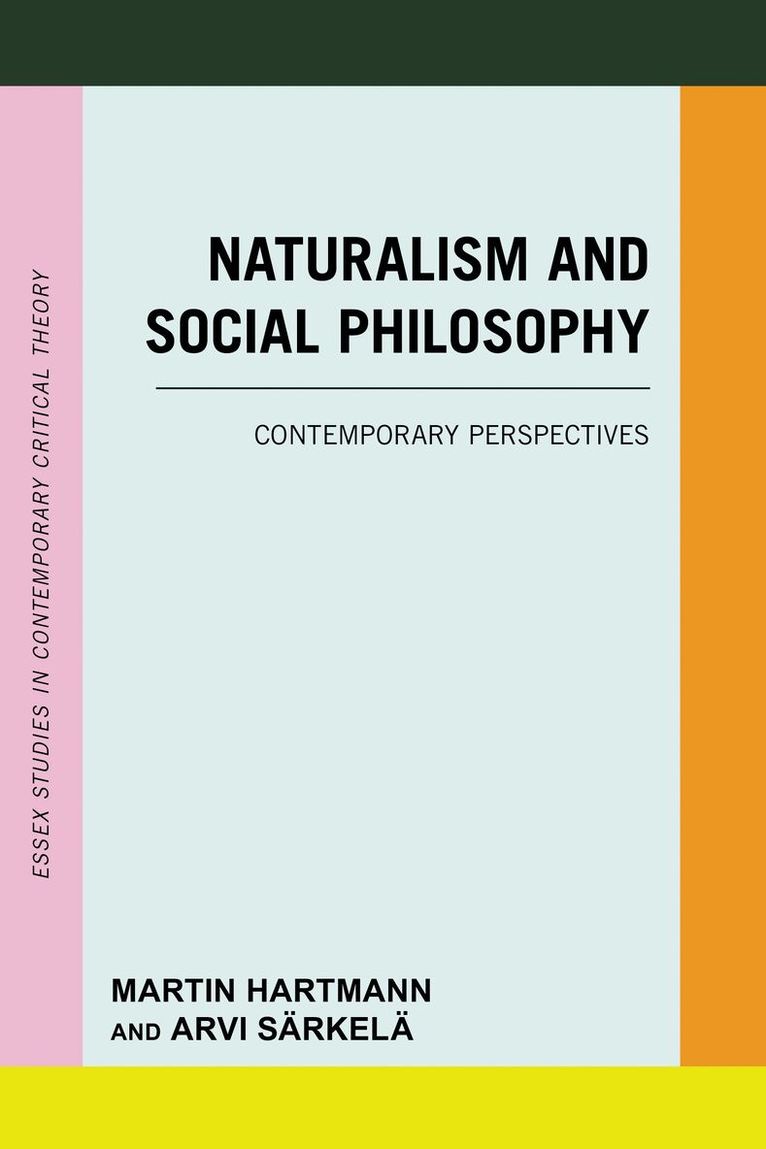
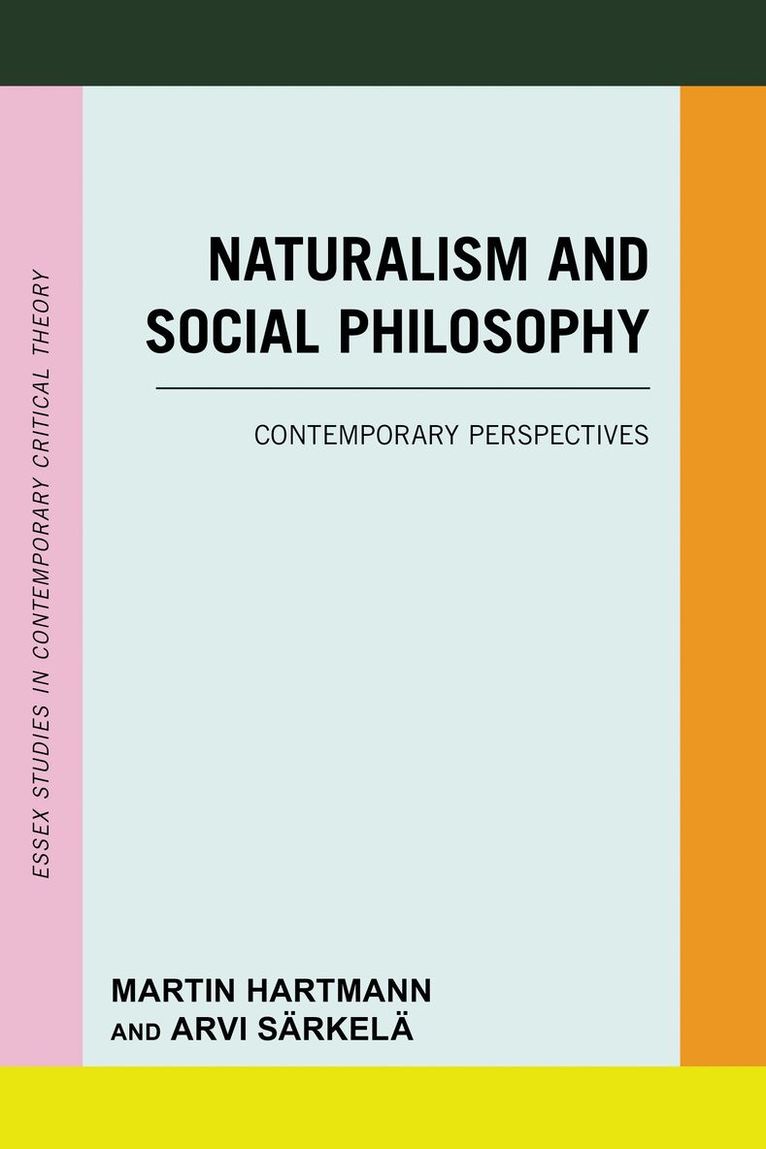
Can societies fall ill? Can institutions die, or social practices degenerate? Must social norms be embodied? To what extent is social action habitual? Is social life part of nature or does it transcend it? This book explores the meaning and many facets of naturalism in social philosophy. It investigates the consequences of concepts such as 'second nature' and 'forms of life' for social philosophy. It analyses the ways in which social action, gender, work and morality are embodied. It surveys the conceptions of nature at play in social criticism. It provides students and experts of social philosophy with both an overview and critical analyses of the many facets of naturalism in social philosophy from Hegel to contemporary critical theory.Contributors: Louis Carré, Fabian Freyenhagen, Martin Hartmann, Axel Honneth, Thomas Khurana, Steven Levine, Sabina Lovibond, Arvi Särkelä, Barbara Stiegler, Mariana Teixeira, Italo Testa
408 kr
Skickas inom 10-15 vardagar
Can societies fall ill? Can institutions die, or social practices degenerate? Must social norms be embodied? To what extent is social action habitual? Is social life part of nature or does it transcend it? This book explores the meaning and many facets of naturalism in social philosophy. It investigates the consequences of concepts such as 'second nature' and 'forms of life' for social philosophy. It analyses the ways in which social action, gender, work and morality are embodied. It surveys the conceptions of nature at play in social criticism. It provides students and experts of social philosophy with both an overview and critical analyses of the many facets of naturalism in social philosophy from Hegel to contemporary critical theory.Contributors: Louis Carré, Fabian Freyenhagen, Martin Hartmann, Axel Honneth, Thomas Khurana, Steven Levine, Sabina Lovibond, Arvi Särkelä, Barbara Stiegler, Mariana Teixeira, Italo Testa
Social Wrongs and Social Pathologies
From Structural Injustice to Metabolic Rift
Inbunden, Engelska, 2026
1 876 kr
Kommande
This book provides a thorough analysis of the notion of social wrong and the idea of social pathology. It addresses questions such as: What does it mean for something to be socially wrong? Why do social philosophers keep “diagnosing” wrongs as “social pathologies”? And is something a pathology because it is wrong, or is it rather a wrong because it is pathological? By constructing an analytical framework of social wrongs and developing the idea of wrongness-with, the book seeks to support critical social thought. While taking societal and structural injustices seriously as paradigm cases of social wrongs, it also offers a comprehensive elaboration of social pathologies as social wrongs. It provides a map of four conceptions of social pathology and contends that only one of them, organicism, must be completely rejected, while the other views may contribute to a critical understanding of social reality. It further elaborates a “natural-historical” view according to which social pathologies as well as their diagnosis and cure are part and parcel of social life. It tests the usefulness of this conception by examining diagnoses of contemporary capitalism in terms of metabolic rift, economic compulsion, and capitalist cannibalization. These diagnoses exemplify three types of pathologies of social life: pathologies of reproduction, pathologies of transformation, and pathologies of mediating the reproductive and transformative pressures of social life.