Arvind Rajagopal – författare
Visar alla böcker från författaren Arvind Rajagopal. Handla med fri frakt och snabb leverans.
11 produkter
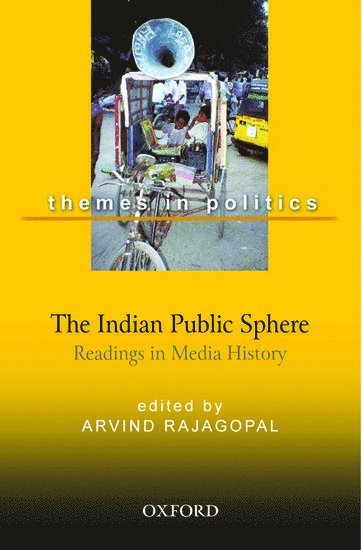
The Indian Public Sphere
Readings in Media History
Inbunden, 2009
463 kr
Lägg i varukorg
The reader is part of the prestigious Themes in Politics series, which presents essays on important issues in the study of political science and Indian politics. It examines the role of the media in India's history and development, bringing together a collection of essays on its interplay with …
Media and the Global Cold War
Av Rossen Djagalov, Arvind Rajagopal
Inbunden, 2027
1445 kr
Kommande
New perspectives on a cornerstone of soft power during the Cold War and beyond In the Cold War era, media became a central force in the shaping of political life, cultural exchange, and ideas of global order. A rivalry between political systems expanded into a worldwide struggle over who could …
Media and the Global Cold War
Av Rossen Djagalov, Arvind Rajagopal
Häftad, 2027
375 kr
Kommande
In the Cold War era, media became a central force in the shaping of political life, cultural exchange, and ideas of global order. A rivalry between political systems expanded into a worldwide struggle over who could shape information, control communication infrastructures, and define reality.Arvind …
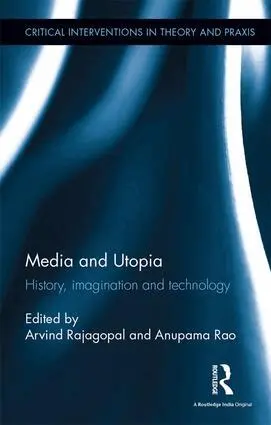
Media and Utopia
History, imagination and technology
Av Arvind Rajagopal, Anupama Rao
Häftad, 2019
713 kr
Lägg i varukorg
Collective political projects have become ephemeral and are subject to radical forms of erasure through cooptation, division, redefinition or intimidation in present times. Media and Utopia responds to the resulting crisis of the social by investigating the links between mediation and political …
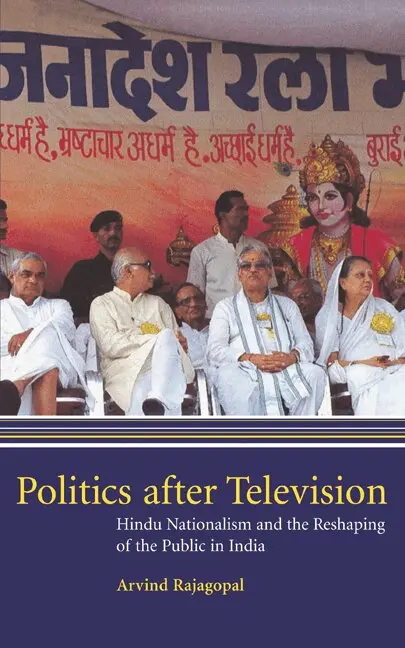
Politics after Television
Hindu Nationalism and the Reshaping of the Public in India
Inbunden, 2001
1807 kr
Lägg i varukorg
In January 1987, the Indian state-run television began broadcasting a Hindu epic in serial form, The Ramayana, to nationwide audiences, violating a decades-old taboo on religious partisanship. What resulted was the largest political campaign in post-independence times, around the symbol of Lord …
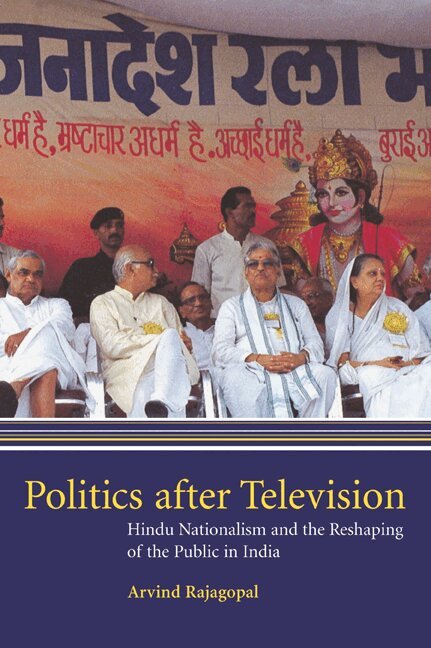
Politics after Television
Hindu Nationalism and the Reshaping of the Public in India
Häftad, 2001
796 kr
Lägg i varukorg
In January 1987, the Indian state-run television began broadcasting a Hindu epic in serial form, The Ramayana, to nationwide audiences, violating a decades-old taboo on religious partisanship. What resulted was the largest political campaign in post-independence times, around the symbol of Lord …
Mapping Hegemony
Television News and Industrial Conflict
Av Robert Goldman, Arvind Rajagopal
Inbunden, 1991
1100 kr
Lägg i varukorg
This volume brings critical theory to bear on a familiar feature of our daily lives- the evening news on television- in order to clarify what it means to talk about hegemony. This book's approach makes accesible to a wider audience another way of seeing an otherwise taken-for-granted dimension of …
Mapping Hegemony
Television News and Industrial Conflict
Av Robert Goldman, Arvind Rajagopal
Häftad, 1991
619 kr
Lägg i varukorg
This volume brings critical theory to bear on a familiar feature of our daily lives- the evening news on television- in order to clarify what it means to talk about hegemony. This book's approach makes accesible to a wider audience another way of seeing an otherwise taken-for-granted dimension of …
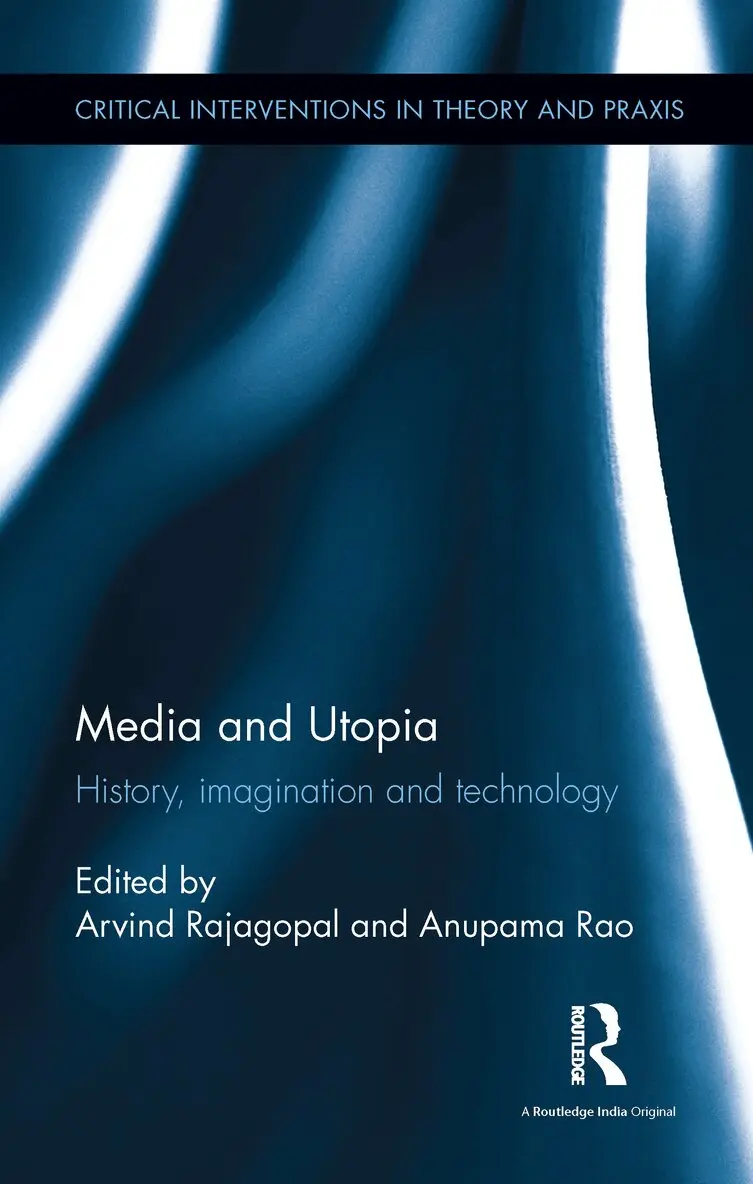
Media and Utopia
History, imagination and technology
Av Arvind Rajagopal, Anupama Rao
Inbunden, 2016
2515 kr
Lägg i varukorg
Collective political projects have become ephemeral and are subject to radical forms of erasure through cooptation, division, redefinition or intimidation in present times. Media and Utopia responds to the resulting crisis of the social by investigating the links between mediation and political …
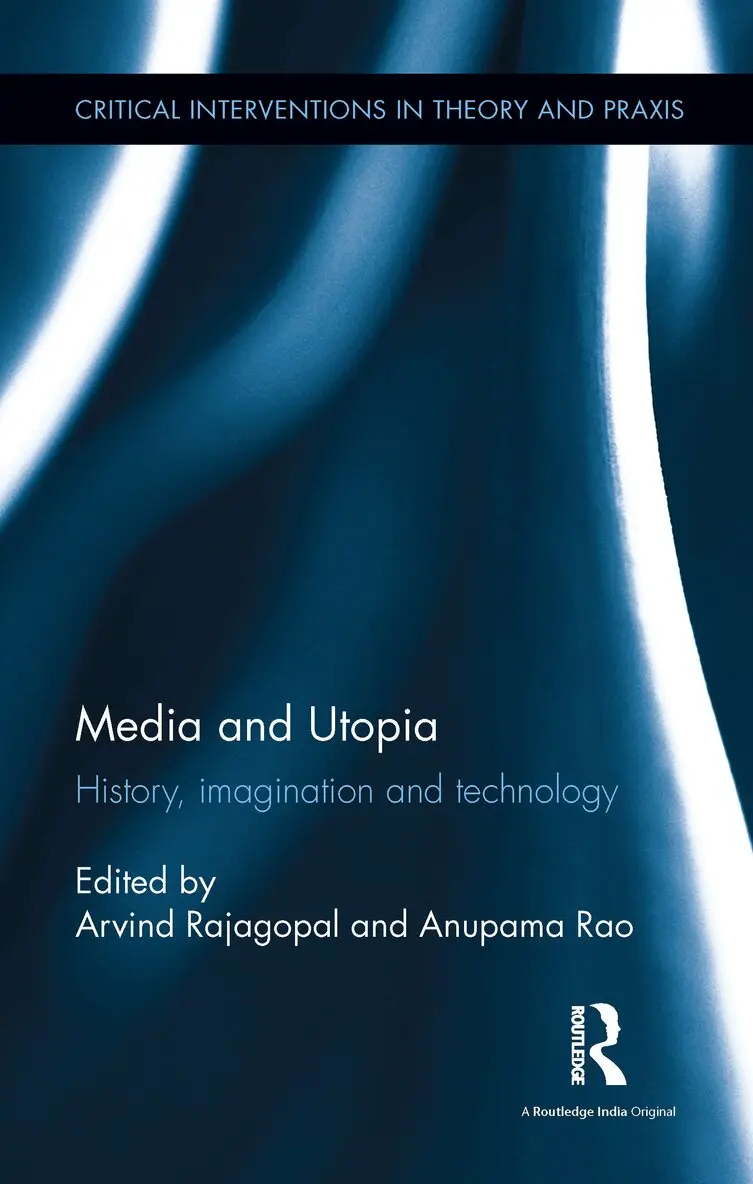
Media and Utopia
History, imagination and technology
Av Arvind Rajagopal, Anupama Rao
E-bok, 2017
838 kr
Lägg i varukorg
Collective political projects have become ephemeral and are subject to radical forms of erasure through cooptation, division, redefinition or intimidation in present times. Media and Utopia responds to the resulting crisis of the social by investigating the links between mediation and political …
Media and Utopia
History, imagination and technology
Av Arvind Rajagopal, Anupama Rao
E-bok, 2017
838 kr
Lägg i varukorg
Collective political projects have become ephemeral and are subject to radical forms of erasure through cooptation, division, redefinition or intimidation in present times. Media and Utopia responds to the resulting crisis of the social by investigating the links between mediation and political …