Ashwin Desai - Böcker
Visar alla böcker från författaren Ashwin Desai. Handla med fri frakt och snabb leverans.
11 produkter
11 produkter
956 kr
Skickas
A History of the Present is the first book-length overview of Indian South Africans in the quarter century following the end of apartheid. Based on oral interviews and archival research it threads a narrative of the lives of Indian South Africans that ranges from the working class men and women to the heady heights of the newly minted billionaires; the changes wrought in the fields of religion and gender; opportunities offered on the sporting fields; the search for roots producing local histories that tell of nostalgia, longing and identity; and the links with India and a myriad of transnational organisations. Indians in South Africa appear to be always caught in an infernal contradiction; too traditional, too insular, never fitting in, while also too modern, too mobile. Can we speak of an Indian 'diaspora' in relation to a people divided by migratory experiences, region, religion, language, ethnicity, caste, and economic status? While focusing on Indian South Africans, this study makes critical interventions into several charged political discussions in post-apartheid South Africa, especially the debate over race and identity, while also engaging in discussions of wider intellectual interest, including diaspora, nation, citizenship and race.
1 180 kr
Skickas inom 7-10 vardagar
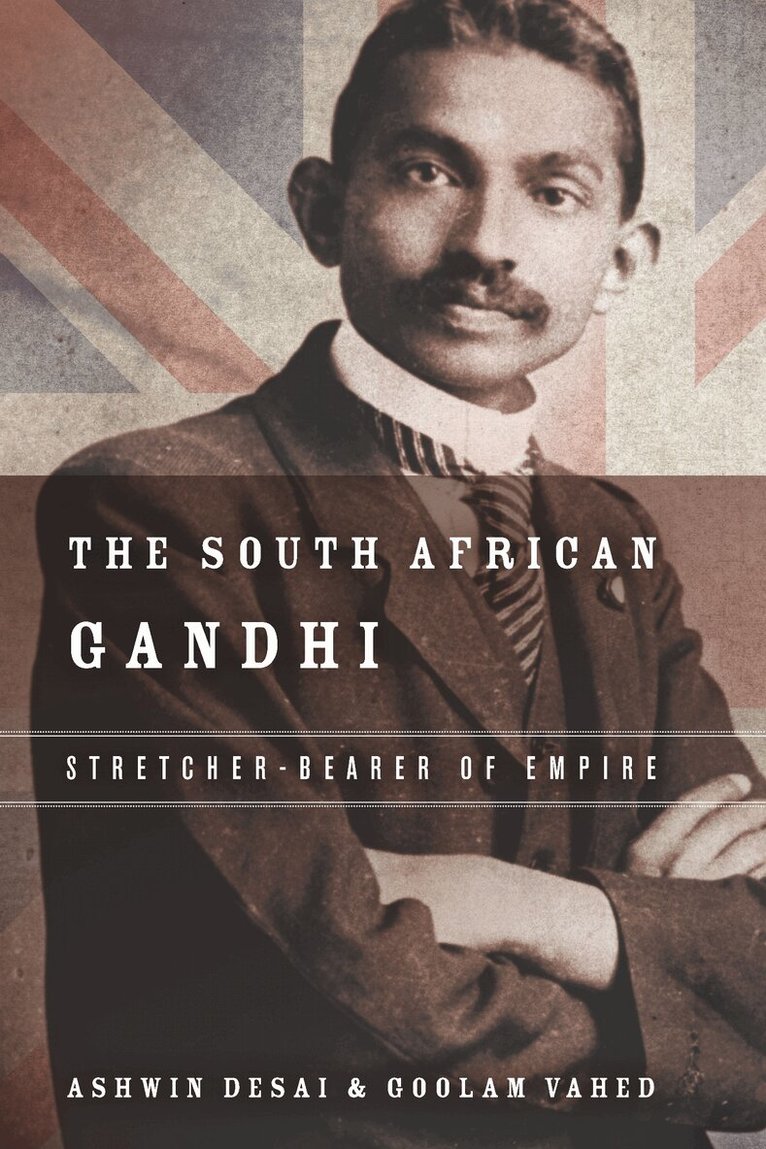
In the pantheon of freedom fighters, Mohandas Karamchand Gandhi has pride of place. His fame and influence extend far beyond India and are nowhere more significant than in South Africa. "India gave us a Mohandas, we gave them a Mahatma," goes a popular South African refrain. Contemporary South African leaders, including Mandela, have consistently lauded him as being part of the epic battle to defeat the racist white regime.The South African Gandhi focuses on Gandhi's first leadership experiences and the complicated man they reveal—a man who actually supported the British Empire. Ashwin Desai and Goolam Vahed unveil a man who, throughout his stay on African soil, stayed true to Empire while showing a disdain for Africans. For Gandhi, whites and Indians were bonded by an Aryan bloodline that had no place for the African. Gandhi's racism was matched by his class prejudice towards the Indian indentured. He persistently claimed that they were ignorant and needed his leadership, and he wrote their resistances and compromises in surviving a brutal labor regime out of history. The South African Gandhi writes the indentured and working class back into history. The authors show that Gandhi never missed an opportunity to show his loyalty to Empire, with a particular penchant for war as a means to do so. He served as an Empire stretcher-bearer in the Boer War while the British occupied South Africa, he demanded guns in the aftermath of the Bhambatha Rebellion, and he toured the villages of India during the First World War as recruiter for the Imperial army. This meticulously researched book punctures the dominant narrative of Gandhi and uncovers an ambiguous figure whose time on African soil was marked by a desire to seek the integration of Indians, minus many basic rights, into the white body politic while simultaneously excluding Africans from his moral compass and political ideals.
290 kr
In the pantheon of freedom fighters, Mohandas Karamchand Gandhi has pride of place. His fame and influence extend far beyond India and are nowhere more significant than in South Africa. "India gave us a Mohandas, we gave them a Mahatma," goes a popular South African refrain. Contemporary South African leaders, including Mandela, have consistently lauded him as being part of the epic battle to defeat the racist white regime.The South African Gandhi focuses on Gandhi's first leadership experiences and the complicated man they reveal—a man who actually supported the British Empire. Ashwin Desai and Goolam Vahed unveil a man who, throughout his stay on African soil, stayed true to Empire while showing a disdain for Africans. For Gandhi, whites and Indians were bonded by an Aryan bloodline that had no place for the African. Gandhi's racism was matched by his class prejudice towards the Indian indentured. He persistently claimed that they were ignorant and needed his leadership, and he wrote their resistances and compromises in surviving a brutal labor regime out of history. The South African Gandhi writes the indentured and working class back into history. The authors show that Gandhi never missed an opportunity to show his loyalty to Empire, with a particular penchant for war as a means to do so. He served as an Empire stretcher-bearer in the Boer War while the British occupied South Africa, he demanded guns in the aftermath of the Bhambatha Rebellion, and he toured the villages of India during the First World War as recruiter for the Imperial army. This meticulously researched book punctures the dominant narrative of Gandhi and uncovers an ambiguous figure whose time on African soil was marked by a desire to seek the integration of Indians, minus many basic rights, into the white body politic while simultaneously excluding Africans from his moral compass and political ideals.
293 kr
Skickas inom 5-8 vardagar
When Nelson Mandela was elected president of South Africa in 1994, freedom-loving people around the world hailed a victory over racial domination. The end of apartheid did not change the basic conditions of the oppressed majority, however. Material inequality has deepened and new forms of solidarity and resistance have emerged in communities that have forged new and dynamic political identities. We Are the Poors follows the growth of the most unexpected of these community movements, beginning in one township of Durban, linking up with community and labor struggles in other parts of the country, and coming together in massive anti-government protests at the time of the UN World Conference Against Racism in 2001. We Are the Poors follows the growth of the most unexpected of these community movements, beginning in one township of Durban, linking up with community and labor struggles in other parts of the country, and coming together in massive anti-government protests at the time of the UN World Conference Against Racism in 2001.It describes from the inside how the downtrodden regain their dignity and create hope for a better future in the face of a neoliberal onslaught, and shows the human faces of the struggle against the corporate model of globalization in a Third World country.
359 kr
Skickas inom 7-10 vardagar
202 kr
Skickas inom 5-8 vardagar
'Somehow, Shakespeare always seems to have something to say to us.' -Nelson Mandela. The prison authorities on the apartheid South African Robben Island were obsessed with censoring the news prisoners could receive of the outside world. Through the memories and biographical accounts written by former political inmates like Nelson Mandela, the book evocatively brings to life the power of the the written word, as well as the voices of these brilliant and courageous prisoners.
309 kr
Skickas inom 7-10 vardagar
Positions the history and inner workings of the Natal Indian Congress (NIC) against the canvas of the major political developments in South Africa during the 1970s and 1980s up to the first democratic elections in 1994Following a hiatus in the 1960s, the Natal Indian Congress (NIC) in South Africa was revived in 1971. In fascinating detail, Ashwin Desai and Goolam Vahed bring the inner workings of the NIC to life against the canvas of major political developments in South Africa during the 1970s and 1980s, and up to the first democratic elections in 1994.The NIC was relaunched during the rise of the Black Consciousness Movement, which attracted a following among Indian university students, and whose invocation of Indians as Black led to a major debate about ethnic organisations such as the NIC. This debate persisted in the 1980s with the rise of the United Democratic Front and its commitment to non-racialism. The NIC was central to other major debates of the period, most significantly the lines drawn between boycotting and participating in government-created structures such as the Tri-Cameral Parliament. Despite threats of banning and incarceration, the NIC kept attracting recruits who encouraged the development of community organisations, such as students radicalised by the 1980s education boycotts and civic protests. Colour, Class and Community, The Natal Indian Congress, 1971—1994 details how some members of the NIC played dual roles, as members of a legal organisation and as allies of the African National Congress' underground armed struggle.Drawing on varied sources, including oral interviews, newspaper reports, and minutes of organisational meetings, this in-depth study tells a largely untold history, challenging existing narratives around Indian 'cabalism', and bringing the African and Indian political story into present debates about race, class and nation.
1 161 kr
Skickas inom 5-8 vardagar
Positions the history and inner workings of the Natal Indian Congress (NIC) against the canvas of the major political developments in South Africa during the 1970s and 1980s up to the first democratic elections in 1994Following a hiatus in the 1960s, the Natal Indian Congress (NIC) in South Africa was revived in 1971. In fascinating detail, Ashwin Desai and Goolam Vahed bring the inner workings of the NIC to life against the canvas of major political developments in South Africa during the 1970s and 1980s, and up to the first democratic elections in 1994.The NIC was relaunched during the rise of the Black Consciousness Movement, which attracted a following among Indian university students, and whose invocation of Indians as Black led to a major debate about ethnic organisations such as the NIC. This debate persisted in the 1980s with the rise of the United Democratic Front and its commitment to non-racialism. The NIC was central to other major debates of the period, most significantly the lines drawn between boycotting and participating in government-created structures such as the Tri-Cameral Parliament. Despite threats of banning and incarceration, the NIC kept attracting recruits who encouraged the development of community organisations, such as students radicalised by the 1980s education boycotts and civic protests. Colour, Class and Community, The Natal Indian Congress, 1971—1994 details how some members of the NIC played dual roles, as members of a legal organisation and as allies of the African National Congress' underground armed struggle.Drawing on varied sources, including oral interviews, newspaper reports, and minutes of organisational meetings, this in-depth study tells a largely untold history, challenging existing narratives around Indian 'cabalism', and bringing the African and Indian political story into present debates about race, class and nation.
566 kr
Skickas inom 11-20 vardagar
In 1960, apartheid’s planners created the ‘Indian’ township of Chatsworth, evicting people from established neighbourhoods around Durban and forcibly settling them into the grid of a modern racial ghetto. Making home within this architecture of exclusion, along streets without names, tens of thousands of new residents began building new lives and new communities, developing an urban space with a unique cultural vibrancy born of creativity and economic struggle.With the dismantling of Group Areas legislation from 1990 and within South Africa’s continually changing political landscape, Chatsworth has witnessed innovations of livelihood, shifting boundaries of identity and protracted social challenges. This book brings together an exhilarating mix of voices that collectively tell the story of Chatsworth’s origins, transformations and ongoing rhythms of daily life. Its narrative richness is further enhanced with classic photographs, some dating back to the period of early settlement, as well as a contemporary photo essay by distinguished photographer, Jenny Gordon.
291 kr
Skickas inom 7-10 vardagar
In the early 1960s, the city of Durban consolidated racially circumscribed group areas with brutal intensity. In the tiny enclave of Wentworth, designated a Coloured area, newly relocated residents made their homes and sought work in the numerous heavy industries that proliferated on its edges. As people built places of worship and newborn friendships reached across fences and staircases, soccer became the game of choice. Rudimentary pitches were marked out, cool drinks staked and the game unfolded with a mixture of delicate touches and bruising tackles. By the early 1970s, Wentworth’s ability to spawn soccer talent, headlined by the glamorous Leeds United, grew into the stuff of legend. Ashwin Desai digs deep into this history, bringing to life those who inspired and played the game when Wentworth was nothing more than a jumble of shacks and whitewashed blocks of flats, watched over by plumes of smoke from local factories that blackened the sky and slowly poisoned the body. The book’s power comes from its ability to keep its focus on soccer while situating the game in the broader social relations, as geography and history, spatial and temporal meld into a beguiling narrative. Page after page reveals writing of haunting power and sensitivity as memories are cajoled from ageing soccer legends and the interior lives of families are illuminated. It is an evocative exemplar of how community history should be brought to life.
198 kr
Tillfälligt slut
In this searing and revealing account of cricket in post-apartheid South Africa, Ashwin Desai deftly tells a story of promise and despair, the story of a new pitch; a quick start full of hope, followed by a steady erosion of the commitments needed to fulfil the promise of a level-playing field. Economic and political compromises contributed to holding back the pulling aside of the covers of race and class privilege. Alongside this, the hurried hollowing out of the ‘politics of cricket’, aided by black administrators assuming the accoutrements of office, saw very little internal challenge to the lack of transformation. In a book where the love of cricket shines through, Ashwin Desai makes a significant contribution to our understanding of the farce that was post-apartheid cricket administration and the characters that played such a role in the charade.