Goolam Vahed - Böcker
Visar alla böcker från författaren Goolam Vahed. Handla med fri frakt och snabb leverans.
11 produkter
11 produkter
956 kr
Skickas
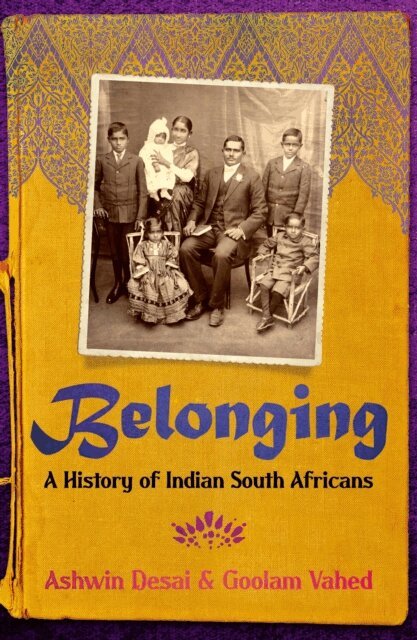
A History of the Present is the first book-length overview of Indian South Africans in the quarter century following the end of apartheid. Based on oral interviews and archival research it threads a narrative of the lives of Indian South Africans that ranges from the working class men and women to the heady heights of the newly minted billionaires; the changes wrought in the fields of religion and gender; opportunities offered on the sporting fields; the search for roots producing local histories that tell of nostalgia, longing and identity; and the links with India and a myriad of transnational organisations. Indians in South Africa appear to be always caught in an infernal contradiction; too traditional, too insular, never fitting in, while also too modern, too mobile. Can we speak of an Indian 'diaspora' in relation to a people divided by migratory experiences, region, religion, language, ethnicity, caste, and economic status? While focusing on Indian South Africans, this study makes critical interventions into several charged political discussions in post-apartheid South Africa, especially the debate over race and identity, while also engaging in discussions of wider intellectual interest, including diaspora, nation, citizenship and race.
Indentured Muslims in the Diaspora
Identity and Belonging of Minority Groups in Plural Societies
Häftad, Engelska, 2024
579 kr
Skickas inom 10-15 vardagar
This is the fourth publication originating from the conference Legacy of Slavery and Indentured Labour: Past, Present and Future, which was organised in June 2013 by the Institute of Graduate Studies and Research (IGSR), Anton de Kom University of Suriname. The core of the book is based on a conference panel which focused specifically on the experience of Muslim with indentured migrants and their descendants. This is a significant contribution since the focus of most studies on Indian indenture has been almost exclusively on Hindu religion and culture, even though an estimated seventeen percent of migrants were Muslims. This book thus fills an important gap in the indentured historiography, both to understand that past as well as to make sense of the present, when Muslim identities are undergoing rapid changes in response to both local and global realities. The book includes a chapter on the experiences of Muslim indentured immigrants of Indonesian descent who settled in Suriname.The core questions in the study are as follows: What role did Islam play in the lives of (Indian) Muslim migrants in their new settings during indenture and in the post-indenture period? How did Islam help migrants adapt and acculturate to their new environment? What have been the similarities and differences in practices, traditions and beliefs between Muslim communities in the different countries and between them and the country of origin? How have Islamic practices and Muslim identities transformed over time? What role does Islam play in the Muslims’ lives in these countries in the contemporary period? In order to respond to these questions, this book examines the historic place of Islam in migrants’ place of origin and provides a series of case studies that focus on the various countries to which the indentured Indians migrated, such as Mauritius, South Africa, Guyana, Trinidad, Suriname and Fiji, to understand the institutionalisation of Islam in these settings and the actual lived experience of Muslims which is culturally and historically specific, bound by the circumstances of individuals’ location in time and space. The chapters in this volume also provide a snapshot of the diversity and similarity of lived Muslim experiences.
Indentured Muslims in the Diaspora
Identity and Belonging of Minority Groups in Plural Societies
Inbunden, Engelska, 2016
2 219 kr
Skickas inom 10-15 vardagar
This is the fourth publication originating from the conference Legacy of Slavery and Indentured Labour: Past, Present and Future, which was organised in June 2013 by the Institute of Graduate Studies and Research (IGSR), Anton de Kom University of Suriname. The core of the book is based on a conference panel which focused specifically on the experience of Muslim with indentured migrants and their descendants. This is a significant contribution since the focus of most studies on Indian indenture has been almost exclusively on Hindu religion and culture, even though an estimated seventeen percent of migrants were Muslims. This book thus fills an important gap in the indentured historiography, both to understand that past as well as to make sense of the present, when Muslim identities are undergoing rapid changes in response to both local and global realities. The book includes a chapter on the experiences of Muslim indentured immigrants of Indonesian descent who settled in Suriname.The core questions in the study are as follows: What role did Islam play in the lives of (Indian) Muslim migrants in their new settings during indenture and in the post-indenture period? How did Islam help migrants adapt and acculturate to their new environment? What have been the similarities and differences in practices, traditions and beliefs between Muslim communities in the different countries and between them and the country of origin? How have Islamic practices and Muslim identities transformed over time? What role does Islam play in the Muslims’ lives in these countries in the contemporary period? In order to respond to these questions, this book examines the historic place of Islam in migrants’ place of origin and provides a series of case studies that focus on the various countries to which the indentured Indians migrated, such as Mauritius, South Africa, Guyana, Trinidad, Suriname and Fiji, to understand the institutionalisation of Islam in these settings and the actual lived experience of Muslims which is culturally and historically specific, bound by the circumstances of individuals’ location in time and space. The chapters in this volume also provide a snapshot of the diversity and similarity of lived Muslim experiences.
309 kr
Skickas inom 7-10 vardagar
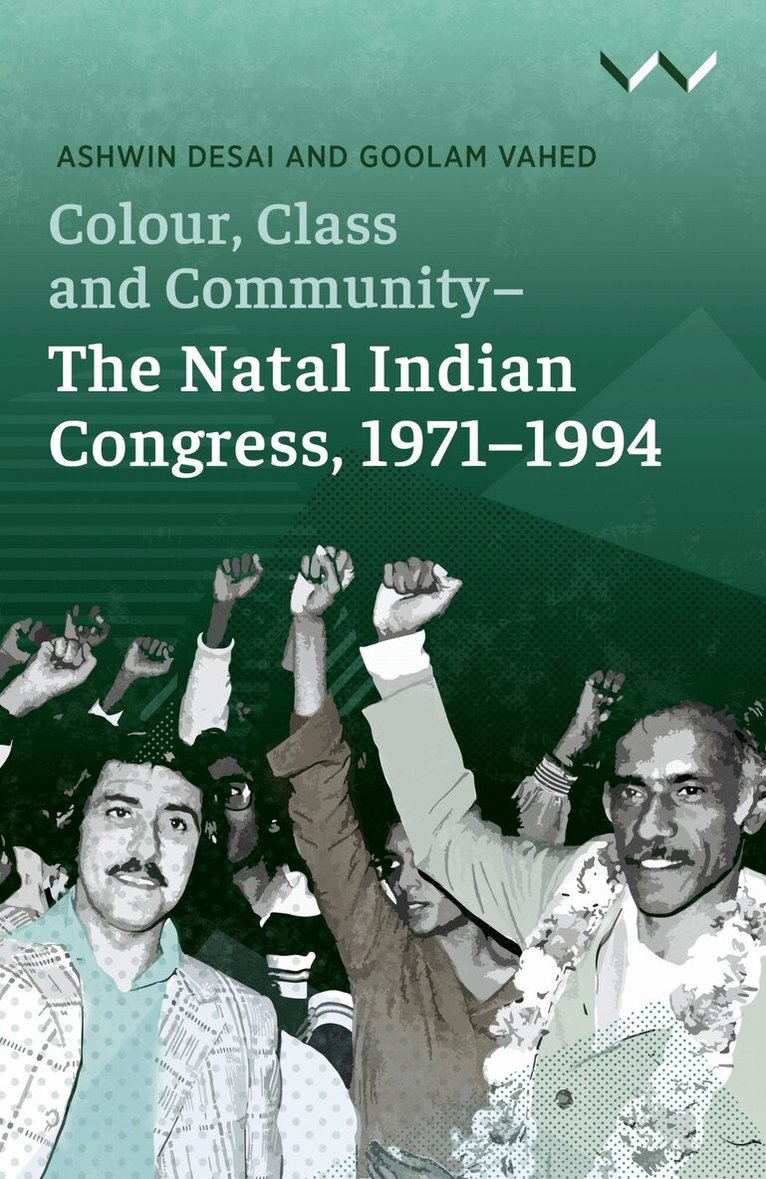
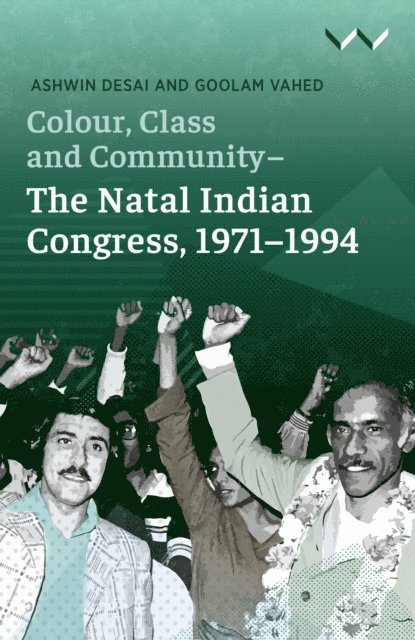
Positions the history and inner workings of the Natal Indian Congress (NIC) against the canvas of the major political developments in South Africa during the 1970s and 1980s up to the first democratic elections in 1994Following a hiatus in the 1960s, the Natal Indian Congress (NIC) in South Africa was revived in 1971. In fascinating detail, Ashwin Desai and Goolam Vahed bring the inner workings of the NIC to life against the canvas of major political developments in South Africa during the 1970s and 1980s, and up to the first democratic elections in 1994.The NIC was relaunched during the rise of the Black Consciousness Movement, which attracted a following among Indian university students, and whose invocation of Indians as Black led to a major debate about ethnic organisations such as the NIC. This debate persisted in the 1980s with the rise of the United Democratic Front and its commitment to non-racialism. The NIC was central to other major debates of the period, most significantly the lines drawn between boycotting and participating in government-created structures such as the Tri-Cameral Parliament. Despite threats of banning and incarceration, the NIC kept attracting recruits who encouraged the development of community organisations, such as students radicalised by the 1980s education boycotts and civic protests. Colour, Class and Community, The Natal Indian Congress, 1971—1994 details how some members of the NIC played dual roles, as members of a legal organisation and as allies of the African National Congress' underground armed struggle.Drawing on varied sources, including oral interviews, newspaper reports, and minutes of organisational meetings, this in-depth study tells a largely untold history, challenging existing narratives around Indian 'cabalism', and bringing the African and Indian political story into present debates about race, class and nation.
1 161 kr
Skickas inom 5-8 vardagar
Positions the history and inner workings of the Natal Indian Congress (NIC) against the canvas of the major political developments in South Africa during the 1970s and 1980s up to the first democratic elections in 1994Following a hiatus in the 1960s, the Natal Indian Congress (NIC) in South Africa was revived in 1971. In fascinating detail, Ashwin Desai and Goolam Vahed bring the inner workings of the NIC to life against the canvas of major political developments in South Africa during the 1970s and 1980s, and up to the first democratic elections in 1994.The NIC was relaunched during the rise of the Black Consciousness Movement, which attracted a following among Indian university students, and whose invocation of Indians as Black led to a major debate about ethnic organisations such as the NIC. This debate persisted in the 1980s with the rise of the United Democratic Front and its commitment to non-racialism. The NIC was central to other major debates of the period, most significantly the lines drawn between boycotting and participating in government-created structures such as the Tri-Cameral Parliament. Despite threats of banning and incarceration, the NIC kept attracting recruits who encouraged the development of community organisations, such as students radicalised by the 1980s education boycotts and civic protests. Colour, Class and Community, The Natal Indian Congress, 1971—1994 details how some members of the NIC played dual roles, as members of a legal organisation and as allies of the African National Congress' underground armed struggle.Drawing on varied sources, including oral interviews, newspaper reports, and minutes of organisational meetings, this in-depth study tells a largely untold history, challenging existing narratives around Indian 'cabalism', and bringing the African and Indian political story into present debates about race, class and nation.
1 403 kr
Skickas inom 7-10 vardagar
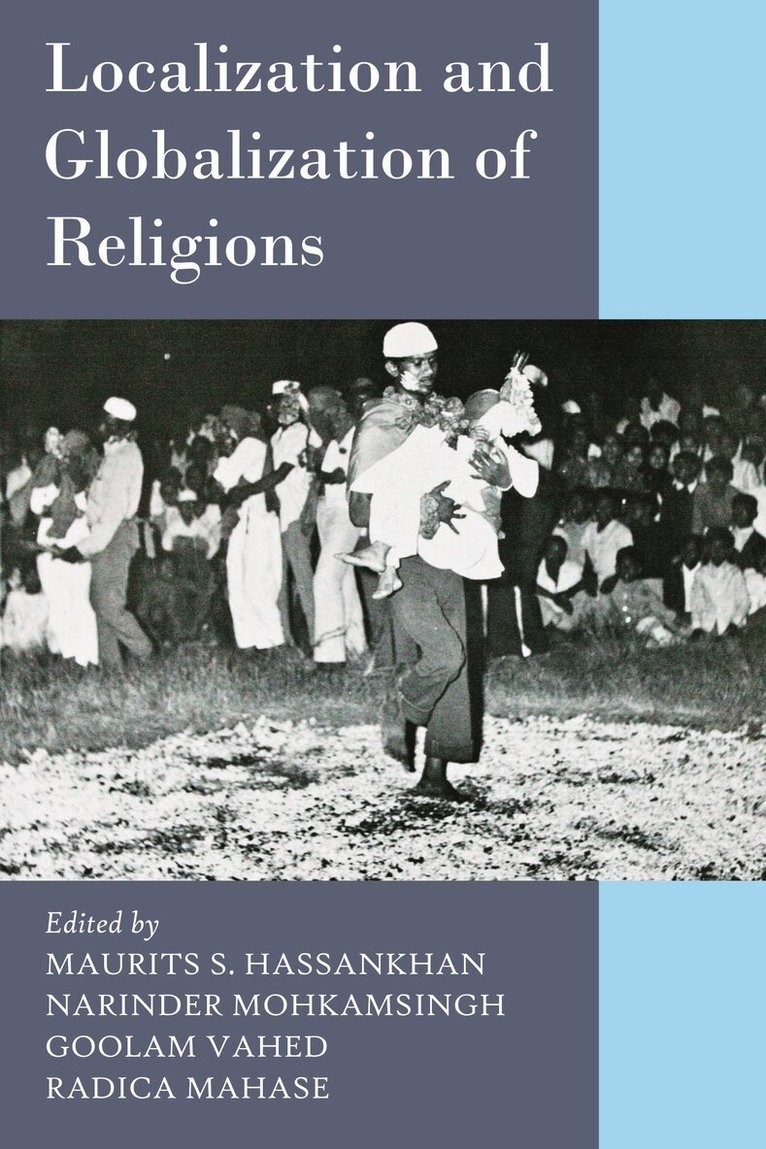
Explores the adaptation of Hinduism and Islam in diasporic settings and inter-religious relations in the Girmit diaspora. Archival research, micro-biographies, and ethnographic studies shine light on the development of Hindu and Muslim communities around the world, and the relationships between them, to deliver new insights into the history of indentured labour and its impact on the formation of religious heritage and identity. Twelve chapters cover regions including the Southern Pacific, Indian Ocean, and the Caribbean.Part I examines Hinduism in Mauritius, South Africa, Fiji and the Caribbean, while Part II considers the Muslim diaspora. Importantly, Part III looks at the relationships between these two religious groups within the Girmit diaspora, including interreligious cooperation and the experiences of religiously mixed families.Includes perspective from historians, sociologists, anthropologists, linguists and others. Features contributors based in Australia, France, Fiji, Mauritius, the Netherlands, New Zealand, South Africa, Suriname, Trinidad & Tobago and the USA.
566 kr
Skickas inom 11-20 vardagar
In 1960, apartheid’s planners created the ‘Indian’ township of Chatsworth, evicting people from established neighbourhoods around Durban and forcibly settling them into the grid of a modern racial ghetto. Making home within this architecture of exclusion, along streets without names, tens of thousands of new residents began building new lives and new communities, developing an urban space with a unique cultural vibrancy born of creativity and economic struggle.With the dismantling of Group Areas legislation from 1990 and within South Africa’s continually changing political landscape, Chatsworth has witnessed innovations of livelihood, shifting boundaries of identity and protracted social challenges. This book brings together an exhilarating mix of voices that collectively tell the story of Chatsworth’s origins, transformations and ongoing rhythms of daily life. Its narrative richness is further enhanced with classic photographs, some dating back to the period of early settlement, as well as a contemporary photo essay by distinguished photographer, Jenny Gordon.
Schooling Muslims in Natal
Identity, State and the Orient Islamic Educational Institute
Häftad, Engelska, 2015
409 kr
Skickas inom 11-20 vardagar
The history of Muslim education in the east coast region of South Africa is the story of ongoing struggles by an immigrant religious minority under successive, exclusionary forms of state. Schooling Muslims in Natal traces the labours and fortunes of a set of progressive idealists who, mobilising merchant capital, transoceanic networks and informal political influence, established the Orient Islamic Educational Institute in 1943 to found schools and promote a secular curriculum that could be integrated with Islamic teaching. Through the story of their Durban flagship project – the Orient Islamic School – the book provides a fascinating account of the changing politics of religious identity, education and citizenship in South Africa.Across a century of changing political expectations, as the region transformed from colony to nation-state to multi-racial democracy, concerns for social mobility, civic inclusion and the survival of Islamic identity on the periphery of the Indian Ocean world were invested in the education of the young.From the late nineteenth century, Gujarati Muslim merchants settling in Natal built mosques and madressas; their progeny carried on the strong traditions of community patronage and civic leadership. Aligned to Gandhi’s Congress initiatives for Indian civic recognition, they worked across differences of political strategy, economic class, ethnicity and religious identity to champion modern education for a continually ghettoised diaspora. In common was the threat of a state that, long before the legal formation of apartheid, managed diversity in deference to white racial hysteria over ‘Indian penetration’ and an ‘Asiatic menace’.This is the story of confrontation, co-operation and compromise by an officially marginalised but still powerful set of ‘founding fathers’, and their centrality in histories of education, urban space and Muslim identity in this region of Africa.
368 kr
Skickas inom 11-20 vardagar
Chota Motala, medical doctor, family man, and political activist, lived out over eight decades of his life in communities that preceded, and ultimately succeeded, the hegemony of formal apartheid in South Africa. For most of this time, Pietermaritzburg, the capital of KwaZulu-Natal, was home to Motala, who helped to shape the politics of the Midlands and whose legacy is vibrantly woven into the city. Pietermaritzburg spawned strong alliances between trade unions, political organisations and communities that cut across race, class and religious lines. This book examines Motala’s intellectual project and activism from his childhood years through to his role as an ambassador in the new South Africa, and throws light on poorly documented episodes in Pietermaritzburg’s history.
University of Durban-Westville, 1961–2003
Undoing Apartheid, Building a Non-Racial Culture
Häftad, Engelska, 2025
415 kr
Kommande
This is a critical study of the origins and development of the University of Durban-Westville over four decades, with a particular emphasis on the humanities and social sciences disciplines. The history of UDW is located within the context of the unfolding of apartheid ideology and resistance to it. This book analyses UDW’s origins as the University College for Indians at Salisbury Island in 1961. Against this background, it chronicles the emergence of UDW and its development until 1976. With the dawn of democracy, the deracialising drive increased in pace and posed new challenges. Complementing historical analysis are reflections on institutional transformation and the merger with the University of Natal that ended UDW’s existence and created the University of KwaZulu-Natal in 2003. The dearth of analysis of academic disciplines at historically black universities makes this book an important addition to the scholarly literature.
752 kr
Skickas inom 7-10 vardagar
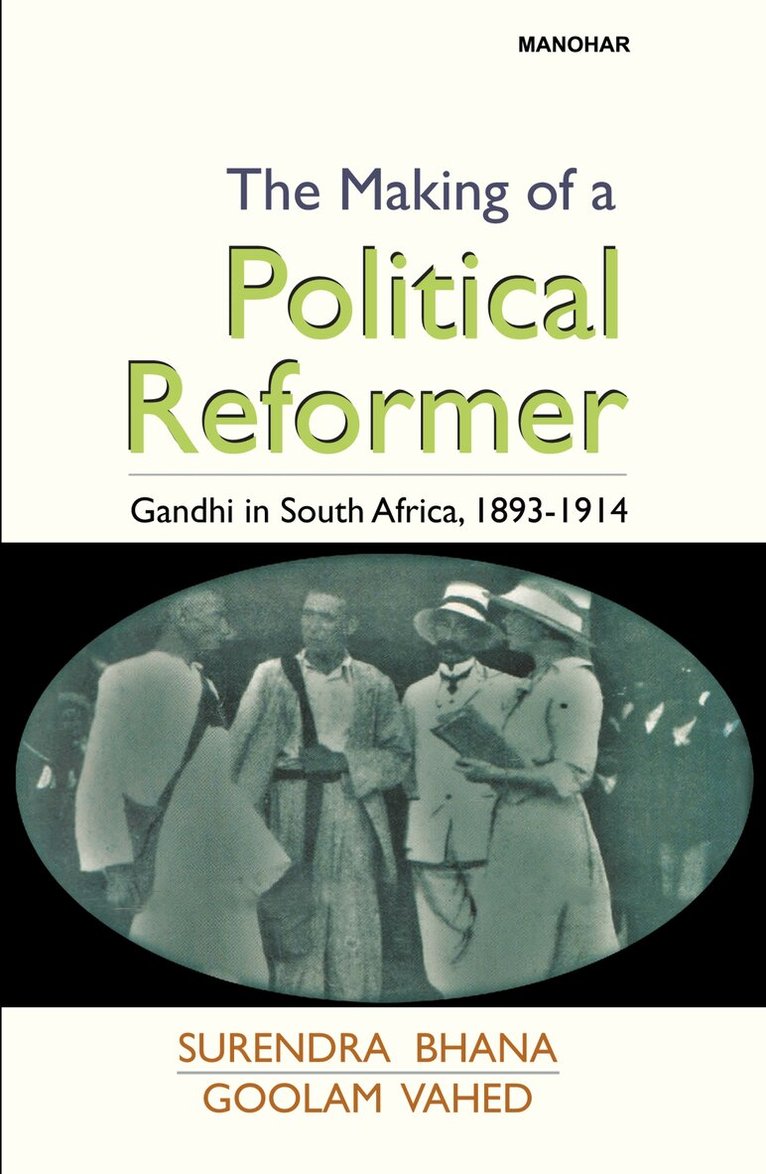
The religious and cultural orientation of South African Indians was influenced Mohandas K. Gandhi, and this study is the first to explore its relevance to his moral, philosophical, and political growth. Gandhi and his compatriots developed 'Indianness' in transnational politics, and used it as a lever to win imperial protection against discriminating practices in colonial South Africa. This linked South Africa to the British Raj in India.In working closely with his compatriots, Gandhi operated within the cultural and religious parameters set by them, and creatively redefined them. In India, he would expand on the ideas and strategies he developed back in South Africa.While useful in an imperial setting, 'Indianness' became embedded in the system of White rule at the turn of the twentieth century. Moreover, the emerging political economy in Natal produced sharp competition and conflict, as Africans, Indians, and Whites came into contact in agriculture, industry, commerce, and other services. Racial antipathies simultaneously grew. As subordinate groups, Indians and Africans both developed stereotypes of each other as a way of identifying themselves more sharply to stress differences. While Gandhi was sensitive to the legitimate political aspirations of Africans, he did not feel the need to spell out how Indians should relate to them because India was at the centre of his thinking. Gandhi's legacy inspired succeeding generations of South African activists. It connects him to Nelson Mandela, who led South Africa to freedom and democracy in the last decade of the twentieth century, yet some have questioned his legacy. This study offers perspectives that more accurately situate Gandhi's role in South Africa's history.