Athanasios Orphanides – författare
Visar alla böcker från författaren Athanasios Orphanides. Handla med fri frakt och snabb leverans.
8 produkter
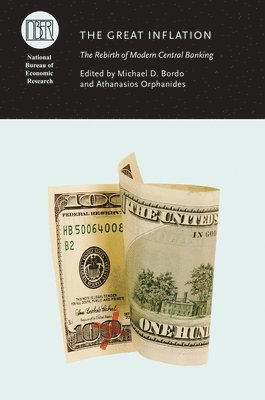
Great Inflation
The Rebirth of Modern Central Banking
Av Michael D. Bordo, Athanasios Orphanides
Inbunden, 2013
1225 kr
Lägg i varukorg
Controlling inflation is among the most important objectives of economic policy. By maintaining price stability, policy makers are able to reduce uncertainty, improve price-monitoring mechanisms, and facilitate more efficient planning and allocation of resources. This volume focuses on …
Finance and Economics Discussion Series
Inflation Targeting Under Imperfect Knowledge
Av Athanasios Orphanides, John C Williams
Häftad, 2013
286 kr
Lägg i varukorg
Finance and Economics Discussion Series
Monetary Policy in Deflation: The Liquidity Trap in History and Practice
Häftad, 2013
274 kr
Lägg i varukorg
Finance and Economics Discussion Series
Imperfect Knowledge, Inflation Expectations, and Monetary Policy
Av Athanasios Orphanides, John C Williams
Häftad, 2013
274 kr
Lägg i varukorg
Finance and Economics Discussion Series
The Opportunistic Approach to Disinflation
Av Athanasios Orphanides, David W Wilcox
Häftad, 2013
274 kr
Lägg i varukorg
Finance and Economics Discussion Series
Compensation Incentives and Risk Taking Behavior: Evidence from Mutual Funds
Häftad, 2013
221 kr
Lägg i varukorg
CYPRUS BAIL-IN, THE: POLICY LESSONS FROM THE CYPRUS ECONOMIC CRISIS
Av Michaelides Alexander, Alexander Michaelides m. fl.
Inbunden, 2016
1881 kr
Lägg i varukorg
On June 28th 2012, the small island of Cyprus became the fifth government to request an economic bail-out from the Eurozone after losing access to international capital markets. Less than a year later, a €10 billion second rescue deal was agreed upon — an unprecedented agreement that bailed in …