Aurora Plomer - Böcker
Visar alla böcker från författaren Aurora Plomer. Handla med fri frakt och snabb leverans.
4 produkter
4 produkter
2 999 kr
Skickas inom 7-10 vardagar
Stem cell research, and particularly embryonic stem cell research, whilst offering the prospect of developing theories for serious life-threatening diseases, also raises a number of difficult and controversial moral questions. This is reflected in a variety of moral perspectives and regulatory regimes, already adopted or in the process of being developed, in EU Member States. In particular the "moral exclusion" clause in Article 6 of the EC Directive on the legal protection of biotechnological inventions has created much uncertainty in this field.This collection of original essays provides comprehensive analysis of the EU patent system as applied to biotechnological inventions and particularly stem cell research, dealing with the overlapping EPC, EU, international and national law regimes bearing on the exclusion of patents in a morally fragmented and contested field. In this multidisciplinary study, the editors aim to clarify the legal scope of Article 6, which they deem essential for the fostering of research and investment in Europe, whilst ensuring that such research is conducted within clear ethical limits which address the concerns of society. As well as a complete overview of the application of the European patent law in the field of human embryonic stem cells, topics covered include legal and philosophical accounts of the boards of the European Court of Justice and European Patent Offices' reasoning in the leading litigated cases, as well as the institutional tensions between national and transnational European research and patent regimes. With its broad research in the fields of patent law, ethics and philosophy, the book analyses a wide range of issues in a way no other book has previously done and suggests solutions to unblock the current stalemate surrounding the patentability of human embryonic stem cell related inventions. The book will be welcomed by a broad readership, including experts and academics in both ethical and legal disciplines as well as policy makers and regulators in the field of embryonic stem cell research in Europe.
1 218 kr
Skickas inom 7-10 vardagar
The aim of this book is to investigate the history and rationale for the paradoxical extension of human rights to companies in the European Convention on Human Rights (ECHR) and to analyse the Court's jurisprudence on protection of companies' intellectual property in this light. The study shows how, before the adoption of the ECHR, the concepts of legal personality and possessions functioned as legal fictions in European civil and common law to facilitate ownership and sale of tangible and intangible property, shares, debts, securities and intellectual property. The Court's construction of the ambiguous text of Article 1 of the First Protocol and its application to corporate intellectual property rights is reviewed in this light and shown to have been initially anchored in the legal fictions of national laws and later expanded and reinforced by European Union law.
1 467 kr
Skickas inom 7-10 vardagar
The new millennium has been described as 'the century of biology', but scientific progress and access to medicines has been marred by global disputes over ownership of the science by universities and private companies. This book examines the challenges posed by the modern patent system to the right of everyone to access the benefits of science in international law.Aurora Plomer retraces the genesis and evolution of the key Articles in the UN system (Article 27 UDHR and Article 15 ICESCR). She combines the historiography of these Articles with a novel perspective on the moral foundations of rights of access to science to draw out implications for today's controversies on patents in the life-sciences. The analysis suggests that access to science as a fundamental right requires both freedom from political and religious interference and the existence of enabling research institutions and educational facilities which promote the flow of knowledge through transparent and open structures. From this perspective, the global patent system is shown to fail spectacularly when it comes to the human rights ideal of universal access to science. The book concludes that a fundamental restructuring of patent institutions is required, in which democratic oversight of patent policies would ensure meaningful realization of the right of everyone to access the benefits of science.Students and scholars of international law, particularly those focusing on intellectual property and human rights, will find this book to be of considerable interest. It will also be of use to practitioners in the field.
432 kr
Skickas inom 10-15 vardagar
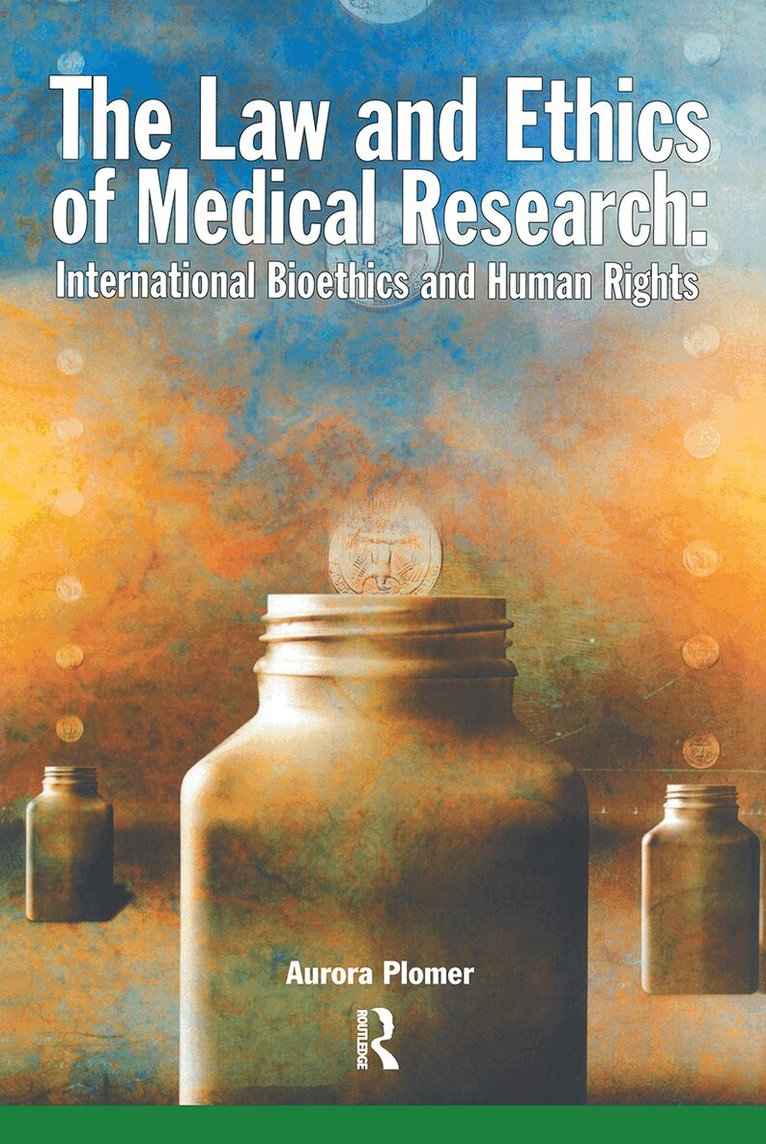
The growing globalization of medical research and the application of new biotechnologies in morally contested areas has forced a revision of international ethical guidelines.This book examines the controversies surrounding biomedical research in the twenty-first century from a human rights perspective, analyzing the evolution and changes in form and content of international instruments regulating the conduct of biomedical research.The approach adopted is comparative and includes an evaluation of human rights and UK and US law on embryonic stem cell research, the HIV/AIDS trials in the developing world, the Alder Hey Inquiry and the human radiation and nerve gas experiments on human subjects in the US and the UK. This is the first book to analyze some of the major issues in biomedical research today from an international, comparative human rights perspective.