Avi Goldfarb - Böcker
Visar alla böcker från författaren Avi Goldfarb. Handla med fri frakt och snabb leverans.
8 produkter
8 produkter
305 kr
Skickas inom 3-6 vardagar
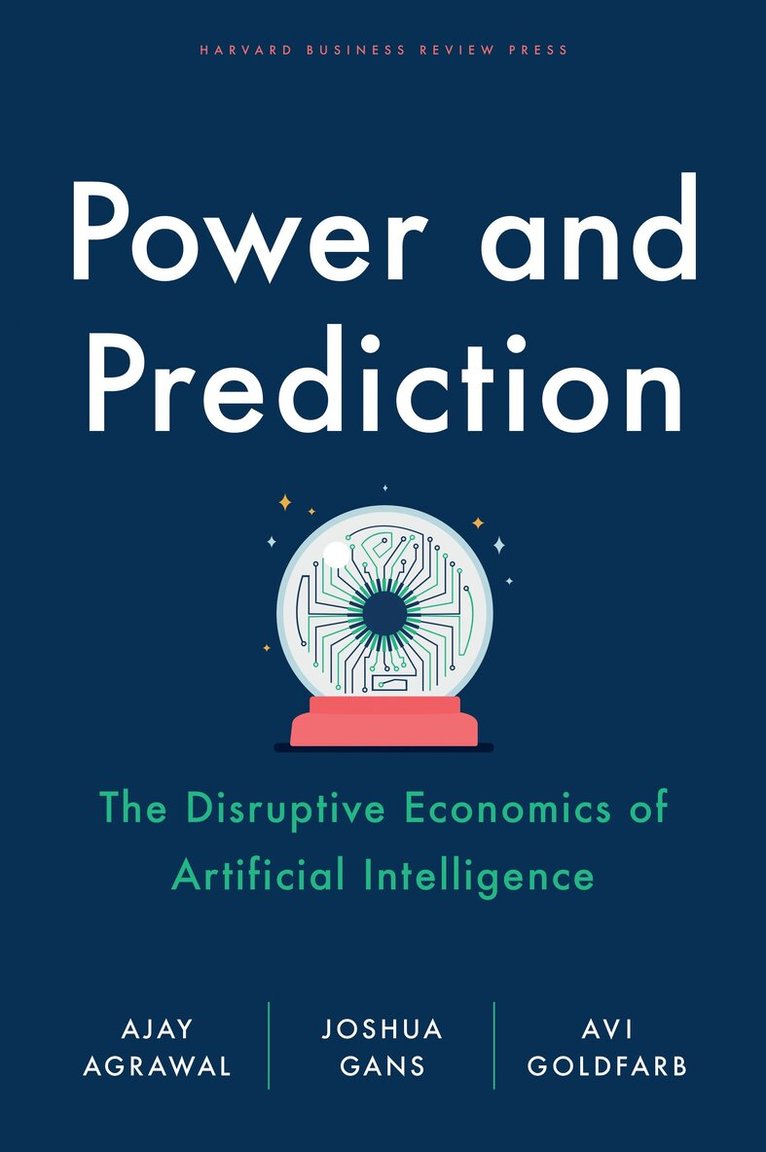
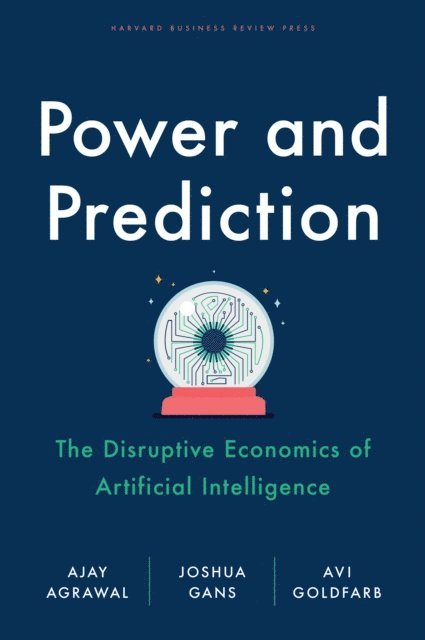
Disruption resulting from the proliferation of AI is coming. The authors of the bestselling Prediction Machines can help you prepare.Artificial intelligence (AI) has impacted many industries around the world—banking and finance, pharmaceuticals, automotive, medical technology, manufacturing, and retail. But it has only just begun its odyssey toward cheaper, better, and faster predictions that drive strategic business decisions. When prediction is taken to the max, industries transform, and with such transformation comes disruption.What is at the root of this? In their bestselling first book, Prediction Machines, eminent economists Ajay Agrawal, Joshua Gans, and Avi Goldfarb explained the simple yet game-changing economics of AI. Now, in Power and Prediction, they go deeper, examining the most basic unit of analysis: the decision. The authors explain that the two key decision-making ingredients are prediction and judgment, and we perform both together in our minds, often without realizing it. The rise of AI is shifting prediction from humans to machines, relieving people from this cognitive load while increasing the speed and accuracy of decisions.This sets the stage for a flourishing of new decisions and has profound implications for system-level innovation. Redesigning systems of interdependent decisions takes time—many industries are in the quiet before the storm—but when these new systems emerge, they can be disruptive on a global scale. Decision-making confers power. In industry, power confers profits; in society, power confers control. This process will have winners and losers, and the authors show how businesses can leverage opportunities, as well as protect their positions.Filled with illuminating insights, rich examples, and practical advice, Power and Prediction is the must-read guide for any business leader or policymaker on how to make the coming AI disruptions work for you rather than against you.
1 140 kr
Skickas inom 7-10 vardagar
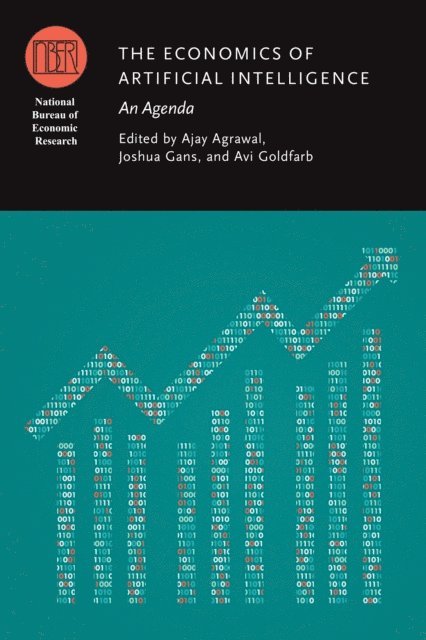
Advances in artificial intelligence (AI) highlight the potential of this technology to affect productivity, growth, inequality, market power, innovation, and employment. This volume seeks to set the agenda for economic research on the impact of AI. It covers four broad themes: AI as a general purpose technology; the relationships between AI, growth, jobs, and inequality; regulatory responses to changes brought on by AI; and the effects of AI on the way economic research is conducted. It explores the economic influence of machine learning, the branch of computational statistics that has driven much of the recent excitement around AI, as well as the economic impact of robotics and automation and the potential economic consequences of a still-hypothetical artificial general intelligence. The volume provides frameworks for understanding the economic impact of AI and identifies a number of open research questions.Contributors:Daron Acemoglu, Massachusetts Institute of TechnologyPhilippe Aghion, Collège de FranceAjay Agrawal, University of TorontoSusan Athey, Stanford UniversityJames Bessen, Boston University School of LawErik Brynjolfsson, MIT Sloan School of ManagementColin F. Camerer, California Institute of TechnologyJudith Chevalier, Yale School of ManagementIain M. Cockburn, Boston UniversityTyler Cowen, George Mason UniversityJason Furman, Harvard Kennedy SchoolPatrick Francois, University of British Columbia Alberto Galasso, University of TorontoJoshua Gans, University of TorontoAvi Goldfarb, University of TorontoAustan Goolsbee, University of Chicago Booth School of BusinessRebecca Henderson, Harvard Business SchoolGinger Zhe Jin, University of MarylandBenjamin F. Jones, Northwestern UniversityCharles I. Jones, Stanford UniversityDaniel Kahneman, Princeton UniversityAnton Korinek, Johns Hopkins UniversityMara Lederman, University of TorontoHong Luo, Harvard Business SchoolJohn McHale, National University of IrelandPaul R. Milgrom, Stanford UniversityMatthew Mitchell, University of TorontoAlexander Oettl, Georgia Institute of TechnologyAndrea Prat, Columbia Business SchoolManav Raj, New York UniversityPascual Restrepo, Boston UniversityDaniel Rock, MIT Sloan School of ManagementJeffrey D. Sachs, Columbia UniversityRobert Seamans, New York UniversityScott Stern, MIT Sloan School of ManagementBetsey Stevenson, University of MichiganJoseph E. Stiglitz. Columbia UniversityChad Syverson, University of Chicago Booth School of BusinessMatt Taddy, University of Chicago Booth School of BusinessSteven Tadelis, University of California, BerkeleyManuel Trajtenberg, Tel Aviv UniversityDaniel Trefler, University of TorontoCatherine Tucker, MIT Sloan School of ManagementHal Varian, University of California, Berkeley
776 kr
Skickas inom 7-10 vardagar
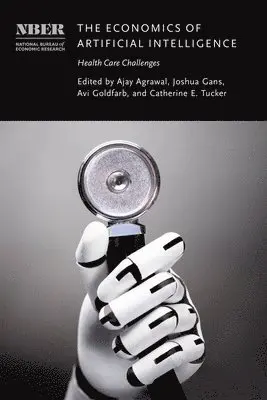
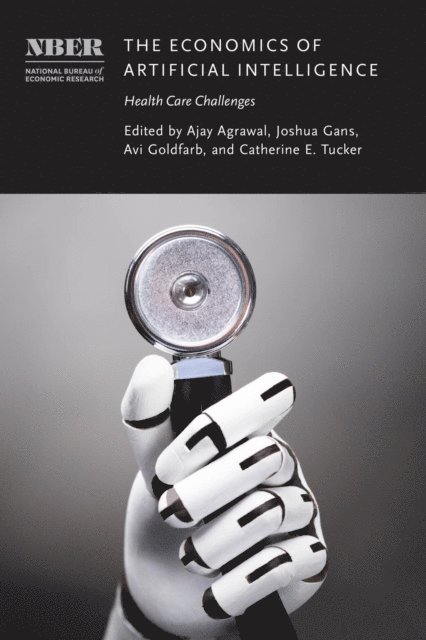
A timely investigation of the potential economic effects, both realized and unrealized, of artificial intelligence within the United States healthcare system.In sweeping conversations about the impact of artificial intelligence on many sectors of the economy, healthcare has received relatively little attention. Yet it seems unlikely that an industry that represents nearly one-fifth of the economy could escape the efficiency and cost-driven disruptions of AI. The Economics of Artificial Intelligence: Health Care Challenges brings together contributions from health economists, physicians, philosophers, and scholars in law, public health, and machine learning to identify the primary barriers to entry of AI in the healthcare sector. Across original papers and in wide-ranging responses, the contributors analyze barriers of four types: incentives, management, data availability, and regulation. They also suggest that AI has the potential to improve outcomes and lower costs. Understanding both the benefits of and barriers to AI adoption is essential for designing policies that will affect the evolution of the healthcare system.
753 kr
Skickas inom 7-10 vardagar
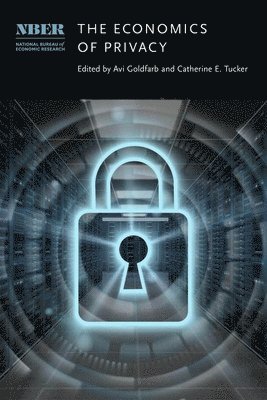
A foundational new collection examining the mechanics of privacy in the digital age.The falling costs of collecting, storing, and processing data have allowed firms and governments to improve their products and services, but have also created databases with detailed individual-level data that raise privacy concerns. This volume summarizes the research on the economics of privacy and identifies open questions on the value of privacy, the roles of property rights and markets for privacy and data, the relationship between privacy and inequality, and the political economy of privacy regulation. Several themes emerge across the chapters. One is that it may not be possible to solve privacy concerns by creating a market for the right to privacy, even if property rights are well-defined and transaction costs are low. Another is that it is difficult to measure and value the benefits of privacy, particularly when individuals have an intrinsic preference for privacy. Most previous attempts at valuation have focused only on quantifiable economic outcomes, such as innovation. Finally, defining privacy through an economic lens is challenging. The broader academic and legal literature includes many distinct definitions of privacy, and different definitions may be appropriate in different contexts. The chapters explore a variety of frameworks for examining these questions and provide a range of new perspectives on the role of economics research in understanding the benefits and costs of privacy and of data flows. As the digital economy continues to expand the scope of economic theory and research, The Economics of Privacy provides the most comprehensive survey to date of this field and its next steps.
1 802 kr
Kommande
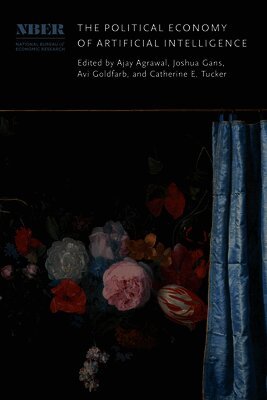
An authoritative look at how artificial intelligence both shapes and is shaped by the political and economic forces of the modern world.As the effects of artificial intelligence are felt across economies and societies, many of its ramifications are still emerging. This volume brings together economists and political scientists to examine how AI intersects with regulation, military power, and political identity—offering analytical frameworks and identifying key open questions for future research. The contributions address topics such as the allocation of property rights for AI inputs, trade-offs among alternative regulatory regimes, and the role of interest groups in shaping the technology’s trajectory. They explore how AI-related capabilities influence military effectiveness, resource allocation, and bargaining power among nations, and consider AI’s effects on political preferences, from the influence of AI-curated information on polarization to the implications of targeted political advertising and personalized education for national identity formation. The volume highlights key trade-offs that arise in AI’s political economy, and points toward empirical strategies and theoretical models that can advance understanding in this emerging field. Drawing on diverse disciplinary perspectives, the collection provides a foundation for rigorous inquiry into how AI both shapes and is shaped by political and economic forces.
321 kr
Tillfälligt slut
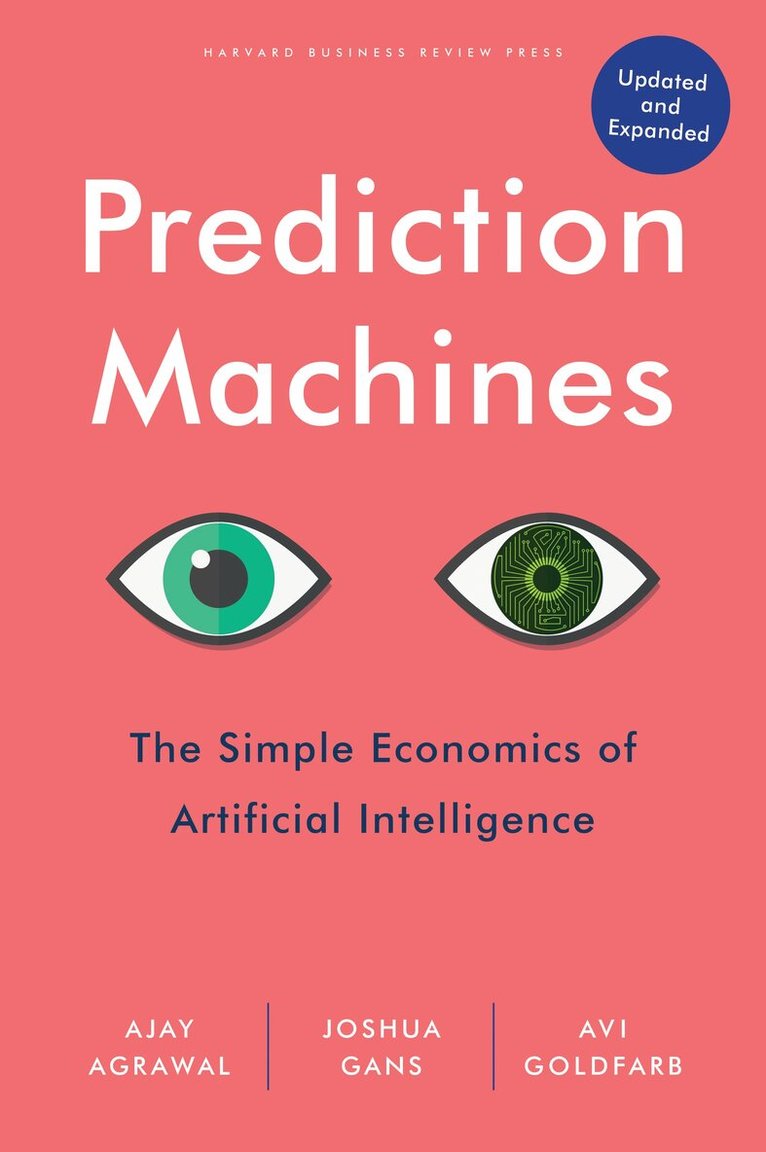
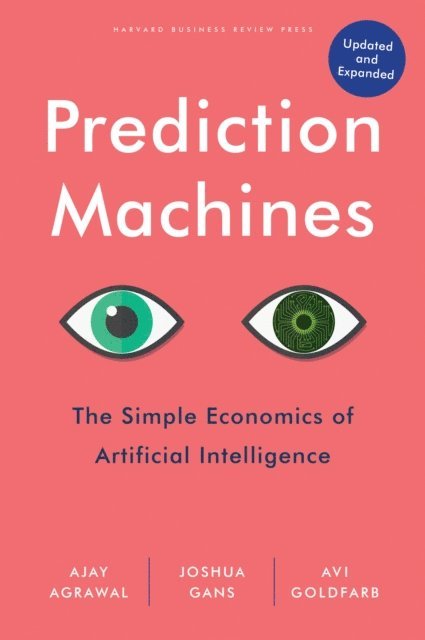
“What does AI mean for your business? Read this book to find out." -- Hal Varian, Chief Economist, Google Artificial intelligence does the seemingly impossible, magically bringing machines to life--driving cars, trading stocks, and teaching children. But facing the sea change that AI will bring can be paralyzing. How should companies set strategies, governments design policies, and people plan their lives for a world so different from what we know? In the face of such uncertainty, many analysts either cower in fear or predict an impossibly sunny future.But in Prediction Machines, three eminent economists recast the rise of AI as a drop in the cost of prediction. With this single, masterful stroke, they lift the curtain on the AI-is-magic hype and show how basic tools from economics provide clarity about the AI revolution and a basis for action by CEOs, managers, policy makers, investors, and entrepreneurs.When AI is framed as cheap prediction, its extraordinary potential becomes clear. Prediction is at the heart of making decisions under uncertainty. Our businesses and personal lives are riddled with such decisions. Prediction tools increase productivity--operating machines, handling documents, communicating with customers. Uncertainty constrains strategy. Better prediction creates opportunities for new business structures and strategies to compete.Penetrating, fun, and always insightful and practical, Prediction Machines follows its inescapable logic to explain how to navigate the changes on the horizon. The impact of AI will be profound, but the economic framework for understanding it is surprisingly simple.
Prediction Machines, Updated and Expanded
The Simple Economics of Artificial Intelligence
Inbunden, Engelska, 2022
347 kr
Named one of "The five best books to understand AI" by The EconomistThe impact AI will have is profound, but the economic framework for understanding it is surprisingly simple.Artificial intelligence seems to do the impossible, magically bringing machines to life—driving cars, trading stocks, and teaching children. But facing the sea change that AI brings can be paralyzing. How should companies set strategies, governments design policies, and people plan their lives for a world so different from what we know? In the face of such uncertainty, many either cower in fear or predict an impossibly sunny future.But in Prediction Machines, three eminent economists recast the rise of AI as a drop in the cost of prediction. With this masterful stroke, they lift the curtain on the AI-is-magic hype and provide economic clarity about the AI revolution as well as a basis for action by executives, policy makers, investors, and entrepreneurs.In this new, updated edition, the authors illustrate how, when AI is framed as cheap prediction, its extraordinary potential becomes clear:Prediction is at the heart of making decisions amid uncertainty. Our businesses and personal lives are riddled with such decisions.Prediction tools increase productivity—operating machines, handling documents, communicating with customers.Uncertainty constrains strategy. Better prediction creates opportunities for new business strategies to compete.The authors reset the context, describing the striking impact the book has had and how its argument and its implications are playing out in the real world. And in new material, they explain how prediction fits into decision-making processes and how foundational technologies such as quantum computing will impact business choices.Penetrating, insightful, and practical, Prediction Machines will help you navigate the changes on the horizon.
Del 280 - The International Library of Critical Writings in Economics series
Economics of Digitization
Inbunden, Engelska, 2013
5 126 kr
Skickas inom 7-10 vardagar
The increasing creation, support, use and consumption of digital representation of information touches a wide breadth of economic activities. This digitization has transformed social interactions, facilitated entirely new industries and undermined others and reshaped the ability of people - consumers, job seekers, managers, government officials and citizens - to access and leverage information. This important book includes seminal papers addressing topics such as the causes and consequences of digitization, factors shaping the structure of products and services and creating an enormous range of new applications and how market participants make their choices over strategic organization, market conduct, and public policies.This authoritative collection, with an original introduction by the editors, will be an invaluable source of reference for students, academics and practitioners with an interest in the economics of digitisation and the digital economy.