Avinoam J. Patt - Böcker
Visar alla böcker från författaren Avinoam J. Patt. Handla med fri frakt och snabb leverans.
5 produkter
5 produkter
363 kr
Skickas inom 10-15 vardagar
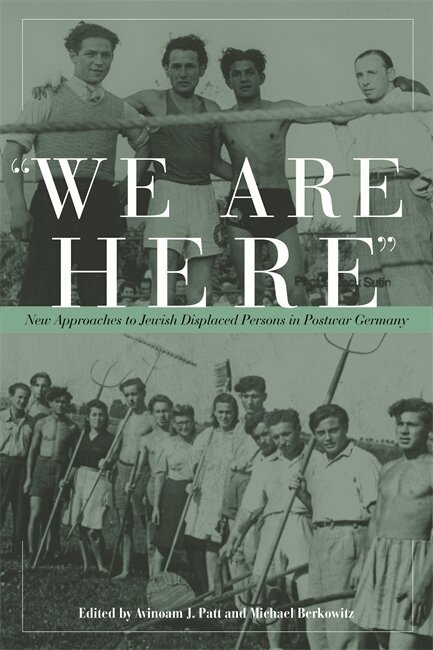
This book collects groundbreaking research on displaced persons (DPs) in Europe in the period after World War II and before the establishment of Israel. By the spring of 1947, less than two years after Nazi Germany's defeat, some 250,000 Jewish refugees remained in the displaced persons camps of Germany, Italy, and Austria. Yet many Jews did not know whether to return to their home countries or move on to someplace else. As a result, these stateless displaced persons (DPs) created a unique space for political, cultural, and social rebirth that was tempered by the complications of overcoming recent trauma. In ""We Are Here,"" editors Avinoam J. Patt and Michael Berkowitz present current research on DPs between the end of the war and the creation of the State of Israel in order to present a more complete and nuanced picture of the DP experience, challenging many earlier assumptions about this group. Contributors to this volume analyze art, music, and literature of the DPs, as well as historical records of specific DP communities to explore the first reactions of survivors to liberation and their understanding of place in the context of postwar Germany and in Europe more generally. A number of the contributions in this volume challenge prior interpretations of Jewish DPs and Holocaust survivors, including the supposedly unified background of the DP population, the notion of a general reluctance to confront the past, the idea of Zionism as an inevitable success after the war, and the suggestion that Jews, despite their presence in Germany, strenuously avoided contact with Germans. Far from constituting a monolithic whole, then, ""We Are Here"" demonstrates that the DPs were composed of diverse groups with disparate wartime experiences. Responding to burgeoning scholarship on DPs and related issues, ""We Are Here"" sifts through the copious records DPs left behind to shed light on the many facets of a vibrant DP society. Scholars of the Holocaust and all readers concerned with the Jewish experience immediately after World War II will be grateful for this volume.
421 kr
Skickas inom 10-15 vardagar
The Edward Lewis Wallant Award was founded by the family of Dr. Irving and Fran Waltman in 1963 and is supported by the University of Hartford’s Maurice Greenberg Center for Judaic Studies. It is given annually to an American writer, preferably early in his or her career, whose fiction is considered significant for American Jews. In The New Diaspora: The Changing Landscape of American Jewish Fiction, editors Victoria Aarons, Avinoam J. Patt, and Mark Shechner who have all served as judges for the award, present vital, original, and wide-ranging fiction by writers whose work has been considered or selected for the award. The resulting collection highlights the exemplary place of the Wallant Award in Jewish literature.With a mix of stories and novel chapters, The New Diaspora reprints selections of short fiction from such well-known writers as Rebecca Goldstein, Nathan Englander, Jonathan Safran Foer, Dara Horn, Julie Orringer, and Nicole Krauss. The first half of the anthology presents pieces by winnners of the Wallant award, focusing on the best work of recent winners. The New Diaspora’s second half reflects the evolving landscape of American Jewish fiction over the last fifty years, as many authors working in America are not American by birth, and their fiction has become more experimental in nature. Pieces in this section represent authors with roots all over the world - including Russia (Maxim Shrayer, Nadia Kalman, and Lara Vapnyar), Latvia (David Bezmozgis), South Africa (Tony Eprile), Canada (Robert Majzels), and Israel (Avner Mandelman, who now lives in Canada).This collection offers an expanded canon of Jewish writing in North America and foregrounds a vision of its variety, its uniqueness, its cosmopolitanism, and its evolving perspectives on Jewish life. It celebrates the continuing vitality and fresh visions of contemporary Jewish writing, even as it highlights its debt to history and embrace of collective memory. Readers of contemporary American fiction and Jewish cultural history will find The New Diaspora enlightening and deeply engaging.Contributors Include: Edith Pearlman, Sara Houghteling, Eileen Pollack, Ehud Havazelet, Nicole Krauss, Jonathan Rosen, Joan Leegant, Dara Horn, Myla Goldberg, Harvey Grossinger, Thane Rosenbaum, Rebecca Goldstein, Melvin Bukiet, Tova Reich, Steve Stern, Francine Prose, Nadia Kalman, Maxim Shrayer, David Bezmozgis, Avner Mandelman, Joseph Epstein, Scott Nadelson, Margot Singer, Jonathan Safran Foer, Aryeh Lev Stollman, Gerald Shapiro, Joshua Henkin, Curt Leviant, Robert Majzels, Tony Eprile, Rachel Kadish, Nathan Englander, Lara Vapnyar, Julie Orringer, Joseph Skibell, Peter Orner, Jonathon Keats.
304 kr
Skickas inom 7-10 vardagar
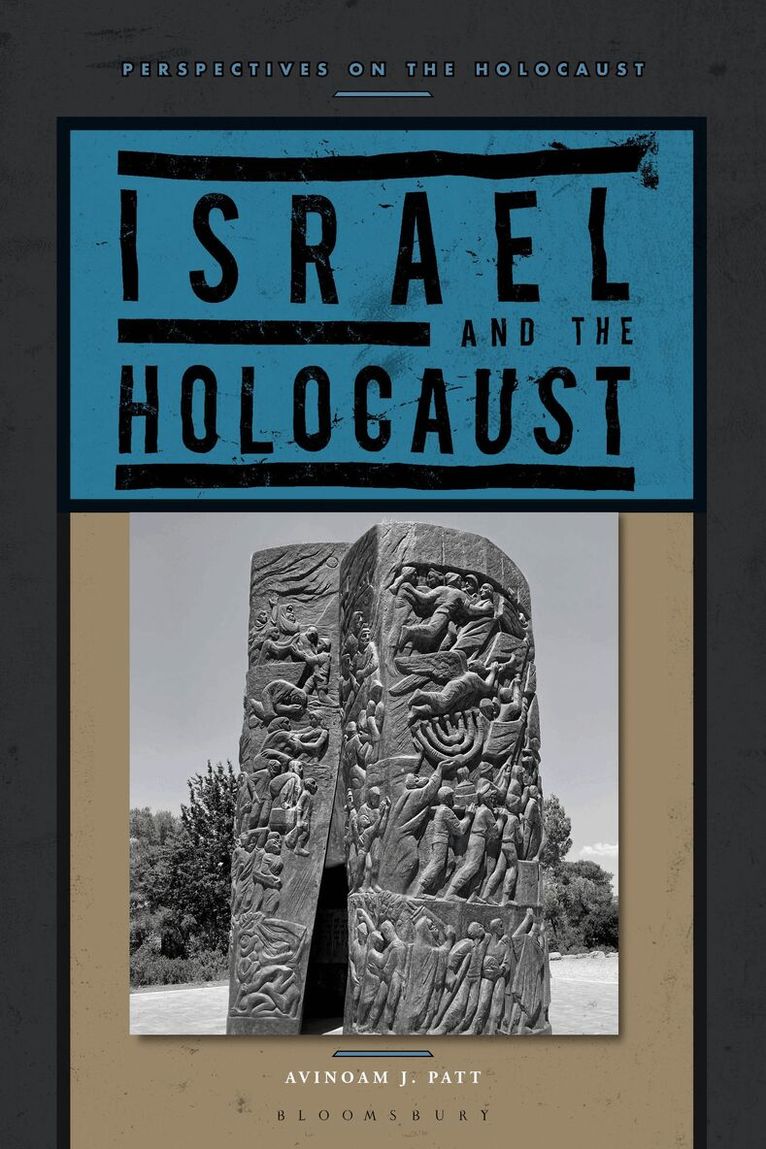
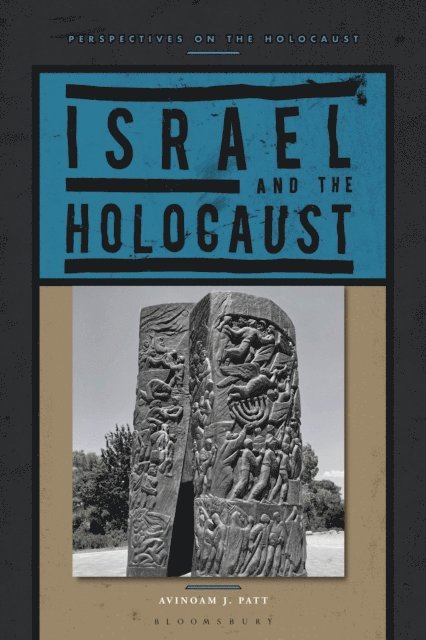
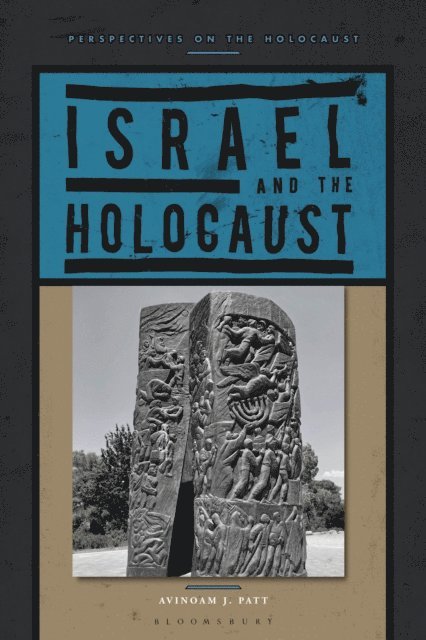
Avinoam Patt examines the relationship between two of the most significant events in modern Jewish history, the Holocaust and the creation of the state of Israel. While there may be no direct causal connection between the Holocaust and the founding of the Jewish state in 1948, the memory of the Holocaust has been a constant presence in Israeli politics, culture, and society since even before 1948.The State of Israel has always existed in an uneasy relationship with the Shoah. On the one hand, Israel was faced with the challenge of taking in hundreds of thousands of Holocaust survivors as new citizens of the state, many of whom were discouraged from sharing their traumatic wartime experiences with their fellow citizens. On the other hand, the destruction of European Jewry and the failure of Western democracy to protect the Jewish minority in Europe seemed to vindicate the Zionist worldview, even as classical Zionism argued that the Jewish people deserved a state on the basis of their deep historical connection to the Land of Israel. By tracing the evolving relationship to the memory of Shoah, Avinoam Patt argues, we can also trace shifting conceptions of Israeli self-understanding and identity, Israel’s relationship to the wider world, its neighbors, the Jewish Diaspora, and the Jewish past. Israel and the Holocaust documents these tensions and analyses the changing nature of Israel’s relationship to the Shoah, revealing that it only seems to strengthen with the passage of time.
970 kr
Skickas inom 10-15 vardagar
Avinoam Patt examines the relationship between two of the most significant events in modern Jewish history, the Holocaust and the creation of the state of Israel. While there may be no direct causal connection between the Holocaust and the founding of the Jewish state in 1948, the memory of the Holocaust has been a constant presence in Israeli politics, culture, and society since even before 1948.The State of Israel has always existed in an uneasy relationship with the Shoah. On the one hand, Israel was faced with the challenge of taking in hundreds of thousands of Holocaust survivors as new citizens of the state, many of whom were discouraged from sharing their traumatic wartime experiences with their fellow citizens. On the other hand, the destruction of European Jewry and the failure of Western democracy to protect the Jewish minority in Europe seemed to vindicate the Zionist worldview, even as classical Zionism argued that the Jewish people deserved a state on the basis of their deep historical connection to the Land of Israel. By tracing the evolving relationship to the memory of Shoah, Avinoam Patt argues, we can also trace shifting conceptions of Israeli self-understanding and identity, Israel’s relationship to the wider world, its neighbors, the Jewish Diaspora, and the Jewish past. Israel and the Holocaust documents these tensions and analyses the changing nature of Israel’s relationship to the Shoah, revealing that it only seems to strengthen with the passage of time.
Del 10 - Archiv jüdischer Geschichte und Kultur / Archive of Jewish History and Culture
Surviving Remnant
Documents on Jewish Displaced Persons in Postwar Germany 1945–1950
Inbunden, Engelska, 2024
1 582 kr
Skickas inom 3-6 vardagar
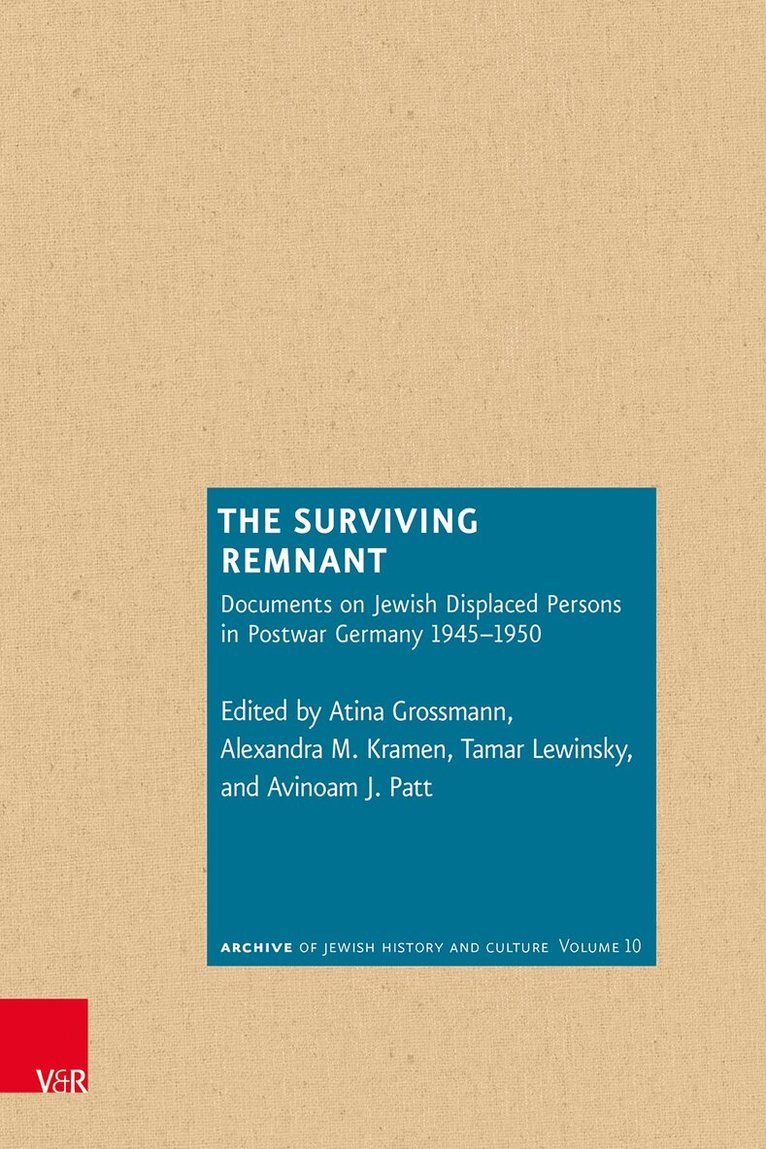
This volume features 72 documents (in Yiddish, English, Hebrew, and German) created between 1945 and 1949, that complicate standard representations of the highly variegated community of Jewish Displaced Persons (DPs) in Allied-occupied Germany, who came to be known as the surviving remnant or She’erit Hapletah. These documents shed light on efforts to organize Jewish DPs upon liberation, attempts to cope with displacement and trauma, relations with the Allied occupation authorities, and the organization of relief and rehabilitation in the weeks, months, and years after liberation. They highlight the DPs’ struggle to organize political responses to their situation and their remarkable cultural creativity with examples on literature, sport, theatre, humor, education, history, and religion. The volume thus reflects the complexities of the Jewish DPs living on “cursed soil” in the aftermath of the war as well as their prospects for a political future.