
Azid Toseef - Böcker
Visar alla böcker från författaren Azid Toseef. Handla med fri frakt och snabb leverans.
2 produkter
2 produkter
Del 1 - Advances In Research On Islamic Economics And Finance
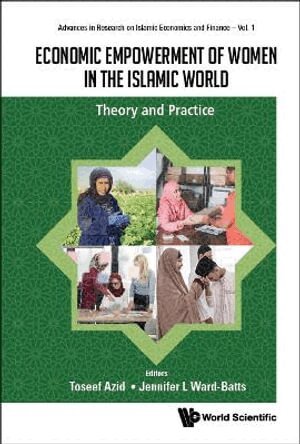
Economic Empowerment Of Women In The Islamic World: Theory And Practice
Inbunden, Engelska, 2020
2 423 kr
Skickas inom 3-6 vardagar
The book, Economic Empowerment of Women in the Islamic World, discusses the economic, social, and political rights and status of women in Islam, which is theoretically given by the Islamic Jurisprudence (Shariah law). The chapters in this volume will address historical practices in comparison to the status of women in the contemporary Muslim world. Men and women in Islam, regardless of their age, social class, and education, are equal as citizens and individuals, but not identical in their rights and responsibilities. It can be observed from Islamic history that in the early age of Islam, women were given full confidence, trust, and high responsibilities in leadership, educational guidance, and decision-making.This volume will try to clarify the confusion in the status of the women in Islam that is presented by the media, as it is assumed that theoretical Islamic empowerment of women bears little relation to the real conditions of women in modern Muslim societies. It has been widely claimed in the media that Muslim women suffer more than men in Muslim societies and communities in terms of insecurity, domestic abuse, and low access to education and medical care. It is also stated in the press and media that absence of good governance also results in gender inequality and violation of the rights of Muslim women.This volume also aims to provide the solutions for the empowerment of women in the Islamic world. We assumed that without good governance, the status of women is not likely to improve. Muslim women have the potential to play a fundamental role in curbing corruption, social ills, violence, and crime in the Muslim world. This volume will make the case that in order to achieve stability and prosperity, the government must ensure a platform for women to participate in decision-making and hence benefit from the rights they are accorded in Islam.By covering a range of perspectives on the economic lives of Muslim women around the world, it hopes to shed light on the problems faced and to offer possible solutions to the empowerment of women in the Islamic world.
Del 2 - Advances In Research On Islamic Economics And Finance
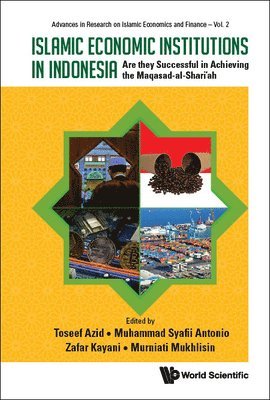
Islamic Economic Institutions In Indonesia: Are They Successful In Achieving The Maqasad-al-shari'ah
Inbunden, Engelska, 2023
1 343 kr
Skickas inom 3-6 vardagar
Islamic institutions have had a very long history, whose performance was muted during the Colonial Period. However, after the Second World War, the revival of the Islamic institutions began. Throughout its history, it had been assumed that these institutions are working for the betterment of humanity. Their target is to achieve a high level of the welfare for the concerned community. Historically these institutions were waqf, zakat and sadaqat. However from the last three decades, Islamic financial institutions have been established with the objective of providing interest- free products, transaction and services for Muslims. However there has been lot of criticism on the performance and role of these institutions. This becomes especially pertinent in a Muslim country like Indonesia, where there is a dire need to know that how these institutions are working and if it is possible for them to achieve the objectives of the Shari'ah. Some scholars have claimed that these institutions are performative and only serving 'lip service', and there are no significant differences between the Islamic and secular institutions where both kinds of institutions operate on the same foundations and differ only in use of technical terminologies. This volume aims to analyze some of the Islamic institutions which are operating in the world's biggest Muslim country, Indonesia, as a case study and analyze the contemporary Islamic Banking products and practices in the light of 'Maqasad al-Shari'ah'. The book's objective is to propose an improved system of Islamic institutions for Muslims to refer to. This volume will also analyze why these institutions are currently not able to comply with the Maqasad al Shari'ah and how it is possible to enhance the level of economic development, social wellbeing, individual freedom and equality, elimination of injustice and poverty, and achieve the other targets of the Maqasad through these institutions.