Toseef Azid - Böcker
Visar alla böcker från författaren Toseef Azid. Handla med fri frakt och snabb leverans.
16 produkter
16 produkter
647 kr
Skickas inom 10-15 vardagar
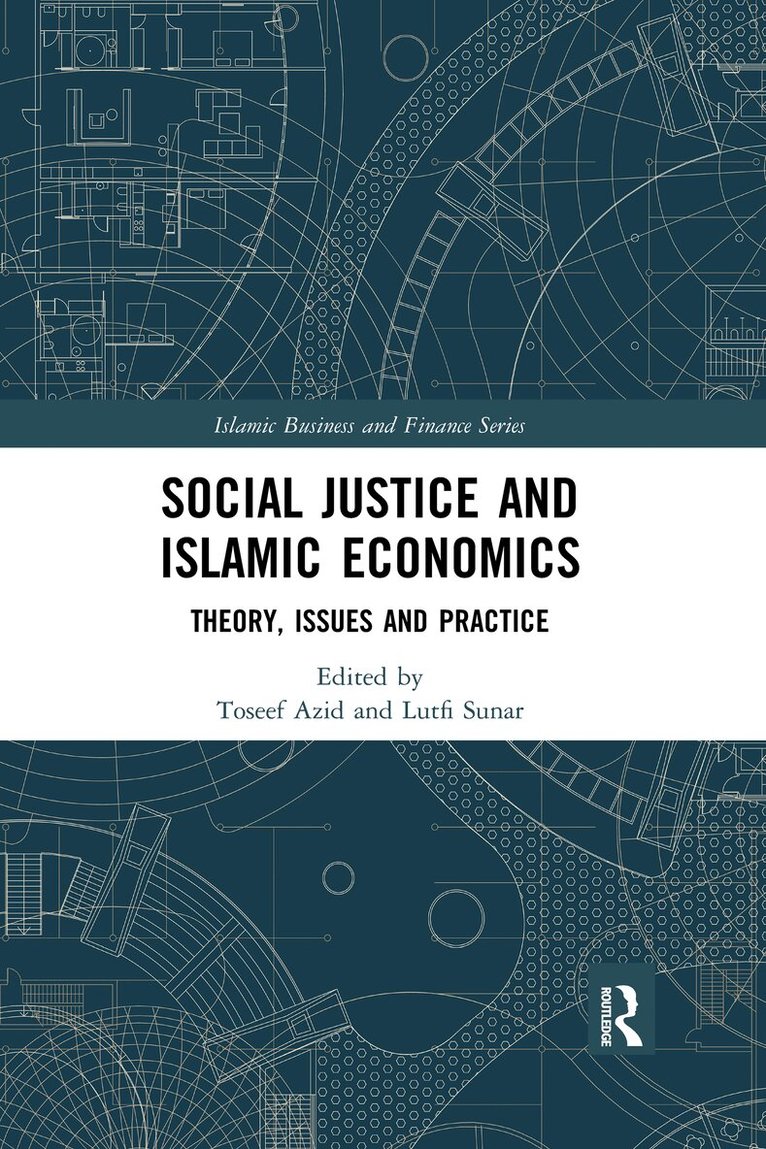
Under the rule of the current economic order, social injustice is ever-increasing. Issues such as poverty, inhumane working conditions, inadequate wages, social insecurity and an unhealthy labor market continue to persist. Many states are also unable to produce policies capable of resolving these problems. The characteristics of the capitalist system currently render it unable to provide social justice. In fact, on the contrary, the system reinforces these injustices and prevents economic and social welfare from reaching the masses. Many Muslim scholars have analyzed and, indeed, criticized this system for years. This book argues that an alternative and more equitable theoretical and practical economical order can been developed within the framework of Islamic principles. On the other hand, the experiences of societies under the rule of Muslim governments do not always seem to hold great promise for an alternative understanding of social justice. In addition, the behaviors of Muslim individuals within their economic lives are mostly shaped by the necessities of daily economic conditions rather than by the tenets of Islam that stand with social justice. Until 1990s, studies of Islamic economics made connections between finance and the notion of social justice, but work conducted more recently has neglected this issue. It is therefore evident that the topic of social justice needs to be revisited in a more in-depth manner. Filling an important gap in existing literature, the book uniquely connects social justice and Islamic finance and economics on this topic. Theory, practice and key issues are presented simultaneously throughout this book, which is based on the writings of a number of eminent scholars.
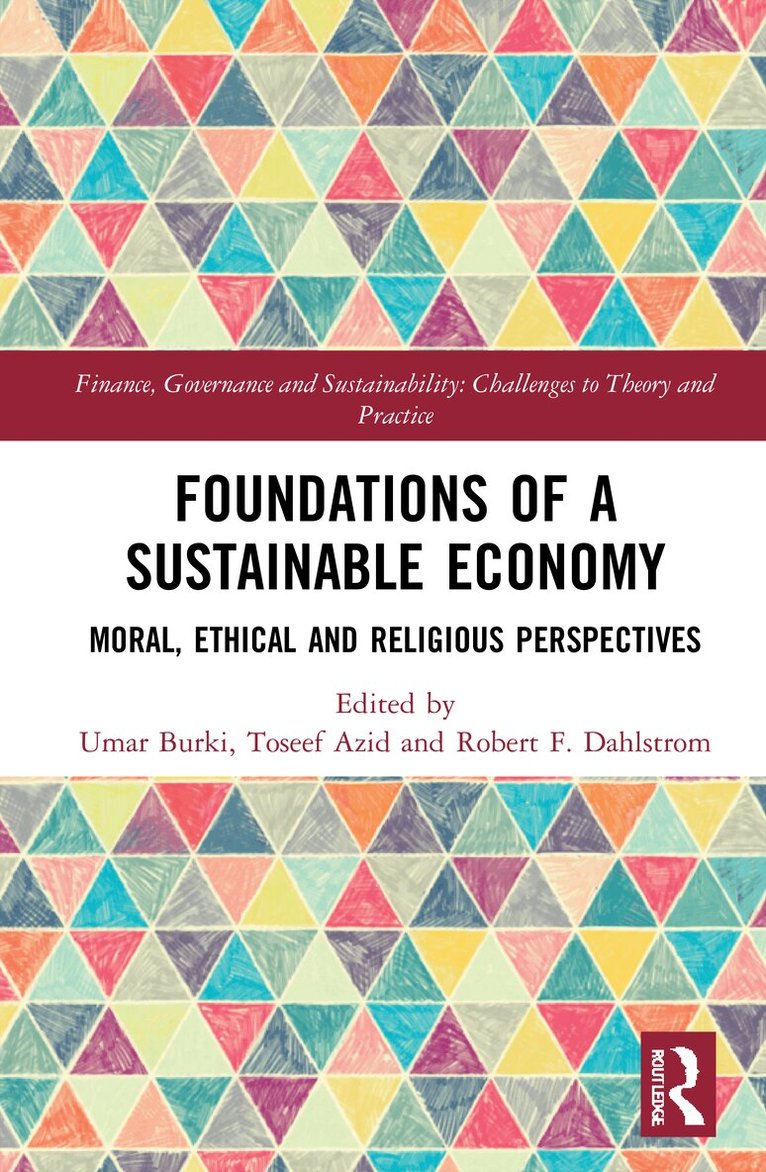
Foundations of a Sustainable Economy
Moral, Ethical and Religious Perspectives
Inbunden, Engelska, 2021
1 895 kr
Skickas inom 10-15 vardagar
This book addresses current practices related to sustainable development, its challenges and the future. People belonging to different genders regardless of their age, social class and education should be equal as citizens and individuals, and identical in their rights and responsibilities.The business sector, authorities, societies and religious circles have the potential to play a fundamental role in curbing social ills and the degradation of the environment in this modern world. The authors of this book argue that without good governance, the status of a human being is unlikely to improve. They make the case that to achieve sustainability, government, society and the economy must ensure a platform for people to participate in decision-making and benefit from the rights they are accorded. By covering a range of perspectives across economic, social and moral life, the book will shed light on the problems and possible solutions to sustainable development and the triple bottom line, of people, planet and profit, under the umbrella of morals and divine law.This will be a useful guide for undergraduate and postgraduate students across multiple disciplines, such as economics, religious studies, business studies, political science, anthropology and sociology.
620 kr
Skickas inom 10-15 vardagar
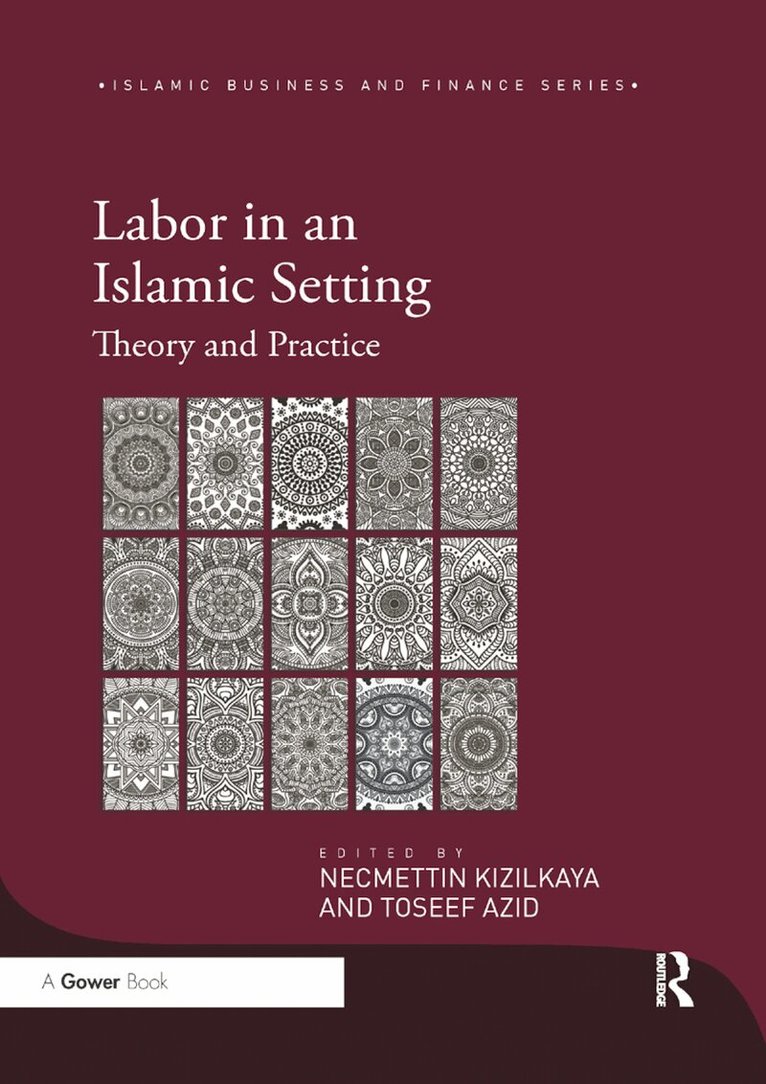
The Islamic labor market rests on the principles of the free market exchange of Islamic economics. Regrettably, the latter has failed to keep pace with the rapidly growing academic and professional developments of the former. Much of the published work within Islamic economics is idealistic if not radically ideological with little relevance to the Islamic labor market, leaving students of Islamic economics without a coherent body of economic theory to understand the practical objectives of Shariah that gives a sense of direction to the developments in this field. Drawing upon received sources of goals of Shariah, the authors present an independent academic work which: Emphasizes the common conceptual grounds of labor market behavior shared by the objectives of Shariah approach as well as the conventional approach to economics. Adopts standard tools of contemporary economics to explain the industrial relations. Extends the conventional scope of the labor market and forces of the labor market under the umbrella of Shariah. Enables readers and practitioners of Islamic economics to make economic sense of Shariah compliance and human resource development.Explains how the economics of Shariah is liable to offer moral guidance and a sense of direction to regulators and practitioners of the Islamic labor market. Labor in an Islamic Setting will be of interest to postgraduate students, academics, middle and senior management in both the western and the Islamic business communities, researchers and policy makers.
2 098 kr
Skickas inom 10-15 vardagar
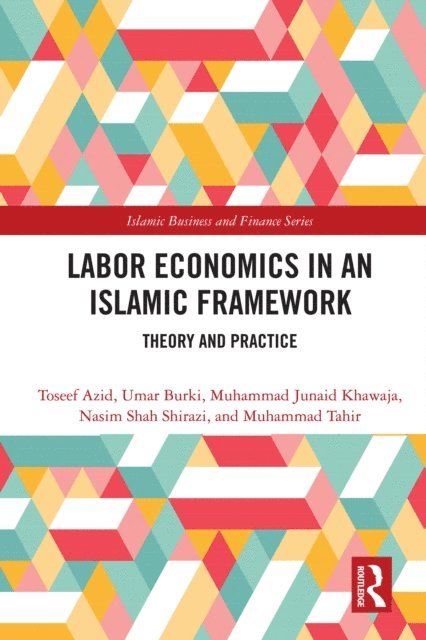
The labor market in Islam is governed by the Islamic laws of fairness, justice, and reward that is equivalent to the job done. Most of the literature in the field discusses the normative aspect of the labor market, whereas few attempts can be seen to address more positive aspects. There is a need for new theoretical and empirical models for the Islamic labor market, which should differ from established approaches.This book provides a comprehensive overview of the nature, scope, and dimensions of the labor market in an Islamic context, from both theoretical and practical perspectives. It presents and discusses labor economics and then compares the similarities and differences between conventional and Islamic views of the labor market, explaining where they meet, and critically justifying why they differ, under the umbrella of Shari'ah. The book raises pertinent issues, which it analyzes from both standpoints and widens the discourse to include norms, morality, and related institutions such as social security and welfare. A unique feature of the book is that it examines labor economics practices among a specific group of countries, and studies the labor conditions within these countries, where the majority of the population follow the teachings of Islam in their daily lives. The book proposes practical strategies for the development of new models for the Islamic labor market which are compatible with the modern world.The book will enable academics and practitioners of Islamic economics to make economic sense of Shari'ah compliance and human resource development.
638 kr
Skickas inom 10-15 vardagar
The labor market in Islam is governed by the Islamic laws of fairness, justice, and reward that is equivalent to the job done. Most of the literature in the field discusses the normative aspect of the labor market, whereas few attempts can be seen to address more positive aspects. There is a need for new theoretical and empirical models for the Islamic labor market, which should differ from established approaches.This book provides a comprehensive overview of the nature, scope, and dimensions of the labor market in an Islamic context, from both theoretical and practical perspectives. It presents and discusses labor economics and then compares the similarities and differences between conventional and Islamic views of the labor market, explaining where they meet, and critically justifying why they differ, under the umbrella of Shari'ah. The book raises pertinent issues, which it analyzes from both standpoints and widens the discourse to include norms, morality, and related institutions such as social security and welfare. A unique feature of the book is that it examines labor economics practices among a specific group of countries, and studies the labor conditions within these countries, where the majority of the population follow the teachings of Islam in their daily lives. The book proposes practical strategies for the development of new models for the Islamic labor market which are compatible with the modern world.The book will enable academics and practitioners of Islamic economics to make economic sense of Shari'ah compliance and human resource development.
579 kr
Skickas inom 10-15 vardagar
This book addresses current practices related to sustainable development, its challenges and the future. People belonging to different genders regardless of their age, social class and education should be equal as citizens and individuals, and identical in their rights and responsibilities.The business sector, authorities, societies and religious circles have the potential to play a fundamental role in curbing social ills and the degradation of the environment in this modern world. The authors of this book argue that without good governance, the status of a human being is unlikely to improve. They make the case that to achieve sustainability, government, society and the economy must ensure a platform for people to participate in decision-making and benefit from the rights they are accorded. By covering a range of perspectives across economic, social and moral life, the book will shed light on the problems and possible solutions to sustainable development and the triple bottom line, of people, planet and profit, under the umbrella of morals and divine law.This will be a useful guide for undergraduate and postgraduate students across multiple disciplines, such as economics, religious studies, business studies, political science, anthropology and sociology.
2 098 kr
Skickas inom 10-15 vardagar
Under the rule of the current economic order, social injustice is ever-increasing. Issues such as poverty, inhumane working conditions, inadequate wages, social insecurity and an unhealthy labor market continue to persist. Many states are also unable to produce policies capable of resolving these problems. The characteristics of the capitalist system currently render it unable to provide social justice. In fact, on the contrary, the system reinforces these injustices and prevents economic and social welfare from reaching the masses. Many Muslim scholars have analyzed and, indeed, criticized this system for years. This book argues that an alternative and more equitable theoretical and practical economical order can been developed within the framework of Islamic principles. On the other hand, the experiences of societies under the rule of Muslim governments do not always seem to hold great promise for an alternative understanding of social justice. In addition, the behaviors of Muslim individuals within their economic lives are mostly shaped by the necessities of daily economic conditions rather than by the tenets of Islam that stand with social justice. Until 1990s, studies of Islamic economics made connections between finance and the notion of social justice, but work conducted more recently has neglected this issue. It is therefore evident that the topic of social justice needs to be revisited in a more in-depth manner. Filling an important gap in existing literature, the book uniquely connects social justice and Islamic finance and economics on this topic. Theory, practice and key issues are presented simultaneously throughout this book, which is based on the writings of a number of eminent scholars.
2 098 kr
Skickas inom 10-15 vardagar
The Islamic labor market rests on the principles of the free market exchange of Islamic economics. Regrettably, the latter has failed to keep pace with the rapidly growing academic and professional developments of the former. Much of the published work within Islamic economics is idealistic if not radically ideological with little relevance to the Islamic labor market, leaving students of Islamic economics without a coherent body of economic theory to understand the practical objectives of Shariah that gives a sense of direction to the developments in this field. Drawing upon received sources of goals of Shariah, the authors present an independent academic work which: Emphasizes the common conceptual grounds of labor market behavior shared by the objectives of Shariah approach as well as the conventional approach to economics. Adopts standard tools of contemporary economics to explain the industrial relations. Extends the conventional scope of the labor market and forces of the labor market under the umbrella of Shariah. Enables readers and practitioners of Islamic economics to make economic sense of Shariah compliance and human resource development.Explains how the economics of Shariah is liable to offer moral guidance and a sense of direction to regulators and practitioners of the Islamic labor market.Labor in an Islamic Setting will be of interest to postgraduate students, academics, middle and senior management in both the western and the Islamic business communities, researchers and policy makers.
Research in Corporate and Shari'ah Governance in the Muslim World
Theory and Practice
Inbunden, Engelska, 2019
1 136 kr
Skickas inom 7-10 vardagar
Corporate governance is oriented around the values of fairness, transparency and accountability. The comprehension and measurement of these objectives is subject to the social and economic attributes of the corporate arena. Significant bodies of intellectual work have approached an assessment of corporate governance from perspectives such as differences in management practices, economic advancements, financial management, as well as regional and country constituents. But little is known about the Islamic perspective on the conceptualization, structure and practice of corporate governance. Research in Corporate and Shari'ah Governance in the Muslim World: Theory and Practice aims to address a critical disciplinary gap between Islamic theory and the practice of the corporate sector in the Muslim World. Adopting a critical approach, the book sheds light on the impact of corporate governance on the economies of the Muslim world. It presents an examination of: Corporate governance in Islamic financial institutions The efficiency of the Islamic Jurisprudence system The common conceptual grounds of corporate structure in the Muslim World The composition of business leaders in the Muslim World Using standard tools of analysis, the book presents a logically consistent synthesis of key variables with critical economic reasoning. It extends the conventional scope of corporate governance to form a basis for common understanding of how it operates in the Muslim world. The book will prove useful to those who research, study and practice in this field.
Monetary Policy, Islamic Finance, and Islamic Corporate Governance
An International Overview
Inbunden, Engelska, 2021
1 082 kr
Skickas inom 7-10 vardagar
Toseef Azid, Murniati Mukhlisin, Nashr Akbar, and Muhammad Tahir bring together leading researchers to provide a state-of-the-art overview of the monetary policy, corporate governance, their legal and regulatory issues and procedures that structure Islamic banks (IBs) and other Islamic financial institutions (IFIs). Monetary policy and corporate governance are integral to macroeconomics and microeconomics while interest rates are a key part of monetary policy. Given negativity associated with interest rates, Islamic economists have sought alternative instruments. Focusing on the populous Muslim countries such as Pakistan, Malaysia, Turkey, Bangladesh and Indonesia this book explains how corporate and shari’ah governance structures work together under the umbrella of Islamic monetary policy, and in the process, provides guidelines that how such structures improve corporate social responsibility in order to serve the best interests of all stakeholders. The chapters included here cover various features of IBs and IFIs, corporate performance and strategic analysis of microfinance shari’ah based non-banking institutions, in order to investigate the role that these processes play in shaping broader global financial systems. For instance, it portrays different governance models of central bank of a country like Iran having a shari’ah based financial system. In conclusion, Monetary Policy, Islamic Finance, and Islamic Corporate Governance: An International overview explores the interrelationships between corporate governance from the perspective of shari’ah, banking industry and Islamic monetary policy. This is a must-read for the corporate sector, banking experts and monetary authorities including academics and postgraduate students.
Del 1 - Advances In Research On Islamic Economics And Finance
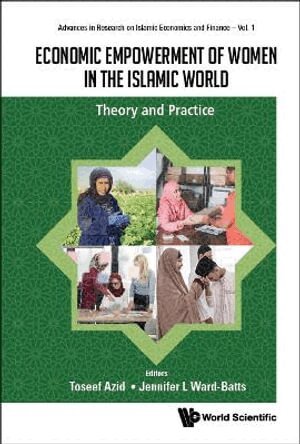
Economic Empowerment Of Women In The Islamic World: Theory And Practice
Inbunden, Engelska, 2020
2 423 kr
Skickas inom 3-6 vardagar
The book, Economic Empowerment of Women in the Islamic World, discusses the economic, social, and political rights and status of women in Islam, which is theoretically given by the Islamic Jurisprudence (Shariah law). The chapters in this volume will address historical practices in comparison to the status of women in the contemporary Muslim world. Men and women in Islam, regardless of their age, social class, and education, are equal as citizens and individuals, but not identical in their rights and responsibilities. It can be observed from Islamic history that in the early age of Islam, women were given full confidence, trust, and high responsibilities in leadership, educational guidance, and decision-making.This volume will try to clarify the confusion in the status of the women in Islam that is presented by the media, as it is assumed that theoretical Islamic empowerment of women bears little relation to the real conditions of women in modern Muslim societies. It has been widely claimed in the media that Muslim women suffer more than men in Muslim societies and communities in terms of insecurity, domestic abuse, and low access to education and medical care. It is also stated in the press and media that absence of good governance also results in gender inequality and violation of the rights of Muslim women.This volume also aims to provide the solutions for the empowerment of women in the Islamic world. We assumed that without good governance, the status of women is not likely to improve. Muslim women have the potential to play a fundamental role in curbing corruption, social ills, violence, and crime in the Muslim world. This volume will make the case that in order to achieve stability and prosperity, the government must ensure a platform for women to participate in decision-making and hence benefit from the rights they are accorded in Islam.By covering a range of perspectives on the economic lives of Muslim women around the world, it hopes to shed light on the problems faced and to offer possible solutions to the empowerment of women in the Islamic world.
Del 2 - Advances In Research On Islamic Economics And Finance
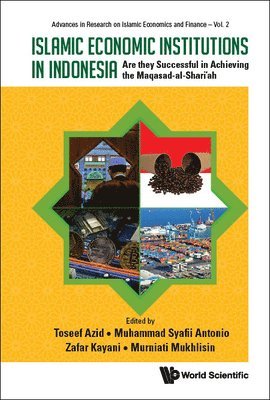
Islamic Economic Institutions In Indonesia: Are They Successful In Achieving The Maqasad-al-shari'ah
Inbunden, Engelska, 2023
1 343 kr
Skickas inom 3-6 vardagar
Islamic institutions have had a very long history, whose performance was muted during the Colonial Period. However, after the Second World War, the revival of the Islamic institutions began. Throughout its history, it had been assumed that these institutions are working for the betterment of humanity. Their target is to achieve a high level of the welfare for the concerned community. Historically these institutions were waqf, zakat and sadaqat. However from the last three decades, Islamic financial institutions have been established with the objective of providing interest- free products, transaction and services for Muslims. However there has been lot of criticism on the performance and role of these institutions. This becomes especially pertinent in a Muslim country like Indonesia, where there is a dire need to know that how these institutions are working and if it is possible for them to achieve the objectives of the Shari'ah. Some scholars have claimed that these institutions are performative and only serving 'lip service', and there are no significant differences between the Islamic and secular institutions where both kinds of institutions operate on the same foundations and differ only in use of technical terminologies. This volume aims to analyze some of the Islamic institutions which are operating in the world's biggest Muslim country, Indonesia, as a case study and analyze the contemporary Islamic Banking products and practices in the light of 'Maqasad al-Shari'ah'. The book's objective is to propose an improved system of Islamic institutions for Muslims to refer to. This volume will also analyze why these institutions are currently not able to comply with the Maqasad al Shari'ah and how it is possible to enhance the level of economic development, social wellbeing, individual freedom and equality, elimination of injustice and poverty, and achieve the other targets of the Maqasad through these institutions.
Del 3 - Advances In Research On Islamic Economics And Finance
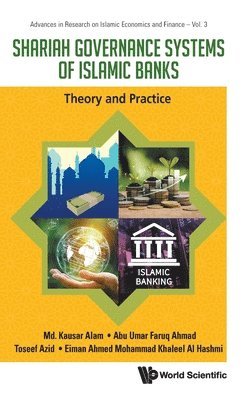
Shariah Governance Systems Of Islamic Banks: Theory And Practice
Inbunden, Engelska, 2025
1 896 kr
Skickas inom 3-6 vardagar
This book describes the theories related to corporate and Shariah governance frameworks of the global Islamic finance industry. It provides the conceptual models of Shariah governance and global Shariah governance systems. It also provides their historical background of development. The book illustrates the steps taken by the regulatory authorities in different countries. As there is a shortage of books on Shariah governance in comparison to corporate governance. This book attempts to fill the gap by describing theories related to corporate and Shariah governance frameworks of the global Islamic finance industry. It provides conceptual models of Shariah governance and global Shariah governance systems and their historical background of development. The book illustrates steps taken by the regulatory authorities in different countries. This book differentiates itself from similar books by providing comprehensive information on overall governance systems, theories and global corporate governance models. Written in a simple and accessible manner, this book will appeal to academia and industry practitioners in Islamic finance.
Wealth Management and Investment in Islamic Settings
Opportunities and Challenges
Inbunden, Engelska, 2022
1 175 kr
Skickas inom 10-15 vardagar
This book addresses the theory, practices, challenges, key issues and potential future policies concerning investment and wealth management in connection with Islamic finance.
Wealth Management and Investment in Islamic Settings
Opportunities and Challenges
Häftad, Engelska, 2023
1 175 kr
Skickas inom 10-15 vardagar
This book addresses the theory, practices, challenges, key issues and potential future policies concerning investment and wealth management in connection with Islamic finance. There is a noted scarcity of literature on Islamic approaches towards wealth management from a jurisprudential perspective, and so this book aims to address this lacuna in available literature. It demonstrates strategies for wealth management in keeping with the Qur’an and Sunn’ah, posing questions relating to interest and investment, and proposing financial models for benefiting the poorer segments of society while simultaneously satisfying economic necessities in keeping with Islamic law. Given its breadth of scope, combining perspectives from scholars and practitioners with extensive experience in the banking and finance sector from different Islamic settings including Malaysia, Saudi Arabia, Sri Lanka, Brunei and Indonesia, this edited volume will benefit practitioners, researchers, and graduate students studying finance, economics and business management in an Islamic context.
1 593 kr
Kommande
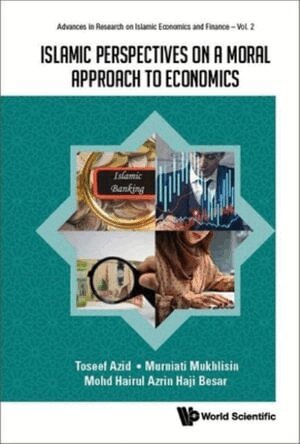
The current state of dissatisfaction with economic issues are not due to primarily economic reasons, but instead, on how whole societies and communities have come to revolve only around the individual's well-being. Islamic Perspectives on a Moral Approach to Economics provides an overview of how followers of Islam think, earn, and treat others with whom they are doing business, and analyses how the moral climate is key for doing business in the Islamic economy and market. The book also discusses the concept of a moral market against that of the Islamic moral market, its advantages over the conventional market and moral market, and analyses its role in redistributive justice. Islamic Perspectives on a Moral Approach to Economics is a new and novel contribution to the global debate on how moral values and religion can increase behavior that reduce the state of selfishness currently prevalent in economic affairs.