Murniati Mukhlisin - Böcker
Visar alla böcker från författaren Murniati Mukhlisin. Handla med fri frakt och snabb leverans.
5 produkter
5 produkter
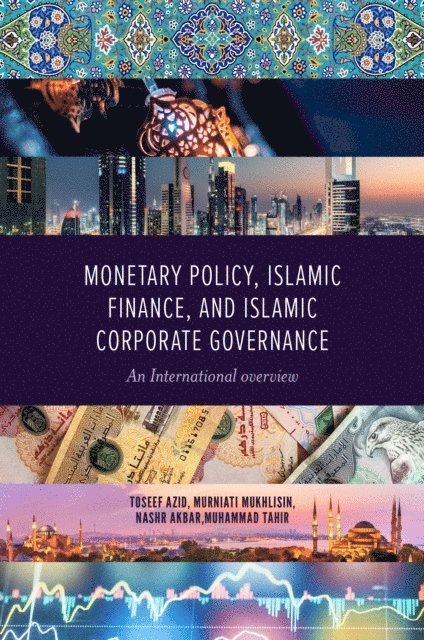
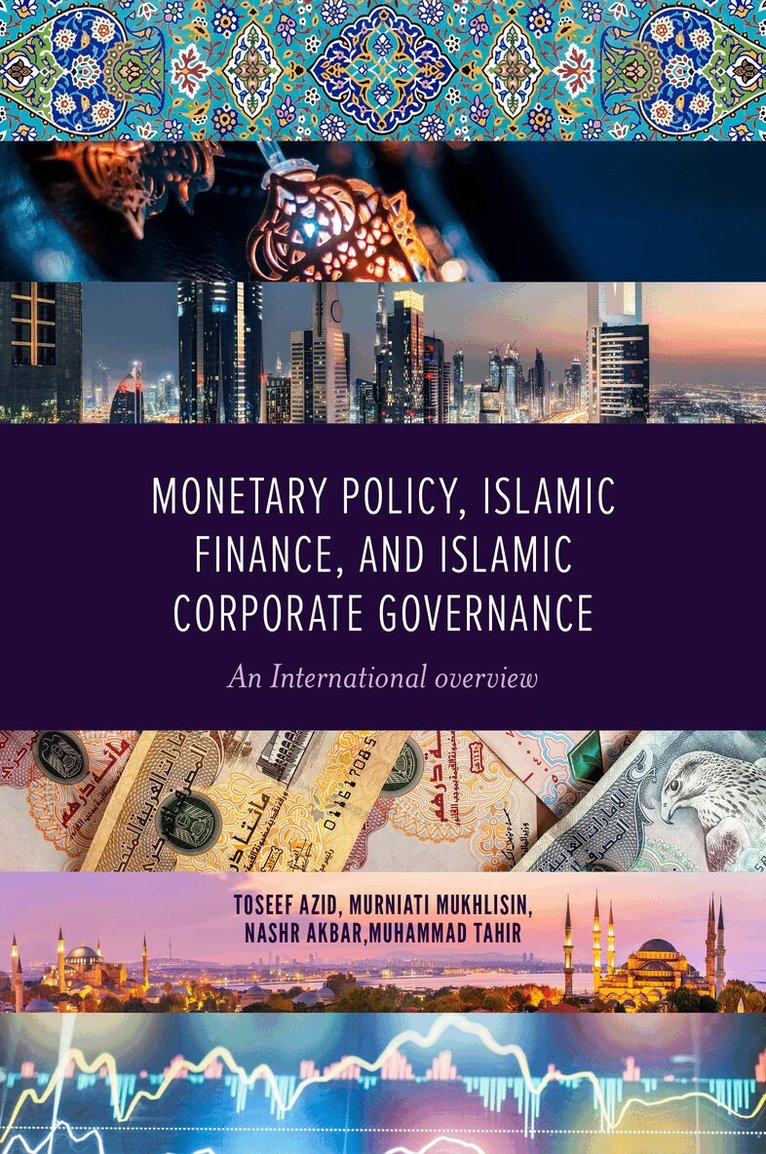
Monetary Policy, Islamic Finance, and Islamic Corporate Governance
An International Overview
Inbunden, Engelska, 2021
1 075 kr
Skickas inom 7-10 vardagar
Toseef Azid, Murniati Mukhlisin, Nashr Akbar, and Muhammad Tahir bring together leading researchers to provide a state-of-the-art overview of the monetary policy, corporate governance, their legal and regulatory issues and procedures that structure Islamic banks (IBs) and other Islamic financial institutions (IFIs). Monetary policy and corporate governance are integral to macroeconomics and microeconomics while interest rates are a key part of monetary policy. Given negativity associated with interest rates, Islamic economists have sought alternative instruments. Focusing on the populous Muslim countries such as Pakistan, Malaysia, Turkey, Bangladesh and Indonesia this book explains how corporate and shari’ah governance structures work together under the umbrella of Islamic monetary policy, and in the process, provides guidelines that how such structures improve corporate social responsibility in order to serve the best interests of all stakeholders. The chapters included here cover various features of IBs and IFIs, corporate performance and strategic analysis of microfinance shari’ah based non-banking institutions, in order to investigate the role that these processes play in shaping broader global financial systems. For instance, it portrays different governance models of central bank of a country like Iran having a shari’ah based financial system. In conclusion, Monetary Policy, Islamic Finance, and Islamic Corporate Governance: An International overview explores the interrelationships between corporate governance from the perspective of shari’ah, banking industry and Islamic monetary policy. This is a must-read for the corporate sector, banking experts and monetary authorities including academics and postgraduate students.
Del 2 - Advances In Research On Islamic Economics And Finance
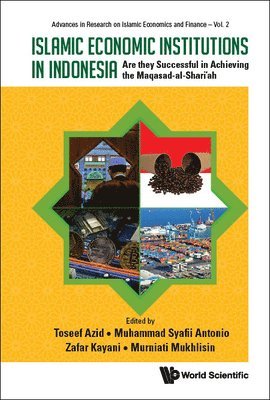
Islamic Economic Institutions In Indonesia: Are They Successful In Achieving The Maqasad-al-shari'ah
Inbunden, Engelska, 2023
1 343 kr
Skickas inom 3-6 vardagar
Islamic institutions have had a very long history, whose performance was muted during the Colonial Period. However, after the Second World War, the revival of the Islamic institutions began. Throughout its history, it had been assumed that these institutions are working for the betterment of humanity. Their target is to achieve a high level of the welfare for the concerned community. Historically these institutions were waqf, zakat and sadaqat. However from the last three decades, Islamic financial institutions have been established with the objective of providing interest- free products, transaction and services for Muslims. However there has been lot of criticism on the performance and role of these institutions. This becomes especially pertinent in a Muslim country like Indonesia, where there is a dire need to know that how these institutions are working and if it is possible for them to achieve the objectives of the Shari'ah. Some scholars have claimed that these institutions are performative and only serving 'lip service', and there are no significant differences between the Islamic and secular institutions where both kinds of institutions operate on the same foundations and differ only in use of technical terminologies. This volume aims to analyze some of the Islamic institutions which are operating in the world's biggest Muslim country, Indonesia, as a case study and analyze the contemporary Islamic Banking products and practices in the light of 'Maqasad al-Shari'ah'. The book's objective is to propose an improved system of Islamic institutions for Muslims to refer to. This volume will also analyze why these institutions are currently not able to comply with the Maqasad al Shari'ah and how it is possible to enhance the level of economic development, social wellbeing, individual freedom and equality, elimination of injustice and poverty, and achieve the other targets of the Maqasad through these institutions.
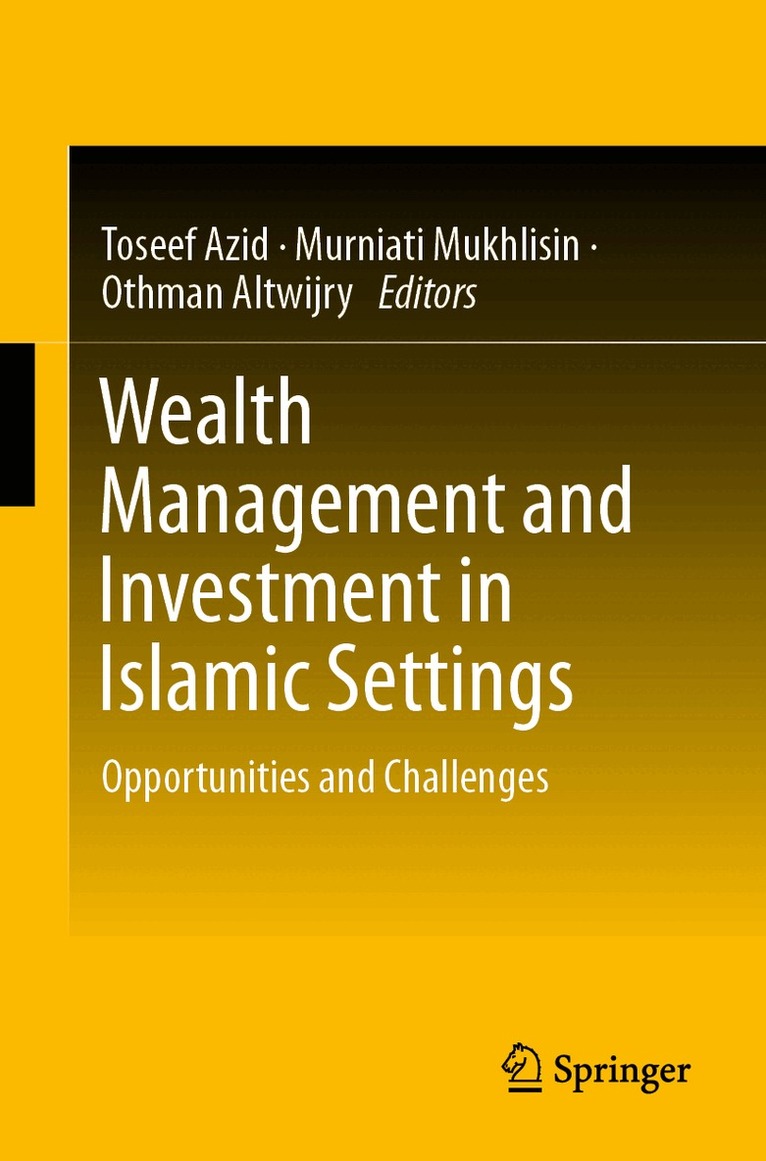
Wealth Management and Investment in Islamic Settings
Opportunities and Challenges
Inbunden, Engelska, 2022
1 170 kr
Skickas inom 10-15 vardagar
This book addresses the theory, practices, challenges, key issues and potential future policies concerning investment and wealth management in connection with Islamic finance.
Wealth Management and Investment in Islamic Settings
Opportunities and Challenges
Häftad, Engelska, 2023
1 170 kr
Skickas inom 10-15 vardagar
This book addresses the theory, practices, challenges, key issues and potential future policies concerning investment and wealth management in connection with Islamic finance. There is a noted scarcity of literature on Islamic approaches towards wealth management from a jurisprudential perspective, and so this book aims to address this lacuna in available literature. It demonstrates strategies for wealth management in keeping with the Qur’an and Sunn’ah, posing questions relating to interest and investment, and proposing financial models for benefiting the poorer segments of society while simultaneously satisfying economic necessities in keeping with Islamic law. Given its breadth of scope, combining perspectives from scholars and practitioners with extensive experience in the banking and finance sector from different Islamic settings including Malaysia, Saudi Arabia, Sri Lanka, Brunei and Indonesia, this edited volume will benefit practitioners, researchers, and graduate students studying finance, economics and business management in an Islamic context.
1 593 kr
Kommande
The current state of dissatisfaction with economic issues are not due to primarily economic reasons, but instead, on how whole societies and communities have come to revolve only around the individual's well-being. Islamic Perspectives on a Moral Approach to Economics provides an overview of how followers of Islam think, earn, and treat others with whom they are doing business, and analyses how the moral climate is key for doing business in the Islamic economy and market. The book also discusses the concept of a moral market against that of the Islamic moral market, its advantages over the conventional market and moral market, and analyses its role in redistributive justice. Islamic Perspectives on a Moral Approach to Economics is a new and novel contribution to the global debate on how moral values and religion can increase behavior that reduce the state of selfishness currently prevalent in economic affairs.