• Fri frakt över 249 kr
  • •
  • Snabba leveranser
  • •
  • Billiga böcker
Kundservice

Du är på sajten för privatpersoner.

Företag, bibliotek eller offentlig verksamhet?

Du handlar på classic.bokus.com, där alla dina funktioner finns intakta.
Till classic.bokus.com
Bokus logotyp. Gå till startsidan.
  • Erbjudanden
  • Nyheter
  • Student
  • Topplistor
  • Barn & ungdom
  • Bokus Play
  • E-böcker
  • Pocketböcker
  • Spel & pussel

10% rabatt på allt med kod: NYSTART10 →

Sidfot

Mina sidor

    Hjälp

    • Kundservice
    • Vanliga frågor och svar
    • Frakt och leverans
    • Retur vid ångerrätt
    • Reklamera vara
    • Betalning
    • Köpvillkor
    • Allmänna villkor
    • Information om webbplatsens tillgänglighet

    Om Bokus

    • Om oss
    • Pressrum
    • För studenter
    • För företag
    • För bibliotek och offentlig verksamhet
    • För leverantörer
    • Hållbarhet

    Populärt

    • Aktuella erbjudanden
    • Presentkort
    • Studentlitteratur
    • Nya böcker
    • Topplistor
    • Signerade böcker
    • Engelska böcker

    Inspiration

    • Boktips
    • BookTok
    • Populära bokserier
    • Barnbokskaraktärer
    • Populära författare
    Logotyp för Bokus
    Följ oss på Facebook (extern länk)Följ oss på Instagram (extern länk)Följ oss på YouTube (extern länk)Följ oss på TikTok (extern länk)
    bokus @ CookiesAnpassa cookiesIntegritetspolicyKöpvillkor
    Till Citymail hemsida (extern länk)Till Budbee hemsida (extern länk)Till Postnord hemsida (extern länk)Till Schenker hemsida (extern länk)Till Early Bird hemsida (extern länk)Till Walleys hemsida (extern länk)
    1. Ekonomi och Ledarskap
    2. Nationalekonomi

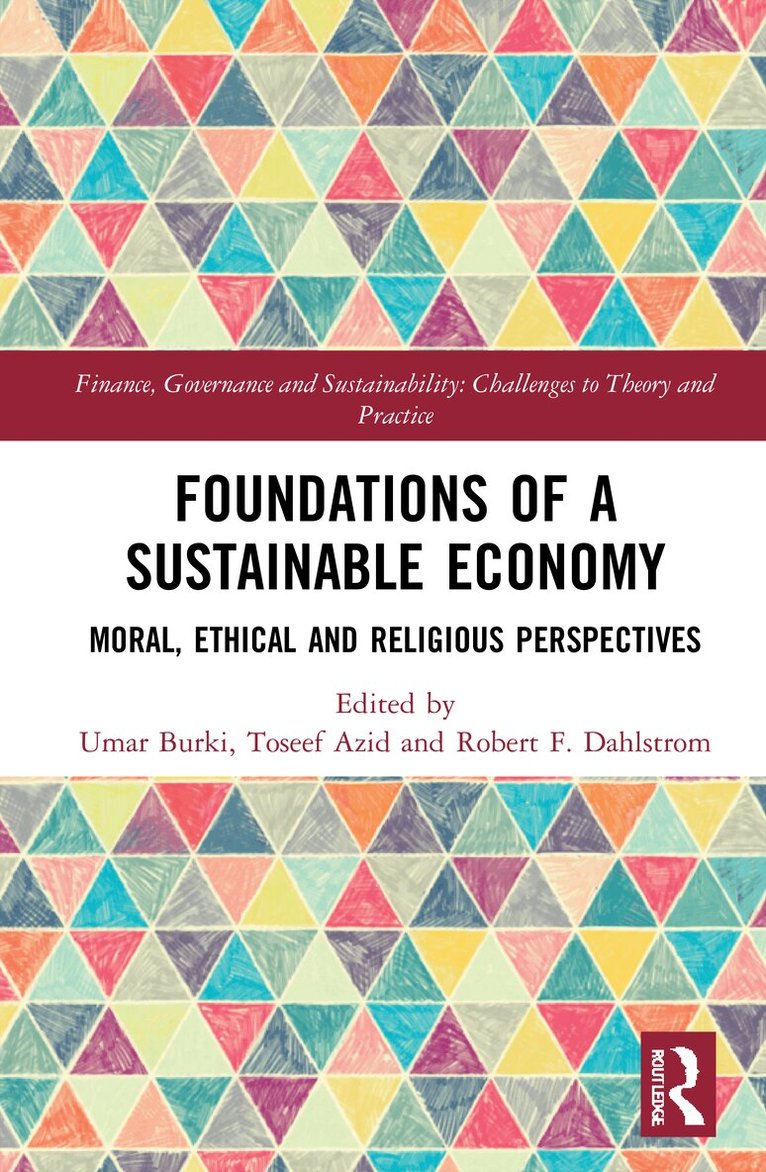
    Foundations of a Sustainable Economy

    Moral, Ethical and Religious Perspectives

    AvUmar Burki,Toseef Azid

    Inbunden, Engelska, 2021

    Del i serien Finance, Governance and Sustainability

    2 056 kr

    Beställningsvara. Skickas inom 10-15 vardagar. Fri frakt över 249 kr.

    Beskrivning

    This book addresses current practices related to sustainable development, its challenges and the future. People belonging to different genders regardless of their age, social class and education should be equal as citizens and individuals, and identical in their rights and responsibilities.The business sector, authorities, societies and religious circles have the potential to play a fundamental role in curbing social ills and the degradation of the environment in this modern world. The authors of this book argue that without good governance, the status of a human being is unlikely to improve. They make the case that to achieve sustainability, government, society and the economy must ensure a platform for people to participate in decision-making and benefit from the rights they are accorded. By covering a range of perspectives across economic, social and moral life, the book will shed light on the problems and possible solutions to sustainable development and the triple bottom line, of people, planet and profit, under the umbrella of morals and divine law.This will be a useful guide for undergraduate and postgraduate students across multiple disciplines, such as economics, religious studies, business studies, political science, anthropology and sociology.

    Produktinformation

    • Utgivningsdatum:2021-07-29
    • Mått:156 x 234 x 30 mm
    • Vikt:480 g
    • Format:Inbunden
    • Språk:Engelska
    • Serie:Finance, Governance and Sustainability
    • Antal sidor:364
    • Förlag:Taylor & Francis Ltd
    • ISBN:9780367818784

    Utforska kategorier

    • Nationalekonomi inom Ekonomi och Ledarskap
    • Internationell ekonomi inom Ekonomi och Ledarskap
    • Miljöteknik inom Naturvetenskap och teknik

    Mer om författaren

    Umar Burki is Associate Professor at USN School of Business, University of South-Eastern Norway, and holds an adjunct position as Associate Professor at Bjorknes University College, Norway.Toseef Azid is Professor of Economics at the College of Business and Economics, Qassim University, Saudi Arabia and visiting professor at Tazkia Islamic University College, Indonesia.Robert Francis Dahlstrom is the Joseph C. Seibert Professor of Marketing in the Farmer School of Business at Miami University and Adjunct Professor of Marketing at BI-Norwegian Business School.

    Recensioner i media

    "Foundations of Sustainable Economy: Moral, Ethical and Religious Perspectives offers readers valuable views of sustainability scholarship from around the world. Together, these studies and cases offer readers the elements of a mosaic that readers can use to form their own interpretation of what is happening on planet Earth today regarding sustainability." — Mark Peterson, Professor of Marketing, University of Wyoming.

    Innehållsförteckning

    • 1. Sustainability and morality Part I: Theoretical foundations 2. Sustainability principles and triple bottom line performance in supply chains 3. The circular economy 4. Environmental policy enforcement Part II: Religion and sustainability 5. Concept of sustainability in Abrahamic religions 6. A Buddhist approach for a sustainable existence 7. Ontological authority of sustainability in Buddhist and Hindu traditions: the art of planetary maintenance 8. Market behavior and sustainable development in the Islamic Framework 9. Religion and development: an Islamic approach to socio-economic development 10. Accountability and Ssstainability in Islamic accounting literature Part III: Empirical evidences 11. Financial development and ecological footprint nexus: a comparative analysis 12. Inequality and sustainability 13. Socio-economic metabolism of Canada: a case study of energy flows from 1990 to 2011 14. Environmental quality and happiness: a perspective of developed and developing countries 15. Altruism a critical prerequisite for sustainable development: implications for Waqf Institutions in Islamic Republic of Iran 16. Social enterprise and Waqf: an alternative sustainable vehicle for Islamic social finance 17. Sustainable development and the work of Ibn Khaldun: the case of Indonesia 18. People, planet and profitability (3Ps): a gender management perspective 19. Challenges and opportunities