Barbara Bridgman Perkins – författare
Visar alla böcker från författaren Barbara Bridgman Perkins. Handla med fri frakt och snabb leverans.
3 produkter
3 produkter
847 kr
Skickas inom 10-15 vardagar
Appraising cancer as a major medical market in the 2010s, Wall Street investors placed their bets on single-technology treatment facilities costing $100-$300 million each. Critics inside medicine called the widely-publicized proton-center boom "crazy medicine and unsustainable public policy." There was no valid evidence, they claimed, that proton beams were more effective than less costly alternatives. But developers expected insurance to cover their centers’ staggeringly high costs and debts. Was speculation like this new to health care?Cancer, Radiation Therapy, and the Market shows how the radiation therapy specialty in the United States (later called radiation oncology) coevolved with its device industry throughout the twentieth-century. Academic engineers and physicians acquired financing to develop increasingly powerful radiation devices, initiated companies to manufacture the devices competitively, and designed hospital and freestanding procedure units to utilize them. In the process, they incorporated market strategies into medical organization and practice. Although palliative benefits and striking tumor reductions fueled hopes of curing cancer, scientific research all too often found serious patient harm and disappointing beneficial impact on cancer survival. This thoroughly documented and provocative inquiry concludes that public health policy needs to re-evaluate market-driven high-tech medicine and build evidence-based health care systems.
580 kr
Skickas inom 11-20 vardagar
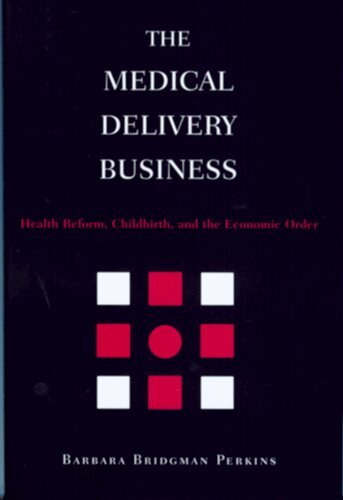
Americans at the end of the twentieth century worried that managed care had fundamentally transformed the character of medicine. In The Medical Delivery Business, Barbara Bridgman Perkins uses examples drawn from maternal and infant care to argue that the business approach in medicine is not a new development. Health care reformers throughout the century looked to industrial, corporate, and commercial enterprises as models for the institutions, specialties, and technological strategies that defined modern medicine. In the case of perinatal care, the business model emphasized specialized over primary care, encouraged the use of surgical and technological procedures, and unnecessarily turned childbirth into an intensive care situation. Active management techniques, for example, encouraged obstetricians to accelerate labor with oxytocin to augment their productivity. Despite the achievements of the childbirth and women’s health movement in the 1970s, aggressive medical intervention has remained the birth experience for millions of American women (and their babies) every year. The Medical Delivery Business challenges the conventional view that a dose of the market is good for medicine. While Perkins is sympathetic to the goals of progressive and feminist reformers, she questions whether their strategies will succeed in making medicine more equitable and effective. She argues that the medical care system itself needs to be fundamentally "re-formed," and the reforms must be based on democracy, caring, and social justice as well as economics.
2 176 kr
Skickas inom 10-15 vardagar
Appraising cancer as a major medical market in the 2010s, Wall Street investors placed their bets on single-technology treatment facilities costing $100-$300 million each. Critics inside medicine called the widely-publicized proton-center boom "crazy medicine and unsustainable public policy." There was no valid evidence, they claimed, that proton beams were more effective than less costly alternatives. But developers expected insurance to cover their centers’ staggeringly high costs and debts. Was speculation like this new to health care?Cancer, Radiation Therapy, and the Market shows how the radiation therapy specialty in the United States (later called radiation oncology) coevolved with its device industry throughout the twentieth-century. Academic engineers and physicians acquired financing to develop increasingly powerful radiation devices, initiated companies to manufacture the devices competitively, and designed hospital and freestanding procedure units to utilize them. In the process, they incorporated market strategies into medical organization and practice. Although palliative benefits and striking tumor reductions fueled hopes of curing cancer, scientific research all too often found serious patient harm and disappointing beneficial impact on cancer survival. This thoroughly documented and provocative inquiry concludes that public health policy needs to re-evaluate market-driven high-tech medicine and build evidence-based health care systems.