Barbara Laslett - Böcker
Visar alla böcker från författaren Barbara Laslett. Handla med fri frakt och snabb leverans.
3 produkter
3 produkter
305 kr
Skickas inom 7-10 vardagar
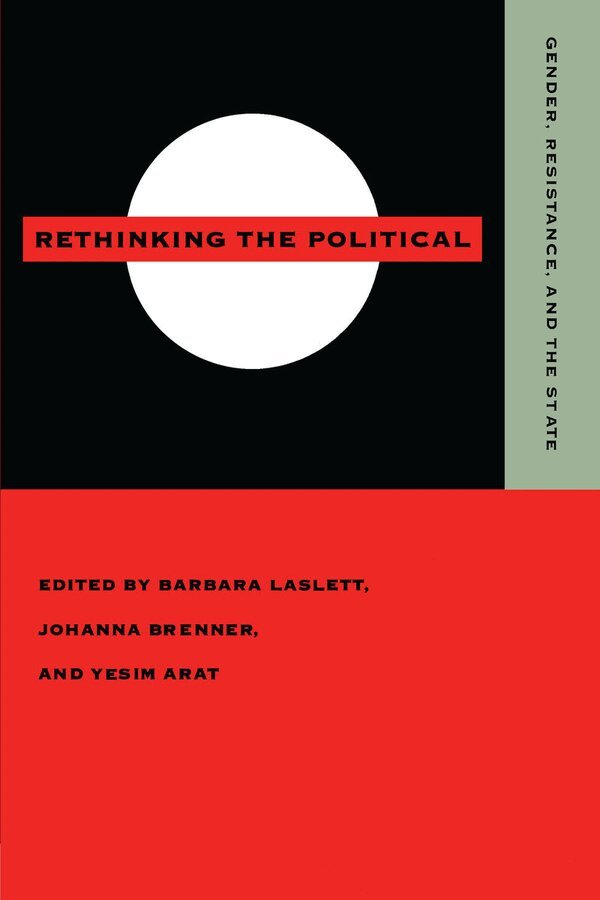
This collection of 18 articles shows how conceptions of the political are expanded and revised when viewed through the lens of gender. Organized to serve both scholars and students across the social sciences, this book re-examines such basic notions as citizenship, collectivity, political resistance and the state. Section One, "Gender, Citizenship, and Collectivity" includes: Nancy Frazer and Linda Gordon's critique of dependence and citizenship; Iris Young on women as a social collective; Ruth Bloch on the feminization of public virtue in revolutionary America; Trisha Franzen on feminism and lesbian community; and Sonia Kruks on de Beauvoir and feminism. "Collective Action and Women's Resistance", Section Two, features: Louise Tilly's "Paths of Proletarianization"; Temma Kaplan's "Female Consciousness and Collective Action"; and five assessments of women's collective action worldwide - Samira Haj on Palestine, Arlene McLeod on Egypt, Gay Seidman on South Africa, Nancy Sternbach et al on Latin America and Anne Walthall on Japan.A section on gender and the state features: Bronwyn Winter on the law and cultural relativism; Sherene Razack on sexual violence; Wendy Luttrell on educational institutions; Patricia Stamp on ethnic conflict; Elizabeth Schmidt on patriarchy and capitalism; and Muriel Nazzari on post-revolutionary Cuba. These essays originally appeared in "Signs: Journal of Women in Culture and Society", edited by Ruth-Ellen Boetcher Joeres and Barbara Laslett.
Telling Stories
The Use of Personal Narratives in the Social Sciences and History
Inbunden, Engelska, 2008
861 kr
Skickas inom 10-15 vardagar
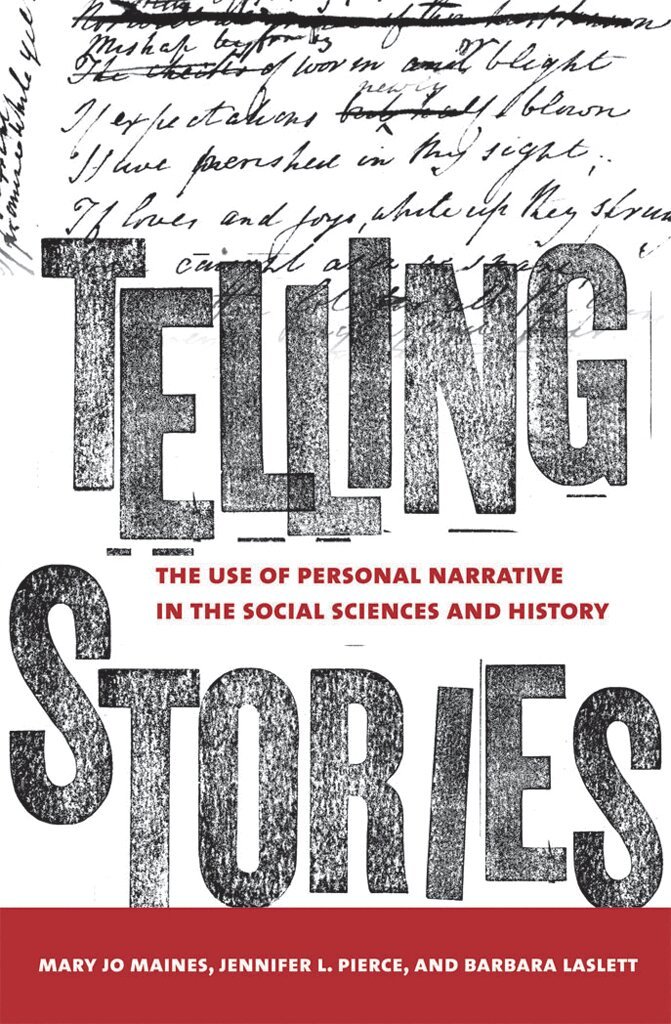
In Telling Stories, Mary Jo Maynes, Jennifer L. Pierce, and Barbara Laslett argue that personal narratives-autobiographies, oral histories, life history interviews, and memoirs-are an important research tool for understanding the relationship between people and their societies. Gathering examples from throughout the world and from premodern as well as contemporary cultures, they draw from labor history and class analysis, feminist sociology, race relations, and anthropology to demonstrate the value of personal narratives for scholars and students alike.Telling Stories explores why and how personal narratives should be used as evidence, and the methods and pitfalls of their use. The authors stress the importance of recognizing that stories that people tell about their lives are never simply individual. Rather, they are told in historically specific times and settings and call on rules, models, and social experiences that govern how story elements link together in the process of self-narration. Stories show how individuals' motivations, emotions, and imaginations have been shaped by their cumulative life experiences. In turn, Telling Stories demonstrates how the knowledge produced by personal narrative analysis is not simply contained in the stories told; the understanding that takes place between narrator and analyst and between analyst and audience enriches the results immeasurably."This decade has witnessed the publication of several anthologies that focus on how to design and conduct oral history projects; introduce and illustrate new applications of oral history to geographical, historical, and social research; and discuss the application of new technologies to oral history methodology.... In this new, important corollary to these works, the authors emphasize the research opportunities available through analysis of personal narratives: 'Read carefully, these sources provide unique insights into the connections between individual life trajectories and collective forces and institutions beyond the individual.' Telling Stories belongs in every oral history collection. Summing Up: Essential."― Choice
Telling Stories
The Use of Personal Narratives in the Social Sciences and History
Häftad, Engelska, 2008
338 kr
Skickas inom 10-15 vardagar
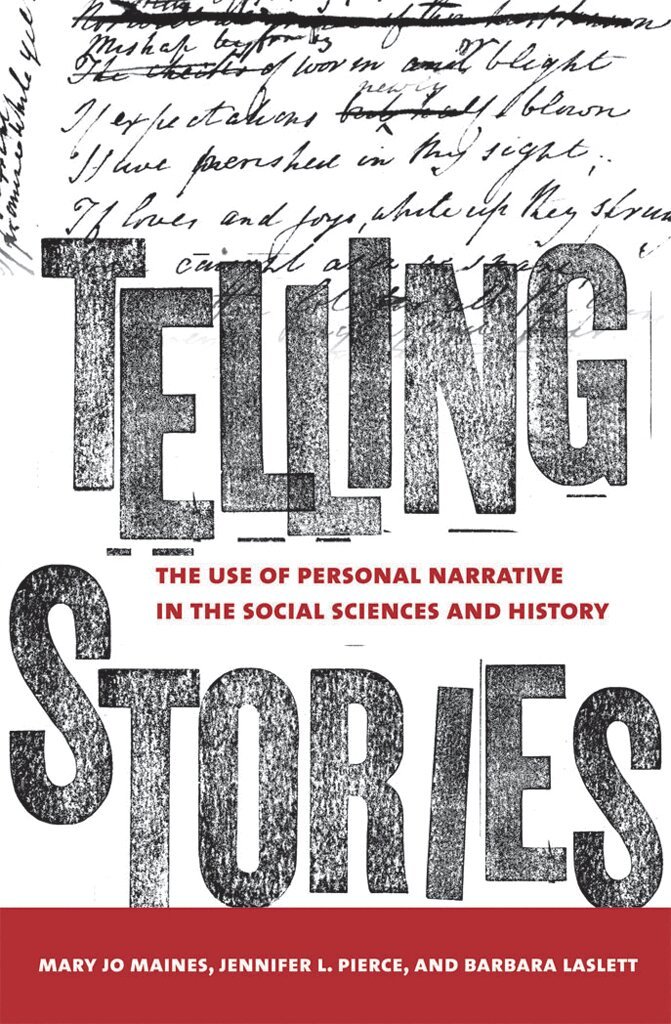
In Telling Stories, Mary Jo Maynes, Jennifer L. Pierce, and Barbara Laslett argue that personal narratives-autobiographies, oral histories, life history interviews, and memoirs-are an important research tool for understanding the relationship between people and their societies. Gathering examples from throughout the world and from premodern as well as contemporary cultures, they draw from labor history and class analysis, feminist sociology, race relations, and anthropology to demonstrate the value of personal narratives for scholars and students alike.Telling Stories explores why and how personal narratives should be used as evidence, and the methods and pitfalls of their use. The authors stress the importance of recognizing that stories that people tell about their lives are never simply individual. Rather, they are told in historically specific times and settings and call on rules, models, and social experiences that govern how story elements link together in the process of self-narration. Stories show how individuals' motivations, emotions, and imaginations have been shaped by their cumulative life experiences. In turn, Telling Stories demonstrates how the knowledge produced by personal narrative analysis is not simply contained in the stories told; the understanding that takes place between narrator and analyst and between analyst and audience enriches the results immeasurably."This decade has witnessed the publication of several anthologies that focus on how to design and conduct oral history projects; introduce and illustrate new applications of oral history to geographical, historical, and social research; and discuss the application of new technologies to oral history methodology.... In this new, important corollary to these works, the authors emphasize the research opportunities available through analysis of personal narratives: 'Read carefully, these sources provide unique insights into the connections between individual life trajectories and collective forces and institutions beyond the individual.' Telling Stories belongs in every oral history collection. Summing Up: Essential."― Choice