Barney Cohen – författare
398 kr
Läs direkt efter köp
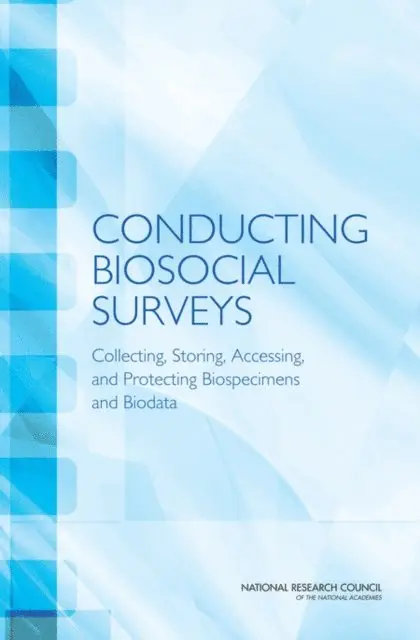
Recent years have seen a growing tendency for social scientists to collect biological specimens such as blood, urine, and saliva as part of large-scale household surveys. By combining biological and social data, scientists are opening up new fields of inquiry and are able for the first time to address many new questions and connections. But including biospecimens in social surveys also adds a great deal of complexity and cost to the investigator''s task. Along with the usual concerns about informed consent, privacy issues, and the best ways to collect, store, and share data, researchers now face a variety of issues that are much less familiar or that appear in a new light. In particular, collecting and storing human biological materials for use in social science research raises additional legal, ethical, and social issues, as well as practical issues related to the storage, retrieval, and sharing of data. For example, acquiring biological data and linking them to social science databases requires a more complex informed consent process, the development of a biorepository, the establishment of data sharing policies, and the creation of a process for deciding how the data are going to be shared and used for secondary analysis—all of which add cost to a survey and require additional time and attention from the investigators. These issues also are likely to be unfamiliar to social scientists who have not worked with biological specimens in the past. Adding to the attraction of collecting biospecimens but also to the complexity of sharing and protecting the data is the fact that this is an era of incredibly rapid gains in our understanding of complex biological and physiological phenomena. Thus the tradeoffs between the risks and opportunities of expanding access to research data are constantly changing. Conducting Biosocial Surveys offers findings and recommendations concerning the best approaches to the collection, storage, use, and sharing of biospecimens gathered in social science surveys and the digital representations of biological data derived therefrom. It is aimed at researchers interested in carrying out such surveys, their institutions, and their funding agencies.
811 kr
Läs direkt efter köp
In 1950 men and women in the United States had a combined life expectancy of 68.9 years, the 12th highest life expectancy at birth in the world. Today, life expectancy is up to 79.2 years, yet the country is now 28th on the list, behind the United Kingdom, Korea, Canada, and France, among others. The United States does have higher rates of infant mortality and violent deaths than in other developed countries, but these factors do not fully account for the country''s relatively poor ranking in life expectancy.
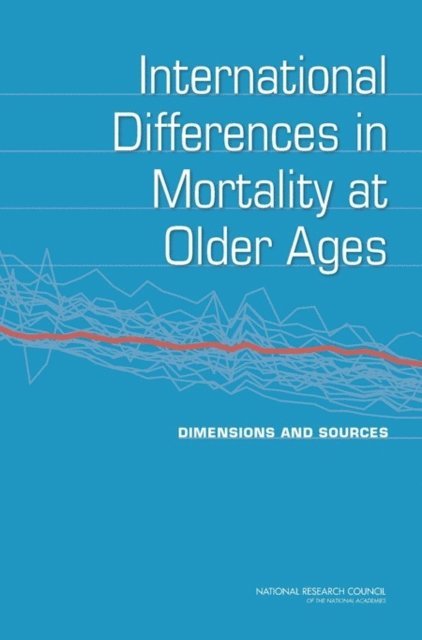
International Differences in Mortality at Older Ages: Dimensions and Sources examines patterns in international differences in life expectancy above age 50 and assesses the evidence and arguments that have been advanced to explain the poor position of the United States relative to other countries. The papers in this deeply researched volume identify gaps in measurement, data, theory, and research design and pinpoint areas for future high-priority research in this area.
In addition to examining the differences in mortality around the world, the papers in International Differences in Mortality at Older Ages look at health factors and life-style choices commonly believed to contribute to the observed international differences in life expectancy. They also identify strategic opportunities for health-related interventions. This book offers a wide variety of disciplinary and scholarly perspectives to the study of mortality, and it offers in-depth analyses that can serve health professionals, policy makers, statisticians, and researchers.
422 kr
Läs direkt efter köp
Recent years have seen a growing tendency for social scientists to collect biological specimens such as blood, urine, and saliva as part of large-scale household surveys. By combining biological and social data, scientists are opening up new fields of inquiry and are able for the first time to address many new questions and connections. But including biospecimens in social surveys also adds a great deal of complexity and cost to the investigator''s task. Along with the usual concerns about informed consent, privacy issues, and the best ways to collect, store, and share data, researchers now face a variety of issues that are much less familiar or that appear in a new light. In particular, collecting and storing human biological materials for use in social science research raises additional legal, ethical, and social issues, as well as practical issues related to the storage, retrieval, and sharing of data. For example, acquiring biological data and linking them to social science databases requires a more complex informed consent process, the development of a biorepository, the establishment of data sharing policies, and the creation of a process for deciding how the data are going to be shared and used for secondary analysis—all of which add cost to a survey and require additional time and attention from the investigators. These issues also are likely to be unfamiliar to social scientists who have not worked with biological specimens in the past. Adding to the attraction of collecting biospecimens but also to the complexity of sharing and protecting the data is the fact that this is an era of incredibly rapid gains in our understanding of complex biological and physiological phenomena. Thus the tradeoffs between the risks and opportunities of expanding access to research data are constantly changing. Conducting Biosocial Surveys offers findings and recommendations concerning the best approaches to the collection, storage, use, and sharing of biospecimens gathered in social science surveys and the digital representations of biological data derived therefrom. It is aimed at researchers interested in carrying out such surveys, their institutions, and their funding agencies.
974 kr
Läs direkt efter köp
919 kr
Läs direkt efter köp
Selection processes play a role: selective migration, for instance, or selective survival to advanced ages. Health differentials originate early in life, possibly even before birth, and are affected by events and experiences throughout the life course. Differences in socioeconomic status, risk behavior, social relations, and health care all play a role. Separate chapters consider the contribution of such factors and the biopsychosocial mechanisms that link them to health. This volume provides the empirical evidence for the research agenda provided in the separate report of the Panel on Race, Ethnicity, and Health in Later Life.
1 086 kr
Läs direkt efter köp
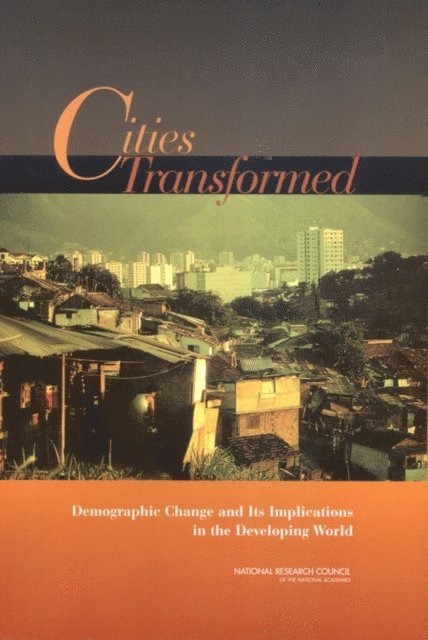
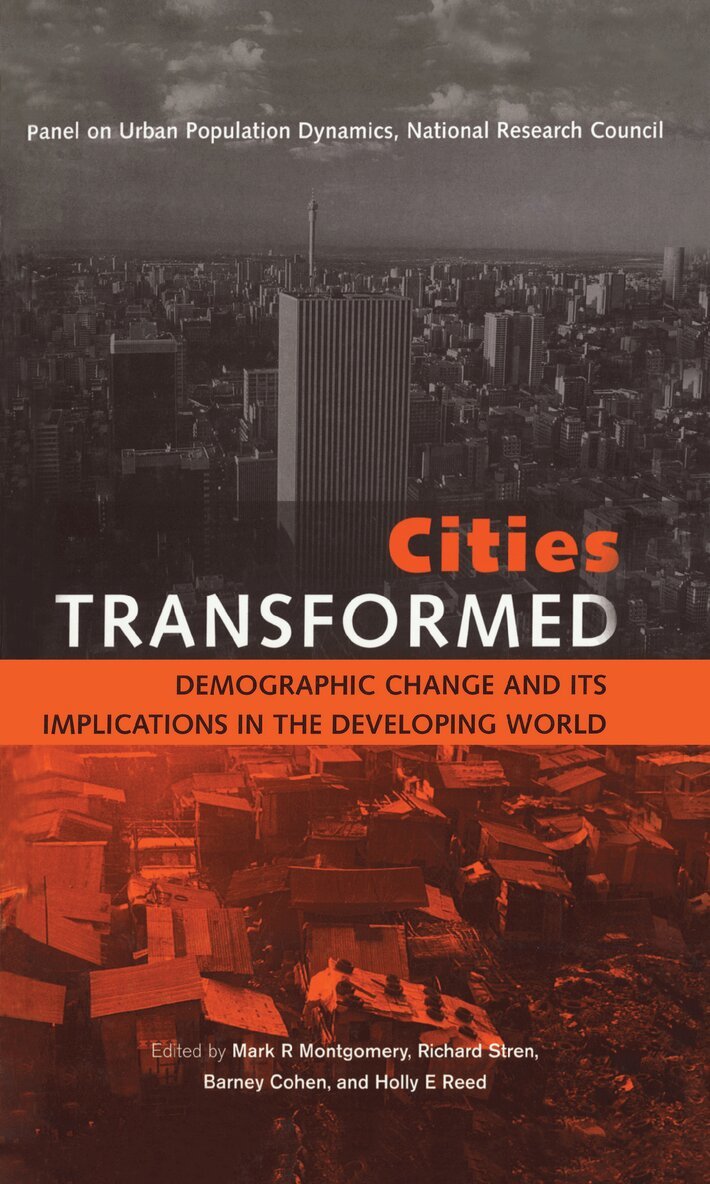
Drawing from a wide variety of data sources, many of them previously inaccessible, Cities Transformed explores the implications of various urban contexts for marriage, fertility, health, schooling, and children''s lives. It should be of interest to all involved in city-level research, policy, planning, and investment decisions.
1 136 kr
Läs direkt efter köp
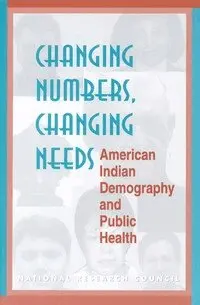
The reported population of American Indians and Alaska Natives has grown rapidly over the past 20 years. These changes raise questions for the Indian Health Service and other agencies responsible for serving the American Indian population. How big is the population? What are its health care and insurance needs?
This volume presents an up-to-date summary of what is known about the demography of American Indian and Alaska Native population—their age and geographic distributions, household structure, employment, and disability and disease patterns. This information is critical for health care planners who must determine the eligible population for Indian health services and the costs of providing them. The volume will also be of interest to researchers and policymakers concerned about the future characteristics and needs of the American Indian population.
735 kr
Läs direkt efter köp
This volume, the last in the series Population Dynamics of Sub-Saharan Africa, examines key demographic changes in Senegal over the past several decades. It analyzes the changes in fertility and their causes, with comparisons to other sub-Saharan countries. It also analyzes the causes and patterns of declines in mortality, focusing particularly on rural and urban differences.
974 kr
Läs direkt efter köp
In sub-Saharan Africa, older people make up a relatively small fraction of the total population and are supported primarily by family and other kinship networks. They have traditionally been viewed as repositories of information and wisdom, and are critical pillars of the community but as the HIV/AIDS pandemic destroys family systems, the elderly increasingly have to deal with the loss of their own support while absorbing the additional responsibilities of caring for their orphaned grandchildren.
Aging in Sub-Saharan Africa explores ways to promote U.S. research interests and to augment the sub-Saharan governments'' capacity to address the many challenges posed by population aging. Five major themes are explored in the book such as the need for a basic definition of "older person," the need for national governments to invest more in basic research and the coordination of data collection across countries, and the need for improved dialogue between local researchers and policy makers.
This book makes three major recommendations: 1) the development of a research agenda 2) enhancing research opportunity and implementation and 3) the translation of research findings.
836 kr
Läs direkt efter köp
The last 35 years or so have witnessed a dramatic shift in the demography of many developing countries. Before 1960, there were substantial improvements in life expectancy, but fertility declines were very rare. Few people used modern contraceptives, and couples had large families. Since 1960, however, fertility rates have fallen in virtually every major geographic region of the world, for almost all political, social, and economic groups. What factors are responsible for the sharp decline in fertility? What role do child survival programs or family programs play in fertility declines? Casual observation suggests that a decline in infant and child mortality is the most important cause, but there is surprisingly little hard evidence for this conclusion. The papers in this volume explore the theoretical, methodological, and empirical dimensions of the fertility-mortality relationship. It includes several detailed case studies based on contemporary data from developing countries and on historical data from Europe and the United States.
502 kr
Läs direkt efter köp
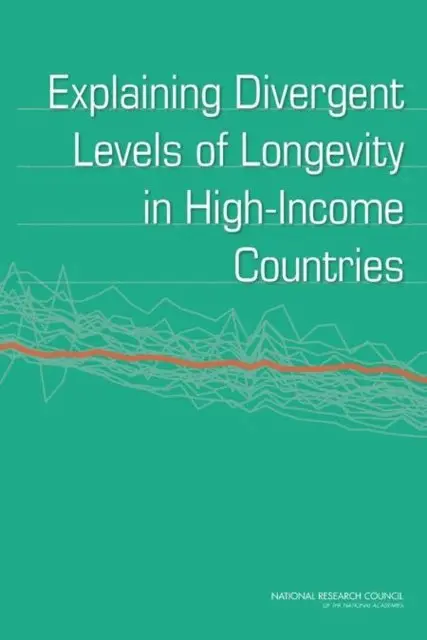
During the last 25 years, life expectancy at age 50 in the United States has been rising, but at a slower pace than in many other high-income countries, such as Japan and Australia. This difference is particularly notable given that the United States spends more on health care than any other nation. Concerned about this divergence, the National Institute on Aging asked the National Research Council to examine evidence on its possible causes. According to Explaining Divergent Levels of Longevity in High-Income Countries, the nation''s history of heavy smoking is a major reason why lifespans in the United States fall short of those in many other high-income nations. Evidence suggests that current obesity levels play a substantial part as well. The book reports that lack of universal access to health care in the U.S. also has increased mortality and reduced life expectancy, though this is a less significant factor for those over age 65 because of Medicare access. For the main causes of death at older ages—cancer and cardiovascular disease—available indicators do not suggest that the U.S. health care system is failing to prevent deaths that would be averted elsewhere. In fact, cancer detection and survival appear to be better in the U.S. than in most other high-income nations, and survival rates following a heart attack also are favorable.Explaining Divergent Levels of Longevity in High-Income Countries identifies many gaps in research. For instance, while lung cancer deaths are a reliable marker of the damage from smoking, no clear-cut marker exists for obesity, physical inactivity, social integration, or other risks considered in this book. Moreover, evaluation of these risk factors is based on observational studies, which—unlike randomized controlled trials—are subject to many biases.
892 kr
Läs direkt efter köp
In 1950 men and women in the United States had a combined life expectancy of 68.9 years, the 12th highest life expectancy at birth in the world. Today, life expectancy is up to 79.2 years, yet the country is now 28th on the list, behind the United Kingdom, Korea, Canada, and France, among others. The United States does have higher rates of infant mortality and violent deaths than in other developed countries, but these factors do not fully account for the country''s relatively poor ranking in life expectancy.
International Differences in Mortality at Older Ages: Dimensions and Sources examines patterns in international differences in life expectancy above age 50 and assesses the evidence and arguments that have been advanced to explain the poor position of the United States relative to other countries. The papers in this deeply researched volume identify gaps in measurement, data, theory, and research design and pinpoint areas for future high-priority research in this area.
In addition to examining the differences in mortality around the world, the papers in International Differences in Mortality at Older Ages look at health factors and life-style choices commonly believed to contribute to the observed international differences in life expectancy. They also identify strategic opportunities for health-related interventions. This book offers a wide variety of disciplinary and scholarly perspectives to the study of mortality, and it offers in-depth analyses that can serve health professionals, policy makers, statisticians, and researchers.
535 kr
Läs direkt efter köp
During the last 25 years, life expectancy at age 50 in the United States has been rising, but at a slower pace than in many other high-income countries, such as Japan and Australia. This difference is particularly notable given that the United States spends more on health care than any other nation. Concerned about this divergence, the National Institute on Aging asked the National Research Council to examine evidence on its possible causes. According to Explaining Divergent Levels of Longevity in High-Income Countries, the nation''s history of heavy smoking is a major reason why lifespans in the United States fall short of those in many other high-income nations. Evidence suggests that current obesity levels play a substantial part as well. The book reports that lack of universal access to health care in the U.S. also has increased mortality and reduced life expectancy, though this is a less significant factor for those over age 65 because of Medicare access. For the main causes of death at older ages—cancer and cardiovascular disease—available indicators do not suggest that the U.S. health care system is failing to prevent deaths that would be averted elsewhere. In fact, cancer detection and survival appear to be better in the U.S. than in most other high-income nations, and survival rates following a heart attack also are favorable.Explaining Divergent Levels of Longevity in High-Income Countries identifies many gaps in research. For instance, while lung cancer deaths are a reliable marker of the damage from smoking, no clear-cut marker exists for obesity, physical inactivity, social integration, or other risks considered in this book. Moreover, evaluation of these risk factors is based on observational studies, which—unlike randomized controlled trials—are subject to many biases.
761 kr
Läs direkt efter köp
Drawing from a wide variety of data sources, many of them previously inaccessible, Cities Transformed explores the implications of various urban contexts for marriage, fertility, health, schooling, and children''s lives. It should be of interest to all involved in city-level research, policy, planning, and investment decisions.
669 kr
Läs direkt efter köp
Selection processes play a role: selective migration, for instance, or selective survival to advanced ages. Health differentials originate early in life, possibly even before birth, and are affected by events and experiences throughout the life course. Differences in socioeconomic status, risk behavior, social relations, and health care all play a role. Separate chapters consider the contribution of such factors and the biopsychosocial mechanisms that link them to health. This volume provides the empirical evidence for the research agenda provided in the separate report of the Panel on Race, Ethnicity, and Health in Later Life.
747 kr
Skickas
1 047 kr
Läs direkt efter köp
The reported population of American Indians and Alaska Natives has grown rapidly over the past 20 years. These changes raise questions for the Indian Health Service and other agencies responsible for serving the American Indian population. How big is the population? What are its health care and insurance needs?
This volume presents an up-to-date summary of what is known about the demography of American Indian and Alaska Native population—their age and geographic distributions, household structure, employment, and disability and disease patterns. This information is critical for health care planners who must determine the eligible population for Indian health services and the costs of providing them. The volume will also be of interest to researchers and policymakers concerned about the future characteristics and needs of the American Indian population.
755 kr
Läs direkt efter köp
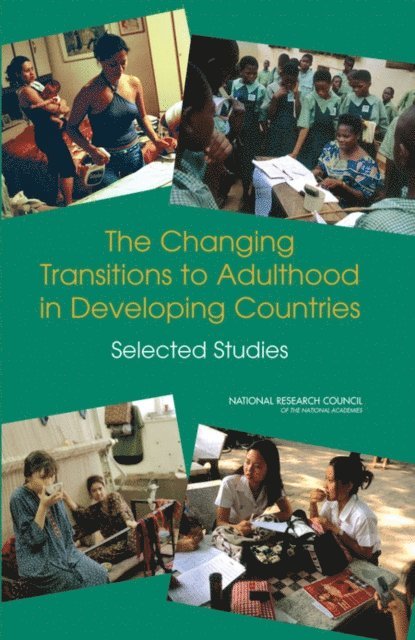
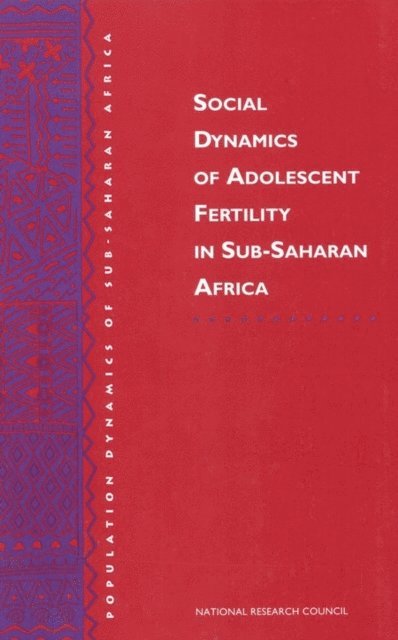
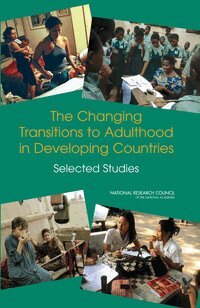
This examination of changes in adolescent fertility emphasizes the changing social context within which adolescent childbearing takes place.
452 kr
Läs direkt efter köp
This volume, the last in the series Population Dynamics of Sub-Saharan Africa, examines key demographic changes in Senegal over the past several decades. It analyzes the changes in fertility and their causes, with comparisons to other sub-Saharan countries. It also analyzes the causes and patterns of declines in mortality, focusing particularly on rural and urban differences.
1 203 kr
Läs direkt efter köp
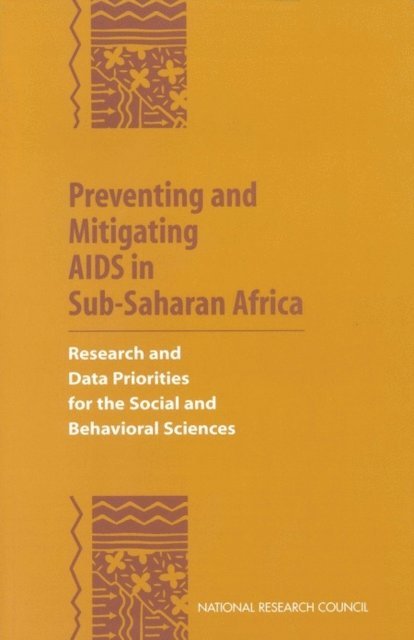
The AIDS epidemic in Sub-Saharan Africa continues to affect all facets of life throughout the subcontinent. Deaths related to AIDS have driven down the life expectancy rate of residents in Zambia, Kenya, and Uganda with far-reaching implications. This book details the current state of the AIDS epidemic in Africa and what is known about the behaviors that contribute to the transmission of the HIV infection. It lays out what research is needed and what is necessary to design more effective prevention programs.
917 kr
Läs direkt efter köp
In sub-Saharan Africa, older people make up a relatively small fraction of the total population and are supported primarily by family and other kinship networks. They have traditionally been viewed as repositories of information and wisdom, and are critical pillars of the community but as the HIV/AIDS pandemic destroys family systems, the elderly increasingly have to deal with the loss of their own support while absorbing the additional responsibilities of caring for their orphaned grandchildren.
Aging in Sub-Saharan Africa explores ways to promote U.S. research interests and to augment the sub-Saharan governments'' capacity to address the many challenges posed by population aging. Five major themes are explored in the book such as the need for a basic definition of "older person," the need for national governments to invest more in basic research and the coordination of data collection across countries, and the need for improved dialogue between local researchers and policy makers.
This book makes three major recommendations: 1) the development of a research agenda 2) enhancing research opportunity and implementation and 3) the translation of research findings.
860 kr
Läs direkt efter köp
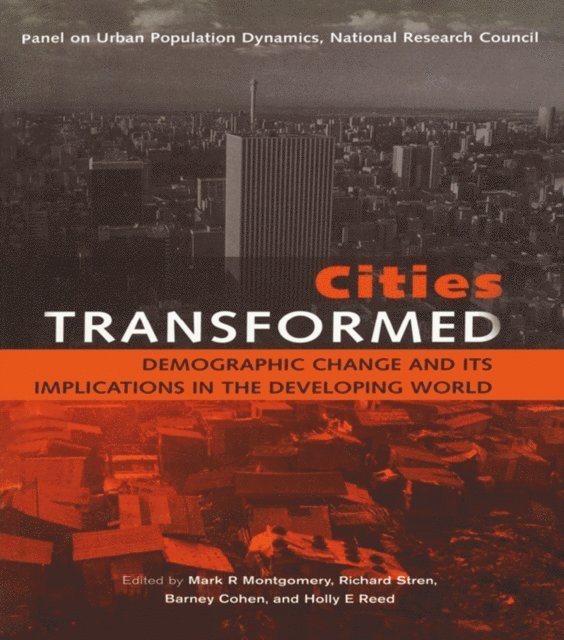
Over the next 20 years, most low-income countries will, for the first time, become more urban than rural. Understanding demographic trends in the cities of the developing world is critical to those countries - their societies, economies, and environments. The benefits from urbanization cannot be overlooked, but the speed and sheer scale of this transformation presents many challenges.
In this uniquely thorough and authoritative volume, 16 of the world''s leading scholars on urban population and development have worked together to produce the most comprehensive and detailed analysis of the changes taking place in cities and their implications and impacts. They focus on population dynamics, social and economic differentiation, fertility and reproductive health, mortality and morbidity, labor force, and urban governance.
As many national governments decentralize and devolve their functions, the nature of urban management and governance is undergoing fundamental transformation, with programs in poverty alleviation, health, education, and public services increasingly being deposited in the hands of untested municipal and regional governments. Cities Transformed identifies a new class of policy maker emerging to take up the growing responsibilities.
Drawing from a wide variety of data sources, many of them previously inaccessible, this essential text will become the benchmark for all involved in city-level research, policy, planning, and investment decisions.
The National Research Council is a private, non-profit institution based in Washington, DC, providing services to the US government, the public, and the scientific and engineering communities. The editors are members of the Council''s Panel on Urban Population Dynamics.
860 kr
Läs direkt efter köp
Over the next 20 years, most low-income countries will, for the first time, become more urban than rural. Understanding demographic trends in the cities of the developing world is critical to those countries - their societies, economies, and environments. The benefits from urbanization cannot be overlooked, but the speed and sheer scale of this transformation presents many challenges.
In this uniquely thorough and authoritative volume, 16 of the world''s leading scholars on urban population and development have worked together to produce the most comprehensive and detailed analysis of the changes taking place in cities and their implications and impacts. They focus on population dynamics, social and economic differentiation, fertility and reproductive health, mortality and morbidity, labor force, and urban governance.
As many national governments decentralize and devolve their functions, the nature of urban management and governance is undergoing fundamental transformation, with programs in poverty alleviation, health, education, and public services increasingly being deposited in the hands of untested municipal and regional governments. Cities Transformed identifies a new class of policy maker emerging to take up the growing responsibilities.
Drawing from a wide variety of data sources, many of them previously inaccessible, this essential text will become the benchmark for all involved in city-level research, policy, planning, and investment decisions.
The National Research Council is a private, non-profit institution based in Washington, DC, providing services to the US government, the public, and the scientific and engineering communities. The editors are members of the Council''s Panel on Urban Population Dynamics.
1 438 kr
Tillfälligt slut
1 358 kr
Tillfälligt slut
1 752 kr
Tillfälligt slut
1 670 kr
Tillfälligt slut
1 481 kr
Tillfälligt slut
923 kr
Tillfälligt slut
856 kr
Tillfälligt slut