E-bok, Engelska, 1997
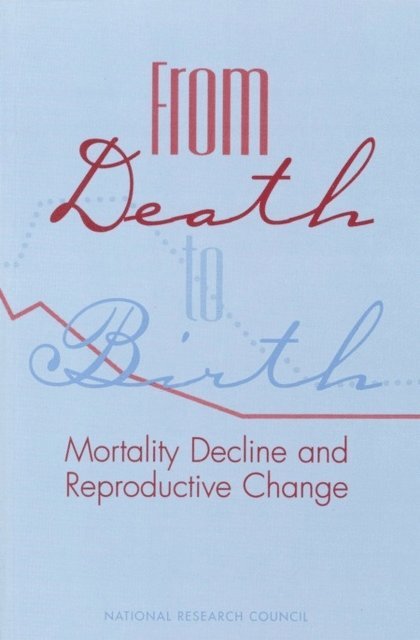
From Death to Birth
Av Committee on Population, Commission on Behavioral and Social Sciences and Education, Division of Behavioral and Social Sciences and Education, National Research Council, Mark R. Montgomery, Barney Cohen
873 kr
Skickas måndag 12/10
Beskrivning
The last 35 years or so have witnessed a dramatic shift in the demography of many developing countries. Before 1960, there were substantial improvements in life expectancy, but fertility declines were very rare. Few people used modern contraceptives, and couples had large families. Since 1960, however, fertility rates have fallen in virtually every major geographic region of the world, for almost all political, social, and economic groups. What factors are responsible for the sharp decline in fertility? What role do child survival programs or family programs play in fertility declines? Casual observation suggests that a decline in infant and child mortality is the most important cause, but there is surprisingly little hard evidence for this conclusion. The papers in this volume explore the theoretical, methodological, and empirical dimensions of the fertility-mortality relationship. It includes several detailed case studies based on contemporary data from developing countries and on historical data from Europe and the United States.
Produktinformation
- Utgivningsdatum: 1997-12-12
- Format: E-bok
- Språk: Engelska
- Antal sidor: 438
- Förlag: National Academies Press
- ISBN: 9780309184915
Utforska kategorier
Betyg & recensioner
0 recensioner
Inga recensioner tillgängliga.