Bas van Bavel - Böcker
Visar alla böcker från författaren Bas van Bavel. Handla med fri frakt och snabb leverans.
7 produkter
7 produkter
684 kr
Skickas inom 7-10 vardagar
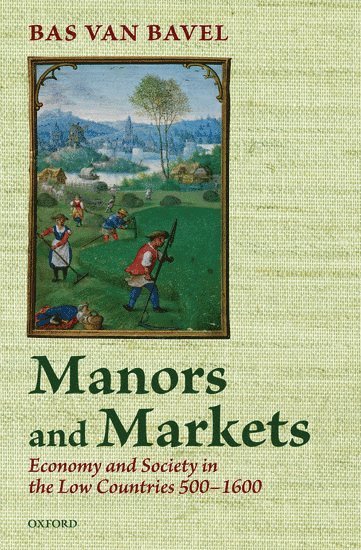
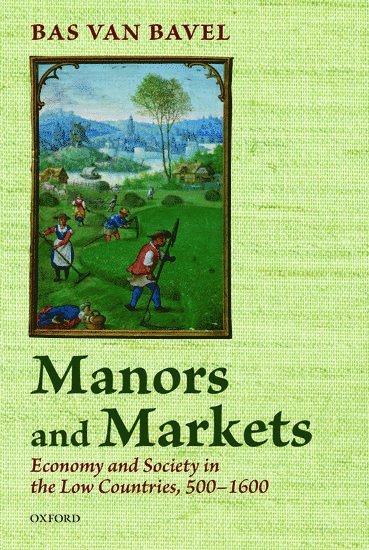
The Low Countries -- an area roughly embracing the present-day Netherlands and Belgium -- formed a patchwork of varied economic and social development in the Middle Ages, with some regions displaying a remarkable dynamism. Manors and Markets charts the history of these vibrant economies and societies, and contrasts them with alternative paths of development, from the early medieval period to the beginning of the seventeenth century. Providing a concise overview of social and economic changes over more than a thousand years, Bas van Bavel assesses the impact of the social and institutional organization that saw the Low Countries become the most urbanized and densely populated part of Europe by the end of the Middle Ages. By delving into the early and high medieval history of society, van Bavel uncovers the foundations of the flourishing of the medieval Flemish towns and the forces that propelled Holland towards its Golden Age. Exploring the Low Countries at a regional level, van Bavel highlights the importance of localized structures for determining the nature of social transitions and economic growth. He assesses the role of manorial organization, the emergence of markets, the rise of towns, the quest for self-determination by ordinary people, and the sharp regional differences in development that can be observed in the very long run. In doing so, the book offers a significant contribution to the debate about the causes of economic and social change, both past and present.
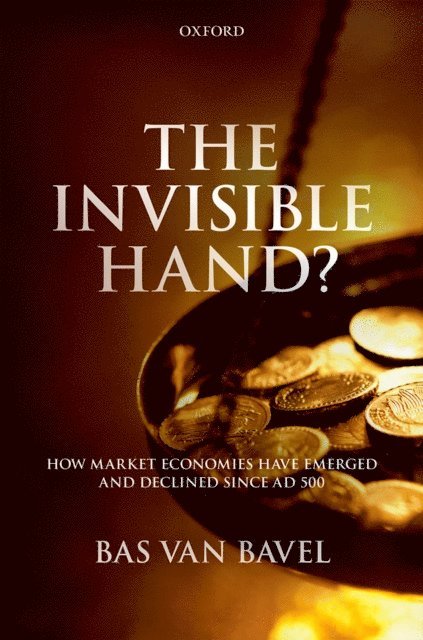
The Invisible Hand?
How Market Economies have Emerged and Declined Since AD 500
Häftad, Engelska, 2019
499 kr
Skickas
The Invisible Hand? offers a radical departure from the conventional wisdom of economists and economic historians, by showing that 'factor markets' and the economies dominated by them -- the market economies -- are not modern, but have existed at various times in the past. They rise, stagnate, and decline; and consist of very different combinations of institutions embedded in very different societies. These market economies create flexibility and high mobility in the exchange of land, labour, and capital, and initially they generate economic growth, although they also build on existing social structures, as well as existing exchange and allocation systems. The dynamism that results from the rise of factor markets leads to the rise of new market elites who accumulate land and capital, and use wage labour extensively to make their wealth profitable. In the long term, this creates social polarization and a decline of average welfare. As these new elites gradually translate their economic wealth into political leverage, it also creates institutional sclerosis, and finally makes these markets stagnate or decline again. This process is analysed across the three major, pre-industrial examples of successful market economies in western Eurasia: Iraq in the early Middle Ages, Italy in the high Middle Ages, and the Low Countries in the late Middle Ages and the early modern period, and then parallels drawn to England and the United States in the modern period. These areas successively saw a rapid rise of factor markets and the associated dynamism, followed by stagnation, which enables an in-depth investigation of the causes and results of this process.
1 508 kr
Skickas inom 7-10 vardagar
The Low Countries -- an area roughly embracing the present-day Netherlands and Belgium -- formed a patchwork of varied economic and social development in the Middle Ages, with some regions displaying a remarkable dynamism. Manors and Markets charts the history of these vibrant economies and societies, and contrasts them with alternative paths of development, from the early medieval period to the beginning of the seventeenth century.Providing a concise overview of social and economic changes over more than a thousand years, Bas van Bavel assesses the impact of the social and institutional organization that saw the Low Countries become the most urbanized and densely populated part of Europe by the end of the Middle Ages. By delving into the early and high medieval history of society, van Bavel uncovers the foundations of the flourishing of the medieval Flemish towns and the forces that propelled Holland towards its Golden Age.Exploring the Low Countries at a regional level, van Bavel highlights the importance of localized structures for determining the nature of social transitions and economic growth. He assesses the role of manorial organization, the emergence of markets, the rise of towns, the quest for self-determination by ordinary people, and the sharp regional differences in development that can be observed in the very long run. In doing so, the book offers a significant contribution to the debate about the causes of economic and social change, both past and present.
The Invisible Hand?
How Market Economies have Emerged and Declined Since AD 500
Inbunden, Engelska, 2016
1 020 kr
Skickas inom 5-8 vardagar
The Invisible Hand offers a radical departure from the conventional wisdom of economists and economic historians, by showing that 'factor markets' and the economies dominated by them -- the market economies -- are not modern, but have existed at various times in the past. They rise, stagnate, and decline; and consist of very different combinations of institutions embedded in very different societies. These market economies create flexibility and high mobility in the exchange of land, labour, and capital, and initially they generate economic growth, although they also build on existing social structures, as well as existing exchange and allocation systems. The dynamism that results from the rise of factor markets leads to the rise of new market elites who accumulate land and capital, and use wage labour extensively to make their wealth profitable. In the long term, this creates social polarization and a decline of average welfare. As these new elites gradually translate their economic wealth into political leverage, it also creates institutional sclerosis, and finally makes these markets stagnate or decline again. This process is analysed across the three major, pre-industrial examples of successful market economies in western Eurasia: Iraq in the early Middle Ages, Italy in the high Middle Ages, and the Low Countries in the late Middle Ages and the early modern period, and then parallels drawn to England and the United States in the modern period. These areas successively saw a rapid rise of factor markets and the associated dynamism, followed by stagnation, which enables an in-depth investigation of the causes and results of this process.
1 034 kr
Skickas inom 7-10 vardagar
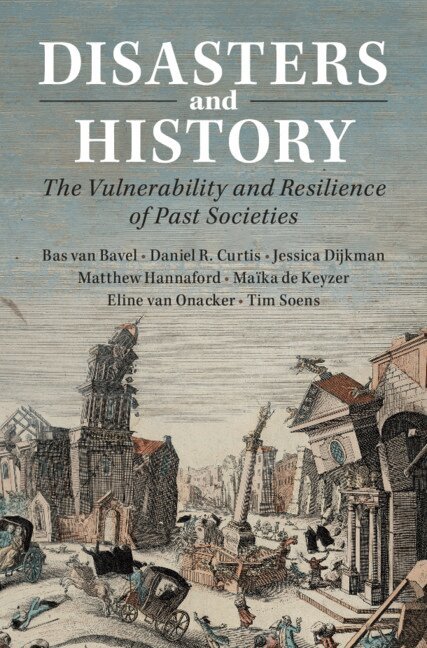
Disasters and History offers the first comprehensive historical overview of hazards and disasters. Drawing on a range of case studies, including the Black Death, the Lisbon earthquake of 1755 and the Fukushima disaster, the authors examine how societies dealt with shocks and hazards and their potentially disastrous outcomes. They reveal the ways in which the consequences and outcomes of these disasters varied widely not only between societies but also within the same societies according to social groups, ethnicity and gender. They also demonstrate how studying past disasters, including earthquakes, droughts, floods and epidemics, can provide a lens through which to understand the social, economic and political functioning of past societies and reveal features of a society which may otherwise remain hidden from view. This title is also available as Open Access on Cambridge Core.
334 kr
Skickas inom 7-10 vardagar
Disasters and History offers the first comprehensive historical overview of hazards and disasters. Drawing on a range of case studies, including the Black Death, the Lisbon earthquake of 1755 and the Fukushima disaster, the authors examine how societies dealt with shocks and hazards and their potentially disastrous outcomes. They reveal the ways in which the consequences and outcomes of these disasters varied widely not only between societies but also within the same societies according to social groups, ethnicity and gender. They also demonstrate how studying past disasters, including earthquakes, droughts, floods and epidemics, can provide a lens through which to understand the social, economic and political functioning of past societies and reveal features of a society which may otherwise remain hidden from view. This title is also available as Open Access on Cambridge Core.
1 212 kr
Skickas inom 3-6 vardagar