Daniel R. Curtis - Böcker
Visar alla böcker från författaren Daniel R. Curtis. Handla med fri frakt och snabb leverans.
7 produkter
7 produkter
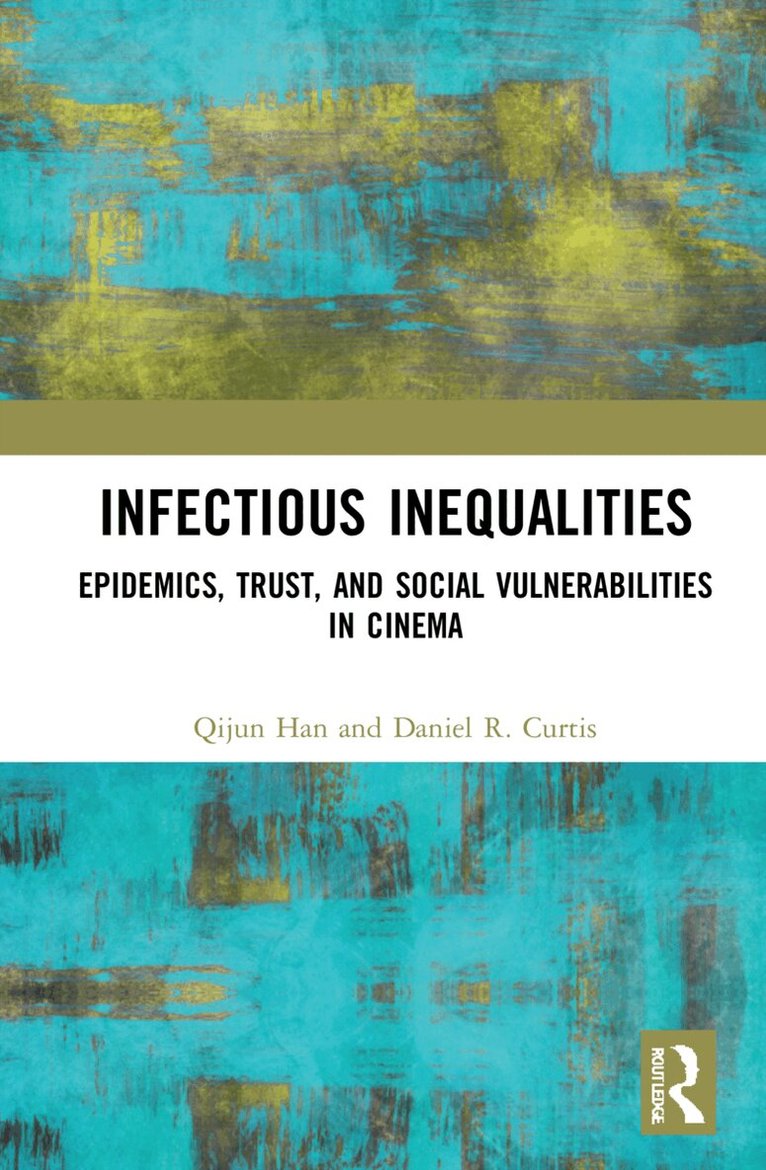
Infectious Inequalities
Epidemics, Trust, and Social Vulnerabilities in Cinema
Inbunden, Engelska, 2021
2 160 kr
Skickas inom 10-15 vardagar
This book explores societal vulnerabilities highlighted within cinema and develops an interpretive framework for understanding the depiction of societal responses to epidemic disease outbreaks across cinematic history.Drawing on a large database of twentieth- and twenty-first-century films depicting epidemics, the study looks into issues including trust, distrust, and mistrust; different epidemic experiences down the lines of expertise, gender, and wealth; and the difficulties in visualizing the invisible pathogen on screen. The authors argue that epidemics have long been presented in cinema as forming a point of cohesion for the communities portrayed, as individuals and groups “from below” represented as characters in these films find solidarity in battling a common enemy of elite institutions and authority figures. Throughout the book, a central question is also posed: “cohesion for whom?”, which sheds light on the fortunes of those characters that are excluded from these expressions of collective solidarity.This book is a valuable reference for scholars and students of film studies and visual studies as well as academic and general readers interested in topics of films and history, and disease and society.The Open Access version of this book, available at http://www.taylorfrancis.com, has been made available under a Creative Commons Attribution-Non Commercial-No Derivatives 4.0 license.
615 kr
Skickas inom 10-15 vardagar
This book explores societal vulnerabilities highlighted within cinema and develops an interpretive framework for understanding the depiction of societal responses to epidemic disease outbreaks across cinematic history.Drawing on a large database of twentieth- and twenty-first-century films depicting epidemics, the study looks into issues including trust, distrust, and mistrust; different epidemic experiences down the lines of expertise, gender, and wealth; and the difficulties in visualizing the invisible pathogen on screen. The authors argue that epidemics have long been presented in cinema as forming a point of cohesion for the communities portrayed, as individuals and groups “from below” represented as characters in these films find solidarity in battling a common enemy of elite institutions and authority figures. Throughout the book, a central question is also posed: “cohesion for whom?”, which sheds light on the fortunes of those characters that are excluded from these expressions of collective solidarity.This book is a valuable reference for scholars and students of film studies and visual studies as well as academic and general readers interested in topics of films and history, and disease and society.The Open Access version of this book, available at http://www.taylorfrancis.com, has been made available under a Creative Commons Attribution-Non Commercial-No Derivatives 4.0 license.
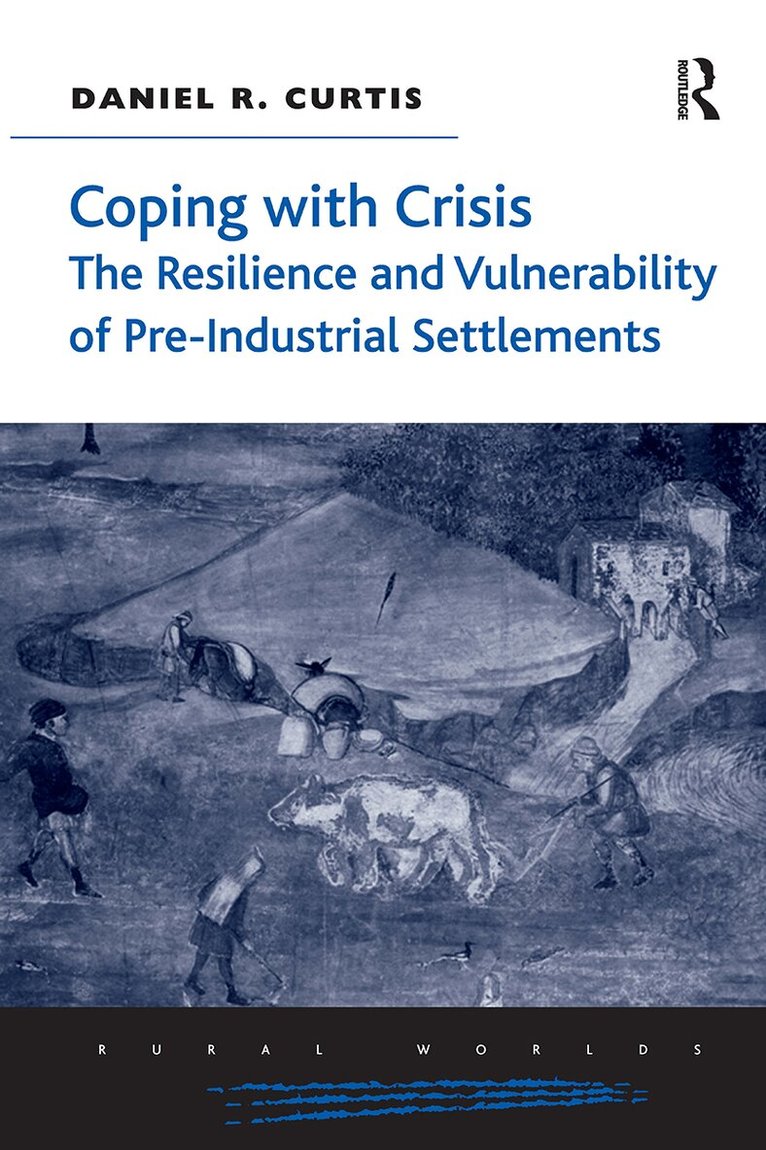
Coping with Crisis: The Resilience and Vulnerability of Pre-Industrial Settlements
Häftad, Engelska, 2024
594 kr
Skickas inom 10-15 vardagar
Why in the pre-industrial period were some settlements resilient and stable over the long term while other settlements were vulnerable to crisis? Indeed, what made certain human habitations more prone to decline or even total collapse, than others? All pre-industrial societies had to face certain challenges: exogenous environmental hazards such as earthquakes or plagues, economic or political hazards from ’outside’ such as warfare or expropriation of property, or hazards of their own-making such as soil erosion or subsistence crises. How then can we explain why some societies were able to overcome or negate these problems, while other societies proved susceptible to failure, as settlements contracted, stagnated, were abandoned, or even disappeared entirely? This book has been stimulated by the questions and hypotheses put forward by a recent ’disaster studies’ literature - in particular, by placing the intrinsic arrangement of societies at the forefront of the explanatory framework. Essentially it is suggested that the resilience or vulnerability of habitation has less to do with exogenous crises themselves, but on endogenous societal responses which dictate: (a) the extent of destruction caused by crises and the capacity for society to protect itself; and (b) the capacity to create a sufficient recovery. By empirically testing the explanatory framework on a number of societies between the Middle Ages and the nineteenth century in England, the Low Countries, and Italy, it is ultimately argued in this book that rather than the protective functions of the state or the market, or the implementation of technological innovation or capital investment, the most resilient human habitations in the pre-industrial period were those than displayed an equitable distribution of property and a well-balanced distribution of power between social interest groups. Equitable distributions of power and property were the underlying conditions in pre-industrial societies that all
1 034 kr
Skickas inom 7-10 vardagar
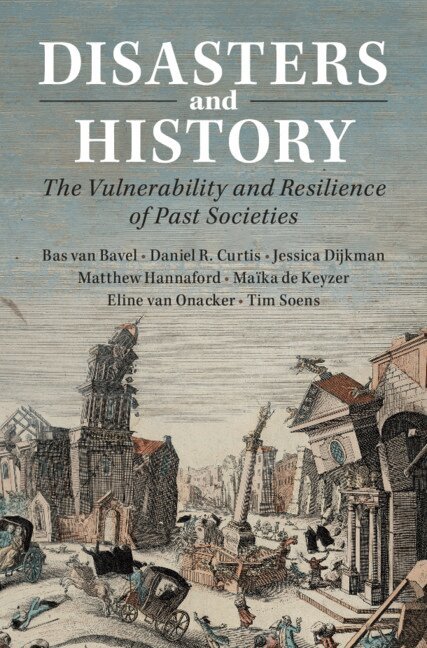
Disasters and History offers the first comprehensive historical overview of hazards and disasters. Drawing on a range of case studies, including the Black Death, the Lisbon earthquake of 1755 and the Fukushima disaster, the authors examine how societies dealt with shocks and hazards and their potentially disastrous outcomes. They reveal the ways in which the consequences and outcomes of these disasters varied widely not only between societies but also within the same societies according to social groups, ethnicity and gender. They also demonstrate how studying past disasters, including earthquakes, droughts, floods and epidemics, can provide a lens through which to understand the social, economic and political functioning of past societies and reveal features of a society which may otherwise remain hidden from view. This title is also available as Open Access on Cambridge Core.
334 kr
Skickas inom 7-10 vardagar
Disasters and History offers the first comprehensive historical overview of hazards and disasters. Drawing on a range of case studies, including the Black Death, the Lisbon earthquake of 1755 and the Fukushima disaster, the authors examine how societies dealt with shocks and hazards and their potentially disastrous outcomes. They reveal the ways in which the consequences and outcomes of these disasters varied widely not only between societies but also within the same societies according to social groups, ethnicity and gender. They also demonstrate how studying past disasters, including earthquakes, droughts, floods and epidemics, can provide a lens through which to understand the social, economic and political functioning of past societies and reveal features of a society which may otherwise remain hidden from view. This title is also available as Open Access on Cambridge Core.
Coping with Crisis: The Resilience and Vulnerability of Pre-Industrial Settlements
Inbunden, Engelska, 2014
2 369 kr
Skickas inom 10-15 vardagar
Why in the pre-industrial period were some settlements resilient and stable over the long term while other settlements were vulnerable to crisis? Indeed, what made certain human habitations more prone to decline or even total collapse, than others? All pre-industrial societies had to face certain challenges: exogenous environmental hazards such as earthquakes or plagues, economic or political hazards from ’outside’ such as warfare or expropriation of property, or hazards of their own-making such as soil erosion or subsistence crises. How then can we explain why some societies were able to overcome or negate these problems, while other societies proved susceptible to failure, as settlements contracted, stagnated, were abandoned, or even disappeared entirely? This book has been stimulated by the questions and hypotheses put forward by a recent ’disaster studies’ literature - in particular, by placing the intrinsic arrangement of societies at the forefront of the explanatory framework. Essentially it is suggested that the resilience or vulnerability of habitation has less to do with exogenous crises themselves, but on endogenous societal responses which dictate: (a) the extent of destruction caused by crises and the capacity for society to protect itself; and (b) the capacity to create a sufficient recovery. By empirically testing the explanatory framework on a number of societies between the Middle Ages and the nineteenth century in England, the Low Countries, and Italy, it is ultimately argued in this book that rather than the protective functions of the state or the market, or the implementation of technological innovation or capital investment, the most resilient human habitations in the pre-industrial period were those than displayed an equitable distribution of property and a well-balanced distribution of power between social interest groups. Equitable distributions of power and property were the underlying conditions in pre-industrial societies that all
Epidemic Disease and Society in the Premodern Low Countries
Inequality and Community
Inbunden, Engelska, 2026
2 160 kr
Skickas inom 10-15 vardagar
In this book, evidence from a long-run history of epidemic-society interaction in the Low Countries shows that most recurring outbreaks were accommodated by communities, and most reactions, responses, and changes seen were the product of frequent and incremental adaptations, sometimes in periods outside of epidemics.Epidemics blur the distinction between the normal and the sub-normal. Accordingly, although histories tend to emphasise epidemics’ capacity to create sharp changes, deviations, or transitions within societies and economies, this book develops an alternative argument that the most relevant questions are not “how and why change”, but given the substantial pressures of raised mortality, why was change often so modest? It brings together around five centuries' worth of existing and new evidence on epidemics and societal resistance, wealth redistribution, and women’s experiences to support this interpretation.Challenging conventional narratives about epidemics as agents of dramatic change, this book will be of interest to researchers examining historiographical debates about crisis and continuity in European history.The Open Access version of this book, available at http://www.taylorfrancis.com, has been made available under a Creative Commons [Attribution-Non Commercial-No Derivatives (CC BY-NC-ND)] 4.0 license.