• Fri frakt över 249 kr
  • •
  • Snabba leveranser
  • •
  • Billiga böcker
Kundservice

Du är på sajten för privatpersoner.

Företag, bibliotek eller offentlig verksamhet?

Du handlar på classic.bokus.com, där alla dina funktioner finns intakta.
Till classic.bokus.com
Bokus logotyp. Gå till startsidan.
  • Erbjudanden
  • Nyheter
  • Student
  • Topplistor
  • Barn & ungdom
  • Bokus Play
  • E-böcker
  • Pocketböcker
  • Spel & pussel

10% rabatt på allt med kod: NYSTART10 →

Sidfot

Mina sidor

    Hjälp

    • Kundservice
    • Vanliga frågor och svar
    • Frakt och leverans
    • Retur vid ångerrätt
    • Reklamera vara
    • Betalning
    • Köpvillkor
    • Allmänna villkor
    • Information om webbplatsens tillgänglighet

    Om Bokus

    • Om oss
    • Pressrum
    • För studenter
    • För företag
    • För bibliotek och offentlig verksamhet
    • För leverantörer
    • Hållbarhet

    Populärt

    • Aktuella erbjudanden
    • Presentkort
    • Studentlitteratur
    • Nya böcker
    • Topplistor
    • Signerade böcker
    • Engelska böcker

    Inspiration

    • Boktips
    • BookTok
    • Populära bokserier
    • Barnbokskaraktärer
    • Populära författare
    Logotyp för Bokus
    Följ oss på Facebook (extern länk)Följ oss på Instagram (extern länk)Följ oss på YouTube (extern länk)Följ oss på TikTok (extern länk)
    bokus @ CookiesAnpassa cookiesIntegritetspolicyKöpvillkor
    Till Citymail hemsida (extern länk)Till Budbee hemsida (extern länk)Till Postnord hemsida (extern länk)Till Schenker hemsida (extern länk)Till Early Bird hemsida (extern länk)Till Walleys hemsida (extern länk)
    1. Historia och arkeologi
    2. Historia
    3. Historia: särskilda händelser och ämnen
    4. Socialhistoria och kulturhistoria

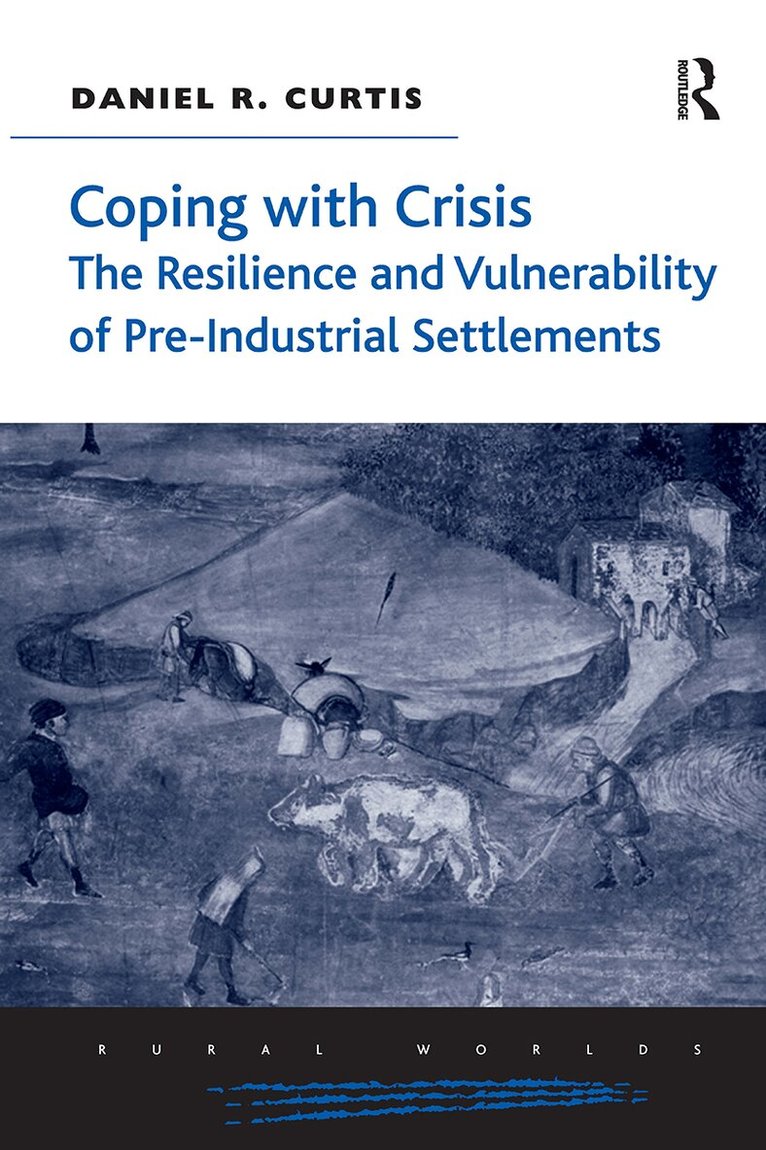
    Coping with Crisis: The Resilience and Vulnerability of Pre-Industrial Settlements

    AvDaniel R. Curtis

    Häftad, Engelska, 2024

    Del i serien Rural Worlds

    643 kr

    Beställningsvara. Skickas inom 10-15 vardagar. Fri frakt över 249 kr.

    Fler format och utgåvor

    E-bok

    762 kr

    E-bok

    760 kr

    Inbunden

    2 724 kr

    Beskrivning

    Why in the pre-industrial period were some settlements resilient and stable over the long term while other settlements were vulnerable to crisis? Indeed, what made certain human habitations more prone to decline or even total collapse, than others? All pre-industrial societies had to face certain challenges: exogenous environmental hazards such as earthquakes or plagues, economic or political hazards from ’outside’ such as warfare or expropriation of property, or hazards of their own-making such as soil erosion or subsistence crises. How then can we explain why some societies were able to overcome or negate these problems, while other societies proved susceptible to failure, as settlements contracted, stagnated, were abandoned, or even disappeared entirely? This book has been stimulated by the questions and hypotheses put forward by a recent ’disaster studies’ literature - in particular, by placing the intrinsic arrangement of societies at the forefront of the explanatory framework. Essentially it is suggested that the resilience or vulnerability of habitation has less to do with exogenous crises themselves, but on endogenous societal responses which dictate: (a) the extent of destruction caused by crises and the capacity for society to protect itself; and (b) the capacity to create a sufficient recovery. By empirically testing the explanatory framework on a number of societies between the Middle Ages and the nineteenth century in England, the Low Countries, and Italy, it is ultimately argued in this book that rather than the protective functions of the state or the market, or the implementation of technological innovation or capital investment, the most resilient human habitations in the pre-industrial period were those than displayed an equitable distribution of property and a well-balanced distribution of power between social interest groups. Equitable distributions of power and property were the underlying conditions in pre-industrial societies that all

    Produktinformation

    • Utgivningsdatum:2024-10-14
    • Mått:156 x 234 x 21 mm
    • Vikt:453 g
    • Format:Häftad
    • Språk:Engelska
    • Serie:Rural Worlds
    • Antal sidor:404
    • Förlag:Taylor & Francis Ltd
    • ISBN:9781032920481

    Utforska kategorier

    • Socialhistoria och kulturhistoria inom Historia och arkeologi
    • Ekonomisk historia inom Ekonomi och Ledarskap
    • Allmän historia och världshistoria inom Historia och arkeologi

    Mer om författaren

    Daniel R. Curtis is currently working at Utrecht University at the Research Institute for History and Art History, and is employed on a European Research Council-funded project entitled 'Coordinating for Life. Success and Failure of Western European Societies in Coping with Rural Hazards and Disasters, 1300-1800' led by Professor Bas van Bavel. He has published articles in a variety of journals such as Continuity and Change, Journal of Medieval History, and Journal of Historical Geography, on an assortment of themes including rural resilience and vulnerability to shocks and stress, settlement development, land consolidation and inequality, the relationship between city and countryside, and common-pool resources.

    Innehållsförteckning

    • 1: Defining Settlement ‘Resilience' and ‘Vulnerability' and Introducing the Historiography; 2: The Theoretical Framework; 3: Parasite or Stimulant? The Divergent Impact of the City of Florence upon its Surrounding Rural Hinterlands, 1300–1580; 4: Settlement Decline before the Black Death? Dealing with Pressure on Resources in Two Regions of Medieval Cambridgeshire, 1200–1340; 5: Village Communities and Commercialisation; 6: A North Sea Coastal Area Under Pressure of Land Consolidation. Transition from a Farmers' Republic to an Unequal Polder Society in the Oldambt of Groningen, 1700–1900; 7: Exploring Long-Term Inequality and Agro-Towns in the Kingdom of Naples, 1600–1900; 8: Conclusion