Bathsheba Demuth - Böcker
Visar alla böcker från författaren Bathsheba Demuth. Handla med fri frakt och snabb leverans.
7 produkter
7 produkter
178 kr
Skickas inom 7-10 vardagar
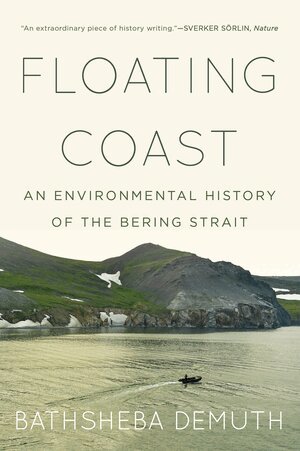
Across Russia’s easternmost shores and through the territories of the Inupiat and Yupik in Alaska, Bathsheba Demuth reveals how, over 150 years, people turned ecological wealth in a remote region into economic growth and state power.Beginning in the 1840s, capitalism and then communism, with their ideas of progress, transformed the area around the Bering Strait into a historical experiment in remaking ecosystems. Rendered even more urgent in a warming climate, Floating Coast is a profoundly resonant tale of the impact that human needs and ambitions have brought (and will continue to bring) to a finite planet.• Shortlisted for the The Pushkin House Book Prize 2020.
259 kr
Skickas inom 7-10 vardagar
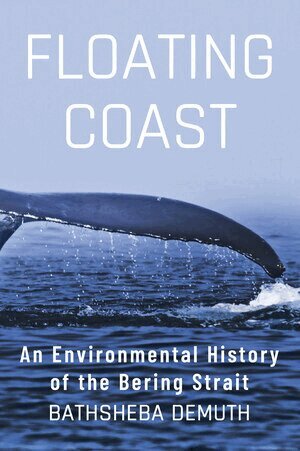
Along the Bering Strait, through the territories of the Inupiat and Yupik in Alaska, and the Yupik and Chukchi in Russia, Bathsheba Demuth explores an ecosystem that has long sustained human beings. Yet when Americans and Europeans arrived, the area became the site of an experiment and the modern ideologies of production and consumption, capitalism and communism were subject to the pressures of arctic scarcity.Demuth draws a vivid portrait of the sweeping effects of turning ecological wealth into economic growth and state power over the past century and a half. More urgent in a warming climate and as we seek new economic ideas for a post-industrial age, Floating Coast delivers warnings and poses provocative questions about human desires and needs in relation to environmental sustainability.
754 kr
Skickas inom 7-10 vardagar
More than any other locale, the Pacific Ocean has been the meeting place between humans and whales. From Indigenous Pacific peoples who built lives and cosmologies around whales, to Euro-American whalers who descended upon the Pacific during the nineteenth century, and to the new forms of human-cetacean partnerships that have emerged from the late twentieth century, the relationship between these two species has been central to the ocean's history. Across Species and Cultures: New Histories of Pacific Whaling offers for the first time a critical, wide-ranging geographical and temporal look at the varieties of whale histories in the Pacific. The essay contributors, hailing from around the Pacific, present a wealth of fascinating stories while breaking new methodological ground in environmental history, women's history, animal studies, and Indigenous ontologies. In the process they reveal previously hidden aspects of the story of Pacific whaling, including the contributions of Indigenous people to capitalist whaling, the industry's exceptionally far-reaching spread, and its overlooked second life as a global, industrial slaughter in the twentieth century. While pointing to striking continuities in whaling histories around the Pacific, Across Species and Cultures also reveals deep tensions: between environmentalists and Indigenous peoples, between ideas and realities, and between the North and South Pacific. The book delves in unprecedented ways into the lives and histories of whales themselves. Despite the worst ravages of commercial and industrial whaling, whales survived two centuries of mass killing in the Pacific. Their perseverance continues to nourish many human communities around and in the Pacific Ocean where they are hunted as commodities, regarded as signs of wealth and power, act as providers and protectors, but are also ancestors, providing a bridge between human and nonhuman worlds.
292 kr
Skickas inom 7-10 vardagar
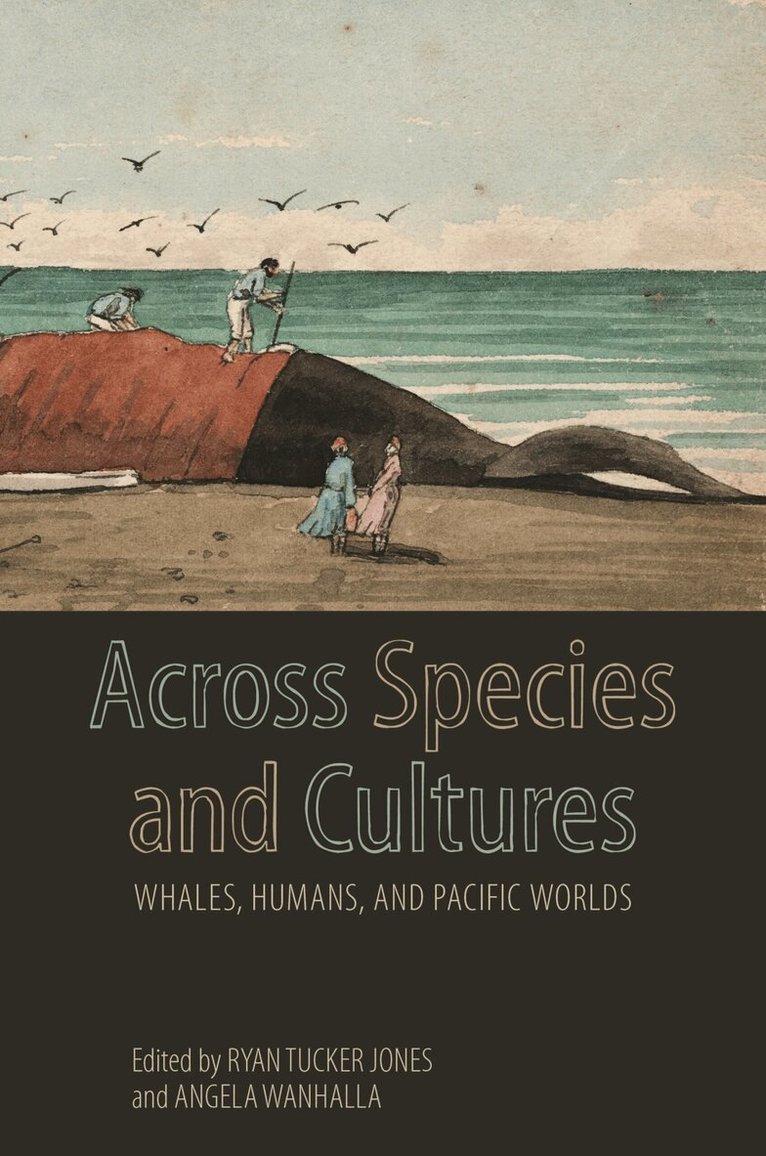
More than any other locale, the Pacific Ocean has been the meeting place between humans and whales. From Indigenous Pacific peoples who built lives and cosmologies around whales, to Euro-American whalers who descended upon the Pacific during the nineteenth century, and to the new forms of human-cetacean partnerships that have emerged from the late twentieth century, the relationship between these two species has been central to the ocean’s history. Across Species and Cultures: Whales, Humans, and Pacific Worlds offers for the first time a critical, wide-ranging geographical and temporal look at the varieties of whale histories in the Pacific. The essay contributors, hailing from around the Pacific, present a wealth of fascinating stories while breaking new methodological ground in environmental history, women’s history, animal studies, and Indigenous ontologies. In the process they reveal previously hidden aspects of the story of Pacific whaling, including the contributions of Indigenous people to capitalist whaling, the industry’s exceptionally far-reaching spread, and its overlooked second life as a global, industrial slaughter in the twentieth century. While pointing to striking continuities in whaling histories around the Pacific, Across Species and Cultures also reveals deep tensions: between environmentalists and Indigenous peoples, between ideas and realities, and between the North and South Pacific. The book delves in unprecedented ways into the lives and histories of whales themselves. Despite the worst ravages of commercial and industrial whaling, whales survived two centuries of mass killing in the Pacific. Their perseverance continues to nourish many human communities around and in the Pacific Ocean where they are hunted as commodities, regarded as signs of wealth and power, act as providers and protectors, but are also ancestors, providing a bridge between human and nonhuman worlds.
822 kr
Skickas inom 7-10 vardagar
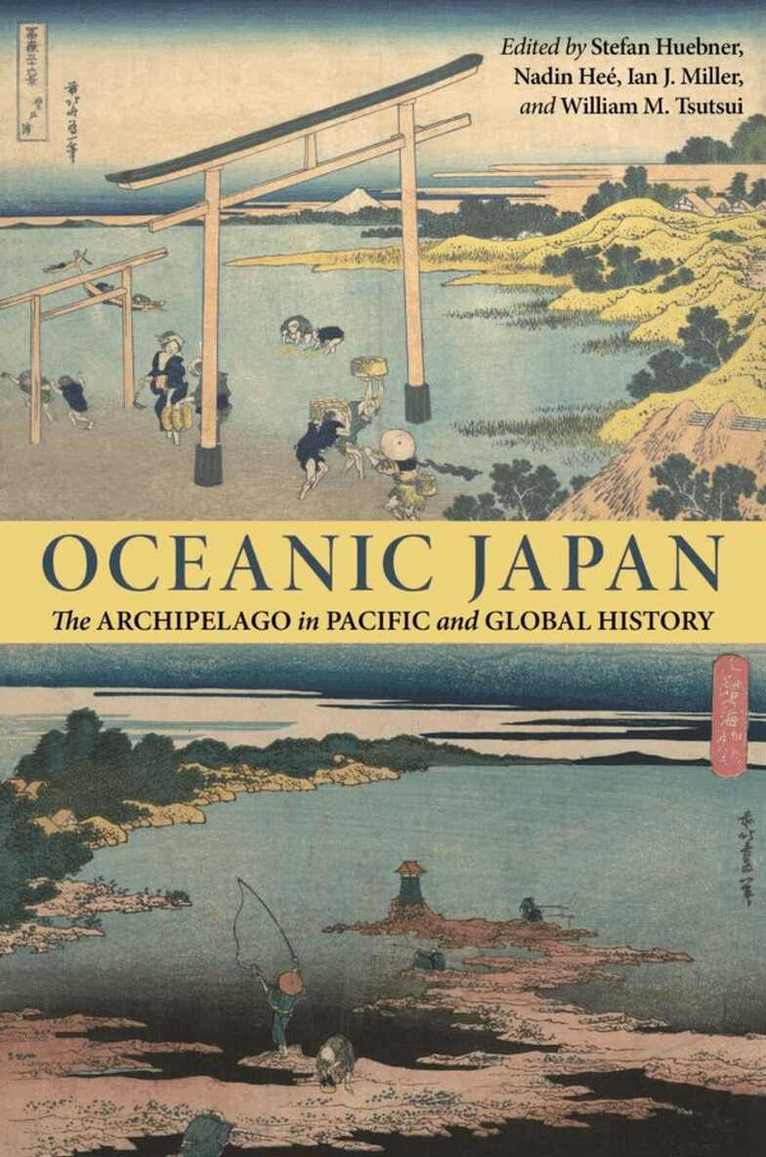
Japan’s oceans demand our attention. Violent, prolific, and changeful, they define life and death on the archipelago: pushing the shore under the rush of tsunami, charging typhoon circulation, feeding millions, and seeding conflicts over territory and resources. And yet, Japan studies remains largely beholden to a terrestrial view of the world that is at odds with the importance of the sea. This “terrestrial bias” also means that on those occasions when oceans are recognized they are most often presented as dividers or connectors—spaces in between rather than rich ecologies and meaningful sites. Oceanic Japan>/i> is meant to help readers re-envision Japanese history in order to show how the seas created the country that we know today.The book convenes a diverse, multinational, multidisciplinary group of scholars to expand the scope of Japan studies and the field of environmental humanities. The chapters draw from the broader turn to the sea—characterized by new oceanic and terraqueous perspectives—developing within these fields and in areas such as Pacific history and Indian Ocean studies. The volume editors’ vision is bifocal. On one hand, they aim to reorient East Asian studies and Japan studies to the sea, underlining how oceans have shaped dynamics from the Tokugawa Era forward into the age of empire and the crisis of the Anthropocene. On the other hand, they argue for a more nuanced environmental approach within the burgeoning field of Oceanic studies. Seeing oceanic spaces as more than entrepots or political spheres requires thinking in new, often vertical, volumetric ways. The chapters follow human and non-human actors to recognize the variegation of watery ecologies through winds, tides, coasts, seabeds, and currents such as the Kuroshio and Oyashio, which have always shaped life on the archipelago.
Rivers on the Move: Waterways in Human Life from the Ice Age to the Anthropocene
Inbunden, Engelska, 2027
1 659 kr
Kommande
Rivers on the Move: Waterways in Human Life from the Ice Age to the Anthropocene
Häftad, Engelska, 2027
501 kr
Kommande