Bella Vivante - Böcker
Visar alla böcker från författaren Bella Vivante. Handla med fri frakt och snabb leverans.
8 produkter
8 produkter
695 kr
Skickas inom 10-15 vardagar
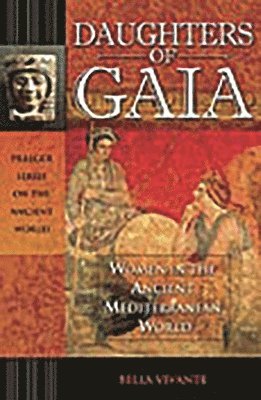
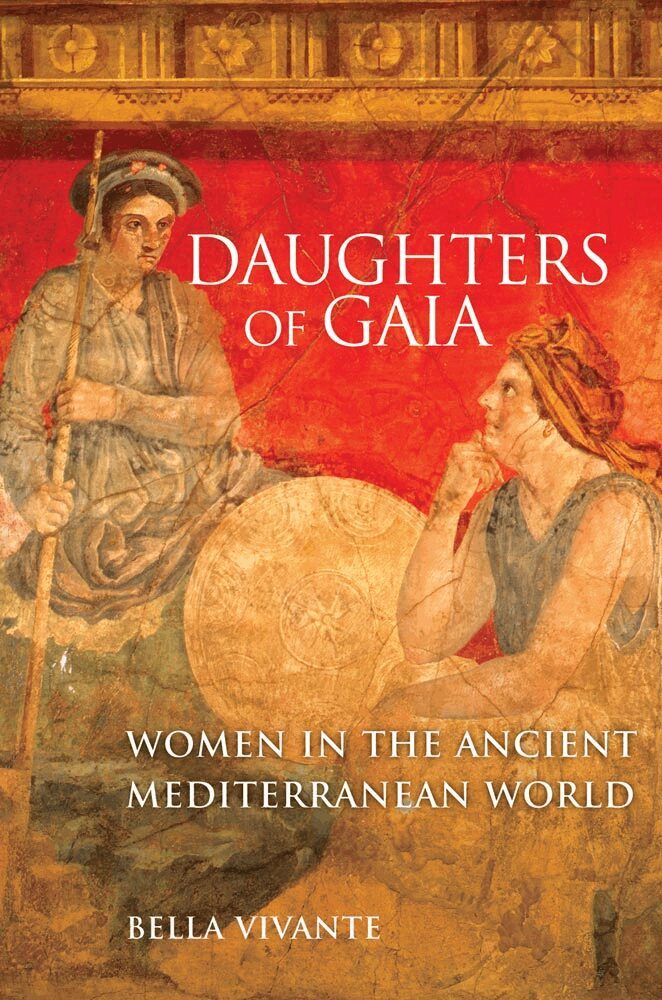
From their personal lives at home to their roles in the realms of religion, health, economics, governance, war, philosophy, and poetry, this is the story of ancient women in all their aspects. Vivante explores women's lives in four ancient civilizations of the Mediterranean: Egypt, Mesopotamia, Greece, and Rome. While the experiences of women in ancient cultures were certainly very different from those of most women today, a tendency to focus too much on negative or restrictive images has until now provided readers with a rather incomplete picture. Looking at this important era from a female-oriented perspective, Vivante widens the perceptual lens and makes it possible to highlight the fundamental empowered aspects of women's activities in order to present them in balance with the various limits imposed on their societal participation.Beginning with powerful images of goddesses and women's roles in the religious sphere, Vivante details the foundation for women's activities in all other social realms. While these four Mediterranean civilizations were distinctive, they also influenced each other through various forms of contact—trade, colonization, and war. Both the similarities and the differences permit richer comparisons and promote a deeper understanding of the lives of women in each.
901 kr
Skickas inom 10-15 vardagar
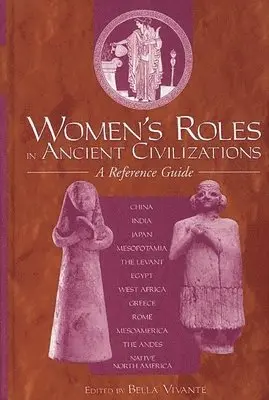
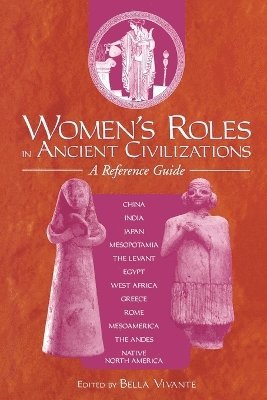
Knowledge about the roles of women in ancient civilizations has been limited to traditionally held notions, but recent discoveries and research have led to exciting insights into the great variety of ways in which women contributed to ancient cultures. This reference work, designed for student research, features lengthy essays and a wealth of new information about women's roles in twelve ancient civilizations around the world—China, India, Japan, Mesopotamia, the Levant, Egypt, West Africa, Greece, Rome, the Maya, the Inca, and Native North America.Historical studies have tended to ignore women's roles in ancient civilizations and to devalue their contributions to the community. These essays examine women's religious, political, public, economic, and domestic roles, their legal status, creative expression in art and literature, and notions of beauty. Students can then compare women's roles across cultures. The contributors, each of whom is a subject specialist, examine not only the nature of women's limitations in patriarchal culture but the ways in which women often succeeded, despite these limitations, in becoming agents of social change. Each essay begins with a timeline of events in the history of that culture to place the narrative in historical context, and concludes with suggestions for further reading about women in that culture.
1 698 kr
Skickas inom 10-15 vardagar
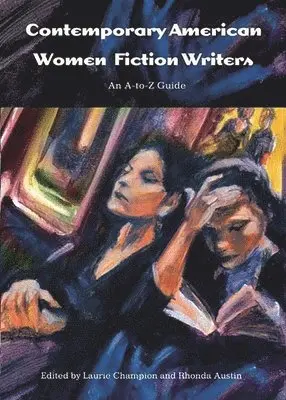
American women writers have long been creating an extraordinarily diverse and vital body of fiction, particularly in the decades since World War II. Recent authors have benefited from the struggles of their predecessors, who broke through barriers that denied women opportunities for self-expression. This reference highlights American women writers who continue to build upon the formerly male-dominated canon.Included are alphabetically arranged entries for more than 60 American women writers of diverse ethnicity who wrote or published their most significant fiction after World War II. Each entry is written by an expert contributor and includes:^L^DBLA brief biography^L^DBLA discussion of major works and themes^^DBLA survey of the writer's critical reception^L^DBLA bibliography of primary and secondary sources
695 kr
Skickas inom 10-15 vardagar
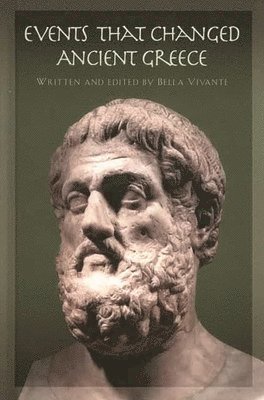
This one-stop resource for information and examination of the ten most important topics and events in Ancient Greek history is an ideal student companion to a study of Greek civilization. Each chapter focuses on one topic or event and contains two essays: a clear, concise introduction to the event that presents complex, factual material in an easily understandable way, followed by an insightful interpretive essay by a recognized authority that explores the short-term and far-reaching ramifications of the event and encourages critical thinking. Chapters cover: Early Greek civilization; political revolutions and the development of ethnic Greek identity; the Olympic games and the rise of Greek religious institutions; Sparta and Athens; the Persian Wars; Athenian imperialism; the Peloponnesian War; the development of Greek philosophy; Makedonian conquests; and Hellenistic empires.Each chapter features a full-page illustration of the event and an annotated bibliography that identifies the most important and recent scholarship about the event. Useful appendixes include a timeline of important events in Ancient Greece, a glossary of terms, and a list of Greek gods and goddesses. This resource is an ideal addition to the school and public library reference shelf and is also excellent for supplementary reading in courses on ancient history and culture.
351 kr
Skickas inom 10-15 vardagar
Knowledge about the roles of women in ancient civilizations has been limited to traditionally held notions, but recent discoveries and research have led to exciting insights into the great variety of ways in which women contributed to ancient cultures. This reference work, designed for student research, features lengthy essays and a wealth of new information about women's roles in twelve ancient civilizations around the world—China, India, Japan, Mesopotamia, the Levant, Egypt, West Africa, Greece, Rome, the Maya, the Inca, and Native North America.Historical studies have tended to ignore women's roles in ancient civilizations and to devalue their contributions to the community. These essays examine women's religious, political, public, economic, and domestic roles, their legal status, creative expression in art and literature, and notions of beauty. Students can then compare women's roles across cultures. The contributors, each of whom is a subject specialist, examine not only the nature of women's limitations in patriarchal culture but the ways in which women often succeeded, despite these limitations, in becoming agents of social change. Each essay begins with a timeline of events in the history of that culture to place the narrative in historical context, and concludes with suggestions for further reading about women in that culture.
2 401 kr
Skickas inom 10-15 vardagar
Women on the Edge, a collection of Alcestis, Medea, Helen, and Iphegenia at Aulis, provides a broad sample of Euripides' plays focusing on women, and spans the chronology of his surviving works, from the earliest, to his last, incomplete, and posthumously produced masterpiece. Each play shows women in various roles--slave, unmarried girl, devoted wife, alienated wife, mother, daughter--providing a range of evidence about the kinds of meaning and effects the category woman conveyed in ancient Athens. The female protagonists in these plays test the boundaries--literal and conceptual--of their lives.Although women are often represented in tragedy as powerful and free in their thoughts, speech and actions, real Athenian women were apparently expected to live unseen and silent, under control of fathers and husbands, with little political or economic power. Women in tragedy often disrupt "normal" life by their words and actions: they speak out boldly, tell lies, cause public unrest, violate custom, defy orders, even kill. Female characters in tragedy take actions, and raise issues central to the plays in which they appear, sometimes in strong opposition to male characters. The four plays in this collection offer examples of women who support the status quo and women who oppose and disrupt it; sometimes these are the same characters.
772 kr
Skickas inom 10-15 vardagar
Women on the Edge, a collection of Alcestis, Medea, Helen, and Iphegenia at Aulis, provides a broad sample of Euripides' plays focusing on women, and spans the chronology of his surviving works, from the earliest, to his last, incomplete, and posthumously produced masterpiece. Each play shows women in various roles--slave, unmarried girl, devoted wife, alienated wife, mother, daughter--providing a range of evidence about the kinds of meaning and effects the category woman conveyed in ancient Athens. The female protagonists in these plays test the boundaries--literal and conceptual--of their lives.Although women are often represented in tragedy as powerful and free in their thoughts, speech and actions, real Athenian women were apparently expected to live unseen and silent, under control of fathers and husbands, with little political or economic power. Women in tragedy often disrupt "normal" life by their words and actions: they speak out boldly, tell lies, cause public unrest, violate custom, defy orders, even kill. Female characters in tragedy take actions, and raise issues central to the plays in which they appear, sometimes in strong opposition to male characters. The four plays in this collection offer examples of women who support the status quo and women who oppose and disrupt it; sometimes these are the same characters.
268 kr
Skickas inom 10-15 vardagar
The experiences of women in ancient cultures were certainly very difficult from those of most women today. Yet a tendency to focus too much on the restrictions early Western women faced has until now provided readers with an incomplete picture. In Daughters of Gaia, Bella Vivante explores women's lives in four ancient civilizations of the Mediterranean: Egypt, Mesopotamia, Greece, and Rome. Looking at this era with a women-centered perspective, Vivante highlights women's agency and explains the social, political, and cultural factors that fostered female empowerment. Beginning with powerful images of goddesses and women's roles in the religious sphere, Vivante lays the foundation for women's activities in other social realms--Health, economica, governance, war, philosophy, and poetry. By examining the similarities and differences among the four Mediterranean civilizations, she offers a deeper understanding of the lives of women in each. Drawing on her extended contact with Native American peoples and her knowledge of Native concepts of women's identities, Vivante applies new models for viewing women's roles in the ancient world.