Ben Stoltzfus - Böcker
Visar alla böcker från författaren Ben Stoltzfus. Handla med fri frakt och snabb leverans.
16 produkter
16 produkter
956 kr
Tillfälligt slut
440 kr
Tillfälligt slut
Of literary criticsm uses Lacanian psychoanalytic theory to explicate Roland Barthes, Albert Camus, Ernest Hemingway, D.H. Lawrence, and Alain Robbe-Grillet.Winner of the 1997 Gradiva Award for Best Book (Cultural Arts Related) awarded by the National Association for the Advancement of Psychoanalysis (NAAP) Using Lacanian psychoanalytic theory in order to uncover the relationship between literature, reading, and the unconscious, this book argues for a special affinity between a text and its reader. This process strives to unveil the disguises of tropic language in order to generate manifest meaning from latent content. Focusing on five twentieth-century writers: D.H. Lawrence, Ernest Hemingway, Albert Camus, Roland Barthes, and Alain Robbe-Grillet, this book shows how Freud's theories of condensation and displacement in dreams match Lacan's uses of metaphor and metonymy in language. Despite the different backgrounds of these authors from America, England, and France, the unifying theme is that the unconscious (because it is structured like language) is the voice of the (m)Other disguised in figurative language.
523 kr
Skickas inom 7-10 vardagar
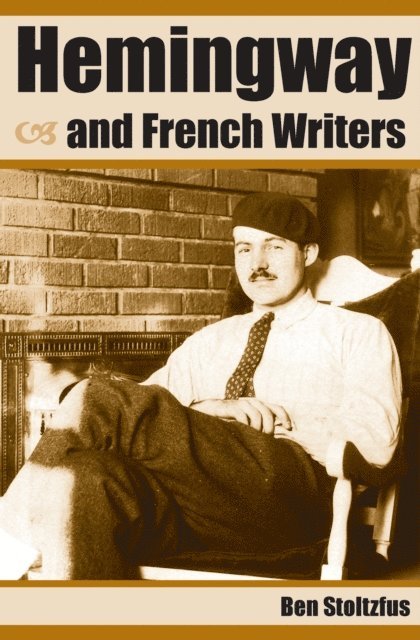
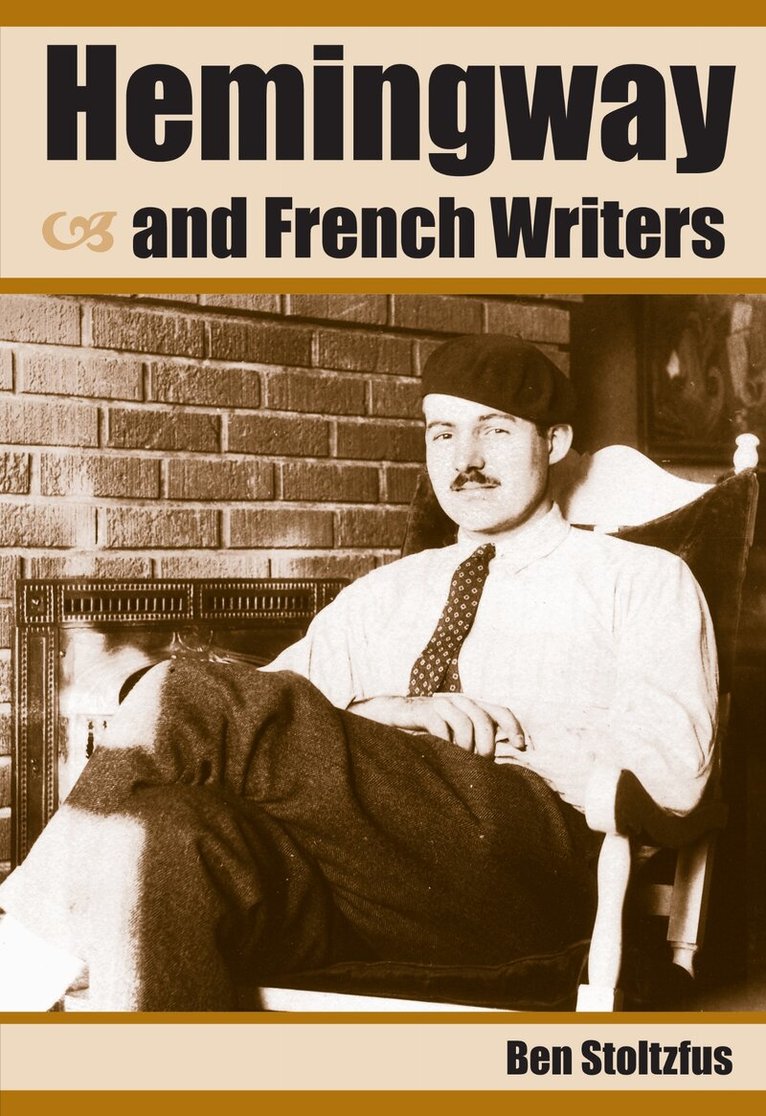
A collection of essays tracing seven decades of literary interaction between Hemingway and notable French authorsIn a 1946 Atlantic Monthly essay, Jean-Paul Sartre writes: "The greatest literary development in France between 1929 and 1939 was the discovery of Faulkner, Dos Passos, Hemingway, Caldwell, and Steinbeck."When Ernest Hemingway arrived in Paris in 1922, he was an unknown writer from America. The City of Light was where he learned his craft and gained legitimacy. Although much has been written about Hemingway's apprentice years in Paris, little has been published about his literary convergences with French writers. In Hemingway and French Writers, Ben Stoltzfus illuminates the connections between Hemingway and the most important French intellectuals, such as Gustave Flaubert, Marcel Proust, André Gide, Jacques Lacan, Jean-Paul Sartre, Henry de Montherlant, André Malraux, and Albert Camus. A distinguished scholar of both French literature and Hemingway studies, Stoltzfus compares Hemingway's major works in chronological order, from The Sun Also Rises to The Old Man and the Sea, with novels by French writers.While it is widely known that France influenced Hemingway's writing, Hemingway also had an immense impact on French writers. Over the years, American and French novelists enriched each other's works with new styles and untried techniques. In this comparative analysis, Stoltzfus discusses the complexities of Hemingway's craft, the controlled skill, narrative economy, and stylistic clarity that the French, drawn to his emphasis on action, labeled "le style américain."
493 kr
Skickas inom 7-10 vardagar
A collection of essays tracing seven decades of literary interaction between Hemingway and notable French authorsIn a 1946 Atlantic Monthly essay, Jean-Paul Sartre writes: "The greatest literary development in France between 1929 and 1939 was the discovery of Faulkner, Dos Passos, Hemingway, Caldwell, and Steinbeck."When Ernest Hemingway arrived in Paris in 1922, he was an unknown writer from America. The City of Light was where he learned his craft and gained legitimacy. Although much has been written about Hemingway's apprentice years in Paris, little has been published about his literary convergences with French writers. In Hemingway and French Writers, Ben Stoltzfus illuminates the connections between Hemingway and the most important French intellectuals, such as Gustave Flaubert, Marcel Proust, André Gide, Jacques Lacan, Jean-Paul Sartre, Henry de Montherlant, André Malraux, and Albert Camus. A distinguished scholar of both French literature and Hemingway studies, Stoltzfus compares Hemingway's major works in chronological order, from The Sun Also Rises to The Old Man and the Sea, with novels by French writers.While it is widely known that France influenced Hemingway's writing, Hemingway also had an immense impact on French writers. Over the years, American and French novelists enriched each other's works with new styles and untried techniques. In this comparative analysis, Stoltzfus discusses the complexities of Hemingway's craft, the controlled skill, narrative economy, and stylistic clarity that the French, drawn to his emphasis on action, labeled "le style américain."
220 kr
Skickas inom 5-8 vardagar
1 314 kr
Skickas inom 10-15 vardagar
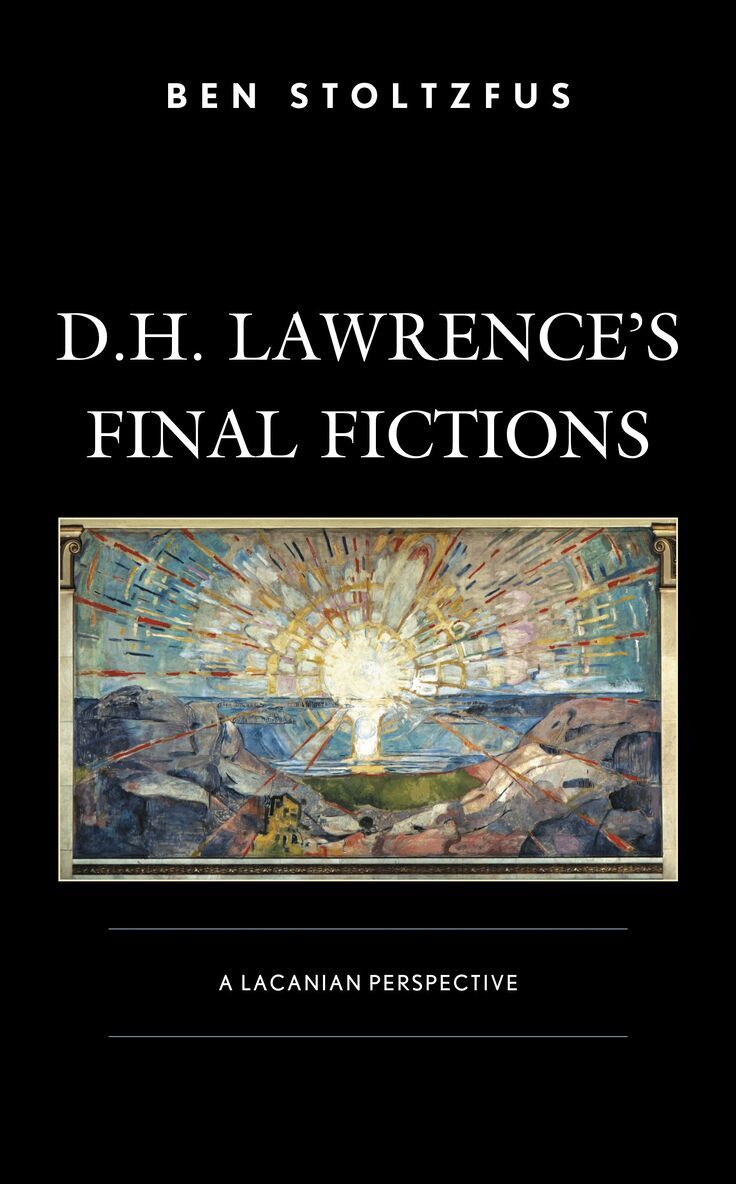
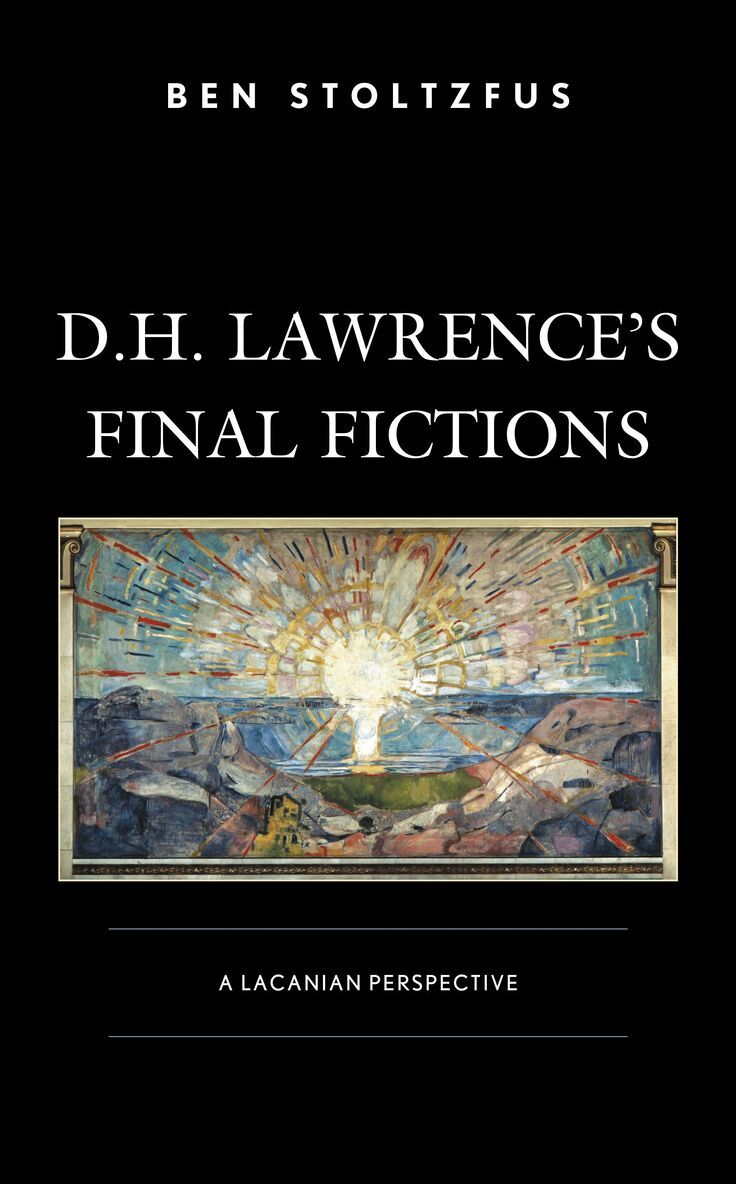
D.H. Lawrence’s Final Fictions: A Lacanian Perspective explores how literature thinks; more specifically, how the reading of fiction influences behavior. Lawrence writes passionately about our alienation from ourselves, from other people, and from the cosmos. He believes that we need to heed the voices of our unconscious, and he shows us how to meld body and mind so that, psychoanalytically speaking, Id and Ego can come together. In this endeavor there is a salient convergence between Lawrence's writings and those of Jacques Lacan, the French psychoanalyst.In this book, Stoltzfus examines the poetics of seven major fictions that Lawrence wrote between 1925 and 1930, five productive years that are referred to as his fabulation period. In each of the book's seven chapters, in tandem with Lacan's writings, Stoltzfus analyzes seven major characters, four of whom move from alienation to the renewal of self and the cosmos. He argues that Lawrence's fiction is simultaneously descriptive and prescriptive by showing us how to circumvent dysfunction. Stoltzfus brings literature and psychoanalysis together in readings that are both aesthetic and epistemological. They are recipes for curing the Anthropocene.
499 kr
Skickas inom 10-15 vardagar
D.H. Lawrence’s Final Fictions: A Lacanian Perspective explores how literature thinks; more specifically, how the reading of fiction influences behavior. Lawrence writes passionately about our alienation from ourselves, from other people, and from the cosmos. He believes that we need to heed the voices of our unconscious, and he shows us how to meld body and mind so that, psychoanalytically speaking, Id and Ego can come together. In this endeavor there is a salient convergence between Lawrence's writings and those of Jacques Lacan, the French psychoanalyst.In this book, Stoltzfus examines the poetics of seven major fictions that Lawrence wrote between 1925 and 1930, five productive years that are referred to as his fabulation period. In each of the book's seven chapters, in tandem with Lacan's writings, Stoltzfus analyzes seven major characters, four of whom move from alienation to the renewal of self and the cosmos. He argues that Lawrence's fiction is simultaneously descriptive and prescriptive by showing us how to circumvent dysfunction. Stoltzfus brings literature and psychoanalysis together in readings that are both aesthetic and epistemological. They are recipes for curing the Anthropocene.
282 kr
Skickas inom 5-8 vardagar
385 kr
Skickas inom 5-8 vardagar
375 kr
Skickas inom 5-8 vardagar
257 kr
Skickas inom 5-8 vardagar
362 kr
Skickas inom 5-8 vardagar
281 kr
Skickas inom 5-8 vardagar
312 kr
Skickas inom 5-8 vardagar
270 kr
Skickas inom 5-8 vardagar
533 kr
Tillfälligt slut
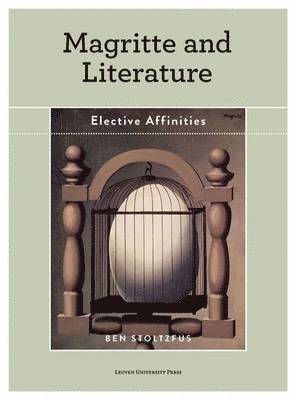
Magritte’s interarts dialog with literatureThe Belgian surrealist artist René Magritte (1898–1967) is well known for his thought-provoking and witty images that challenge the observer’s preconditioned perceptions of reality.Magritte and Literature examines some of the artist's major paintings whose titles were influenced by and related to works of literature. Baudelaire's The Flowers of Evil, Goethe's Elective Affinities, and Poe's The Domain of Arnheim are representative examples of Magritte's interarts dialog with literary figures. Despite these convergences the titles subvert the images in his paintings. It is the two images together, the image in the painting and the image in the title, that expresses the aesthetics of Surrealism -- sparked by the juxtaposition of unrelated objects. Magritte's challenge to representation compares with metafiction's challenge to classic realism, Les Chants de Maldoror for example, and the intersecting space between art and writing, sometimes referred to as the iconotext, manifests itself whenever Magritte borrows a literary title for a painting. His strategy is to paint visible thought, and this reverse ekphrasis, the opposite of a rhetorical description of a painting, undermines the written text. When he succeeds, the effect is poetry. This publication is GPRC-labeled (Guaranteed Peer-Reviewed Content).