Benjamin C. Garrett - Böcker
Visar alla böcker från författaren Benjamin C. Garrett. Handla med fri frakt och snabb leverans.
3 produkter
3 produkter
695 kr
Skickas inom 10-15 vardagar
Human experience with nuclear, biological, and chemical (NBC) warfare has been limited, especially in comparison to conventional forms of warfare. Our experience with nuclear warfare is confined to a period of less than one week during the end of World War II, when the United States successfully used two nuclear weapons against targets in Japan. The course of biological warfare and modern use of biological weapons are difficult to track owing to the difficulty of differentiating deliberate use from natural outbreaks. However, the keen potential of biological weapons in acts of terror was shown in the mass disruption caused in the fall 2001 experience in the U.S. with the release of anthrax through the American postal system. Chemical weapons have been used in a handful of conflicts since their introduction to modern warfare during World War I, most recently during the Iran-Iraq War during the 1980s. Despite this limited experience, NBC warfare continues to exert a certain fascination among states.The A to Z of Nuclear, Biological, and Chemical Warfare covers the development and use of NBC weapons as well as efforts to limit or control the use of these weapons through a chronology, a bibliography, an introductory essay, and dictionary entries. Over 500 cross-referenced dictionary entries provide a unique selection of terms related to NBC warfare, ranging from basic descriptions of substances used in NBC warfare to details on incidents and episodes where NBC weapons were used. Entries are structured around historical events, persons important to NBC warfare, countries where such weapons have been developed or used, and international treaties and treaty-related organizations.
1 320 kr
Skickas inom 10-15 vardagar
The history of biological weapons (BW), chemical weapons (CW), and nuclear weapons is complicated. It can be disturbing, tragic, and occasionally encouraging. It is rarely amusing, although the names selected for certain weapons suggest a casualness toward the consequences of their use: Atomic Annie, Blue Peacock, Dew of Death, Fat Man, Flying cow, George, Gilda, Helen of Bikini, Hurricane, Katie, Little Boy, Lulu, Mike, Red Beard, Sewer Pipe, Squirt. Use of BW and CW in warfare has produced mixed results in terms of effecting the outcome of a battle or campaign; despite this mixed record, both weapon types have attracted intense interest and strong advocacy for further use. The sole experience with use of nuclear weapons in warfare is viewed as hastening surrender by Japan, created competition among nations to develop more such weapons, and influenced efforts to ban any use or even stockpiling of such weapons. Each of these three weapon types has its own peculiar history, as recounted in this dictionary.This second edition of Historical Dictionary of Nuclear, Biological and Chemical Warfare contains a chronology, an introduction, and an extensive bibliography. The dictionary section has over 700 cross-referenced entries onterms related to NBC warfare, ranging from basic descriptions of substances used to details on incidents and episodes where NBC weapons were used, historical events, persons important to NBC warfare, countries where such weapons have been developed or used, and international treaties and treaty-related organizations.
1 866 kr
Skickas inom 5-8 vardagar
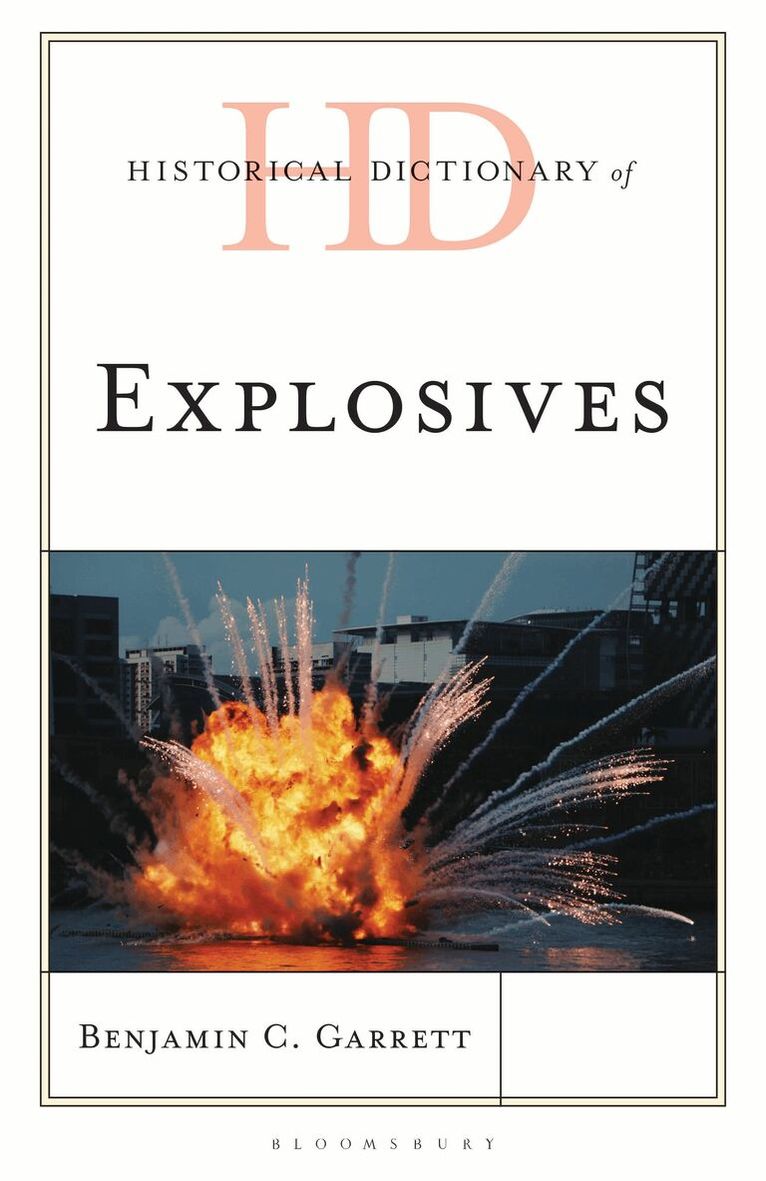
The history of explosives is told through accidents, inventions, tragedies, and war. Historical Dictionary of Explosives describes this history, presenting the three types of explosives—chemical, mechanical, and nuclear—and how they were discovered, developed, and used. It gives their physical and chemical characteristics and profiles the men, women, companies, and collaborative efforts responsible for inventing or otherwise developing these explosives. It recounts selected events in which they were used both in warfare and for peaceful purposes such as tunneling and removing obstacles to navigation. It highlights disasters where human error, carelessness, disregard for personal safety, or unimagined circumstances led to explosions that killed many, injured more, and destroyed cities and ports. Misuse at the hands of terrorists is described, noting that such misuse has changed the way we board aircraft, enter sports venues, and access public buildings. It discusses attempts at both controlling their development and limiting their acquisition, stockpiling, testing, and use, noting that while these attempts are imperfect, they build hopes for enhanced international security.Historical Dictionary of Explosives contains a chronology, an introduction, an extensive bibliography, and cross-referenced dictionary entries. This book is an excellent resource for students, researchers, and anyone wanting to know more about explosives.