John Mason Hart – författare
Visar alla böcker från författaren John Mason Hart. Handla med fri frakt och snabb leverans.
9 produkter
9 produkter
Häftad, Engelska, 1997
428 kr
Skickas inom 5-8 vardagar
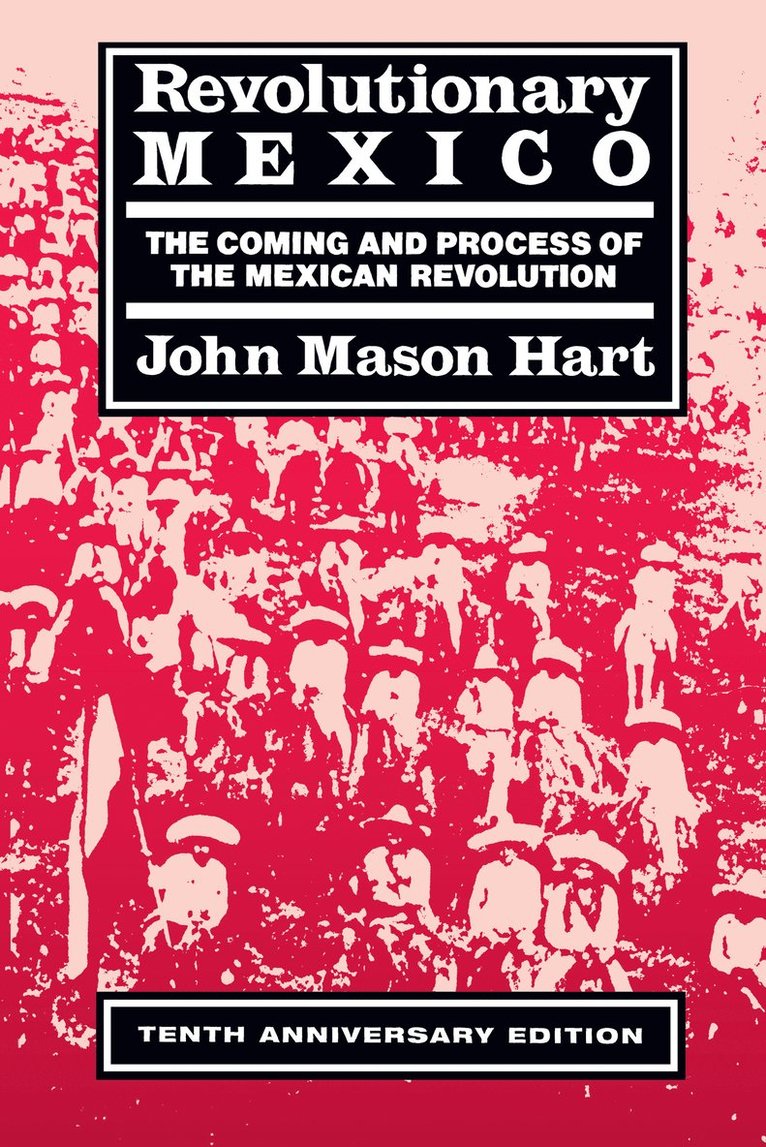
This acclaimed reinterpretation of the Mexican Revolution, based on new evidence obtained in Mexican and American archives and on the historical literature of recent years, is available here in the tenth anniversary edition, complete with a new Preface by the author.
Häftad, Engelska, 2006
414 kr
Skickas inom 5-8 vardagar
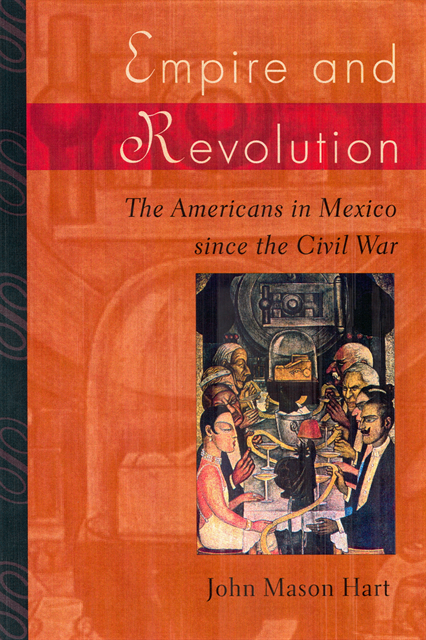
The deep relationship between the United States and Mexico has had repercussions felt around the world. This sweeping and unprecedented chronicle of the economic and social connections between the two nations opens a new window onto history from the Civil War to today and brilliantly illuminates the course of events that made the United States a global empire. The Mexican Revolution, Manifest Destiny, World War II, and NAFTA are all part of the story, but John Mason Hart's narrative transcends these moments of economic and political drama, resonating with the themes of wealth and power. Combining economic and historical analysis with personal memoirs and vivid descriptions of key episodes and players, "Empire and Revolution" is based on substantial amounts of previously unexplored source material. Hart excavated recently declassified documents in the archives of the United States government and traveled extensively in rural Mexico to uncover the rich sources for this gripping story of 135 years of intervention, cooperation, and corruption.Beginning just after the American Civil War, Hart traces the activities of an elite group of financiers and industrialists who, sensing opportunities for wealth to the south, began to develop Mexico's infrastructure. He charts their activities through the pivotal regime of Porfirio Diaz, when Americans began to gain ownership of Mexico's natural resources, and through the Mexican Revolution, when Americans lost many of their holdings in Mexico. Hart concentrates less on traditional political history in the twentieth century and more on the hidden interactions between Americans and Mexicans, especially the unfolding story of industrial production in Mexico for export to the United States. Throughout, this masterful narrative illuminates the development and expansion of the American railroad, oil, mining, and banking industries. Hart also shows how the export of the 'American Dream' has shaped such areas as religion and work attitudes in Mexico. "Empire and Revolution" reveals much about the American psyche, especially the compulsion of American elites toward wealth, global power, and contact with other people, often in order to 'save' them.These characteristics were first expressed internationally in Mexico, and Hart shows that the Mexican experience was and continues to be a prototype for U.S. expansion around the world. His work demonstrates the often inconspicuous yet profoundly damaging impact of American investment in the underdeveloped countries of Latin America, Asia, and Africa. "Empire and Revolution" will be the definitive book on U.S.-Mexico relations and their local and global ramifications.
E-bok
PDF, Engelska, 2002503 kr
Läs direkt efter köp
The deep relationship between the United States and Mexico has had repercussions felt around the world. This sweeping and unprecedented chronicle of the economic and social connections between the two nations opens a new window onto history from the Civil War to today and brilliantly illuminates the course of events that made the United States a global empire. The Mexican Revolution, Manifest Destiny, World War II, and NAFTA are all part of the story, but John Mason Hart''s narrative transcends these moments of economic and political drama, resonating with the themes of wealth and power. Combining economic and historical analysis with personal memoirs and vivid descriptions of key episodes and players, Empire and Revolution is based on substantial amounts of previously unexplored source material. Hart excavated recently declassified documents in the archives of the United States government and traveled extensively in rural Mexico to uncover the rich sources for this gripping story of 135 years of intervention, cooperation, and corruption.Beginning just after the American Civil War, Hart traces the activities of an elite group of financiers and industrialists who, sensing opportunities for wealth to the south, began to develop Mexico''s infrastructure. He charts their activities through the pivotal regime of Porfirio Díaz, when Americans began to gain ownership of Mexico''s natural resources, and through the Mexican Revolution, when Americans lost many of their holdings in Mexico. Hart concentrates less on traditional political history in the twentieth century and more on the hidden interactions between Americans and Mexicans, especially the unfolding story of industrial production in Mexico for export to the United States. Throughout, this masterful narrative illuminates the development and expansion of the American railroad, oil, mining, and banking industries. Hart also shows how the export of the "American Dream" has shaped such areas as religion and work attitudes in Mexico.Empire and Revolution reveals much about the American psyche, especially the compulsion of American elites toward wealth, global power, and contact with other peoples, often in order to "save" them. These characteristics were first expressed internationally in Mexico, and Hart shows that the Mexican experience was and continues to be a prototype for U.S. expansion around the world. His work demonstrates the often inconspicuous yet profoundly damaging impact of American investment in the underdeveloped countries of Latin America, Asia, and Africa. Empire and Revolution will be the definitive book on U.S.-Mexico relations and their local and global ramifications.
E-bok
Engelska, 1998596 kr
Läs direkt efter köp
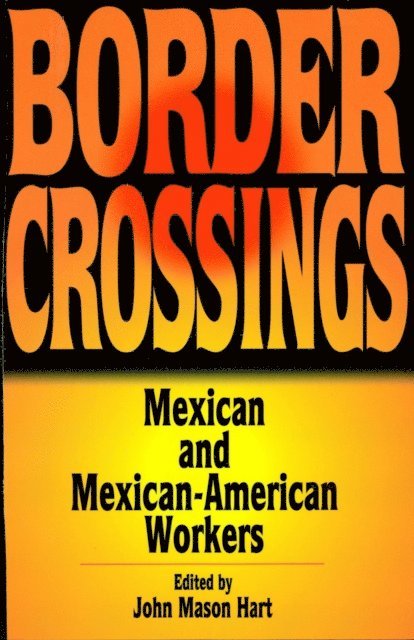
The history of Mexican and Mexican-American working classes has been segregated by the political boundary that separates the United States of America from the United States of Mexico. As a result, scholars have long ignored the social, cultural, and political threads that the two groups hold in common. Further, they have seldom addressed the impact of American values and organizations on the working class of that country. Compiled by one of the leading North American experts on the Mexican Revolution, the essays in Border Crossings: Mexican and Mexican-American Workers explore the historical process behind the formation of the Mexican and Mexican- American working classes. The volume connects the history of their experiences from the cultural beginnings and the rise of industrialism in Mexico to the late twentieth century in the U.S. Border Crossings notes the similar social experiences and strategies of Mexican workers in both countries, community formation and community organizations, their mutual aid efforts, the movements of people between Mexico and Mexican-American communities, the roles of women, and the formation of political groups. Finally, Border Crossings addresses the special conditions of Mexicans in the United States, including the creation of a Mexican-American middle class, the impact of American racism on Mexican communities, and the nature and evolution of border towns and the borderlands.
Inbunden, Engelska, 2006
1 528 kr
Skickas inom 10-15 vardagar
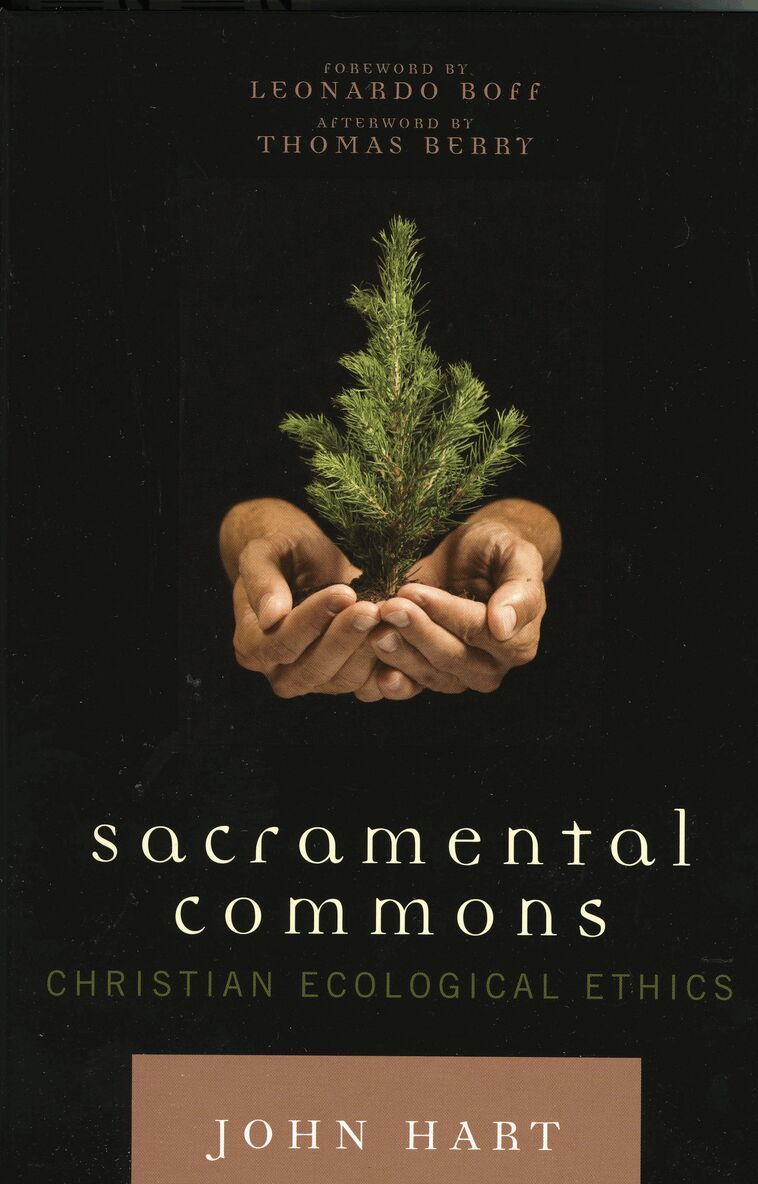
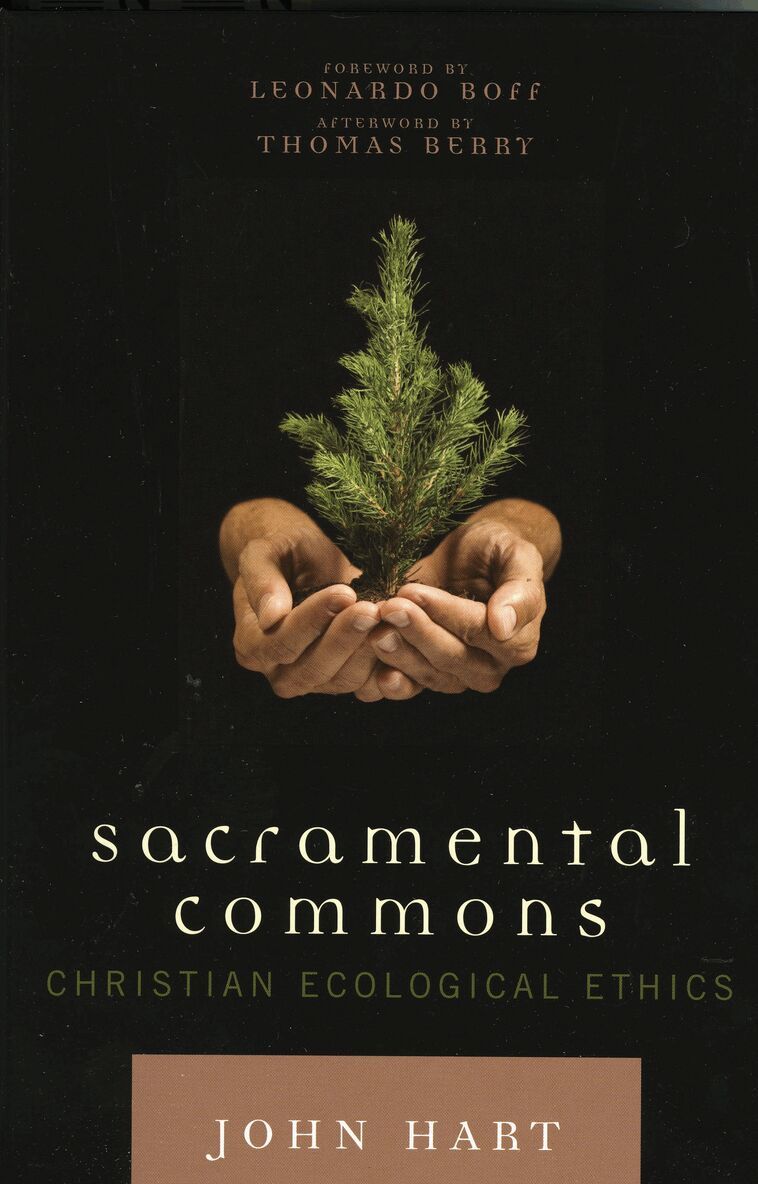
The increasing awareness of environmental issues as ultimately moral issues has led to the intersection of religion and environment. Sacramental Commons presents a unique way of looking at this topic by relating the Christian word "sacrament" (signs of divine presence) to the term "commons" (shared place and shared goods, among people and between people and the natural world), suggesting that local natural settings and local communities can be a source for respect and compassion. Sacramental Commons uses Earth-oriented biblical teachings, and ideas from such thinkers as Hildegard, St. Francis, John Muir, and Black Elk, to provide insights about divine immanence in creation, human commitments to creation, and human accountability to the Spirit, Earth, and biotic community. It extends the concept of "natural rights" beyond humans to include all nature, and affirms intrinsic value in ecosystems in whole and in part. Sacramental Commons declares that the Earth commons and its goods should be shared equitably by human communities and individuals living in interdependent relationships with other members of the community of life. It suggests essential values that will stimulate care for the commons, and embodies them in principles of an innovative Christian Ecological Ethics.
Häftad, Engelska, 2006
505 kr
Skickas inom 10-15 vardagar
The increasing awareness of environmental issues as ultimately moral issues has led to the intersection of religion and environment. Sacramental Commons presents a unique way of looking at this topic by relating the Christian word "sacrament" (signs of divine presence) to the term "commons" (shared place and shared goods, among people and between people and the natural world), suggesting that local natural settings and local communities can be a source for respect and compassion. Sacramental Commons uses Earth-oriented biblical teachings, and ideas from such thinkers as Hildegard, St. Francis, John Muir, and Black Elk, to provide insights about divine immanence in creation, human commitments to creation, and human accountability to the Spirit, Earth, and biotic community. It extends the concept of "natural rights" beyond humans to include all nature, and affirms intrinsic value in ecosystems in whole and in part. Sacramental Commons declares that the Earth commons and its goods should be shared equitably by human communities and individuals living in interdependent relationships with other members of the community of life. It suggests essential values that will stimulate care for the commons, and embodies them in principles of an innovative Christian Ecological Ethics.
E-bok
Engelska, 20071 372 kr
Läs direkt efter köp
Human experience with nuclear, biological, and chemical (NBC) warfare has been limited, especially in comparison to conventional forms of warfare. Our experience with nuclear warfare is confined to a period of less than one week during the end of World War II, when the United States successfully used two nuclear weapons against targets in Japan. The course of biological warfare and modern use of biological weapons are difficult to track owing to the difficulty of differentiating deliberate use from natural outbreaks. However, the keen potential of biological weapons in acts of terror was shown in the mass disruption caused in the fall 2001 experience in the U.S. with the release of anthrax through the American postal system. Chemical weapons have been used in a handful of conflicts since their introduction to modern warfare during World War I, most recently during the Iran-Iraq War during the 1980s. Despite this limited experience, NBC warfare continues to exert a certain fascination among states.The Historical Dictionary of Nuclear, Biological, and Chemical Warfare covers the development and use of NBC weapons as well as efforts to limit or control the use of these weapons through a chronology, a bibliography, an introductory essay, and dictionary entries. Over 500 cross-referenced dictionary entries provide a unique selection of terms related to NBC warfare, ranging from basic descriptions of substances used in NBC warfare to details on incidents and episodes where NBC weapons were used. Entries are structured around historical events, persons important to NBC warfare, countries where such weapons have been developed or used, and international treaties and treaty-related organizations.
Del 90 - A to Z Guide Series
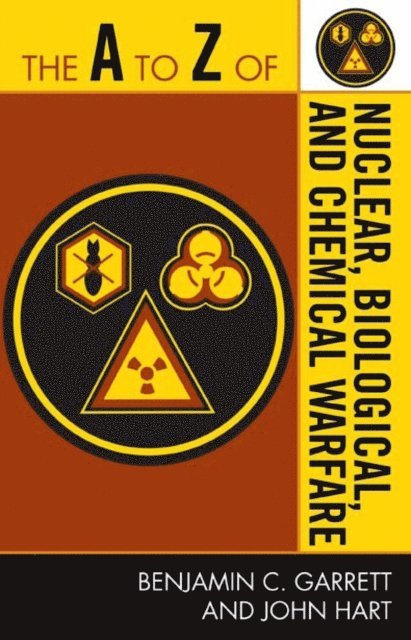
A to Z of Nuclear, Biological and Chemical Warfare
Häftad, Engelska, 2009
719 kr
Skickas inom 10-15 vardagar
Human experience with nuclear, biological, and chemical (NBC) warfare has been limited, especially in comparison to conventional forms of warfare. Our experience with nuclear warfare is confined to a period of less than one week during the end of World War II, when the United States successfully used two nuclear weapons against targets in Japan. The course of biological warfare and modern use of biological weapons are difficult to track owing to the difficulty of differentiating deliberate use from natural outbreaks. However, the keen potential of biological weapons in acts of terror was shown in the mass disruption caused in the fall 2001 experience in the U.S. with the release of anthrax through the American postal system. Chemical weapons have been used in a handful of conflicts since their introduction to modern warfare during World War I, most recently during the Iran-Iraq War during the 1980s. Despite this limited experience, NBC warfare continues to exert a certain fascination among states.The A to Z of Nuclear, Biological, and Chemical Warfare covers the development and use of NBC weapons as well as efforts to limit or control the use of these weapons through a chronology, a bibliography, an introductory essay, and dictionary entries. Over 500 cross-referenced dictionary entries provide a unique selection of terms related to NBC warfare, ranging from basic descriptions of substances used in NBC warfare to details on incidents and episodes where NBC weapons were used. Entries are structured around historical events, persons important to NBC warfare, countries where such weapons have been developed or used, and international treaties and treaty-related organizations.
E-bok
Engelska, 2009779 kr
Läs direkt efter köp
Human experience with nuclear, biological, and chemical (NBC) warfare has been limited, especially in comparison to conventional forms of warfare. Our experience with nuclear warfare is confined to a period of less than one week during the end of World War II, when the United States successfully used two nuclear weapons against targets in Japan. The course of biological warfare and modern use of biological weapons are difficult to track owing to the difficulty of differentiating deliberate use from natural outbreaks. However, the keen potential of biological weapons in acts of terror was shown in the mass disruption caused in the fall 2001 experience in the U.S. with the release of anthrax through the American postal system. Chemical weapons have been used in a handful of conflicts since their introduction to modern warfare during World War I, most recently during the Iran-Iraq War during the 1980s. Despite this limited experience, NBC warfare continues to exert a certain fascination among states.The A to Z of Nuclear, Biological, and Chemical Warfare covers the development and use of NBC weapons as well as efforts to limit or control the use of these weapons through a chronology, a bibliography, an introductory essay, and dictionary entries. Over 500 cross-referenced dictionary entries provide a unique selection of terms related to NBC warfare, ranging from basic descriptions of substances used in NBC warfare to details on incidents and episodes where NBC weapons were used. Entries are structured around historical events, persons important to NBC warfare, countries where such weapons have been developed or used, and international treaties and treaty-related organizations.