Benjamin Madley - Böcker
Visar alla böcker från författaren Benjamin Madley. Handla med fri frakt och snabb leverans.
5 produkter
5 produkter
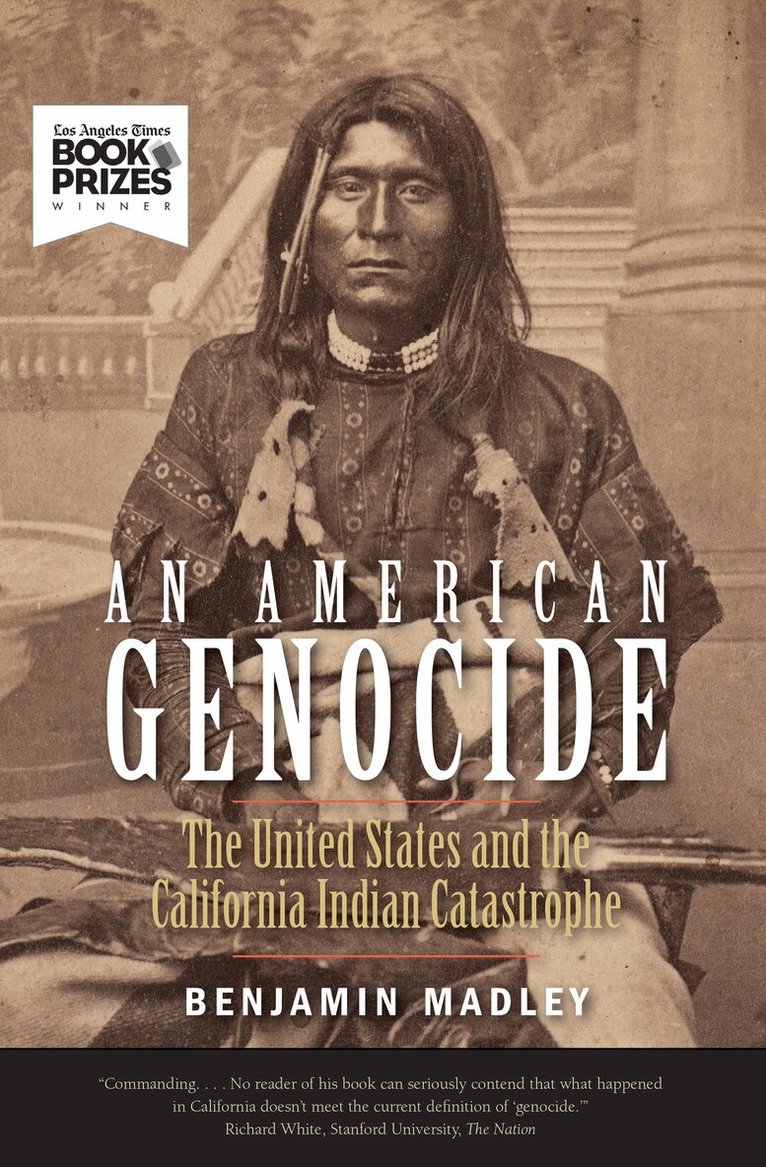
American Genocide
The United States and the California Indian Catastrophe, 1846-1873
Häftad, Engelska, 2017
193 kr
Skickas inom 7-10 vardagar
The first full account of the government-sanctioned genocide of California Indians under United States rule Winner of the 2016 Los Angeles Times Book Award for History and a New York Times Book Review Editors’ Choice “Gruesomely thorough. . . . Others have described some of these campaigns, but never in such strong terms and with so much blame placed directly on the United States government.”—Alexander Nazaryan, Newsweek Between 1846 and 1873, California’s Indian population plunged from perhaps 150,000 to 30,000. Benjamin Madley is the first historian to uncover the full extent of the slaughter, the involvement of state and federal officials, the taxpayer dollars that supported the violence, Indigenous resistance, who did the killing, and why the killings ended. This deeply researched book is a comprehensive and chilling history of an American genocide. Madley describes pre-contact California and precursors to the genocide before explaining how the Gold Rush stirred vigilante violence against California Indians. He narrates the rise of a state-sanctioned killing machine and the broad societal, judicial, and political support for genocide. Many participated: vigilantes, volunteer state militiamen, U.S. Army soldiers, U.S. congressmen, California governors, and others. The state and federal governments spent at least $1.7 million on campaigns against California Indians. Besides evaluating government officials’ culpability, Madley considers why the slaughter constituted genocide and how other possible genocides within and beyond the Americas might be investigated using the methods presented in this groundbreaking book.
750 kr
Skickas inom 7-10 vardagar
Migrant Ecologies: Environmental Histories of the Pacific World is the first volume explicitly dedicated to the environmental history of Earth’s largest ocean. Covering nearly one-third of the planet, the Pacific Ocean is remarkable for its diverse human and non-human inhabitants, their astounding long-distance migrations over time, and their profound influences on other parts of the world. This book creates an understanding of the past, present, and futures of the lands, seas, peoples, practices, microbes, animals, plants, and other natural forces that shape the Pacific. It effectively argues for the existence of an interconnected Pacific World environmental history, as well as for the Pacific Ocean as a necessary framework for understanding that history.The fifteen chapters in this comprehensive collection, written by leading experts from across the globe, span a vast array of topics, from disease ecology and coffee cultivation to nuclear testing and whaling practices. They explore regions stretching from the Tuamotu Archipelago in the south Pacific to the Kamchatka Peninsula in the far north, resisting the depiction of the Pacific as isolated and uninhabited. What unites these diverse contributions is a concern for how the people, places, and non-human beings of the Pacific World have been shaped by, and have in turn modified, their oceanic realm. Building on a recent renaissance in Pacific history, these chapters make a powerful argument for the importance of the Pacific World as a coherent unit of analysis and a valuable lens through which to examine past, ongoing, and emerging environmental issues. By showcasing surprising and innovative perspectives on the environmental histories of the peoples and ecosystems in and around the Pacific Ocean, this work adds to current conversations and debates about the Pacific World and offers myriad opportunities for further discussions, both inside and outside of the classroom.
291 kr
Skickas inom 7-10 vardagar
Migrant Ecologies: Environmental Histories of the Pacific World is the first volume explicitly dedicated to the environmental history of Earth’s largest ocean. Covering nearly one-third of the planet, the Pacific Ocean is remarkable for its diverse human and non-human inhabitants, their astounding long-distance migrations over time, and their profound influences on other parts of the world. This book creates an understanding of the past, present, and futures of the lands, seas, peoples, practices, microbes, animals, plants, and other natural forces that shape the Pacific. It effectively argues for the existence of an interconnected Pacific World environmental history, as well as for the Pacific Ocean as a necessary framework for understanding that history.The fifteen chapters in this comprehensive collection, written by leading experts from across the globe, span a vast array of topics, from disease ecology and coffee cultivation to nuclear testing and whaling practices. They explore regions stretching from the Tuamotu Archipelago in the south Pacific to the Kamchatka Peninsula in the far north, resisting the depiction of the Pacific as isolated and uninhabited. What unites these diverse contributions is a concern for how the people, places, and non-human beings of the Pacific World have been shaped by, and have in turn modified, their oceanic realm. Building on a recent renaissance in Pacific history, these chapters make a powerful argument for the importance of the Pacific World as a coherent unit of analysis and a valuable lens through which to examine past, ongoing, and emerging environmental issues. By showcasing surprising and innovative perspectives on the environmental histories of the peoples and ecosystems in and around the Pacific Ocean, this work adds to current conversations and debates about the Pacific World and offers myriad opportunities for further discussions, both inside and outside of the classroom.
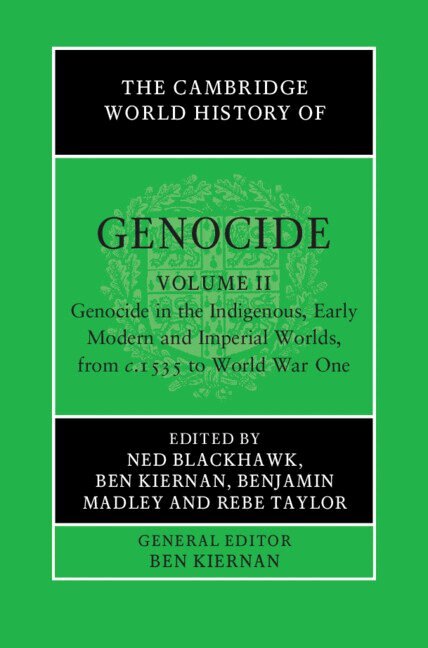
The Cambridge World History of Genocide: Volume 2, Genocide in the Indigenous, Early Modern and Imperial Worlds, from c.1535 to World War One
Inbunden, Engelska, 2023
1 822 kr
Skickas inom 7-10 vardagar
Volume II documents and analyses genocide and extermination throughout the early modern and modern eras. It tracks their global expansion as European and Asian imperialisms, and Euroamerican settler colonialism, spread across the globe before the Great War, forging new frontiers and impacting Indigenous communities in Europe, Asia, North America, Africa, and Australia. Twenty-five historians with expertise on specific regions explore examples on five continents, providing comparisons of nine cases of conventional imperialism with nineteen of settler colonialism, and offering a substantial basis for assessing the various factors leading to genocide. This volume also considers cases where genocide did not occur, permitting a global consideration of the role of imperialism and settler-Indigenous relations from the sixteenth to the early twentieth centuries. It ends with six pre-1918 cases from Australia, China, the Middle East, Africa, and Europe that can be seen as 'premonitions' of the major twentieth-century genocides in Europe and Asia.
The Cambridge World History of Genocide: Volume 2, Genocide in the Indigenous, Early Modern and Imperial Worlds, from c.1535 to World War One
Häftad, Engelska, 2025
526 kr
Skickas inom 7-10 vardagar
Volume II documents and analyses genocide and extermination throughout the early modern and modern eras. It tracks their global expansion as European and Asian imperialisms, and Euroamerican settler colonialism, spread across the globe before the Great War, forging new frontiers and impacting Indigenous communities in Europe, Asia, North America, Africa, and Australia. Twenty-five historians with expertise on specific regions explore examples on five continents, providing comparisons of nine cases of conventional imperialism with nineteen of settler colonialism, and offering a substantial basis for assessing the various factors leading to genocide. This volume also considers cases where genocide did not occur, permitting a global consideration of the role of imperialism and settler-Indigenous relations from the sixteenth to the early twentieth centuries. It ends with six pre-1918 cases from Australia, China, the Middle East, Africa, and Europe that can be seen as 'premonitions' of the major twentieth-century genocides in Europe and Asia.