Berend Wierenga - Böcker
Visar alla böcker från författaren Berend Wierenga. Handla med fri frakt och snabb leverans.
6 produkter
6 produkter
1 096 kr
Skickas inom 10-15 vardagar
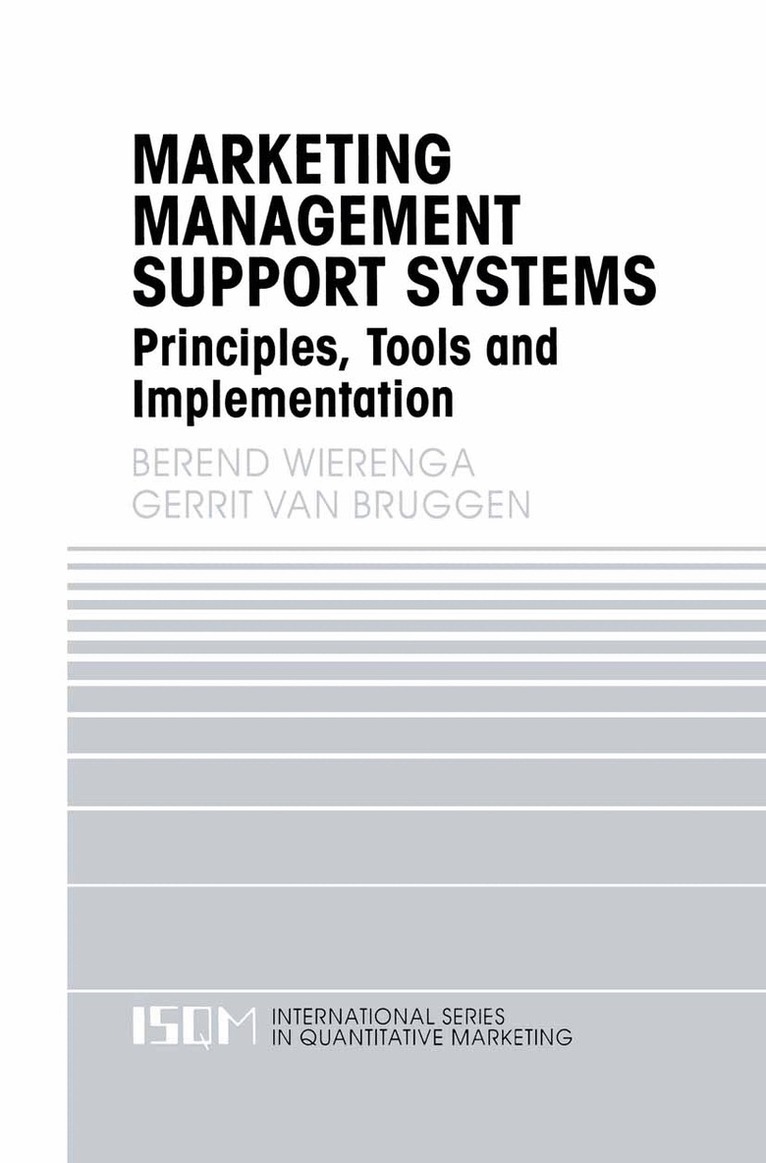
Developments in information technology have caused a marketing data explosion, but have also provided a powerful set of tools that can transform this data into applicable marketing knowledge. By collecting and transforming this information into useful data-driven and knowledge-driven systems, marketing management support systems enable more strategic and effective decision-making. Consequently, companies are making major investments in such support systems. This textbook on marketing management support systems looks at how to determine the most effective type of support for a given decision-maker in a particular marketing context. This topic is approached from a demand-oriented perspective, as decision aids for marketing professionals can only be effective if these systems match the thinking and reasoning processes of the managers using them.Consequently, the important questions addressed in this book are: how do marketing managers make decisions; how can marketing management support systems help to overcome several cognitive limitations of human decision-makers; and what is the most appropriate type of management support system for assisting the problem-solving methods employed by a marketing decision-maker? The different types of marketing management support systems are addressed in a discussion of the various technologies available. The more conventional data-driven marketing management support systems are covered - marketing models, marketing information systems and marketing decision support systems. The authors also devote extensive attention to more recently developed knowledge-driven marketing management support systems, such as marketing expert systems, marketing case-based reasoning systems, marketing neural networks and marketing creativity support systems. The book introduces the reader to the principles of the different systems and also provides many examples of real-life applications.By using insights gained from marketing science, behavioural decision theory, information systems research and artificial intelligence, the authors bring an interdisciplinary approach to the consideration of marketing management support systems. Besides discussing the state of the field, the book deals with the major research issues involving the design and implementation of these systems. Special attention is paid to considering what factors determine the success of marketing management support systems. Marketing management support systems constitute a rapidly evolving domain of interest to academic researchers and marketing professionals. The book discusses the implications posed for these systems by the ever-growing stream of data available from barcode scanners, direct marketing, and electronic commerce; by the integration of different business processes (enterprise resource planning); and by the need for vertical supply chain co-ordination.Also addressed are how recent advances in information technology, such as new methods for designing software, intelligent agents, and user-friendlier user interfaces, and data analysis (such as new methods for data mining) will affect the subsequent development of marketing management support systems. The challenge for the future is designing marketing management support systems that combine these newer technologies into maximally effective systems that constitute a real competitive edge in the marketplace. This book aims to help spur this implementation by offering a framework for matching the demand and supply of information in order to guide the functional design and development of marketing management support systems in specific situations.
1 625 kr
Skickas inom 10-15 vardagar
As in many other sectors, in agribusiness major changes are taking place. On the demand side, consumers are changing lifestyles, eating and shopping habits, and increasingly are demanding more accommodation of these needs in the supermarket. With regard to the supply: the traditional distribution channel dominators - manufacturers of branded consumer products - are trying hard to defend their positions against retailers, who gather and use information about the consumer to streamline their enterprises and strengthen their ties with the consumer. The agricultural producers, meanwhile, face increased regulations with regard to food additives, pesticides, and herbicides. Pressures rise as their business becomes more specialized and capital-intensive than that of their predecessors. Finally, the larger political climate is not so favorable to agriculture, which now has to compete in the global market without significant government support. This volume describes and interprets changes in the domain of agriculture and food.The contributors develop the theme of taking an interdisciplinary approach to coping with these changes, using concepts and methods developed in general marketing, which are adapted so as to apply to the particular characteristics of the food and agriculture sector.
1 096 kr
Skickas inom 10-15 vardagar
Marketing management support systems are designed to make marketing managers more effective decision makers in this electronic era. Developments in information technology have caused a marketing data explosion, but have also provided a powerful set of tools that can transform this data into applicable marketing knowledge. Consequently, companies are making major investments in such marketing decision aids. This book is the first comprehensive, systematic textbook on marketing management support systems. The basic issue is the question of how to determine the most effective type of support for a given marketing decision maker in a particular decision situation. The book takes a demand-oriented approach. Decision aids for marketing managers can only be effective if they match with the thinking and reasoning process of the decision makers who use them. Consequently, the important questions addressed in this book are: how do marketing managers make decisions; how can marketing management support systems help to overcome several (cognitive) limitations of human decision makers; and what is the most appropriate type of management support system for assisting the problem-solving methods employed by a marketing decision-maker?
1 578 kr
Skickas inom 10-15 vardagar
As in many other sectors, in agribusiness major changes are taking place. On the demand side, consumers are changing lifestyles, eating and shopping habits, and increasingly are demanding more accommodation of these needs in the supermarket. With regard to the supply: the traditional distribution channel dominators - manufacturers of branded consumer products - are trying hard to defend their positions against retailers, who gather and use information about the consumer to streamline their enterprises and strengthen their ties with the consumer. The agricultural producers, meanwhile, face increased regulations with regard to food additives, pesticides, and herbicides. Pressures rise as their business becomes more specialized and capital-intensive than that of their predecessors. Finally, the larger political climate is not so favorable to agriculture, which now has to compete in the global market without significant government support. This title describes and interprets changes in the domain of agriculture and food. The contributors develop the theme of taking an interdisciplinary approach to coping with these changes, using concepts and methods developed in general marketing, which are adapted so as to apply to the particular characteristics of the food and agriculture sector. This book is published to honor the distinguished career of Professor Mathew T.G. Meulenberg from Wageningen Agricultural University, on the occasion of his retirement in September 1996. As a scientist, teacher, and advisor to the agribusiness and the government, Professor Meulenberg has made an important contribution to the development of marketing, inside and outside the domain of agriculture.
3 532 kr
Skickas inom 10-15 vardagar
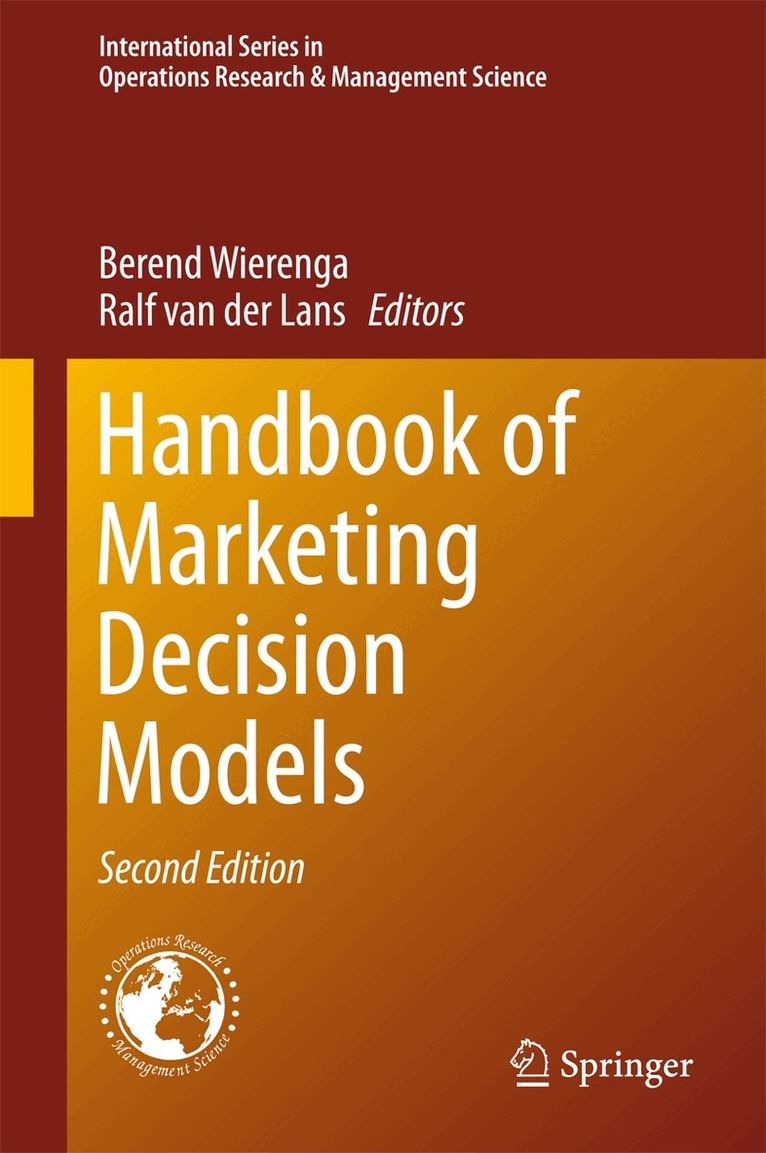
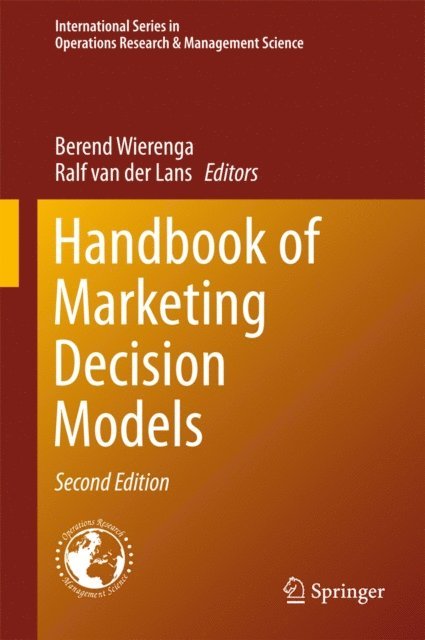
The Second Edition of this book presents the state of the art in this important field. Marketing decision models constitute a core component of the marketing discipline and the area is changing rapidly, not only due to fundamental advances in methodology and model building, but also because of the recent developments in information technology, the Internet and social media. This Handbook contains eighteen chapters that cover the most recent developments of marketing decision models in different domains of marketing. Compared to the previous edition, thirteen chapters are entirely new, while the remaining chapters represent complete updates and extensions of the previous edition. This new edition of the Handbook has chapters on models for substantive marketing problems, such as customer relationship management, customer loyalty management, website design, Internet advertising, social media, and social networks. In addition, it contains chapters on recent methodologicaldevelopments that are gaining popularity in the area of marketing decision models, such as structural modeling, learning dynamics, choice modeling, eye-tracking and measurement. The introductory chapter discusses the main developments of the last decade and discusses perspectives for future developments.
3 532 kr
Skickas inom 10-15 vardagar
In addition, it contains chapters on recent methodologicaldevelopments that are gaining popularity in the area of marketing decision models, such as structural modeling, learning dynamics, choice modeling, eye-tracking and measurement.