Berit Valentin Eriksen – författare
Visar alla böcker från författaren Berit Valentin Eriksen. Handla med fri frakt och snabb leverans.
8 produkter
8 produkter
Inbunden, Engelska, 1996
1 671 kr
Skickas inom 10-15 vardagar
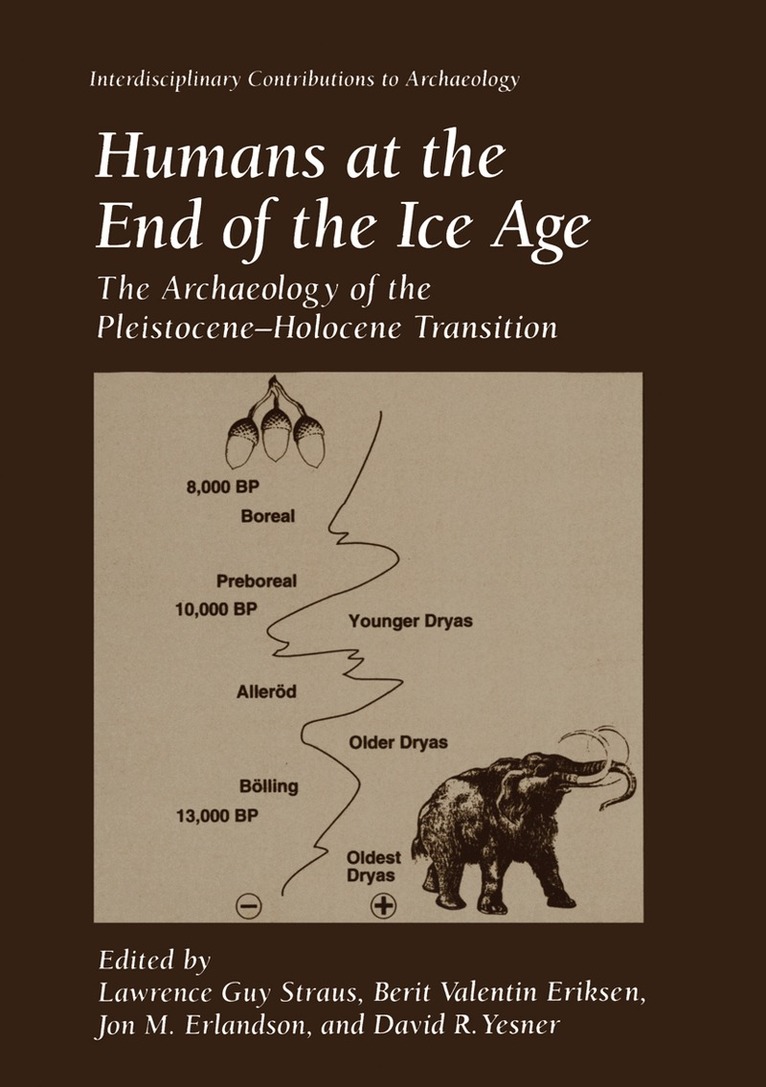
Humans at the End of the Ice Age chronicles and explores the significance of the variety of cultural responses to the global environmental changes at the last glacial-interglacial boundary. Contributions address the nature and consequences of the global climate changes accompanying the end of the Pleistocene epoch-detailing the nature, speed, and magnitude of the human adaptations that culminated in the development of food production in many parts of the world. The text is aided by vital maps, chronological tables, and charts.
Häftad, Engelska, 2012
1 671 kr
Skickas inom 10-15 vardagar
Humans at the End of the Ice Age chronicles and explores the significance of the variety of cultural responses to the global environmental changes at the last glacial-interglacial boundary. Contributions address the nature and consequences of the global climate changes accompanying the end of the Pleistocene epoch-detailing the nature, speed, and magnitude of the human adaptations that culminated in the development of food production in many parts of the world. The text is aided by vital maps, chronological tables, and charts.
E-bok
PDF, Engelska, 20122 110 kr
Läs direkt efter köp
Humans at the End of the Ice Age chronicles and explores the significance of the variety of cultural responses to the global environmental changes at the last glacial-interglacial boundary. Contributions address the nature and consequences of the global climate changes accompanying the end of the Pleistocene epoch-detailing the nature, speed, and magnitude of the human adaptations that culminated in the development of food production in many parts of the world. The text is aided by vital maps, chronological tables, and charts.
E-bok
Engelska, 2021123 kr
Läs direkt efter köp
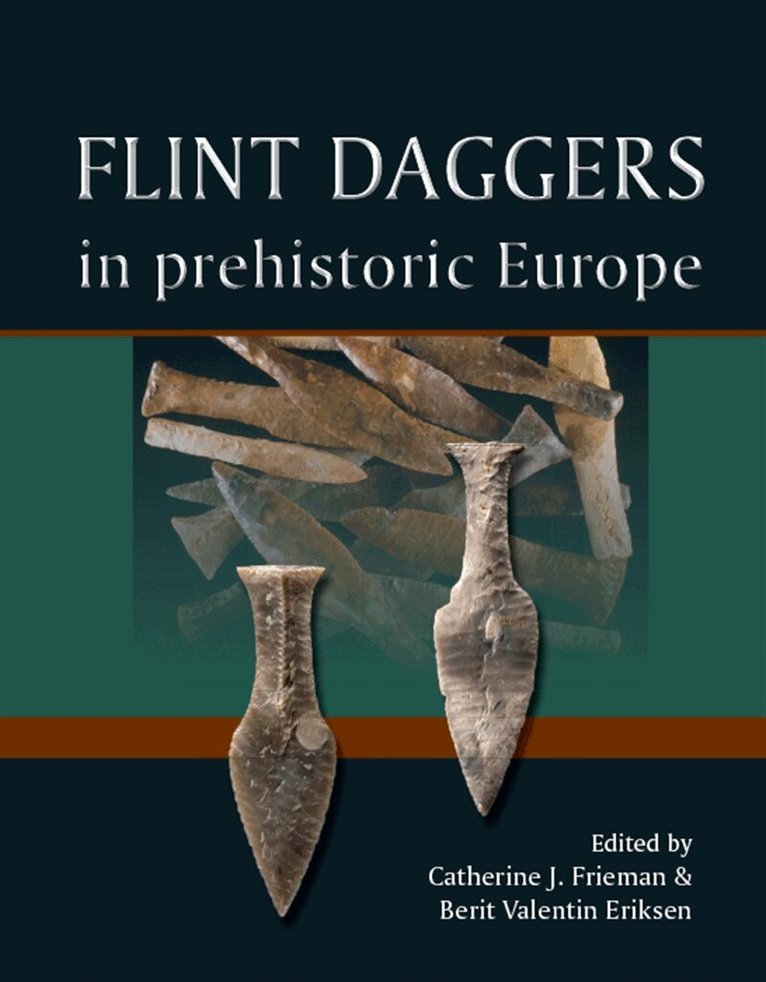
For more than a century flint daggers have been among the most closely studied and most heavily published later prehistoric lithic tools. It is well established that they are found across Europe and beyond, and that many were widely circulated over many generations. Yet, few researchers have attempted to discuss the entirety of the flint dagger phenomenon. The present volume brings together papers that address questions of the regional variability and socio-technical complexity of flint daggers and their production. It focuses on the typology, chronology, technology, functionality and meaning of flint and other lithic daggers produced primarily in Europe, but also in the Eastern Mediterranean and East Asia, in prehistory. The 14 papers by leading researchers provide a comprehensive overview of the state of knowledge concerning various flint dagger corpora as well as potential avenues for the development of a research agenda across national, regional and disciplinary boundaries. The volume originates from a session held at the 2011 meeting of the European Association of Archaeology but includes additional commissioned contributions.
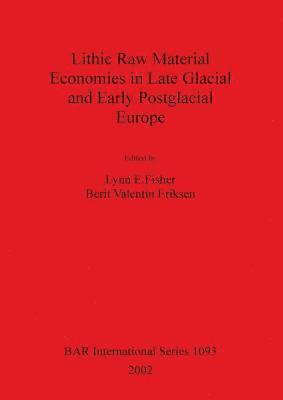
Häftad, Engelska, 2002
391 kr
Skickas inom 3-6 vardagar
Inbunden, Engelska, 2018
685 kr
Skickas inom 5-8 vardagar
This two-volume, multi-author and multi-disciplinary monographs sheds new light on the Bronze Age in Thy from many different angles, and places the archaeology of the area in both a detailed regional and a broader supra-regional North Sea context. It provides a high-resolution archaeological and paleoecological picture og the organisation of landscapes, settlements and households during the period 1500-700 BC. By combining the results of paleoenvironmental research, extensive field surveys and excavations of archaeological sites with exceptional preservation, it links the histories of local farmsteads in Thy with wider developments and events in the Bronze Age of northwest Europe.
Häftad, Engelska, 2026
1 400 kr
Kommande
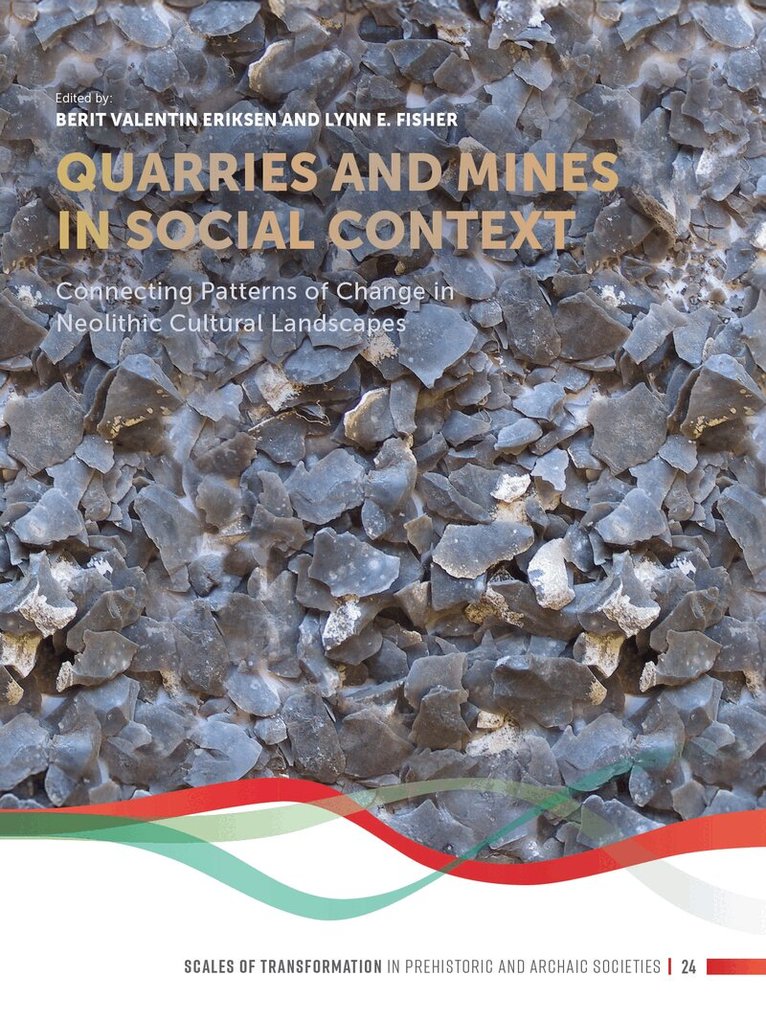
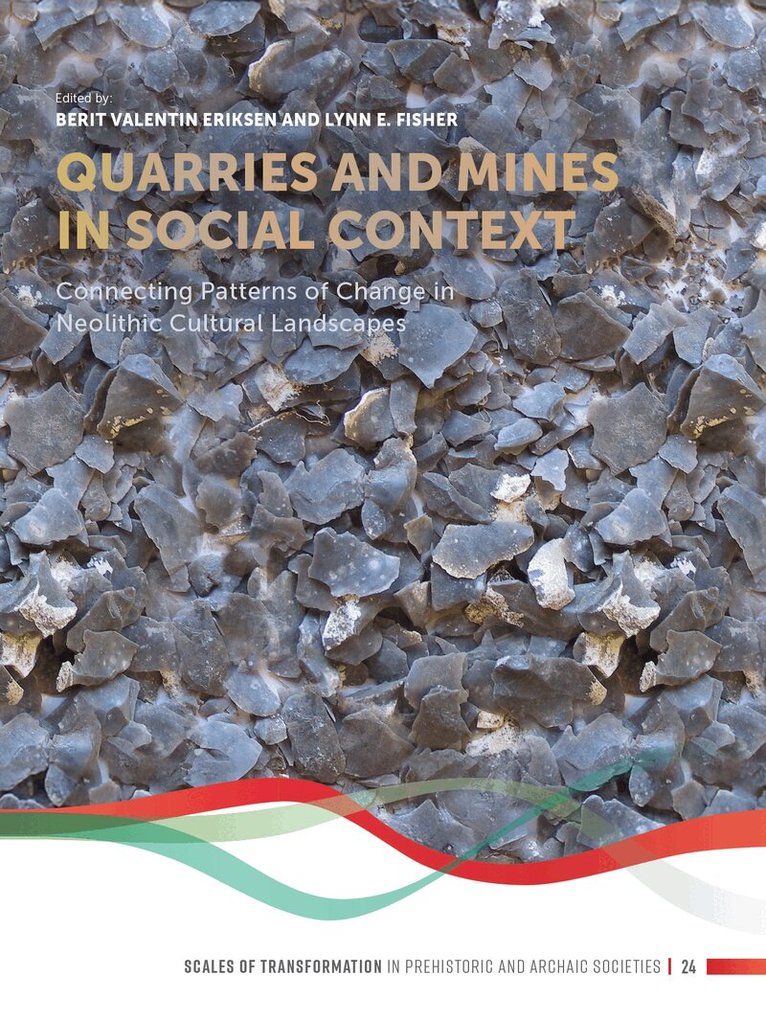
Flint mines and quarries are a widespread phenomenon in the European Neolithic, but are difficult to characterise and to connect to broader sociocultural developments due to challenges of recognition and dating, and to a great diversity of practices across regions and time periods. Neolithic mines and quarries vary greatly in intensity, chronology, and duration of exploitation. Investigations across Europe also reveal varied spatial scales of distribution, production of prestige objects as well as items for everyday use, and widely varying functional and social contexts in which extracted stone is used.The present volume brings together papers that address regional case studies in the context of broader sociocultural landscapes. As such, it explores the variability in mines and quarries in several regions of Neolithic Europe, with a focus on detecting and understanding changes in raw material extraction, related production activities, forms of specialisation or task differentiation, and/or linkages to other locales in technological and social networks. The 14 papers by leading researchers provide a comprehensive overview of the state of knowledge concerning various flint mining and quarrying sites in Central Europe, as well as potential avenues for understanding raw material extraction in relation to other patterns of socio-economic change across national, regional and disciplinary boundaries. The volume originates from a workshop held at Kiel University in 2022 under the auspices of the Collaborative Research Centre (CRC 1266) “Scales of Transformation – Human-Environmental Interaction in Prehistoric and Archaic Societies”.
Inbunden, Engelska, 2026
2 856 kr
Kommande
Flint mines and quarries are a widespread phenomenon in the European Neolithic, but are difficult to characterise and to connect to broader sociocultural developments due to challenges of recognition and dating, and to a great diversity of practices across regions and time periods. Neolithic mines and quarries vary greatly in intensity, chronology, and duration of exploitation. Investigations across Europe also reveal varied spatial scales of distribution, production of prestige objects as well as items for everyday use, and widely varying functional and social contexts in which extracted stone is used.The present volume brings together papers that address regional case studies in the context of broader sociocultural landscapes. As such, it explores the variability in mines and quarries in several regions of Neolithic Europe, with a focus on detecting and understanding changes in raw material extraction, related production activities, forms of specialisation or task differentiation, and/or linkages to other locales in technological and social networks. The 14 papers by leading researchers provide a comprehensive overview of the state of knowledge concerning various flint mining and quarrying sites in Central Europe, as well as potential avenues for understanding raw material extraction in relation to other patterns of socio-economic change across national, regional and disciplinary boundaries. The volume originates from a workshop held at Kiel University in 2022 under the auspices of the Collaborative Research Centre (CRC 1266) “Scales of Transformation – Human-Environmental Interaction in Prehistoric and Archaic Societies”.