• Fri frakt över 249 kr
  • •
  • Snabba leveranser
  • •
  • Billiga böcker
Kundservice

Du är på sajten för privatpersoner.

Företag, bibliotek eller offentlig verksamhet?

Du handlar på classic.bokus.com, där alla dina funktioner finns intakta.
Till classic.bokus.com
Bokus logotyp. Gå till startsidan.
  • Erbjudanden
  • Nyheter
  • Student
  • Topplistor
  • Barn & ungdom
  • Bokus Play
  • E-böcker
  • Pocketböcker
  • Spel & pussel

10% rabatt på allt med kod: NYSTART10 →

Sidfot

Mina sidor

    Hjälp

    • Kundservice
    • Vanliga frågor och svar
    • Frakt och leverans
    • Retur vid ångerrätt
    • Reklamera vara
    • Betalning
    • Köpvillkor
    • Allmänna villkor
    • Information om webbplatsens tillgänglighet

    Om Bokus

    • Om oss
    • Pressrum
    • För studenter
    • För företag
    • För bibliotek och offentlig verksamhet
    • För leverantörer
    • Hållbarhet

    Populärt

    • Aktuella erbjudanden
    • Presentkort
    • Studentlitteratur
    • Nya böcker
    • Topplistor
    • Signerade böcker
    • Engelska böcker

    Inspiration

    • Boktips
    • BookTok
    • Populära bokserier
    • Barnbokskaraktärer
    • Populära författare
    Logotyp för Bokus
    Följ oss på Facebook (extern länk)Följ oss på Instagram (extern länk)Följ oss på YouTube (extern länk)Följ oss på TikTok (extern länk)
    bokus @ CookiesAnpassa cookiesIntegritetspolicyKöpvillkor
    Till Citymail hemsida (extern länk)Till Budbee hemsida (extern länk)Till Postnord hemsida (extern länk)Till Schenker hemsida (extern länk)Till Early Bird hemsida (extern länk)Till Walleys hemsida (extern länk)
    1. Historia och arkeologi
    2. Arkeologi

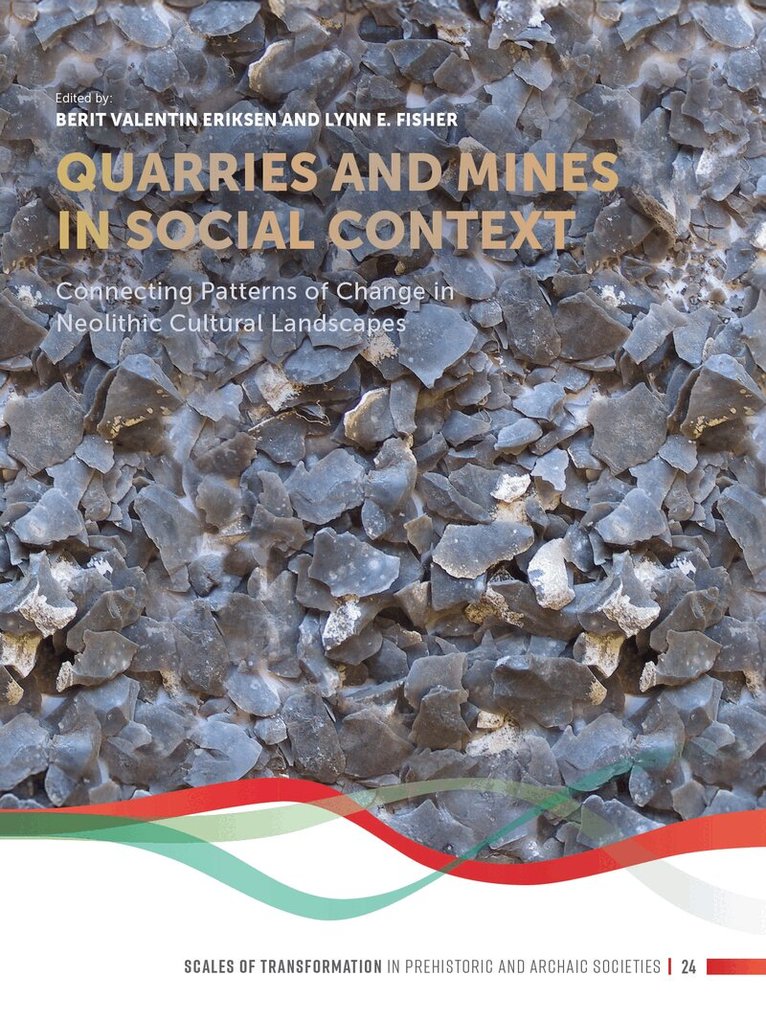
    Quarries and mines in social context

    Connecting patterns of change in Neolithic cultural landscapes

    AvBerit Valentin Eriksen,Lynn E. Fisher

    Häftad, Engelska, 2026

    1 445 kr

    Kommande

    Beskrivning

    Flint mines and quarries are a widespread phenomenon in the European Neolithic, but are difficult to characterise and to connect to broader sociocultural developments due to challenges of recognition and dating, and to a great diversity of practices across regions and time periods. Neolithic mines and quarries vary greatly in intensity, chronology, and duration of exploitation. Investigations across Europe also reveal varied spatial scales of distribution, production of prestige objects as well as items for everyday use, and widely varying functional and social contexts in which extracted stone is used.The present volume brings together papers that address regional case studies in the context of broader sociocultural landscapes. As such, it explores the variability in mines and quarries in several regions of Neolithic Europe, with a focus on detecting and understanding changes in raw material extraction, related production activities, forms of specialisation or task differentiation, and/or linkages to other locales in technological and social networks. The 14 papers by leading researchers provide a comprehensive overview of the state of knowledge concerning various flint mining and quarrying sites in Central Europe, as well as potential avenues for understanding raw material extraction in relation to other patterns of socio-economic change across national, regional and disciplinary boundaries. The volume originates from a workshop held at Kiel University in 2022 under the auspices of the Collaborative Research Centre (CRC 1266) “Scales of Transformation – Human-Environmental Interaction in Prehistoric and Archaic Societies”.

    Produktinformation

    • Utgivningsdatum:2026-11-05
    • Mått:210 x 280 x undefined mm
    • Format:Häftad
    • Språk:Engelska
    • Antal sidor:420
    • Förlag:Sidestone Press
    • ISBN:9789464271683

    Utforska kategorier

    • Arkeologi inom Historia och arkeologi

    Mer om författaren

    Berit V. Eriksen is senior researcher at the Museum for Archaeology, Stiftung Schleswig-Holsteinische Landesmuseen Schloss Gottorf, and Honorary Professor in Prehistoric Archaeology at Kiel University. She lectures on Palaeolithic and Mesolithic archaeology. She is a PI of the Collaborative Research Centre ‘Scales of Transformation: Human–Environmental Interaction in Prehistoric and Archaic Societies’ (CRC 1266, financed by the German Research Foundation/DFG) and a member of the Cluster of Excellence ‘Roots’ at Kiel University. She has published various articles and books about the archaeology of prehistoric hunter-gatherers as well as flint technology and she is currently particularly interested in the use of flint and stone in early metal using societies, including not least the Bronze Age of Scandinavia. Lynn E. Fisher is Professor for Anthropology and Archaeology at the University of Illinois Springfield. A primary focus of her research is on social change and technology in early Stone Age farming societies in southern Germany. Her archaeological fieldwork in southern Germany has been funded by the Fulbright Foundation and the National Science Foundation. In autumn 2021, she joined Kiel University as a Mercator fellow invited by the Collaborative Research Centre 1266 “Scales of Transformation”. During her stay in Kiel she collaborated intensively with Berit V. Eriksen to plan and organise an international workshop on “Quarries and mines in social context. Connecting patterns of change in Neolithic cultural landscapes”. The proceedings is forthcoming/published with Sidestone Press.

    Innehållsförteckning

    • Chapter 1. IntroductionBerit Valentin Eriksen, Lynn E. FisherChapter 2. Of pits and pitfalls. Neolithic flint mining in the province of Limburg (the Netherlands) between ca. 5300 and ca. 2600 BCEMarjorie E. Th. de GroothChapter 3. Socio-economic patterns evolution as exemplified by flints procurement: from Early to Middle Neolithic in western BelgiumJean-Philippe Collin, Solène DenisChapter 4. Specialisation of production, specialisation of space: changes and continuities in the territorial and socio-economic patterns of Bartonian flint production in northern France 5000–3800 BCEFrançoise BostynChapter 5. Copper and flint, business cycles and the conditions of knowledge transmission: a demographic explanationTim KerigChapter 6. Beyond mines and quarries – lithic raw material supply and circulation during the Mesolithic and Early Neolithic in the Rhineland and BavariaSilviane Scharl, Birgit Gehlen, Jehanne Affolter, Anna-Leena Fischer, Alexander Kisslinger, Stefan SuhrbierChapter 7. Exploring lithic production strategies at a Neolithic chert quarry in southwest Germany: intra-quarry variation at Asch-BorgerhauLynn E. Fisher, Susan K. Harris, Corina Knipper, Rainer SchregChapter 8. Neolithic silicite procurement in the Alpine Foreland from the 5th to the 3rd millennium BCE – a case study from the Zurich regionKurt Altorfer, Jehanne AffolterChapter 9. The mining of Vienna Radiolarite – new perspectives on lithic resource management at the eastern fringe of the AlpsMichael Brandl, Oliver Schmitsberger, Martin PenzChapter 10. Flint supply and access in prehistoric HungaryKatalin T. BiróChapter 11. Non-siliceous rocks in the context of prehistoric mining in the territory of the Czech RepublicPavel Burgert, Antonín PřichystalChapter 12. Mining, use, and distribution of chocolate flint among Neolithic and Bronze Age communities in eastern Central EuropeDagmara H. WerraChapter 13. Western European Late Neolithic battle axes and their meaning for the reconstruction of enduring socio-spatial patternsSebastian SchultrichChapter 14. A diachronic perspective on the mass production of flint tools in early metal using societies. Addressing the evidence of flint mines in Neolithic and Bronze Age DenmarkBerit Valentin Eriksen