Bernhard Waldenfels – författare
Visar alla böcker från författaren Bernhard Waldenfels. Handla med fri frakt och snabb leverans.
21 produkter
Phenomenology and Marxism
Av Bernhard Waldenfels, Jan M. Broekman m. fl.
Inbunden, 2013
2515 kr
Lägg i varukorg
Originally published in English in 1984, this collection of essays documents a dialogue between phenomenology and Marxism, with the contributors representing a cross-section from the two traditions. The theoretical and historical presuppositions of the phenomenology inaugurated by Husserl are very …
Phenomenology of the Alien
Häftad, 2011
312 kr
Lägg i varukorg
Tanja Stähler and Alexander Kozin’s elegant translation of Bernhard Waldenfels’s Phenomenology of the Alien (Grundmotive einer Phänomenologie des Fremden) introduces the English readership to the philosophy of alien-experience, a multifaceted and multidimensional phenomenon that permeates our …
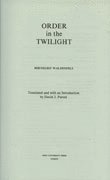
Order in the Twilight
Inbunden, 1996
502 kr
Lägg i varukorg
"Whoever distrusts the barking of watchdogs, however, does not immediately have to begin howling with the wolves."—Bernhard WaldenfelsIn this seminal work, acclaimed philosopher Bernhard Waldenfels deals with the problem of the nature of order after the "shattering of the world," and the loss of …
Phenomenology and Marxism
Av Bernhard Waldenfels, Jan M. Broekman m. fl.
Häftad, 2015
794 kr
Lägg i varukorg
Originally published in English in 1984, this collection of essays documents a dialogue between phenomenology and Marxism, with the contributors representing a cross-section from the two traditions. The theoretical and historical presuppositions of the phenomenology inaugurated by Husserl are very …
Geburt des Ethos aus dem Pathos
Wege einer responsiven Phänomenologie
Av Bernhard Waldenfels, Birgit Weyel
Inbunden, 2024
390 kr
Lägg i varukorg
In seiner Preisrede erläutert Bernhard Waldenfels, dass responsive Ethik davon ausgeht, dass wir in all unserem Tun und Lassen wohl oder übel auf etwas antworten, das uns zusammen mit anderen widerfährt. Antwortend erfinden wir, wie wir antworten wollen, nicht aber, dass wir es tun. Selbst die …
Beiträge zur Wissenssoziologie, Beiträge zur Religionssoziologie / Contributions to the Sociology of Knowledge Contributions to the Sociology of Religion
Av Peter Gross, Werner Stark m. fl.
Häftad, 1975
567 kr
Lägg i varukorg
Roland Fischer
Refugees
Häftad, 2017
207 kr
Lägg i varukorg
Roland Fischer was inspired by the current political and social events relating t o the topic of refugees to create a collective portrait consisting of over 1,000 separate photographs. Central questions about identity and solidarity, which are the subject of discussion in the socio - political …
Vom Eigensinn der Dinge
Für eine neue Perspektive auf die Welt des Materiellen
Av Bernhard Waldenfels, Monika Wagner m. fl.
E-bok, 2015
204 kr
Lägg i varukorg
Nie zuvor in seiner Geschichte war der Mensch von einer solch großen Anzahl von Dingen umgeben wie heute. Der Sachbesitz des Einzelnen in der Konsumgesellschaft übersteigt jedes zuvor bekannte Maß. Dank innovativer Technologien verfügen Menschen über immer neue Objekte mit zuvor ungeahnten …
Question of the Other
Inbunden, 2007
287 kr
Lägg i varukorg
Drawn from a series of lectures that Bernhard Waldenfels delivered in honour of the Chinese philosopher Tang Chun-I, ""The Question of the Other"" is a collection of seven papers introducing what he calls a new sort of responsive phenomenology. This means that our experience does not start from our …
Phénoménologie de l'étranger
Motifs fondamentaux
E-bok, 2019
329 kr
Lägg i varukorg
Si l’étranger a traditionnellement constitué l’écueil inassimilable dont la philosophie n’a cessé de se détourner, la phénoménologie de l’étranger de Waldenfels, au cœur des débats contemporains, entend au contraire faire droit à sa requête. Waldenfels ne traite pas l’étranger comme un simple …
Question of the Other
Häftad, 2016
394 kr
Tillfälligt slut
Introduces the phenomenology of the Other, taking into account the work of Husserl, Merleau-Ponty, Levinas, Schutz, and Derrida, but mostly going back to things themselves.Drawn from a series of lectures that Bernhard Waldenfels delivered in honor of the Chinese philosopher Tang Junyi, The Question …
Phenomenology of the Alien
Inbunden, 2011
789 kr
Tillfälligt slut
Tanja Stähler and Alexander Kozin’s elegant translation of Bernhard Waldenfels’s Phenomenology of the Alien (Grundmotive einer Phänomenologie des Fremden) introduces the English readership to the philosophy of alien-experience, a multifaceted and multidimensional phenomenon that permeates our …