Bert O. States – Författare
Visar alla böcker från författaren Bert O. States. Handla med fri frakt och snabb leverans.
4 produkter
4 produkter
468 kr
Skickas inom 5-8 vardagar
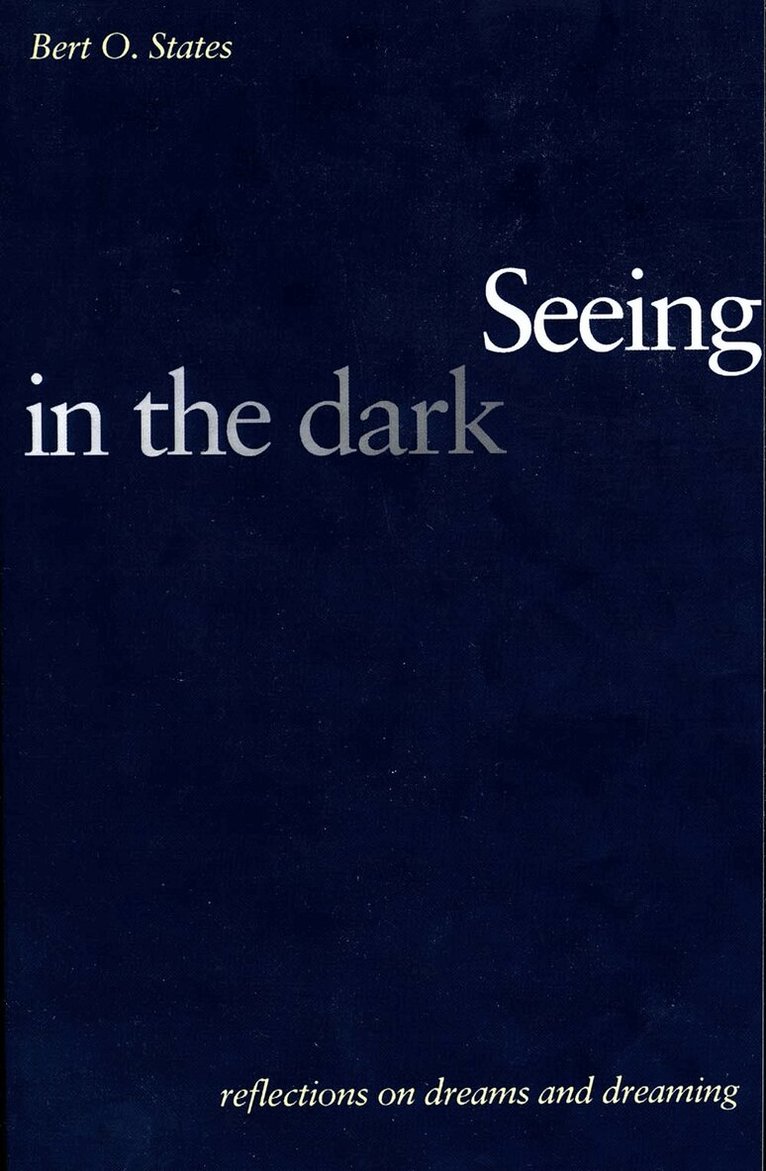
What is the relation between waking experience and dreams, and between dreams and literary creativity? In this book Bert States explores the nature of dream imagery, the metaphorical processes in dreaming, and the nature and sources of dream narrative. Challenging the classical psychoanalytic view that dreams represent censored wishes, he argues instead that dreams are nonrepressive, unplanned constructions that unfold one image at a time with no other end than making the most integral use of the images at hand. Dreams are a phenomenon of mind and, like art, are manifestations of a biological need to convert experience into structure, says States.If we acknowledge that dreaming is a biological activity (because virtually all mammals are known to dream), then we may profitably study dreams as instances of an evolutionary process in which images survive by a form of natural selection to influence the remainder of the dream, States contends. And if dreams have any meaning, it is no different in kind from the meaning that may be given to waking experience.In addition to evolutionary biology, States draws on cognitive psychology, anthropology, neuroscience, literary and rhetorical theory, and philosophy, as well as poetry, literature, and drama. His provocative and lively investigation of dreams will appeal to any reader curious about the mind's activity during sleep.
267 kr
Skickas inom 7-10 vardagar
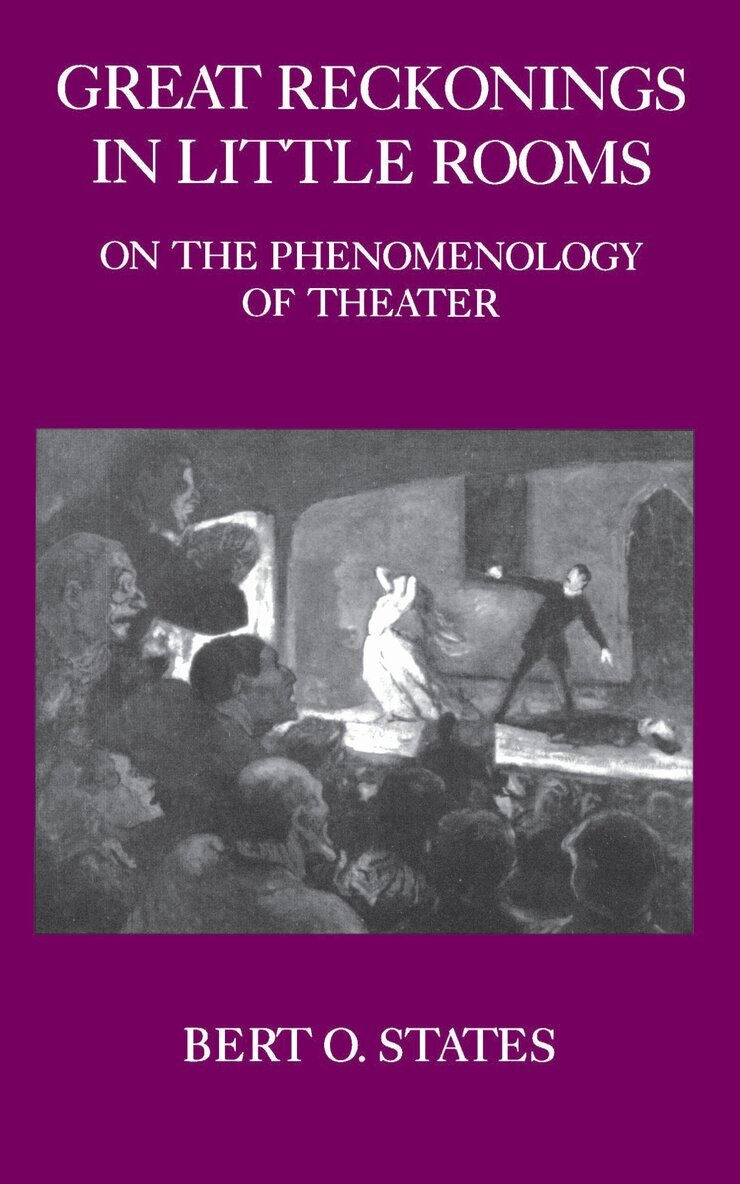
This is a book about the theater phenomenon. It is an extension of notes on the theater and theatergoing that have been accumulating for some time. It does not have an argument, or set out to prove a thesis, and it will not be one of those useful books one reads for the fruits of its research. Rather, it is a form of critical description that is phenomenological in the sense that it focuses on the activity of theater making itself out of its essential materials: speech, sound, movement, scenery, text, etc. Like most phenomenological description, it will succeed to the extent that it awakens the reader's memory of his own perceptual encounters with theater. If the book fails in this it will be about as interesting to read as an anthology of someone else's dreams. In any case, this book is less concerned with the scientific purity of my perspective and method than with retrieving something from the theater experience that seems to me worthy of our critical admiration.
657 kr
Skickas inom 10-15 vardagar
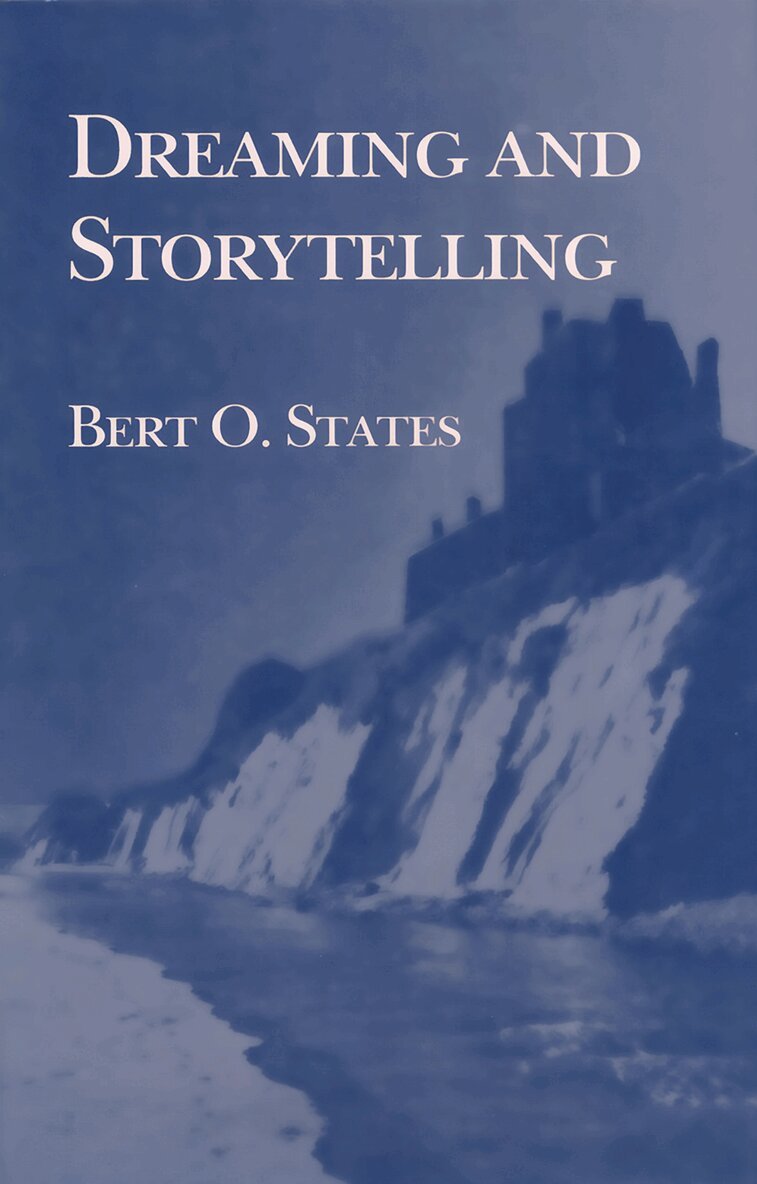
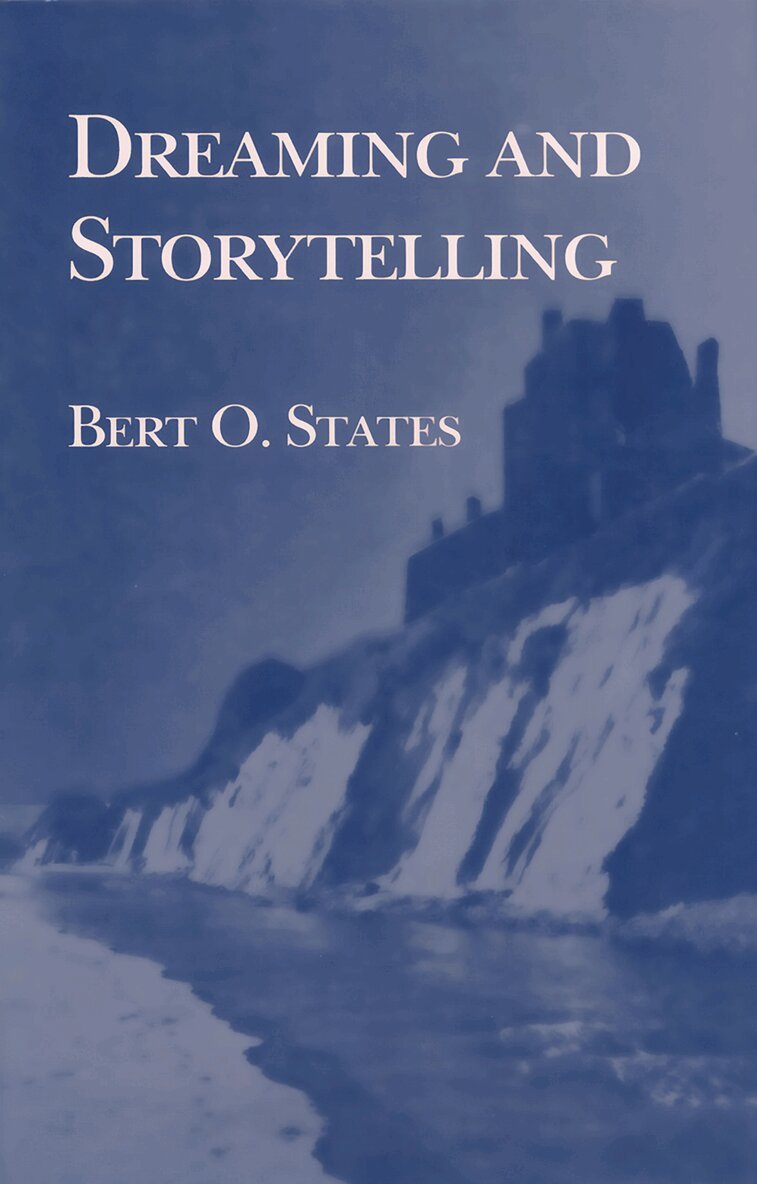
Are dreams merely odd things that happen to us at night, sometimes pleasant, sometimes terrifying, but not to be taken too seriously? Is there any reason to think about them at all, other than in terms of questions such as ''Why should Aunt Sarah turn into a bird and invite us all to dinner in her sycamore tree?"In this witty and eminently readable book, Bert O. States rethinks both the meaning of dreams and the relationship between dreaming and the telling of stories. Dreams constitute a private literature of the self, he says, that—despite their seeming lack of order or structure—can help us to understand the very nature of shared literature.Observers have often pointed out narrative elements that are common to dreams and stories—including "cinematic" visual techniques and such plot devices as reversals of fortune and paired villains and antagonists. Drawing on current work in such fields as neurobiology, cognitive psychology, literary theory, and dream theory, States asks whether dreaming and storytelling may share similar psychic processes as well. He first considers the bizarreness of dreams compared to the expected intelligibility of stories. He then surveys a wide array of stories and reported dreams, focusing on them as narratives with varied beginnings and endings, character functions, cause-and-effect relationships, archetypal structures, even generic constraints. Turning to the question of intentionality, States addresses the perennially intriguing question of whether dreams actually do have meanings, or whether we thrust meaning upon them.Anyone interested in the poetics of imaginative experience—whether approached from the perspective of the literary critic, the psychologist, or the psychoanalyst—will want to read Dreaming and Storytelling.
293 kr
Skickas inom 10-15 vardagar
Are dreams merely odd things that happen to us at night, sometimes pleasant, sometimes terrifying, but not to be taken too seriously? Is there any reason to think about them at all, other than in terms of questions such as ''Why should Aunt Sarah turn into a bird and invite us all to dinner in her sycamore tree?"In this witty and eminently readable book, Bert O. States rethinks both the meaning of dreams and the relationship between dreaming and the telling of stories. Dreams constitute a private literature of the self, he says, that—despite their seeming lack of order or structure—can help us to understand the very nature of shared literature.Observers have often pointed out narrative elements that are common to dreams and stories—including "cinematic" visual techniques and such plot devices as reversals of fortune and paired villains and antagonists. Drawing on current work in such fields as neurobiology, cognitive psychology, literary theory, and dream theory, States asks whether dreaming and storytelling may share similar psychic processes as well. He first considers the bizarreness of dreams compared to the expected intelligibility of stories. He then surveys a wide array of stories and reported dreams, focusing on them as narratives with varied beginnings and endings, character functions, cause-and-effect relationships, archetypal structures, even generic constraints. Turning to the question of intentionality, States addresses the perennially intriguing question of whether dreams actually do have meanings, or whether we thrust meaning upon them.Anyone interested in the poetics of imaginative experience—whether approached from the perspective of the literary critic, the psychologist, or the psychoanalyst—will want to read Dreaming and Storytelling.