Beverly Mack – författare
Visar alla böcker från författaren Beverly Mack. Handla med fri frakt och snabb leverans.
2 produkter
2 produkter
269 kr
Skickas inom 10-15 vardagar
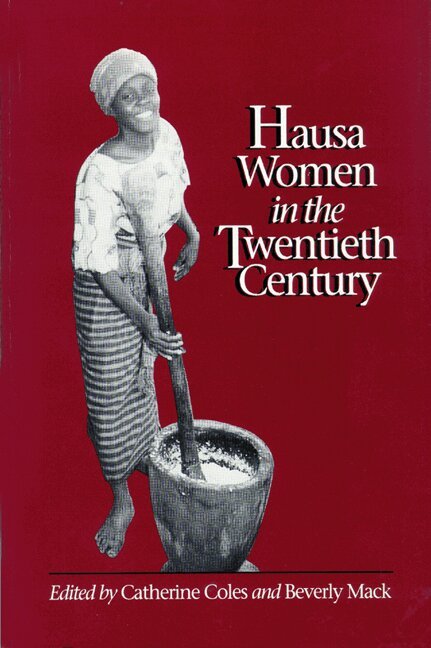
The Hausa are one of the largest ethnic groups in Africa, with populations in Nigeria, Niger and Ghana. Their long history of city-states and Islamic caliphates, their complex trading economies and their cultural traditions have attracted the attention of historians, political economists, linguists and anthropologists. The large body of scholarship on Hausa society, however, has assumed the subordination of women to men. This work refutes the notion that Hausa women are pawns in a patriarchal Muslim society. The contributors, all of whom have done field research in Hausaland, explore the ways Hausa women have balanced the demands of Islamic expectations and Western choices as their society moved from a pre-colonial system through British colonial administration to inclusion in the modern Nigerian nation. The book examines the roles of a wide variety of women, from wives and workers, to political activists and mythical figures, and it emphasizes that women have been educators and spiritual leaders in Hausa society since pre-colonial times. From royalty to slaves and concubines, in traditional Hausa cities and in newer towns, from the urban poor to the newly educated elite, the ""invisible women"" whose lives are documented here demonstrate that standard accounts of Hausa society should be revised.
Equals in Learning and Piety
Muslim Women Scholars in Nigeria and North America
Inbunden, Engelska, 2023
888 kr
Skickas inom 10-15 vardagar
Equals in Learning and Piety is an intellectual history of the ‘Yan Taru (Associates) movement, a women-led Islamic educational organization that continues to this day in both northern Nigeria and in the United States. Drawing on extensive scholarship across disciplines including history, Islamic studies, anthropology, gender and women’s studies, and literary studies—and alongside rigorous ethnographic research and interviews with leading Nigerian Muslim scholars—Beverly Mack argues that this formidable Muslim women’s movement consolidated the religious and social order established by the Sokoto Jihad in the early nineteenth century. Mack shows how women scholars instructed rural Hausa and Fulani women in Muslim ethics, doctrine, traditions, and behavior that followed and replaced the traumatic experience of warfare unleashed by the Jihad. She shows that these unique social engagements shaped people’s agency in the dynamic process of social change throughout the nineteenth century. Women imaginatively reconciled Muslim reformist doctrines and traditional practices in Nigeria, and these doctrines have continued to be influential in the diaspora, especially among Black American Muslims in the United States in the twenty-first century. With this major investigation of a little-studied phenomenon, Mack demonstrates the importance of women to the religious, political, and social transformation of Nigerian Muslim society.