Blake Emerson – författare
Visar alla böcker från författaren Blake Emerson. Handla med fri frakt och snabb leverans.
6 produkter
6 produkter
992 kr
Skickas inom 5-8 vardagar
The Public's Law is a theory and history of democracy in the American administrative state. The book describes how American Progressive thinkers - such as John Dewey, W.E.B. Du Bois, and Woodrow Wilson - developed a democratic understanding of the state from their study of Hegelian political thought. G.W.F. Hegel understood the state as an institution that regulated society in the interest of freedom. This normative account of the state distinguished his view from later German theorists, such as Max Weber, who adopted a technocratic conception of bureaucracy, and others, such as Carl Schmitt, who prioritized the will of the chief executive. The Progressives embraced Hegel's view of the connection between bureaucracy and freedom, but sought to democratize his concept of the state. They agreed that welfare services, economic regulation, and official discretion were needed to guarantee conditions for self-determination. But they stressed that the people should participate deeply in administrative policymaking. This Progressive ideal influenced administrative programs during the New Deal. It also sheds light on interventions in the War on Poverty and the Second Reconstruction, as well as on the Administrative Procedure Act of 1946. The book develops a normative theory of the state on the basis of this intellectual and institutional history, with implications for deliberative democratic theory, constitutional theory, and administrative law. On this view, the administrative state should provide regulation and social services through deliberative procedures, rather than hinge its legitimacy on presidential authority or economistic reasoning.
256 kr
Skickas inom 5-8 vardagar
The Public's Law is a theory and history of democracy in the American administrative state. The book describes how American Progressive thinkers - such as John Dewey, W.E.B. Du Bois, and Woodrow Wilson - developed a democratic understanding of the state from their study of Hegelian political thought. G.W.F. Hegel understood the state as an institution that regulated society in the interest of freedom. This normative account of the state distinguished his view from later German theorists, such as Max Weber, who adopted a technocratic conception of bureaucracy, and others, such as Carl Schmitt, who prioritized the will of the chief executive. The Progressives embraced Hegel's view of the connection between bureaucracy and freedom, but sought to democratize his concept of the state. They agreed that welfare services, economic regulation, and official discretion were needed to guarantee conditions for self-determination. But they stressed that the people should participate deeply in administrative policymaking. This Progressive ideal influenced administrative programs during the New Deal. It also sheds light on interventions in the War on Poverty and the Second Reconstruction, as well as on the Administrative Procedure Act of 1946. The book develops a normative theory of the state on the basis of this intellectual and institutional history, with implications for deliberative democratic theory, constitutional theory, and administrative law. On this view, the administrative state should provide regulation and social services through deliberative procedures, rather than hinge its legitimacy on presidential authority or economistic reasoning.
3 066 kr
Skickas inom 7-10 vardagar
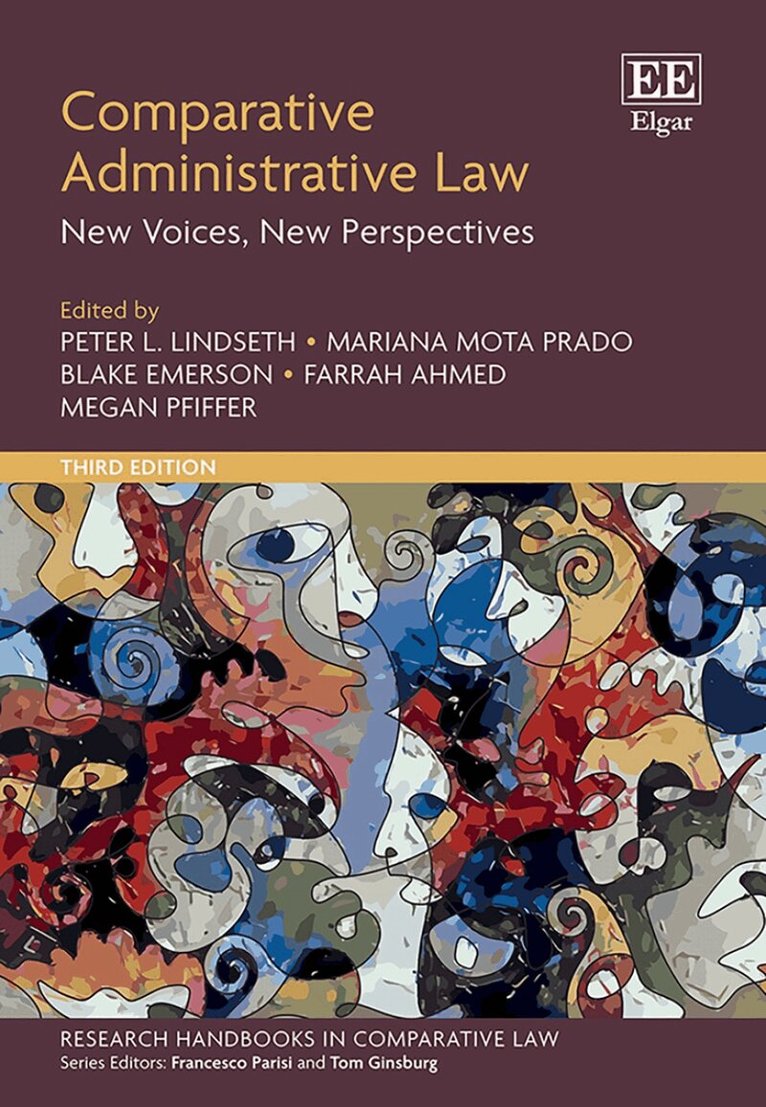
This thoroughly revised third edition of Comparative Administrative Law builds on the legacy of the first two editions, providing a redefined and reinvigorated analysis of pressing issues through original chapters, a renewed group of contributors and a broader geographic scope, with particular emphasis on the Global South.Leading scholars offer novel perspectives, investigating the intersecting differences between common law and civil law, including cultural traditions and political systems. Most chapters provide comparative analyses of administrative law across at least two legal orders, while others explore comparative law themes and issues within a single jurisdiction. The result of this combination is a rich and detailed description of legal doctrines, institutional arrangements and practices across multiple jurisdictions. Furthermore, key topics such as the plural legacies of decolonization in administrative law, the relationship of administrative law to constitutional politics, and the challenge of legality in administrative governance beyond the state are also covered.Scholars and students of comparative public law, international economic law, as well as law and development will benefit from this book’s insights. It is also a valuable resource for judges, lawyers, policymakers, regional integration bodies, and NGOs interested in comparative and legal perspectives on regulation, governance, and public bureaucracies.
162 kr
Skickas inom 5-8 vardagar
4 260 kr
Skickas inom 7-10 vardagar
A comprehensive overview of the field of comparative administrative law that builds on the first edition with many new and revised chapters, additional topics and extended geographical coverage. This research handbook s broad, multi-method approach combines history and social science with more strictly legal analyses. This new edition demonstrates the growth and dynamism of recent efforts - spearheaded by the first edition - to stimulate comparative research in administrative law and public law more generally, reaching across different countries and scholarly disciplines.A particular focus is on administrative independence with its manifold implications for separation of powers, democratic self-government, and the boundary between law, politics, and policy. Several chapters highlight the tensions between impartial expertise and public accountability; others consider administrative litigation and the role of the courts in reviewing both individual decisions and secondary norms. The book concludes by asking how administrative law is shaping and is being shaped by the changing boundaries of the state, especially shifting boundaries between the public and the private, and the national and the supranational domains.This extensive and interdisciplinary appraisal of the field will be a vital resource for scholars and students of administrative and comparative law worldwide, and for public officials and representatives of interest groups engaged with government policy implementation and regulation. Contributors: B. Ackerman, A. Alemanno, M. Asimow, J.-B. Auby, D. Barek-Erez, J. Barnes, P. Cane, P. Craig, D. Custos, M. D'Alberti, L.A. Dickinson, C. Donnelly, Y. Dotan, B. Emerson, T. Ginsburg, D. Halberstam, H.C.H. Hofmann, G.B. Hola, C.-Y. Huang, N. Kadomatsu, K. Kovács, P. Lindseth, M.E. Magill, J. Mashaw, J. Massot, J. Mathews, J. Mendes, G. Napolitano, D.R. Ortiz, T. Perroud, M.M. Prado, A. Psygkas, V.V. Ramraj, D.R. Reiss, S. Rose-Ackerman, M. Ruffert, J. Saurer, K.L. Scheppele, J.-P. Schneider, M. Shapiro, B. Sordi, L. Sossin, P. Strauss, A.K. Thiruvengadam, A. Vosskuhle, J.B. Wiener, T. Wischmeyer, J.-r. Yeh
737 kr
Skickas inom 7-10 vardagar
A comprehensive overview of the field of comparative administrative law that builds on the first edition with many new and revised chapters, additional topics and extended geographical coverage. This research handbook s broad, multi-method approach combines history and social science with more strictly legal analyses. This new edition demonstrates the growth and dynamism of recent efforts - spearheaded by the first edition - to stimulate comparative research in administrative law and public law more generally, reaching across different countries and scholarly disciplines.A particular focus is on administrative independence with its manifold implications for separation of powers, democratic self-government, and the boundary between law, politics, and policy. Several chapters highlight the tensions between impartial expertise and public accountability; others consider administrative litigation and the role of the courts in reviewing both individual decisions and secondary norms. The book concludes by asking how administrative law is shaping and is being shaped by the changing boundaries of the state, especially shifting boundaries between the public and the private, and the national and the supranational domains.This extensive and interdisciplinary appraisal of the field will be a vital resource for scholars and students of administrative and comparative law worldwide, and for public officials and representatives of interest groups engaged with government policy implementation and regulation. Contributors: B. Ackerman, A. Alemanno, M. Asimow, J.-B. Auby, D. Barek-Erez, J. Barnes, P. Cane, P. Craig, D. Custos, M. D'Alberti, L.A. Dickinson, C. Donnelly, Y. Dotan, B. Emerson, T. Ginsburg, D. Halberstam, H.C.H. Hofmann, G.B. Hola, C.-Y. Huang, N. Kadomatsu, K. Kovács, P. Lindseth, M.E. Magill, J. Mashaw, J. Massot, J. Mathews, J. Mendes, G. Napolitano, D.R. Ortiz, T. Perroud, M.M. Prado, A. Psygkas, V.V. Ramraj, D.R. Reiss, S. Rose-Ackerman, M. Ruffert, J. Saurer, K.L. Scheppele, J.-P. Schneider, M. Shapiro, B. Sordi, L. Sossin, P. Strauss, A.K. Thiruvengadam, A. Vosskuhle, J.B. Wiener, T. Wischmeyer, J.-r. Yeh