Blake R. Silver – författare
Visar alla böcker från författaren Blake R. Silver. Handla med fri frakt och snabb leverans.
8 produkter
8 produkter
462 kr
Läs direkt efter köp
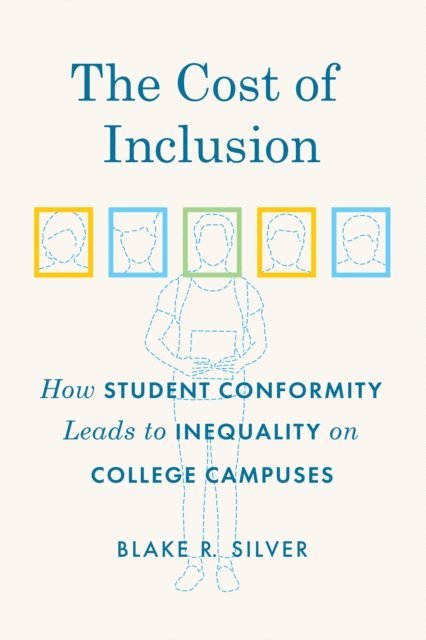
Young people are told that college is a place where they will “find themselves” by engaging with diversity and making friendships that will last a lifetime. This vision of an inclusive, diverse social experience is a fundamental part of the image colleges sell potential students. But what really happens when students arrive on campus and enter this new social world? The Cost of Inclusion delves into this rich moment to explore the ways students seek out a sense of belonging and the sacrifices they make to fit in. Blake R. Silver spent a year immersed in student life at a large public university. He trained with the Cardio Club, hung out with the Learning Community, and hosted service events with the Volunteer Collective. Through these day-to-day interactions, he witnessed how students sought belonging and built their social worlds on campus. Over time, Silver realized that these students only achieved inclusion at significant cost. To fit in among new peers, they clung to or were pushed into raced and gendered cultural assumptions about behavior, becoming “the cool guy,” “the nice girl,” “the funny one,” “the leader,” “the intellectual,” or “the mom of the group.” Instead of developing dynamic identities, they crafted and adhered to a cookie-cutter self, one that was rigid and two-dimensional. Silver found that these students were ill-prepared for the challenges of a diverse college campus, and that they had little guidance from their university on how to navigate the trials of social engagement or the pressures to conform. While colleges are focused on increasing the diversity of their enrolled student body, Silver’s findings show that they need to take a hard look at how they are failing to support inclusion once students arrive on campus.
Inbunden, Engelska, 2024
938 kr
Skickas inom 5-8 vardagar
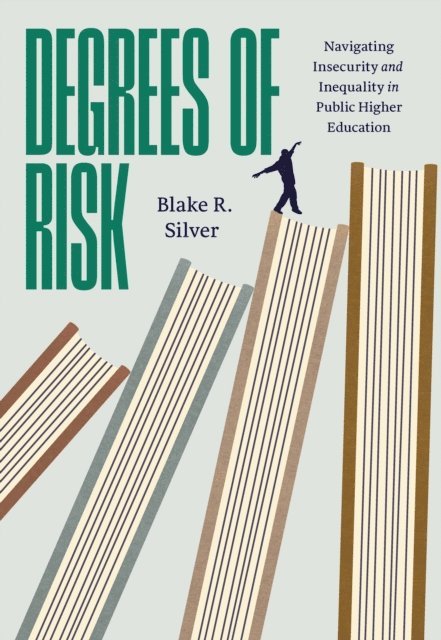
An ethnographic analysis of how insecurity is at the heart of contemporary higher education.Institutions of higher education are often described as “ivory towers,” places of privilege where students exist in a “campus bubble,” insulated from the trials of the outside world. These metaphors reveal a widespread belief that college provides young people with stability and keeps insecurity at bay. But for many students, that’s simply not the case.Degrees of Risk reveals how insecurity permeates every facet of college life for students at public universities. Sociologist Blake Silver dissects how these institutions play a direct role in perpetuating uncertainty, instability, individualism, and anxiety about the future. Silver examined interviews with more than one hundred students who described the risks that surrounded every decision: which major to choose, whether to take online classes, and how to find funding. He expertly identified the ways the college experience played out differently for students from different backgrounds. For students from financially secure families with knowledge of how college works, all the choices and flexibility of college felt like an adventure or a wealth of opportunities. But for many others, especially low-income, first-generation students, their personal and family circumstances meant that that flexibility felt like murkiness and precarity. In addition, he discovered that students managed insecurity in very different ways, intensifying inequality at the intersections of socioeconomic status, race, gender, and other sociodemographic dimensions. Drawing from these firsthand accounts, Degrees of Risk presents a model for a better university, one that fosters success and confidence for a diverse range of students.
416 kr
Läs direkt efter köp
An ethnographic analysis of how insecurity is at the heart of contemporary higher education. Institutions of higher education are often described as “ivory towers,” places of privilege where students exist in a “campus bubble,” insulated from the trials of the outside world. These metaphors reveal a widespread belief that college provides young people with stability and keeps insecurity at bay. But for many students, that’s simply not the case. Degrees of Risk reveals how insecurity permeates every facet of college life for students at public universities. Sociologist Blake Silver dissects how these institutions play a direct role in perpetuating uncertainty, instability, individualism, and anxiety about the future. Silver examined interviews with more than one hundred students who described the risks that surrounded every decision: which major to choose, whether to take online classes, and how to find funding. He expertly identified the ways the college experience played out differently for students from different backgrounds. For students from financially secure families with knowledge of how college works, all the choices and flexibility of college felt like an adventure or a wealth of opportunities. But for many others, especially low-income, first-generation students, their personal and family circumstances meant that that flexibility felt like murkiness and precarity. In addition, he discovered that students managed insecurity in very different ways, intensifying inequality at the intersections of socioeconomic status, race, gender, and other sociodemographic dimensions. Drawing from these firsthand accounts, Degrees of Risk presents a model for a better university, one that fosters success and confidence for a diverse range of students.
Häftad, Engelska, 2024
230 kr
Skickas inom 5-8 vardagar
An ethnographic analysis of how insecurity is at the heart of contemporary higher education.Institutions of higher education are often described as “ivory towers,” places of privilege where students exist in a “campus bubble,” insulated from the trials of the outside world. These metaphors reveal a widespread belief that college provides young people with stability and keeps insecurity at bay. But for many students, that’s simply not the case.Degrees of Risk reveals how insecurity permeates every facet of college life for students at public universities. Sociologist Blake Silver dissects how these institutions play a direct role in perpetuating uncertainty, instability, individualism, and anxiety about the future. Silver examined interviews with more than one hundred students who described the risks that surrounded every decision: which major to choose, whether to take online classes, and how to find funding. He expertly identified the ways the college experience played out differently for students from different backgrounds. For students from financially secure families with knowledge of how college works, all the choices and flexibility of college felt like an adventure or a wealth of opportunities. But for many others, especially low-income, first-generation students, their personal and family circumstances meant that that flexibility felt like murkiness and precarity. In addition, he discovered that students managed insecurity in very different ways, intensifying inequality at the intersections of socioeconomic status, race, gender, and other sociodemographic dimensions. Drawing from these firsthand accounts, Degrees of Risk presents a model for a better university, one that fosters success and confidence for a diverse range of students.
E-bok
Engelska, 2024520 kr
Läs direkt efter köp
E-bok
PDF, Engelska, 2024520 kr
Läs direkt efter köp
Inbunden, Engelska, 2024
1 331 kr
Skickas inom 7-10 vardagar
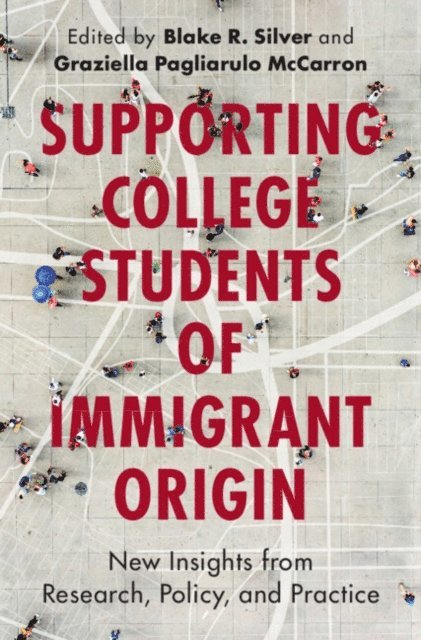
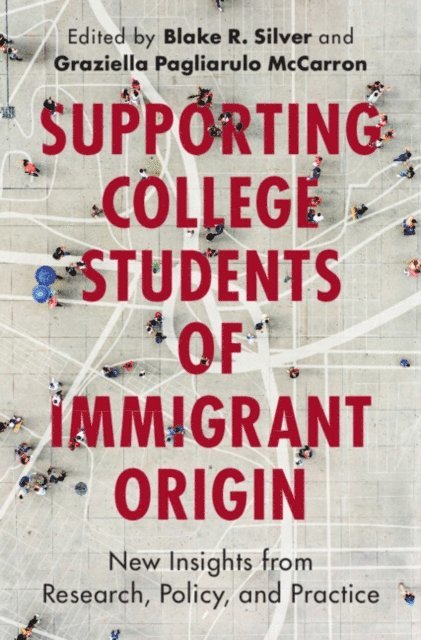
Over 5 million college students in the United States - nearly one-in-three students currently enrolled - are of immigrant origin, meaning they are either the children of immigrant parents or guardians and/or immigrants themselves. These students accounted for almost 60% of the growth in higher education enrolment in the 21st century. Nevertheless, there is very little research dedicated to this student population's specific experiences of postsecondary education, with similar absences discernible within the realms of higher education policy and practice. Although college campuses are making important progress in building more inclusive spaces, conversations about climate and student care rarely account for the journeys of students of immigrant origin. Featuring 20 chapters written by more than 50 contributors, this book addresses this glaring omission. The authors examine how students of immigrant origin experience the road to, through, and beyond higher education, while, simultaneously, speaking to evidence-based implications for policy, research, and practice.
Häftad, Engelska, 2024
433 kr
Skickas inom 7-10 vardagar
Over 5 million college students in the United States - nearly one-in-three students currently enrolled - are of immigrant origin, meaning they are either the children of immigrant parents or guardians and/or immigrants themselves. These students accounted for almost 60% of the growth in higher education enrolment in the 21st century. Nevertheless, there is very little research dedicated to this student population's specific experiences of postsecondary education, with similar absences discernible within the realms of higher education policy and practice. Although college campuses are making important progress in building more inclusive spaces, conversations about climate and student care rarely account for the journeys of students of immigrant origin. Featuring 20 chapters written by more than 50 contributors, this book addresses this glaring omission. The authors examine how students of immigrant origin experience the road to, through, and beyond higher education, while, simultaneously, speaking to evidence-based implications for policy, research, and practice.