Board on Army Science and Technology – författare
Visar alla böcker från författaren Board on Army Science and Technology. Handla med fri frakt och snabb leverans.
117 produkter
Effects of Degraded Agent and Munitions Anomalies on Chemical Stockpile Disposal Operations
Av National Research Council, Division on Engineering and Physical Sciences m. fl.
Häftad, 2004
508 kr
Lägg i varukorg
The U.S. Army is in the process of destroying its entire stock of chemical weapons. To help with stockpile disposal, the Armya (TM)s Chemical Stockpile Disposal Program (CSDP), in 1987, asked the National Research Council (NRC) for scientific and technical advice. This report is one in a series of …
Army Science and Technology for Homeland Security
Report 2: C4ISR
Av National Research Council, Division on Engineering and Physical Sciences m. fl.
Häftad, 2004
725 kr
Lägg i varukorg
Shortly after the events of September 11, 2001, the U.S. Army asked the National Research Council (NRC) for a series of reports on how science and technology could assist the Army meet its Homeland defense obligations. The first report, Science and Technology for Army Homeland Securitya "Report 1, …
Interim Design Assessment for the Pueblo Chemical Agent Destruction Pilot Plant
Av National Research Council, Division on Engineering and Physical Sciences m. fl.
Häftad, 2005
508 kr
Lägg i varukorg
In 1996, Congress enacted directing the Department of Defense to assess and demonstrate technology alternatives to incineration for destruction of the chemical weapons stored at Pueblo Chemical and Blue Grass Army Depots. Since then, the National Research Council (NRC) has been carrying out …
Impact of Revised Airborne Exposure Limits on Non-Stockpile Chemical Materiel Program Activities
Av National Research Council, Division on Engineering and Physical Sciences m. fl.
Häftad, 2005
606 kr
Lägg i varukorg
The U.S. Army's Non-Stockpile Chemical Materiel program is responsible for dismantling former chemical agent production facilities and destroying recovered chemical materiel. In response to congressional requirements, the Center for Disease Control (CDC), in 2003, recommended new airborne exposure …
Monitoring at Chemical Agent Disposal Facilities
Av National Research Council, Division on Engineering and Physical Sciences m. fl.
Häftad, 2005
606 kr
Lägg i varukorg
Under the direction of the U.S. Armya (TM)s Chemical Materials Agency (CMA) and mandated by Congress, the nation is destroying its chemical weapons stockpile. Over the past several years, the Army has requested several studies from the NRC to assist with the stockpile destruction. This study was …
Assessment of the Continuing Operability of Chemical Agent Disposal Facilities and Equipment
Av National Research Council, Division on Engineering and Physical Sciences m. fl.
Häftad, 2007
508 kr
Lägg i varukorg
The U.S. Armya (TM)s Chemical Materials Agency (CMA) currently oversees contracts for the operation of chemical agent stockpile incineration facilities at four disposal sites. Because the period of time required to dispose of these chemical agents has grown beyond that originally planned, the Army …
Review of Chemical Agent Secondary Waste Disposal and Regulatory Requirements
Av National Research Council, Division on Engineering and Physical Sciences m. fl.
Häftad, 2007
508 kr
Lägg i varukorg
Under the direction of the U.S. Army's Chemical Materials Agency (CMA) and mandated by Congress, the nation is destroying its chemical weapons stockpile. Large quantities of secondary waste are being generated in the process, and managing these wastes safely and effectively is a critical part of …
Review of Chemical Agent Secondary Waste Disposal and Regulatory Requirements
Av Committee on Review of Chemical Agent Secondary Waste Disposal and Regulatory Requirements, Board on Army Science and Technology m. fl.
E-bok, 2007
286 kr
Lägg i varukorg
Under the direction of the U.S. Army''s Chemical Materials Agency (CMA) and mandated by Congress, the nation is destroying its chemical weapons stockpile. Large quantities of secondary waste are being generated in the process, and managing these wastes safely and effectively is a critical part of …
Strategy for an Army Center for Network Science, Technology, and Experimentation
Av and Experimentation Committee on Strategies for Network Science, Technology, Board on Army Science and Technology m. fl.
E-bok, 2007
286 kr
Lägg i varukorg
The U.S. military has committed to a strategy of network-centric warfare. As a result, the Army has become increasingly interested in the critical role of network science. To a significant extent, this interest was stimulated by an earlier NRC report, Network Science. To build on that book, the …
Review of Directed Energy Technology for Countering Rockets, Artillery, and Mortars (RAM)
Abbreviated Version
Av Committee on Directed Energy Technology for Countering Indirect Weapons, Board on Army Science and Technology m. fl.
E-bok, 2008
200 kr
Lägg i varukorg
The United States Army is looking for ways to defend against missile and mortar attacks. In this book, the National Research Council assesses a plan to create a 100 kW mobile, solid-state, laser weapon that could defend an area several kilometers in diameter. The NRC provides several …
Review and Assessment of Developmental Issues Concerning the Metal Parts Treater Design for the Blue Grass Chemical Agent Destruction Pilot Plant
Av Committee to Review and Assess Developmental Issues Concerning the Metal Parts Treater Design for the Blue Grass Chemical Agent Destruction Pilot Plant, Board on Army Science and Technology m. fl.
E-bok, 2008
280 kr
Lägg i varukorg
The United States is in the process of destroying its chemical weapons stockpile. In 1996, Congress mandated that DOD demonstrate and select alternative methods to incineration at the Blue Grass and Pueblo sites. The Assembled Chemical Weapons Alternatives (ACWA) program was setup to oversee the …
Review of Secondary Waste Disposal Planning for the Blue Grass and Pueblo Chemical Agent Destruction Pilot Plants
Av National Research Council, Division on Engineering and Physical Sciences m. fl.
Häftad, 2008
497 kr
Lägg i varukorg
The U.S. Army Program Manager for Assembled Chemical Weapons Alternatives (PMACWA) is charged with disposing of chemical weapons as stored at two sites: Pueblo, Colorado, and Blue Grass, Kentucky. In accordance with congressional mandates, technologies other than incineration are to be used if they …
Review of Secondary Waste Disposal Planning for the Blue Grass and Pueblo Chemical Agent Destruction Pilot Plants
Av Committee to Review Secondary Waste Disposal and Regulatory Requirements for the Assembled Chemical Weapons Alternatives Program, Board on Army Science and Technology m. fl.
E-bok, 2008
280 kr
Lägg i varukorg
The U.S. Army Program Manager for Assembled Chemical Weapons Alternatives (PMACWA) is charged with disposing of chemical weapons as stored at two sites: Pueblo, Colorado, and Blue Grass, Kentucky. In accordance with congressional mandates, technologies other than incineration are to be used if they …
Opportunities in Neuroscience for Future Army Applications
Av Committee on Opportunities in Neuroscience for Future Army Applications, Board on Army Science and Technology m. fl.
E-bok, 2009
454 kr
Lägg i varukorg
Advances and major investments in the field of neuroscience can enhance traditional behavioral science approaches to training, learning, and other applications of value to the Army. Neural-behavioral indicators offer new ways to evaluate how well an individual trainee has assimilated mission …
Evaluation of Safety and Environmental Metrics for Potential Application at Chemical Agent Disposal Facilities
Av Committee on Evaluation of the Safety and Environmental Metrics for Potential Application at Chemical Agent Disposal Facilities, Board on Army Science and Technology m. fl.
E-bok, 2009
278 kr
Lägg i varukorg
By the end of 2009, more than 60 percent of the global chemical weapons stockpile declared by signatories to the Chemical Weapons Convention will have been destroyed, and of the 184 signatories, only three countries will possess chemical weapons-the United States, Russia, and Libya. In the United …
Network Science
Av Committee on Network Science for Future Army Applications, Board on Army Science and Technology m. fl.
E-bok, 2005
661 kr
Lägg i varukorg
The military is currently attempting to develop itself into a force capable of networkcentricoperations. While this effort has highlighted the military''s dependence oninteracting networks, it has also shown that there is a huge gap between what we need toknow about networks and our fundamental …
Disposal of Activated Carbon from Chemical Agent Disposal Facilities
Av National Research Council, Division on Engineering and Physical Sciences m. fl.
Häftad, 2009
508 kr
Lägg i varukorg
For the last two decades, the United States has been destroying its entire stockpile of chemical agents. At the facilities where these agents are being destroyed, effluent gas streams pass through large activated carbon filters before venting to ensure that any residual trace vapors of chemical …
Evaluation of Safety and Environmental Metrics for Potential Application at Chemical Agent Disposal Facilities
Av Committee on Evaluation of the Safety and Environmental Metrics for Potential Application at Chemical Agent Disposal Facilities, Board on Army Science and Technology m. fl.
E-bok, 2009
416 kr
Lägg i varukorg
By the end of 2009, more than 60 percent of the global chemical weapons stockpile declared by signatories to the Chemical Weapons Convention will have been destroyed, and of the 184 signatories, only three countries will possess chemical weapons-the United States, Russia, and Libya. In the United …
Disposal of Activated Carbon from Chemical Agent Disposal Facilities
Av and Air Conditioning Systems at Chemical Agent Disposal Facilities Committee to Examine the Disposal of Activated Carbon from the Heating, Ventilation, Board on Army Science and Technology m. fl.
E-bok, 2009
416 kr
Lägg i varukorg
For the last two decades, the United States has been destroying its entire stockpile of chemical agents. At the facilities where these agents are being destroyed, effluent gas streams pass through large activated carbon filters before venting to ensure that any residual trace vapors of chemical …
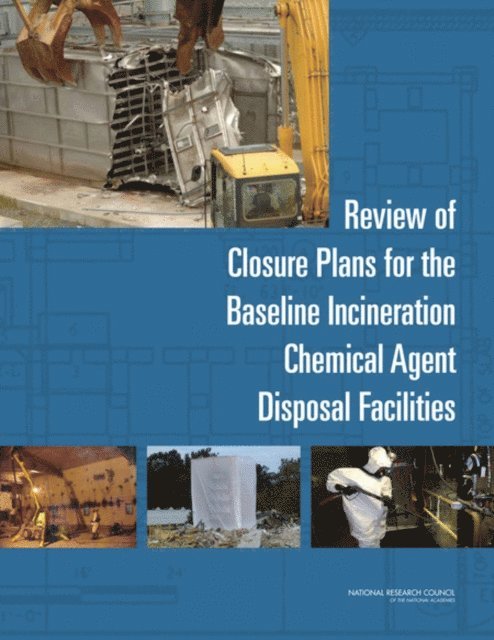
Review of Closure Plans for the Baseline Incineration Chemical Agent Disposal Facilities
Av Committee to Review and Assess Closure Plans for the Tooele Chemical Agent Disposal Facility and the Chemical Agent Munitions Disposal System, Board on Army Science and Technology m. fl.
E-bok, 2010
370 kr
Lägg i varukorg
This book responds to a request by the director of the U.S. Army Chemical Materials Agency (CMA) for the National Research Council to examine and evaluate the ongoing planning for closure of the four currently operational baseline incineration chemical agent disposal facilities and the closure of a …
Assessment of Approaches for Using Process Safety Metrics at the Blue Grass and Pueblo Chemical Agent Destruction Pilot Plants
Av Committee to Assess Process Safety Metrics for the Blue Grass and Pueblo Chemical Agent Destruction Pilot Plants, Board on Army Science and Technology m. fl.
E-bok, 2011
280 kr
Lägg i varukorg
The Department of Defense, through the Assembled Chemical Weapons Alternatives program, is currently in the process of constructing two full-scale pilot plants at the Pueblo Chemical Depot in Colorado and the Blue Grass Army Depot in Kentucky to destroy the last two remaining inventories of …
Interim Design Assessment for the Pueblo Chemical Agent Destruction Pilot Plant
Av Committee to Assess Designs for Pueblo and Blue Grass Chemical Agent Destruction Pilot Plants, Board on Army Science and Technology m. fl.
E-bok, 2005
416 kr
Lägg i varukorg
In 1996, Congress enacted directing the Department of Defense to assess and demonstrate technology alternatives to incineration for destruction of the chemical weapons stored at Pueblo Chemical and Blue Grass Army Depots. Since then, the National Research Council (NRC) has been carrying out …
Meeting the Energy Needs of Future Warriors
Av Committee on Soldier Power/Energy Systems, Board on Army Science and Technology m. fl.
E-bok, 2004
660 kr
Lägg i varukorg
The central characteristic of the evolution of the combat soldier in recent years is an increasingly sophisticated array of sensing, communications, and related electronics for use in battlefield situations. The most critical factor for maintaining this evolution will be the development of power …
Army Science and Technology for Homeland Security
Report 2: C4ISR
Av Committee on Army Science and Technology for Homeland Defense -- C4ISR, Board on Army Science and Technology m. fl.
E-bok, 2004
762 kr
Lägg i varukorg
Shortly after the events of September 11, 2001, the U.S. Army asked the National Research Council (NRC) for a series of reports on how science and technology could assist the Army meet its Homeland defense obligations. The first report, Science and Technology for Army Homeland Security—Report 1, …
Effects of Degraded Agent and Munitions Anomalies on Chemical Stockpile Disposal Operations
Av Committee on Review and Evaluation of the Army Chemical Stockpile Disposal Program, Board on Army Science and Technology m. fl.
E-bok, 2004
407 kr
Lägg i varukorg
The U.S. Army is in the process of destroying its entire stock of chemical weapons. To help with stockpile disposal, the Army''s Chemical Stockpile Disposal Program (CSDP), in 1987, asked the National Research Council (NRC) for scientific and technical advice. This report is one in a series of such …
Assessment of Processing Gelled GB M55 Rockets at Anniston
Av Committee on Review of Army Planning for the Disposal of M55 Rockets at the Anniston Chemical Agent Disposal Facility, Board on Army Science and Technology m. fl.
E-bok, 2003
416 kr
Lägg i varukorg
In 1985, Congress mandated the destruction of the stockpile of M55 rockets stored at several chemical weapons storage sites in the United States and its possessions because of the risk that the rockets may self-ignite. Risk assessments performed by the Army indicate the risk to the public is …
Science and Technology for Army Homeland Security
Report 1
Av Committee on Army Science and Technology for Homeland Defense, Board on Army Science and Technology m. fl.
E-bok, 2003
797 kr
Lägg i varukorg
The confluence of the September 11, 2001 terrorist attack and the U.S. Army''s historic role to support civil authorities has resulted in substantial new challenges for the Army. To help meet these challenges, the Assistant Secretary of the Army for Research and Technology requested the National …
Technology Development for Army Unmanned Ground Vehicles
Av Committee on Army Unmanned Ground Vehicle Technology, Board on Army Science and Technology m. fl.
E-bok, 2003
763 kr
Lägg i varukorg
Unmanned ground vehicles (UGV) are expected to play a key role in the Army''s Objective Force structure. These UGVs would be used for weapons platforms, logistics carriers, and reconnaissance, surveillance, and target acquisition among other things. To examine aspects of the Army''s UGV program, …
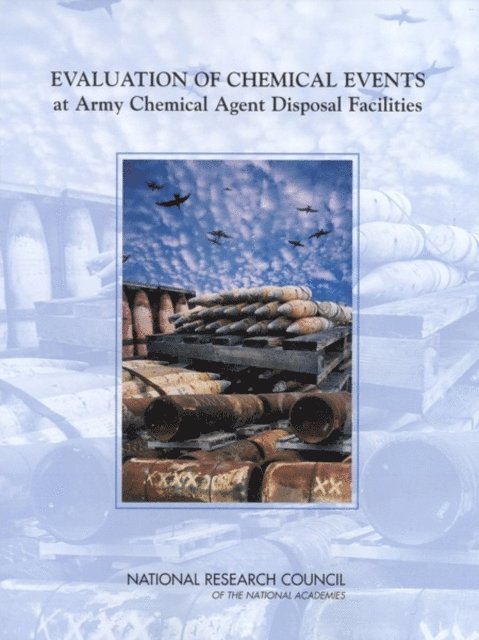
Evaluation of Chemical Events at Army Chemical Agent Disposal Facilities
Av Committee on Evaluation of Chemical Events at Army Chemical Agent Disposal Facilities, Board on Army Science and Technology m. fl.
E-bok, 2002
641 kr
Lägg i varukorg
For over a decade the Army has been carrying out a program aimed at the destruction of accumulated chemical weapons stored at several sites. While destruction by incineration has been successful, several incidents—called chemical events—occurred during the disposal process or decontamination …
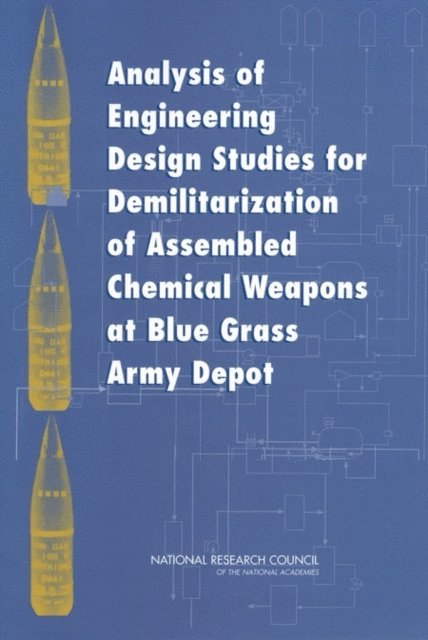
Analysis of Engineering Design Studies for Demilitarization of Assembled Chemical Weapons at Blue Grass Army Depot
Av Committee on Review and Evaluation of Alternative Technologies for Demilitarization of Assembled Chemical Weapons: Phase II, Board on Army Science and Technology m. fl.
E-bok, 2002
762 kr
Lägg i varukorg
The U.S. Army is in the process of destroying the nation''s stockpile of aging chemical weapons stored at eight locations in the continental United States and on Johnston Atoll in the Pacific. Originally, incineration was chosen for the destruction of these stores, but this method has met with …