Committee on Review and Evaluation of the Army Chemical Stockpile Disposal Program – författare
Visar alla böcker från författaren Committee on Review and Evaluation of the Army Chemical Stockpile Disposal Program. Handla med fri frakt och snabb leverans.
30 produkter
Effects of Degraded Agent and Munitions Anomalies on Chemical Stockpile Disposal Operations
Av National Research Council, Division on Engineering and Physical Sciences m. fl.
Häftad, 2004
508 kr
Lägg i varukorg
The U.S. Army is in the process of destroying its entire stock of chemical weapons. To help with stockpile disposal, the Armya (TM)s Chemical Stockpile Disposal Program (CSDP), in 1987, asked the National Research Council (NRC) for scientific and technical advice. This report is one in a series of …
Effects of Degraded Agent and Munitions Anomalies on Chemical Stockpile Disposal Operations
Av Committee on Review and Evaluation of the Army Chemical Stockpile Disposal Program, Board on Army Science and Technology m. fl.
E-bok, 2004
407 kr
Lägg i varukorg
The U.S. Army is in the process of destroying its entire stock of chemical weapons. To help with stockpile disposal, the Army''s Chemical Stockpile Disposal Program (CSDP), in 1987, asked the National Research Council (NRC) for scientific and technical advice. This report is one in a series of such …
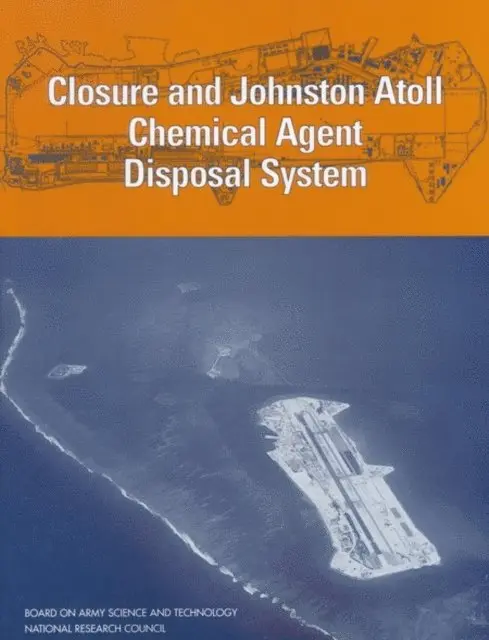
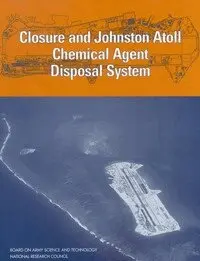
Closure and Johnston Atoll Chemical Agent Disposal System
Av Committee on Review and Evaluation of the Army Chemical Stockpile Disposal Program, Board on Army Science and Technology m. fl.
E-bok, 2002
416 kr
Lägg i varukorg
Johnston Atoll Chemical Agent Disposal System (JACADS), the first fully integrated chemical agent disposal facility, is located on Johnston Island some 800 miles southwest of Hawaii. JACADS completed ten years of operations in November 2000, which resulted in the disposal of more than 2000 tons of …
Integrated Design of Alternative Technologies for Bulk-Only Chemical Agent Disposal Facilities
Av Committee on Review and Evaluation of the Army Chemical Stockpile Disposal Program, Board on Army Science and Technology m. fl.
E-bok, 2000
416 kr
Lägg i varukorg
The U.S. Army is pilot testing chemical hydrolysis as a method for destroying the chemical agents stockpiled at Aberdeen, Maryland (HD mustard agent), and Newport, Indiana (VX nerve agent). The chemical agents at both locations, which are stored only in bulk ton containers, will be hydrolyzed …
Carbon Filtration for Reducing Emissions from Chemical Agent Incineration
Av Committee on Review and Evaluation of the Army Chemical Stockpile Disposal Program, Commission on Engineering and Technical Systems m. fl.
E-bok, 1999
710 kr
Lägg i varukorg
This report reviews the Army''s evaluation of carbon filters for use in the baseline incineration PAS, as well as the Army''s change management process (the Army''s tool for evaluating major equipment and operational changes to disposal facilities). In preparing this report, members of the …
Using Supercritical Water Oxidation to Treat Hydrolysate from VX Neutralization
Av Committee on Review and Evaluation of the Army Chemical Stockpile Disposal Program, Commission on Engineering and Technical Systems m. fl.
E-bok, 1998
658 kr
Lägg i varukorg
The U.S. Army has asked the National Research Council (NRC) to evaluate whether supercritical water oxidation (SCWO) is an effective and appropriate means of eliminating hazardous or toxic organic constituents in VX hydrolysate for ultimate disposition. The NRC was not asked to conduct an in-depth …
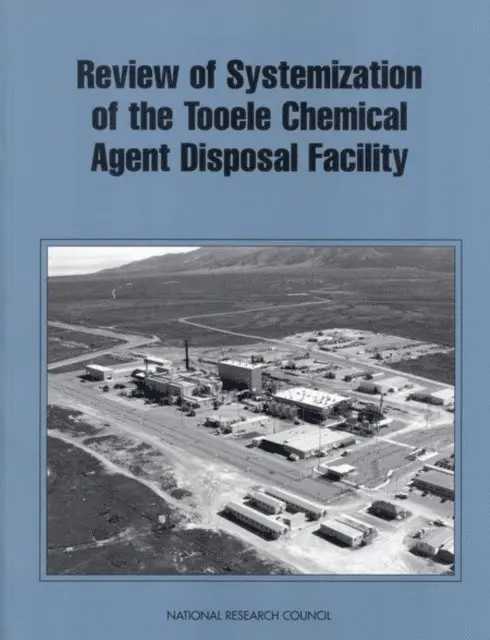
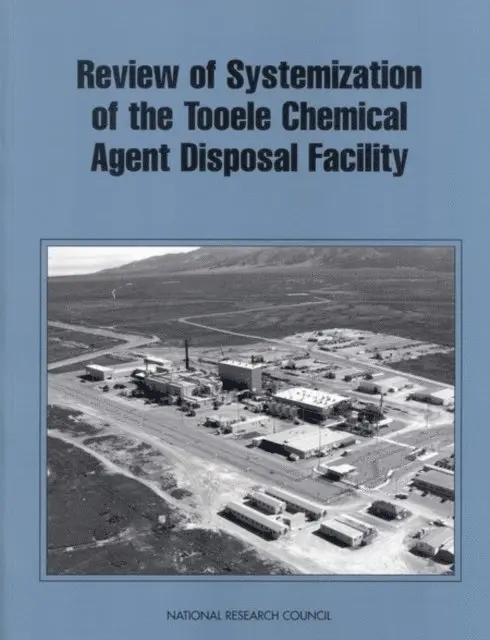
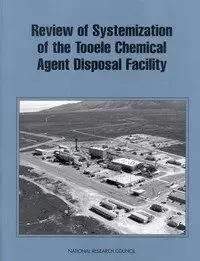
Review of Systemization of the Tooele Chemical Agent Disposal Facility
Av Committee on Review and Evaluation of the Army Chemical Stockpile Disposal Program, Commission on Engineering and Technical Systems m. fl.
E-bok, 1996
622 kr
Lägg i varukorg
In 1993, at Tooele Army Depot, Utah, the Army completed construction of the Tooele Chemical Agent Disposal Facility (TOCDF), the first complete facility for destruction of lethal unitary chemical agents and munitions to be built in the continental United States. The TOCDF will employ the Army''s …
Modified Baseline Incineration Process for Mustard Projectiles at Pueblo Chemical Depot
Av Committee on Review and Evaluation of the Army Chemical Stockpile Disposal Program, Board on Army Science and Technology m. fl.
E-bok, 2001
416 kr
Lägg i varukorg
The United States has maintained a stockpile of chemical warfare agents and munitions since World War I. The Army leadership has sought outside, unbiased advice on how best to dispose of the stockpile. In 1987, at the request of the Under Secretary of the Army, the National Research Council (NRC) …
Occupational Health and Workplace Monitoring at Chemical Agent Disposal Facilities
Av Committee on Review and Evaluation of the Army Chemical Stockpile Disposal Program, Board on Army Science and Technology m. fl.
E-bok, 2001
428 kr
Lägg i varukorg
In keeping with a congressional mandate (Public Law 104-484) and the Chemical Weapons Convention, the United States is currently destroying its chemical weapons stockpile. The Army must ensure that the chemical demilitarization workforce is protected from the risks of exposure to hazardous …
Tooele Chemical Agent Disposal Facility
Update on National Research Council Recommendations
Av Committee on Review and Evaluation of the Army Chemical Stockpile Disposal Program, Commission on Engineering and Technical Systems m. fl.
E-bok, 1999
416 kr
Lägg i varukorg
This report reviews the status of the U.S. Army Chemical Stockpile Disposal Program (CSDP) operations at Tooele, Utah, with respect to previous recommendations and observations made by the National Research Council (NRC) Committee on Review and Evaluation of the Army Chemical Stockpile Disposal …
Closure and Johnston Atoll Chemical Agent Disposal System
Av Committee on Review and Evaluation of the Army Chemical Stockpile Disposal Program, Board on Army Science and Technology m. fl.
E-bok, 2002
280 kr
Lägg i varukorg
Johnston Atoll Chemical Agent Disposal System (JACADS), the first fully integrated chemical agent disposal facility, is located on Johnston Island some 800 miles southwest of Hawaii. JACADS completed ten years of operations in November 2000, which resulted in the disposal of more than 2000 tons of …
Effects of Degraded Agent and Munitions Anomalies on Chemical Stockpile Disposal Operations
Av Committee on Review and Evaluation of the Army Chemical Stockpile Disposal Program, Board on Army Science and Technology m. fl.
E-bok, 2004
286 kr
Lägg i varukorg
The U.S. Army is in the process of destroying its entire stock of chemical weapons. To help with stockpile disposal, the Army''s Chemical Stockpile Disposal Program (CSDP), in 1987, asked the National Research Council (NRC) for scientific and technical advice. This report is one in a series of such …
Occupational Health and Workplace Monitoring at Chemical Agent Disposal Facilities
Av Committee on Review and Evaluation of the Army Chemical Stockpile Disposal Program, Board on Army Science and Technology m. fl.
E-bok, 2001
295 kr
Lägg i varukorg
In keeping with a congressional mandate (Public Law 104-484) and the Chemical Weapons Convention, the United States is currently destroying its chemical weapons stockpile. The Army must ensure that the chemical demilitarization workforce is protected from the risks of exposure to hazardous …
Integrated Design of Alternative Technologies for Bulk-Only Chemical Agent Disposal Facilities
Av Committee on Review and Evaluation of the Army Chemical Stockpile Disposal Program, Board on Army Science and Technology m. fl.
E-bok, 2000
286 kr
Lägg i varukorg
The U.S. Army is pilot testing chemical hydrolysis as a method for destroying the chemical agents stockpiled at Aberdeen, Maryland (HD mustard agent), and Newport, Indiana (VX nerve agent). The chemical agents at both locations, which are stored only in bulk ton containers, will be hydrolyzed …
Carbon Filtration for Reducing Emissions from Chemical Agent Incineration
Av Committee on Review and Evaluation of the Army Chemical Stockpile Disposal Program, Commission on Engineering and Technical Systems m. fl.
E-bok, 1999
494 kr
Lägg i varukorg
This report reviews the Army''s evaluation of carbon filters for use in the baseline incineration PAS, as well as the Army''s change management process (the Army''s tool for evaluating major equipment and operational changes to disposal facilities). In preparing this report, members of the …
Modified Baseline Incineration Process for Mustard Projectiles at Pueblo Chemical Depot
Av Committee on Review and Evaluation of the Army Chemical Stockpile Disposal Program, Board on Army Science and Technology m. fl.
E-bok, 2001
286 kr
Lägg i varukorg
The United States has maintained a stockpile of chemical warfare agents and munitions since World War I. The Army leadership has sought outside, unbiased advice on how best to dispose of the stockpile. In 1987, at the request of the Under Secretary of the Army, the National Research Council (NRC) …
Using Supercritical Water Oxidation to Treat Hydrolysate from VX Neutralization
Av Committee on Review and Evaluation of the Army Chemical Stockpile Disposal Program, Commission on Engineering and Technical Systems m. fl.
E-bok, 1998
468 kr
Lägg i varukorg
The U.S. Army has asked the National Research Council (NRC) to evaluate whether supercritical water oxidation (SCWO) is an effective and appropriate means of eliminating hazardous or toxic organic constituents in VX hydrolysate for ultimate disposition. The NRC was not asked to conduct an in-depth …
Recommendations for the Disposal of Chemical Agents and Munitions
Av Committee on Review and Evaluation of the Army Chemical Stockpile Disposal Program, Commission on Engineering and Technical Systems m. fl.
E-bok, 1994
473 kr
Lägg i varukorg
The U.S. Army''s chemical stockpile is aging and gradually deteriorating. Its elimination has public, political, and environmental ramifications. The U.S. Department of Defense has designated the Department of the Army as the executive agent responsible for the safe, timely, and effective …
Tooele Chemical Agent Disposal Facility
Update on National Research Council Recommendations
Av Committee on Review and Evaluation of the Army Chemical Stockpile Disposal Program, Commission on Engineering and Technical Systems m. fl.
E-bok, 1999
280 kr
Lägg i varukorg
This report reviews the status of the U.S. Army Chemical Stockpile Disposal Program (CSDP) operations at Tooele, Utah, with respect to previous recommendations and observations made by the National Research Council (NRC) Committee on Review and Evaluation of the Army Chemical Stockpile Disposal …
Review of Systemization of the Tooele Chemical Agent Disposal Facility
Av Committee on Review and Evaluation of the Army Chemical Stockpile Disposal Program, Commission on Engineering and Technical Systems m. fl.
E-bok, 1996
459 kr
Lägg i varukorg
In 1993, at Tooele Army Depot, Utah, the Army completed construction of the Tooele Chemical Agent Disposal Facility (TOCDF), the first complete facility for destruction of lethal unitary chemical agents and munitions to be built in the continental United States. The TOCDF will employ the Army''s …
Recommendations for the Disposal of Chemical Agents and Munitions
Av National Research Council, Division on Engineering and Physical Sciences m. fl.
Häftad, 1994
1379 kr
Tillfälligt slut
The U.S. Army's chemical stockpile is aging and gradually deteriorating. Its elimination has public, political, and environmental ramifications. The U.S. Department of Defense has designated the Department of the Army as the executive agent responsible for the safe, timely, and effective …
Review of Systemization of the Tooele Chemical Agent Disposal Facility
Av National Research Council, Division on Engineering and Physical Sciences m. fl.
Häftad, 1996
1364 kr
Tillfälligt slut
In 1993, at Tooele Army Depot, Utah, the Army completed construction of the Tooele Chemical Agent Disposal Facility (TOCDF), the first complete facility for destruction of lethal unitary chemical agents and munitions to be built in the continental United States. The TOCDF will employ the Army's …
Risk Assessment and Management at Deseret Chemical Depot and the Tooele Chemical Agent Disposal Facility
Av National Research Council, Division on Engineering and Physical Sciences m. fl.
Häftad, 1997
1205 kr
Tillfälligt slut
Using Supercritical Water Oxidation to Treat Hydrolysate from VX Neutralization
Av National Research Council, Division on Engineering and Physical Sciences m. fl.
Häftad, 1998
1376 kr
Tillfälligt slut
The U.S. Army has asked the National Research Council (NRC) to evaluate whether supercritical water oxidation (SCWO) is an effective and appropriate means of eliminating hazardous or toxic organic constituents in VX hydrolysate for ultimate disposition. The NRC was not asked to conduct an in-depth …
Carbon Filtration for Reducing Emissions from Chemical Agent Incineration
Av National Research Council, Division on Engineering and Physical Sciences m. fl.
Häftad, 1999
1413 kr
Tillfälligt slut
This report reviews the Army's evaluation of carbon filters for use in the baseline incineration PAS, as well as the Army's change management process (the Army's tool for evaluating major equipment and operational changes to disposal facilities). In preparing this report, members of the Stockpile …
Tooele Chemical Agent Disposal Facility
Update on National Research Council Recommendations
Av National Research Council, Division on Engineering and Physical Sciences m. fl.
Häftad, 1999
1167 kr
Tillfälligt slut
This report reviews the status of the U.S. Army Chemical Stockpile Disposal Program (CSDP) operations at Tooele, Utah, with respect to previous recommendations and observations made by the National Research Council (NRC) Committee on Review and Evaluation of the Army Chemical Stockpile Disposal …
Integrated Design of Alternative Technologies for Bulk-Only Chemical Agent Disposal Facilities
Av National Research Council, Commission on Engineering and Technical Systems m. fl.
Häftad, 2000
1205 kr
Tillfälligt slut
The U.S. Army is pilot testing chemical hydrolysis as a method for destroying the chemical agents stockpiled at Aberdeen, Maryland (HD mustard agent), and Newport, Indiana (VX nerve agent). The chemical agents at both locations, which are stored only in bulk ton containers, will be hydrolyzed …
Occupational Health and Workplace Monitoring at Chemical Agent Disposal Facilities
Av National Research Council, Division on Engineering and Physical Sciences m. fl.
Häftad, 2001
512 kr
Tillfälligt slut
In keeping with a congressional mandate (Public Law 104-484) and the Chemical Weapons Convention, the United States is currently destroying its chemical weapons stockpile. The Army must ensure that the chemical demilitarization workforce is protected from the risks of exposure to hazardous …
Modified Baseline Incineration Process for Mustard Projectiles at Pueblo Chemical Depot
Av National Research Council, Division on Engineering and Physical Sciences m. fl.
Häftad, 2001
508 kr
Tillfälligt slut
The United States has maintained a stockpile of chemical warfare agents and munitions since World War I. The Army leadership has sought outside, unbiased advice on how best to dispose of the stockpile. In 1987, at the request of the Under Secretary of the Army, the National Research Council (NRC) …
Closure and Johnston Atoll Chemical Agent Disposal System
Av National Research Council, Division on Engineering and Physical Sciences m. fl.
Häftad, 2002
497 kr
Tillfälligt slut
Johnston Atoll Chemical Agent Disposal System (JACADS), the first fully integrated chemical agent disposal facility, is located on Johnston Island some 800 miles southwest of Hawaii. JACADS completed ten years of operations in November 2000, which resulted in the disposal of more than 2000 tons of …