Board on Health Promotion and Disease Prevention – författare
1 376 kr
Skickas
1 328 kr
Skickas
570 kr
Skickas
491 kr
Skickas
656 kr
Skickas
789 kr
Skickas
904 kr
Skickas
838 kr
Skickas
833 kr
Skickas
668 kr
Läs direkt efter köp
The anthrax incidents following the 9/11 terrorist attacks put the spotlight on the nation''s public health agencies, placing it under an unprecedented scrutiny that added new dimensions to the complex issues considered in this report.
The Future of the Public''s Health in the 21st Century reaffirms the vision of Healthy People 2010, and outlines a systems approach to assuring the nation''s health in practice, research, and policy. This approach focuses on joining the unique resources and perspectives of diverse sectors and entities and challenges these groups to work in a concerted, strategic way to promote and protect the public''s health.
Focusing on diverse partnerships as the framework for public health, the book discusses:
The need for a shift from an individual to a population-based approach in practice, research, policy, and community engagement. The status of the governmental public health infrastructure and what needs to be improved, including its interface with the health care delivery system. The roles nongovernment actors, such as academia, business, local communities and the media can play in creating a healthy nation.Providing an accessible analysis, this book will be important to public health policy-makers and practitioners, business and community leaders, health advocates, educators and journalists.
762 kr
Läs direkt efter köp
Almost all homes, apartments, and commercial buildings will experienceleaks, flooding, or other forms of excessive indoor dampness at some point.Not only is excessive dampness a health problem by itself, it also contributesto several other potentially problematic types of situations. Molds and othermicrobial agents favor damp indoor environments, and excess moisture mayinitiate the release of chemical emissions from damaged building materialsand furnishings. This new book from the Institute of Medicine examines thehealth impact of exposures resulting from damp indoor environments andoffers recommendations for public health interventions.
Damp Indoor Spaces and Health covers a broad range of topics. The booknot only examines the relationship between damp or moldy indoor environmentsand adverse health outcomes but also discusses how and wherebuildings get wet, how dampness influences microbial growth and chemicalemissions, ways to prevent and remediate dampness, and elements ofa public health response to the issues. A comprehensive literature reviewfinds sufficient evidence of an association between damp indoor environmentsand some upper respiratory tract symptoms, coughing, wheezing,and asthma symptoms in sensitized persons. This important book will be ofinterest to a wide-ranging audience of science, health, engineering, andbuilding professionals, government officials, and members of the public.
735 kr
Läs direkt efter köp
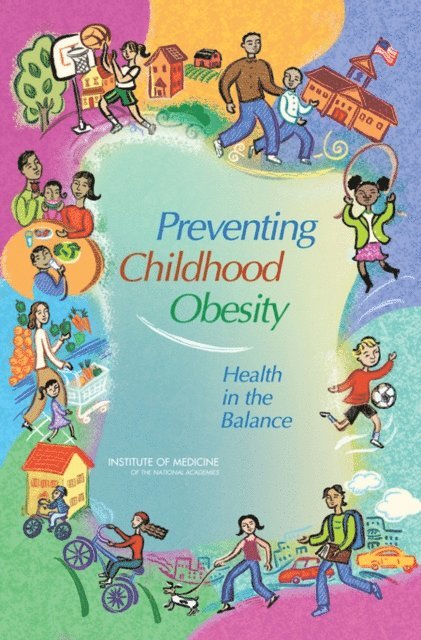
Children''s health has made tremendous strides over the past century. In general, life expectancy has increased by more than thirty years since 1900 and much of this improvement is due to the reduction of infant and earlychildhood mortality. Given this trajectory toward a healthier childhood, webegin the 21st-century with a shocking development—an epidemic of obesityin children and youth. The increased number of obese childrenthroughout the U.S. during the past 25 years has led policymakers to rankit as one of the most critical public health threats of the 21st-century.
Preventing Childhood Obesity provides a broad-based examination of thenature, extent, and consequences of obesity in U.S. children and youth,including the social, environmental, medical, and dietary factors responsiblefor its increased prevalence. The book also offers a prevention-orientedaction plan that identifies the most promising array of short-term andlonger-term interventions, as well as recommendations for the roles andresponsibilities of numerous stakeholders in various sectors of society toreduce its future occurrence. Preventing Childhood Obesity explores theunderlying causes of this serious health problem and the actions needed toinitiate, support, and sustain the societal and lifestyle changes that canreverse the trend among our children and youth.
866 kr
Läs direkt efter köp
Integration of complementary and alternative medicine therapies (CAM) with conventional medicine is occurring in hospitals and physicians offices, health maintenance organizations (HMOs) are covering CAM therapies, insurance coverage for CAM is increasing, and integrative medicine centers and clinics are being established, many with close ties to medical schools and teaching hospitals. In determining what care to provide, the goal should be comprehensive care that uses the best scientific evidence available regarding benefits and harm, encourages a focus on healing, recognizes the importance of compassion and caring, emphasizes the centrality of relationship-based care, encourages patients to share in decision making about therapeutic options, and promotes choices in care that can include complementary therapies where appropriate.
Numerous approaches to delivering integrative medicine have evolved. Complementary and Alternative Medicine in the United States identifies an urgent need for health systems research that focuses on identifying the elements of these models, the outcomes of care delivered in these models, and whether these models are cost-effective when compared to conventional practice settings.
It outlines areas of research in convention and CAM therapies, ways of integrating these therapies, development of curriculum that provides further education to health professionals, and an amendment of the Dietary Supplement Health and Education Act to improve quality, accurate labeling, research into use of supplements, incentives for privately funded research into their efficacy, and consumer protection against all potential hazards.
1 429 kr
Läs direkt efter köp
952 kr
Läs direkt efter köp
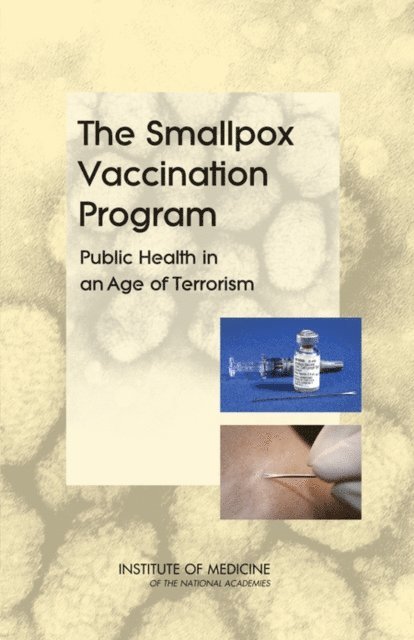
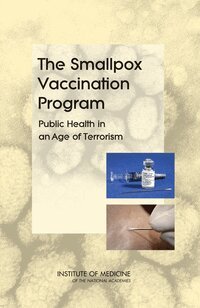
December 13, 2002, the president of the United States announced that smallpox vaccination would be offered to some categories of civilians and administered to members of the military and government representatives in high-risk areas of the world. The events that precipitated that historic announcement included a series of terrorist attacks during the 1990s, which culminated in the catastrophic events of 2001.Although preparedness for deliberate attacks with biologic weapons was already the subject of much public health planning, meetings, and publications as the twentieth century neared its end, the events of 2001 led to a steep rise in bioterrorism-related government policies and funding, and in state and local preparedness activities, for example, in public health, health care, and the emergency response and public safety communities. The national smallpox vaccination program is but one of many efforts to improve readiness to respond to deliberate releases of biologic agents.The Institute of Medicine (IOM) Committee on Smallpox Vaccination Program Implementation was convened in October 2002 at the request of the Centers for Disease Control and Prevention (CDC), the federal agency charged with implementing the government''s policy of providing smallpox vaccine first to public health and health care workers on response teams, then to all interested health care workers and other first responders, and finally to members of the general public who might insist on receiving the vaccine. The committee was charged with providing "advice to the CDC and the program investigators on selected aspects of the smallpox program implementation and evaluation."The committee met six times over 19 months and wrote a series of brief "letter" reports. The Smallpox Vaccination Program: Public Health in an Age of Terrorism constitutes the committee''s seventh and final report, and the committee hopes that it will fulfill three purposes: 1) To serve as an archival document that brings together the six reports addressed to Julie Gerberding, director of CDC, and previously released on line and as short, unbound papers; 2) To serve as a historical document that summarizes milestones in the smallpox vaccination program, and ; 3) To comment on the achievement of overall goals of the smallpox vaccination program (in accordance with the last item in the charge), including lessons learned from the program.
652 kr
Läs direkt efter köp
In this report, the committee that was asked to review aspects of this program recommends that two new oversight groups are needed to ensure that the policies and procedures of the VSD and its data sharing program are implemented as fairly and openly as possible.
1 170 kr
Läs direkt efter köp
622 kr
Läs direkt efter köp
The Gulf War in 1990-1991 was considered a brief and successful military operation, with few injuries or deaths of US troops. The war began in August 1990, and the last US ground troops returned home by June 1991. Although most Gulf War veterans resumed their normal activities, many soon began reporting a variety of nonexplained health problems that they attributed to their participation in the Gulf War, including chronic fatigue, muscle and joint pain, loss of concentration, forgetfulness, headache, and rash. Because of concerns about the veterans'' health problems, the Department of Veterans Affairs (VA) requested that the Institute of Medicine (IOM) review the scientific and medical literature on the long-term adverse health effects of agents to which the Gulf War veterans may have been exposed. This report is a broad overview of the toxicology of sarin and cyclosarin. It assesses the biologic plausibility with respect to the compounds in question and health effects.
719 kr
Läs direkt efter köp
This eighth and final report of the Immunization Safety Review Committee examines the hypothesis that vaccines, specifically the measles-mumps-rubella (MMR) vaccine and thimerosal-containing vaccines, are causally associated with autism. The committee reviewed the extant published and unpublished epidemiological studies regarding causality and studies of potential biologic mechanisms by which these immunizations might cause autism. Immunization Safety Review: Vaccines and Autism finds that the body of epidemiological evidence favors rejection of a causal relationship between thimerosal-containing vaccines and autism. The book further finds that potential biological mechanisms for vaccine-induced autism that have been generated to date are only theoretical. It recommends a public health response that fully supports an array of vaccine safety activities and recommends that available funding for autism research be channeled to the most promising areas. The book makes additional recommendations regarding surveillance and epidemiological research, clinical studies, and communication related to these vaccine safety concerns.
819 kr
Läs direkt efter köp
Poisoning is a far more serious health problem in the U.S. than has generallybeen recognized. It is estimated that more than 4 million poisoning episodesoccur annually, with approximately 300,000 cases leading to hospitalization.The field of poison prevention provides some of the most celebrated examplesof successful public health interventions, yet surprisingly the currentpoison control "system" is little more than a loose network of poison controlcenters, poorly integrated into the larger spheres of public health. Toincrease their effectiveness, efforts to reduce poisoning need to be linked toa national agenda for public health promotion and injury prevention.
Forging a Poison Prevention and Control System recommends a future poisoncontrol system with a strong public health infrastructure, a national systemof regional poison control centers, federal funding to support core poisoncontrol activities, and a national poison information system to trackmajor poisoning epidemics and possible acts of bioterrorism. This frameworkprovides a complete "system" that could offer the best poison preventionand patient care services to meet the needs of the nation in the21st century.
390 kr
Läs direkt efter köp
From 1962 to 1971, US military forces sprayed herbicides over Vietnam to strip the thick jungle canopy that helped conceal opposition forces, to destroy crops that enemy forces might depend on, and to clear tall grasses and bushes from the perimeters of US base camps and outlying fire-support bases. Mixtures of 2,4-dichlorophenoxyacetic acid (2,4-D), 2,4,5-trichlorophenoxyacetic acid (2,4,5-T), picloram, and cacodylic acid made up the majority of the herbicides sprayed. Agent Orange was a 50:50 mixture of 2,4-D and 2,4,5-T. At the time of the spraying, 2,3,7,8-tetrachlorodibenzo-p-dioxin (TCDD, one form of dioxin) was an unintended contaminant from the production of 2,4,5-T and was present in Agent Orange and some other formulations sprayed in Vietnam.
In 1991, because of continuing uncertainty about the long-term health effects on Vietnam veterans of the herbicides sprayed, Congress passed Public Law 102-4, the Agent Orange Act of 1991. In response to the request from the VA, IOM extended the service of the Committee to Review the Health Effects in Vietnam Veterans of Exposure to Herbicides that was responsible for Update 2002 to address the question of presumptive period and respiratory cancer. The charge to the committee was to undertake a review and evaluation of the evidence regarding the period between cessation of exposure to herbicides used in Vietnam and their contaminants (2,4-D, 2,4,5-T and its contaminant TCDD, cacodylic acid, and picloram) and the occurrence of respiratory cancer.
769 kr
Läs direkt efter köp
New and improved therapies to treat and protect against drug dependence andabuse are urgently needed. In the United States alone about 50 million people regularlysmoke tobacco and another 5 million are addicted to other drugs. In a givenyear, millions of these individuals attempt—with or without medical assistance—toquit using drugs, though relapse remains the norm. Furthermore, each year severalmillion teenagers start smoking and nearly as many take illicit drugs for the firsttime. Research is advancing on promising new means of treating drug addictionusing immunotherapies and sustained-release (depot) medications. The aim of thisresearch is to develop medications that can block or significantly attenuate the psychoactiveeffects of such drugs as cocaine, nicotine, heroin, phencyclidine, andmethamphetamine for weeks or months at a time. This represents a fundamentallynew therapeutic approach that shows promise for treating drug addiction problemsthat were difficult to treat in the past. Despite their potential benefits, however, severalcharacteristics of these new methods pose distinct behavioral, ethical, legal, andsocial challenges that require careful scrutiny. Such issues can be considered uniqueaspects of safety and efficacy that are fundamentally related to the distinct natureand properties of these new types of medications.
797 kr
Läs direkt efter köp
In response to a congressional mandate, an Institute of Medicine committee wasformed to reevaluate whether CARE allocation strategies are an equitable and efficientway of distributing resources to jurisdictions with the greatest needs and toassess whether quality of care can be refined and expanded. Measuring WhatMatters: Allocation, Planning, and Quality Assessment for the Ryan White CARE Act proposesseveral types of analyses that could be used to guide the evaluation andimprovement of allocation formulas, as well as a framework for assessing quality ofcare provided to HIV-infected persons.
449 kr
Läs direkt efter köp
The US Department of Justice''s National Institute of Justice (NIJ) asked the Institute of Medicine (IOM) of The National Academies to conduct a workshop that would examine the interface of the medicolegal death investigation system and the criminal justice system. NIJ was particularly interested in a workshop in which speakers would highlight not only the status and needs of the medicolegal death investigation system as currently administered by medical examiners and coroners but also its potential to meet emerging issues facing contemporary society in America. Additionally, the workshop was to highlight priority areas for a potential IOM study on this topic.
To achieve those goals, IOM constituted the Committee for the Workshop on the Medicolegal Death Investigation System, which developed a workshop that focused on the role of the medical examiner and coroner death investigation system and its promise for improving both the criminal justice system and the public health and health care systems, and their ability to respond to terrorist threats and events. Six panels were formed to highlight different aspects of the medicolegal death investigation system, including ways to improve it and expand it beyond its traditional response and meet growing demands and challenges. This report summarizes the Workshop presentations and discussions that followed them.
635 kr
Läs direkt efter köp
In today''s world the public faces many health threats from bioterrorism to the epidemic of obesity. It''s thus important to have an effective public health system. This system depends significantly on the quality and preparedness of our public health workforce as well as the quality of public health education and training. In March, 2001 the Robert Wood Johnson Foundation asked the Institute of Medicine (IOM) to examine the education of public health professionals and develop recommendations for how public health education, training, and research could be strengthened to meet the needs of future public health professionals to improve population-level health. As a result the Committee on Educating Public Health Professionals for the 21st Century was formed; members can be seen in Appendix A.
Over the course of one year, the committee held five meetings; reviewed and analyzed key literature; and abstracted, analyzed, and synthesized data from catalogs, web sites, and survey responses of accredited schools of public health. Because numerous institutions and agencies play important roles in public health education, training, research, and leadership development, the report addresses its recommendations to schools of public health, degree-granting programs in public health, medical schools, schools of nursing, other professional schools (e.g., law), and local, state, and federal public health agencies. Conclusions and recommendations for each of these sectors are present in the report.
The report generated a lot of discussion, resulting in the Robert Wood Johnson Foundation asking the IOM to hold a workshop of interested people to foster joint discussion among the academic and practice communities. The workshop was held May 22, 2003 and over 100 representatives attended. Who Will Keep the Public Healthy?: Workshop Summary includes the workshop presentations, recommendations, workshop agendas, and more.
535 kr
Läs direkt efter köp
The committee reviewed epidemiologic evidence focusing on three outcomes: SIDS, all SUDI (sudden unexpected death in infancy), and neonatal death (infant death, whether sudden or not, during the first 4 weeks of life). Based on this review, the committee concluded that the evidence favors rejection of a causal relationship between some vaccines and SIDS; and that the evidence is inadequate to accept or reject a causal relationship between other vaccines and SIDS, SUDI, or neonatal death. The evidence regarding biological mechanisms is essentially theoretical, reflecting in large measure the lack of knowledge concerning the pathogenesis of SIDS.
1 947 kr
Läs direkt efter köp
Because little information exists on actual exposure levels — a critical factor when assessing health effects — the committee could not draw specific conclusions about the health problems of Gulf War veterans. However, the study found some evidence, although usually limited, to link specific long-term health outcomes with exposure to certain insecticides and solvents.
The next phase of the series will examine the literature on potential health effects associated with exposure to selected environmental pollutants and particulates, such as oil-well fires and jet fuels.
1 379 kr
Läs direkt efter köp
537 kr
Läs direkt efter köp
The Immunization Safety Review Committee was established by the Institute of Medicine (IOM) to evaluate the evidence on possible causal associations between immunizations and certain adverse outcomes, and to then present conclusions and recommendations. The committee''s mandate also includes assessing the broader societal significance of these immunization safety issues. While all the committee members share the view that immunization is generally beneficial, none of them has a vested interest in the specific immunization safety issues that come before the group. The committee reviews three immunization safety review topics each year, addressing each one at a time. In this fifth report in a series, the committee examines the hypothesis that exposure to polio vaccine contaminated with simian virus 40 (SV40), a virus that causes inapparent infection in some monkeys, can cause certain types of cancer.
624 kr
Läs direkt efter köp
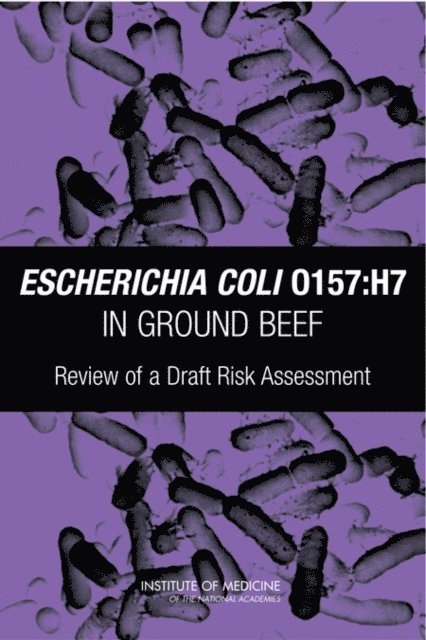
USDA''s Food Safety and Inspection Service (FSIS) is formulating risk assessments to identify important foodborne hazards; evaluate potential strategies to prevent, reduce, or eliminate those hazards; assess the effects of different mitigation strategies; and identify research needs. These risk assessments, in brief, empirically characterize the determinants of the presence or level of microbial contamination in vulnerable foodstuffs at various points leading up to consumption.
One of the initial efforts in the undertaking is a risk assessment of the public health impact of E. coli O157:H7 in ground beef. In addition to soliciting public input, FSIS asked the Institute of Medicine (IOM) to convene a committee of experts to review the draft and offer recommendations and suggestions for consideration as the agency finalizes the document. This report presents the results of that review.