Committee to Review the Health Effects in Vietnam Veterans of Exposure to Herbicides – författare
Visar alla böcker från författaren Committee to Review the Health Effects in Vietnam Veterans of Exposure to Herbicides. Handla med fri frakt och snabb leverans.
6 produkter
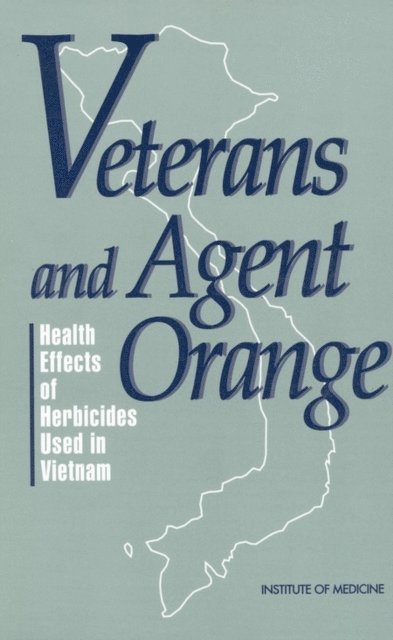
Veterans and Agent Orange
Health Effects of Herbicides Used in Vietnam
Av Institute of Medicine, Committee to Review the Health Effects in Vietnam Veterans of Exposure to Herbicides
Häftad, 1994
3116 kr
Lägg i varukorg
Have U.S. military personnel experienced health problems from being exposed to Agent Orange, its dioxin contaminants, and other herbicides used in Vietnam? This definitive volume summarizes the strength of the evidence associating exposure during Vietnam service with cancer and other health effects …
Veterans and Agent Orange
Update 1996
Av Committee to Review the Health Effects in Vietnam Veterans of Exposure to Herbicides, Institute of Medicine
E-bok, 1996
874 kr
Lägg i varukorg
This book updates and evaluates the available scientific evidence regarding statistical associations between diseases and exposure to dioxin and other chemical compounds in herbicides used in Vietnam, focusing on new scientific studies and literature published since the release of Veterans and …
Veterans and Agent Orange
Length of Presumptive Period for Association Between Exposure and Respiratory Cancer
Av Committee to Review the Health Effects in Vietnam Veterans of Exposure to Herbicides, Board on Health Promotion and Disease Prevention m. fl.
E-bok, 2004
416 kr
Lägg i varukorg
From 1962 to 1971, US military forces sprayed herbicides over Vietnam to strip the thick jungle canopy that helped conceal opposition forces, to destroy crops that enemy forces might depend on, and to clear tall grasses and bushes from the perimeters of US base camps and outlying fire-support …
Veterans and Agent Orange
Length of Presumptive Period for Association Between Exposure and Respiratory Cancer
Av Committee to Review the Health Effects in Vietnam Veterans of Exposure to Herbicides, Board on Health Promotion and Disease Prevention m. fl.
E-bok, 2004
278 kr
Lägg i varukorg
From 1962 to 1971, US military forces sprayed herbicides over Vietnam to strip the thick jungle canopy that helped conceal opposition forces, to destroy crops that enemy forces might depend on, and to clear tall grasses and bushes from the perimeters of US base camps and outlying fire-support …
Veterans and Agent Orange
Health Effects of Herbicides Used in Vietnam
Av Committee to Review the Health Effects in Vietnam Veterans of Exposure to Herbicides, Institute of Medicine
E-bok, 1994
2652 kr
Lägg i varukorg
Have U.S. military personnel experienced health problems from being exposed to Agent Orange, its dioxin contaminants, and other herbicides used in Vietnam? This definitive volume summarizes the strength of the evidence associating exposure during Vietnam service with cancer and other health effects …
Veterans and Agent Orange
Update 1996
Av Institute of Medicine, Committee to Review the Health Effects in Vietnam Veterans of Exposure to Herbicides
Inbunden, 1996
1756 kr
Tillfälligt slut
This book updates and evaluates the available scientific evidence regarding statistical associations between diseases and exposure to dioxin and other chemical compounds in herbicides used in Vietnam, focusing on new scientific studies and literature published since the release of Veterans and …