and Sensory Sciences Board on Behavioral, Cognitive – författare
442 kr
Skickas
477 kr
Skickas
577 kr
Läs direkt efter köp
666 kr
Läs direkt efter köp
Human behavior forms the nucleus of military effectiveness. Humans operating in the complex military system must possess the knowledge, skills, abilities, aptitudes, and temperament to perform their roles effectively in a reliable and predictable manner, and effective military management requires understanding of how these qualities can be best provided and assessed. Scientific research in this area is critical to understanding leadership, training and other personnel issues, social interactions and organizational structures within the military.
The U.S. Army Research Institute for the Behavioral and Social Sciences (ARI) asked the National Research Council to provide an agenda for basic behavioral and social research focused on applications in both the short and long-term. The committee responded by recommending six areas of research on the basis of their relevance, potential impact, and timeliness for military needs: intercultural competence; teams in complex environments; technology-based training; nonverbal behavior; emotion; and behavioral neurophysiology. The committee suggests doubling the current budget for basic research for the behavioral and social sciences across U.S. military research agencies. The additional funds can support approximately 40 new projects per year across the committee''s recommended research areas.
Human Behavior in Military Contexts includes committee reports and papers that demonstrate areas of stimulating, ongoing research in the behavioral and social sciences that can enrich the military''s ability to recruit, train, and enhance the performance of its personnel, both organizationally and in its many roles in other cultures.
860 kr
Läs direkt efter köp
609 kr
Läs direkt efter köp
Emerging Cognitive Neuroscience and Related Technologies, from the National Research Council, identifies and explores several specific research areas that have implications for U.S. national security, and should therefore be monitored consistently by the intelligence community. These areas include:
neurophysiological advances in detecting and measuring indicators of psychological states and intentions of individuals the development of drugs or technologies that can alter human physical or cognitive abilities advances in real-time brain imaging breakthroughs in high-performance computing and neuronal modeling that could allow researchers to develop systems which mimic functions of the human brain, particularly the ability to organize disparate forms of data.As these fields continue to grow, it will be imperative that the intelligence community be able to identify scientific advances relevant to national security when they occur. To do so will require adequate funding, intelligence analysts with advanced training in science and technology, and increased collaboration with the scientific community, particularly academia.
A key tool for the intelligence community, this book will also be a useful resource for the health industry, the military, and others with a vested interest in technologies such as brain imaging and cognitive or physical enhancers.
631 kr
Läs direkt efter köp
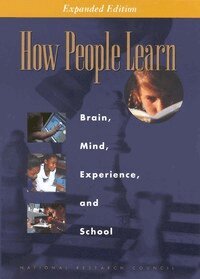
First released in the Spring of 1999, How People Learn has been expanded to show how the theories and insights from the original book can translate into actions and practice, now making a real connection between classroom activities and learning behavior. This edition includes far-reaching suggestions for research that could increase the impact that classroom teaching has on actual learning.
Like the original edition, this book offers exciting new research about the mind and the brain that provides answers to a number of compelling questions. When do infants begin to learn? How do experts learn and how is this different from non-experts? What can teachers and schools do-with curricula, classroom settings, and teaching methods—to help children learn most effectively? New evidence from many branches of science has significantly added to our understanding of what it means to know, from the neural processes that occur during learning to the influence of culture on what people see and absorb.
How People Learn examines these findings and their implications for what we teach, how we teach it, and how we assess what our children learn. The book uses exemplary teaching to illustrate how approaches based on what we now know result in in-depth learning. This new knowledge calls into question concepts and practices firmly entrenched in our current education system.
Topics include:
How learning actually changes the physical structure of the brain. How existing knowledge affects what people notice and how they learn. What the thought processes of experts tell us about how to teach. The amazing learning potential of infants. The relationship of classroom learning and everyday settings of community and workplace. Learning needs and opportunities for teachers. A realistic look at the role of technology in education.316 kr
Läs direkt efter köp
A devastatingly large number of people in America cannot read as well as they need for success in life. With literacy problems plaguing as many as four in ten children in America, this book discusses how best to help children succeed in reading. This book identifies the most important questions and explores the authoritative answers on the topic of how children can grow into readers, including:
What are the key elements all children need in order to become good readers? What can parents and caregivers provide all children so that they are prepared for reading instruction by the time that they get to school? What concepts about language and literacy should be included in beginning reading instruction? How can we prevent reading difficulties starting with infants and into the early grades? What to ask school boards, principals, elected officials, and other policy makers who make decisions regarding early reading instruction.You''ll find out how to help youngsters build word recognition, avoid comprehension problems, and more—with checklists of specific accomplishments to be expected at different ages: for very young children, for kindergarten students, and for first, second, and third grade students. Included are 55 activities to do with children to help them become successful readers, a list of recommended children''s books, and a guide to CD-ROMs and websites.
Great strides have been made recently toward identifying the best ways to teach children to read. Starting Out Right provides a wealth of knowledge based on a summary of extensive research. It is a "must read" for specialists in primary education as well as parents, pediatricians, child care providers, tutors, literacy advocates, policy makers, and teachers.
779 kr
Läs direkt efter köp
The polygraph, often portrayed as a magic mind-reading machine, is still controversial among experts, who continue heated debates about its validity as a lie-detecting device. As the nation takes a fresh look at ways to enhance its security, can the polygraph be considered a useful tool?
The Polygraph and Lie Detection puts the polygraph itself to the test, reviewing and analyzing data about its use in criminal investigation, employment screening, and counter-intelligence.
The book looks at:
The theory of how the polygraph works and evidence about how deceptiveness—and other psychological conditions—affect the physiological responses that the polygraph measures. Empirical evidence on the performance of the polygraph and the success of subjects'' countermeasures. The actual use of the polygraph in the arena of national security, including its role in deterring threats to security.The book addresses the difficulties of measuring polygraph accuracy, the usefulness of the technique for aiding interrogation and for deterrence, and includes potential alternatives—such as voice-stress analysis and brain measurement techniques.
819 kr
Läs direkt efter köp
974 kr
Läs direkt efter köp
892 kr
Läs direkt efter köp
Emerging Cognitive Neuroscience and Related Technologies, from the National Research Council, identifies and explores several specific research areas that have implications for U.S. national security, and should therefore be monitored consistently by the intelligence community. These areas include:
neurophysiological advances in detecting and measuring indicators of psychological states and intentions of individuals the development of drugs or technologies that can alter human physical or cognitive abilities advances in real-time brain imaging breakthroughs in high-performance computing and neuronal modeling that could allow researchers to develop systems which mimic functions of the human brain, particularly the ability to organize disparate forms of data.As these fields continue to grow, it will be imperative that the intelligence community be able to identify scientific advances relevant to national security when they occur. To do so will require adequate funding, intelligence analysts with advanced training in science and technology, and increased collaboration with the scientific community, particularly academia.
A key tool for the intelligence community, this book will also be a useful resource for the health industry, the military, and others with a vested interest in technologies such as brain imaging and cognitive or physical enhancers.
374 kr
Läs direkt efter köp
On September 22-23, 2009, the National Research Council held a workshop on the field evaluation of behavioral and cognitive sciences—based methods and tools for use in the areas of intelligence and counterintelligence. Broadly speaking, the purpose of the workshop was to discuss the best ways to take methods and tools from behavioral science and apply them to work in intelligence operations. More specifically, the workshop focused on the issue of field evaluation—the testing of these methods and tools in the context in which they will be used in order to determine if they are effective in real-world settings. This book is a summary and synthesis of the two days of presentations and discussions that took place during the workshop. The workshop participants included invited speakers and experts from a number of areas related to the behavioral sciences and the intelligence community. The discussions covered such ground as the obstacles to field evaluation of behavioral science tools and methods, the importance of field evaluation, and various lessons learned from experience with field evaluation in other areas.
536 kr
Läs direkt efter köp
On September 22-23, 2009, the National Research Council held a workshop on the field evaluation of behavioral and cognitive sciences—based methods and tools for use in the areas of intelligence and counterintelligence. Broadly speaking, the purpose of the workshop was to discuss the best ways to take methods and tools from behavioral science and apply them to work in intelligence operations. More specifically, the workshop focused on the issue of field evaluation—the testing of these methods and tools in the context in which they will be used in order to determine if they are effective in real-world settings. This book is a summary and synthesis of the two days of presentations and discussions that took place during the workshop. The workshop participants included invited speakers and experts from a number of areas related to the behavioral sciences and the intelligence community. The discussions covered such ground as the obstacles to field evaluation of behavioral science tools and methods, the importance of field evaluation, and various lessons learned from experience with field evaluation in other areas.
382 kr
Läs direkt efter köp
The intelligence community (IC) plays an essential role in the national security of the United States. Decision makers rely on IC analyses and predictions to reduce uncertainty and to provide warnings about everything from international diplomatic relations to overseas conflicts. In today''s complex and rapidly changing world, it is more important than ever that analytic products be accurate and timely. Recognizing that need, the IC has been actively seeking ways to improve its performance and expand its capabilities.In 2008, the Office of the Director of National Intelligence (ODNI) asked the National Research Council (NRC) to establish a committee to synthesize and assess evidence from the behavioral and social sciences relevant to analytic methods and their potential application for the U.S. intelligence community. In Intelligence Analysis for Tomorrow: Advances from the Behavioral and Social Sciences, the NRC offers the Director of National Intelligence (DNI) recommendations to address many of the IC''s challenges.Intelligence Analysis for Tomorrow asserts that one of the most important things that the IC can learn from the behavioral and social sciences is how to characterize and evaluate its analytic assumptions, methods, technologies, and management practices. Behavioral and social scientific knowledge can help the IC to understand and improve all phases of the analytic cycle: how to recruit, select, train, and motivate analysts; how to master and deploy the most suitable analytic methods; how to organize the day-to-day work of analysts, as individuals and teams; and how to communicate with its customers. The report makes five broad recommendations which offer practical ways to apply the behavioral and social sciences, which will bring the IC substantial immediate and longer-term benefits with modest costs and minimal disruption.
892 kr
Läs direkt efter köp
The U.S. Department of Defense (DoD) faces short-term and long-term challenges in selecting and recruiting an enlisted force to meet personnel requirements associated with diverse and changing missions. The DoD has established standards for aptitudes/abilities, medical conditions, and physical fitness to be used in selecting recruits who are most likely to succeed in their jobs and complete the first term of service (generally 36 months). In 1999, the Committee on the Youth Population and Military Recruitment was established by the National Research Council (NRC) in response to a request from the DoD. One focus of the committee''s work was to examine trends in the youth population relative to the needs of the military and the standards used to screen applicants to meet these needs. When the committee began its work in 1999, the Army, the Navy, and the Air Force had recently experienced recruiting shortfalls. By the early 2000s, all the Services were meeting their goals; however, in the first half of calendar year 2005, both the Army and the Marine Corps experienced recruiting difficulties and, in some months, shortfalls. When recruiting goals are not being met, scientific guidance is needed to inform policy decisions regarding the advisability of lowering standards and the impact of any change on training time and cost, job performance, attrition, and the health of the force. Assessing Fitness for Military Enlistment examines the current physical, medical, and mental health standards for military enlistment in light of (1) trends in the physical condition of the youth population; (2) medical advances for treating certain conditions, as well as knowledge of the typical course of chronic conditions as young people reach adulthood; (3) the role of basic training in physical conditioning; (4) the physical demands and working conditions of various jobs in today''s military services; and (5) the measures that are used by the Services to characterize an individual''s physical condition. The focus is on the enlistment of 18- to 24-year-olds and their first term of service.
919 kr
Läs direkt efter köp
By 2030 there will be about 70 million people in the United States who are older than 64. Approximately 26 percent of these will be racial and ethnic minorities. Overall, the older population will be more diverse and better educated than their earlier cohorts. The range of late-life outcomes is very dramatic with old age being a significantly different experience for financially secure and well-educated people than for poor and uneducated people. The early mission of behavioral science research focused on identifying problems of older adults, such as isolation, caregiving, and dementia. Today, the field of gerontology is more interdisciplinary.
When I''m 64 examines how individual and social behavior play a role in understanding diverse outcomes in old age. It also explores the implications of an aging workforce on the economy. The book recommends that the National Institute on Aging focus its research support in social, personality, and life-span psychology in four areas: motivation and behavioral change; socioemotional influences on decision-making; the influence of social engagement on cognition; and the effects of stereotypes on self and others. When I''m 64 is a useful resource for policymakers, researchers and medical professionals.
892 kr
Läs direkt efter köp
Hearing Loss: Determining Eligibility for Social Security Benefits reviews current knowledge about hearing loss and its measurement and treatment, and provides an evaluation of the strengths and weaknesses of the current processes and criteria. It recommends changes to strengthen the disability determination process and ensure its reliability and fairness. The book addresses criteria for selection of pure tone and speech tests, guidelines for test administration, testing of hearing in noise, special issues related to testing children, and the difficulty of predicting work capacity from clinical hearing test results. It should be useful to audiologists, otolaryngologists, disability advocates, and others who are concerned with people who have hearing loss.
779 kr
Läs direkt efter köp
Mirroring a worldwide phenomenon in industrialized nations, the U.S. is experiencing a change in its demographic structure known as population aging. Concern about the aging population tends to focus on the adequacy of Medicare and Social Security, retirement of older Americans, and the need to identify policies, programs, and strategies that address the health and safety needs of older workers.
Older workers differ from their younger counterparts in a variety of physical, psychological, and social factors. Evaluating the extent, causes, and effects of these factors and improving the research and data systems necessary to address the health and safety needs of older workers may significantly impact both their ability to remain in the workforce and their well being in retirement.
Health and Safety Needs of Older Workers provides an image of what is currently known about the health and safety needs of older workers and the research needed to encourage social polices that guarantee older workers a meaningful share of the nation''s work opportunities.
769 kr
Läs direkt efter köp
New and improved therapies to treat and protect against drug dependence andabuse are urgently needed. In the United States alone about 50 million people regularlysmoke tobacco and another 5 million are addicted to other drugs. In a givenyear, millions of these individuals attempt—with or without medical assistance—toquit using drugs, though relapse remains the norm. Furthermore, each year severalmillion teenagers start smoking and nearly as many take illicit drugs for the firsttime. Research is advancing on promising new means of treating drug addictionusing immunotherapies and sustained-release (depot) medications. The aim of thisresearch is to develop medications that can block or significantly attenuate the psychoactiveeffects of such drugs as cocaine, nicotine, heroin, phencyclidine, andmethamphetamine for weeks or months at a time. This represents a fundamentallynew therapeutic approach that shows promise for treating drug addiction problemsthat were difficult to treat in the past. Despite their potential benefits, however, severalcharacteristics of these new methods pose distinct behavioral, ethical, legal, andsocial challenges that require careful scrutiny. Such issues can be considered uniqueaspects of safety and efficacy that are fundamentally related to the distinct natureand properties of these new types of medications.
919 kr
Läs direkt efter köp
Technology for Adaptive Aging is the product of a workshop that brought together distinguished experts in aging research and in technology to discuss applications of technology to communication, education and learning, employment, health, living environments, and transportation for older adults. It includes all of the workshop papers and the report of the committee that organized the workshop. The committee report synthesizes and evaluates the points made in the workshop papers and recommends priorities for federal support of translational research in technology for older adults.
615 kr
Läs direkt efter köp
974 kr
Läs direkt efter köp
892 kr
Läs direkt efter köp
649 kr
Läs direkt efter köp
1 577 kr
Läs direkt efter köp
668 kr
Läs direkt efter köp
735 kr
Läs direkt efter köp
Possible new breakthroughs in understanding the aging mind that can be used to benefit older people are now emerging from research. This volume identifies the key scientific advances and the opportunities they bring. For example, science has learned that among older adults who do not suffer from Alzheimer''s disease or other dementias, cognitive decline may depend less on loss of brain cells than on changes in the health of neurons and neural networks. Research on the processes that maintain neural health shows promise of revealing new ways to promote cognitive functioning in older people. Research is also showing how cognitive functioning depends on the conjunction of biology and culture. The ways older people adapt to changes in their nervous systems, and perhaps the changes themselves, are shaped by past life experiences, present living situations, changing motives, cultural expectations, and emerging technology, as well as by their physical health status and sensory-motor capabilities. Improved understanding of how physical and contextual factors interact can help explain why some cognitive functions are impaired in aging while others are spared and why cognitive capability is impaired in some older adults and spared in others. On the basis of these exciting findings, the report makes specific recommends that the U.S. government support three major new initiatives as the next steps for research.
946 kr
Läs direkt efter köp
The United States annually spends over $300 billion on public elementary and secondary education. As the nation enters the 21st century, it faces a major challenge: how best to tie this financial investment to the goal of high levels of achievement for all students. In addition, policymakers want assurance that education dollars are being raised and used in the most efficient and effective possible ways. The book covers such topics as:
Legal and legislative efforts to reduce spending and achievement gaps. The shift from "equity" to "adequacy" as a new standard for determining fairness in education spending. The debate and the evidence over the productivity of American schools. Strategies for using school finance in support of broader reforms aimed at raising student achievement.This book contains a comprehensive review of the theory and practice of financing public schools by federal, state, and local governments in the United States. It distills the best available knowledge about the fairness and productivity of expenditures on education and assesses options for changing the finance system.
521 kr
Läs direkt efter köp
The state of America''s schools is a major concern of policymakers, educators, and parents, and new programs and ideas are constantly proposed to improve it. Yet few of these programs and ideas are based on strong research about students and teachers—about learning and teaching. Even when there is solid knowledge, the task of importing it into more than one million classrooms is daunting.
Improving Student Learning responds by proposing an ambitious and extraordinary plan: a strategic education research program that would focus on four key questions:
How can advances in research on learning be incorporated into educational practice? How can student motivation to achieve in school be increased? How can schools become organizations capable of continuous improvement? How can the use of research knowledge be increased in schools?This book is the springboard for a year-long discussion among educators, researchers, policy makers, and the potential funders—federal, state, and private—of the proposed strategic education research program. The committee offers suggestions for designing, organizing, and managing an effective strategic education research program by building a structure of interrelated networks. The book highlights such issues as how teachers can help students overcome their conceptions about how the world works, the effect of expectations on school performance, and the particular challenges of teaching children from diverse and disadvantaged backgrounds.
In the midst of a cacophony of voices about America''s schools, this book offers a serious, long-range proposal for meeting the challenges of educating the nation''s children.