Board on Science and Technology for International Development – författare
Visar alla böcker från författaren Board on Science and Technology for International Development. Handla med fri frakt och snabb leverans.
19 produkter
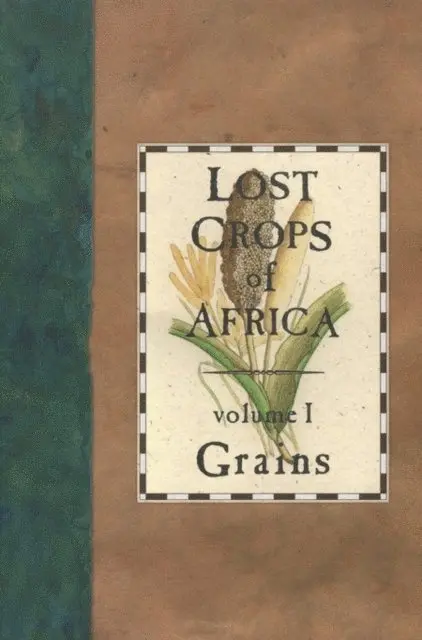
Lost Crops of Africa
Volume I: Grains
Av Board on Science and Technology for International Development, Office of International Affairs m. fl.
E-bok, 1996
932 kr
Lägg i varukorg
Scenes of starvation have drawn the world''s attention to Africa''s agricultural and environmental crisis. Some observers question whether this continent can ever hope to feed its growing population. Yet there is an overlooked food resource in sub-Saharan Africa that has vast potential: native food …
Fisheries Technologies for Developing Countries
Av Board on Science and Technology for International Development, Policy and Global Affairs m. fl.
E-bok, 1988
667 kr
Lägg i varukorg
In developing countries, traditional fishermen are important food contributors, yet technological information and development assistance to third-world nations often focuses on agriculture and industrial fishing, without addressing the needs of independent, small-scale fishermen. This book explores …
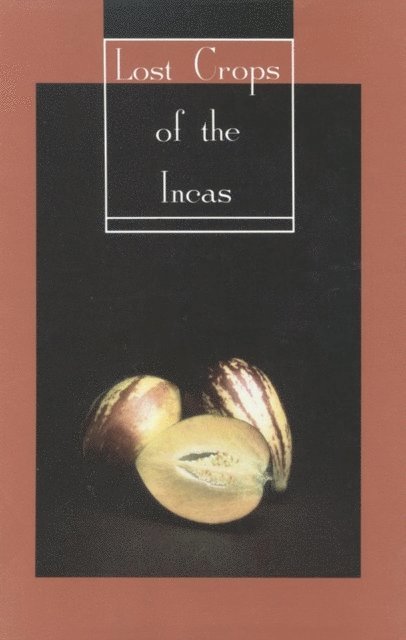
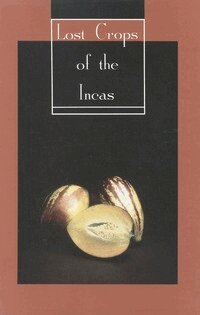
Lost Crops of the Incas
Little-Known Plants of the Andes with Promise for Worldwide Cultivation
Av Ad Hoc Panel of the Advisory Committee on Technology Innovation, Board on Science and Technology for International Development m. fl.
E-bok, 1989
1429 kr
Lägg i varukorg
This fascinating, readable volume is filled with enticing, detailed information about more than 30 different Incan crops that promise to follow the potato''s lead and become important contributors to the world''s food supply. Some of these overlooked foods offer special advantages for developing …
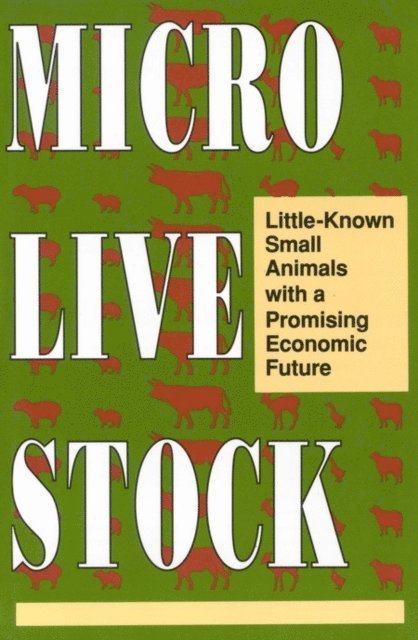
Microlivestock
Little-Known Small Animals with a Promising Economic Future
Av Board on Science and Technology for International Development, National Research Council
E-bok, 1991
1541 kr
Lägg i varukorg
Microlivestock is a term coined for species that are inherently small as well as for breeds of cattle, sheep, goats, and pigs that are less than about half the size of the most common breeds. These miniature animals are seldom considered in the broad picture of livestock development, but they seem …
Toward Sustainability
Soil and Water Research Priorities for Developing Countries
Av Committee on International Soil and Water Research and Development, Water Science and Technology Board m. fl.
E-bok, 1991
136 kr
Lägg i varukorg
How can high-growth areas such as Africa, Asia, and Latin America sustain agricultural production for current and future generations? Toward Sustainability explores research priorities to support sustainable agriculture. The book identifies six areas that could offer great rewards: addressing …
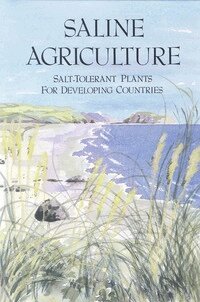
Saline Agriculture
Salt-Tolerant Plants for Developing Countries
Av Board on Science and Technology for International Development, Office of International Affairs m. fl.
E-bok, 1990
243 kr
Lägg i varukorg
Food Aid Projections for the Decade of the 1990s
Av Board on Science and Technology for International Development, Policy and Global Affairs m. fl.
E-bok, 1989
277 kr
Lägg i varukorg
This book presents the results of a meeting held by the Board on Science and Technology for International Development. At this meeting, six groups of modelers presented their best estimates of the food aid/food commodity trade picture during the period 1991-2000. These estimates are based on each …
Conserving Biodiversity
A Research Agenda for Development Agencies
Av Board on Science and Technology for International Development, National Research Council
E-bok, 1992
255 kr
Lägg i varukorg
The loss of the earth''s biological diversity is widely recognized as a critical environmental problem. That loss is most severe in developing countries, where the conditions of human existence are most difficult. Conserving Biodiversity presents an agenda for research that can provide information …
Neem
A Tree for Solving Global Problems
Av Board on Science and Technology for International Development, National Research Council
E-bok, 1992
364 kr
Lägg i varukorg
The neem tree, one of the most promising of all plants, may eventually benefit every person on the planet. Probably no other plant yields as many varied products or has as many exploitable by-products. Indeed, as foreseen by some scientists, this tree may usher in a new era in pest control; provide …
Lost Crops of Africa
Volume I: Grains
Av Board on Science and Technology for International Development, Office of International Affairs m. fl.
E-bok, 1996
468 kr
Lägg i varukorg
Scenes of starvation have drawn the world''s attention to Africa''s agricultural and environmental crisis. Some observers question whether this continent can ever hope to feed its growing population. Yet there is an overlooked food resource in sub-Saharan Africa that has vast potential: native food …
Sustainable Agriculture and the Environment in the Humid Tropics
Av Committee on Sustainable Agriculture and the Environment in the Humid Tropics, Board on Agriculture m. fl.
E-bok, 1993
736 kr
Lägg i varukorg
Rainforests are rapidly being cleared in the humid tropics to keep pace with food demands, economic needs, and population growth. Without proper management, these forests and other natural resources will be seriously depleted within the next 50 years. Sustainable Agriculture and the Environment in …
Toward Sustainability
A Plan for Collaborative Research on Agriculture and Natural Resource Management
Av Panel for Collaborative Research Support for AID's Sustainable Agriculture and Natural Resource Management Program, Board on Agriculture m. fl.
E-bok, 1991
260 kr
Lägg i varukorg
Toward Sustainability recommends a design for a new Collaborative Research Support Program (CRSP) for the U.S. Agency for International Development (AID). Currently, eight CRSPs operate under legislation that supports long-term agricultural research of benefit to developing countries and the United …
Vetiver Grass
A Thin Green Line Against Erosion
Av Panel on Vetiver, Board on Science and Technology for International Development m. fl.
E-bok, 1993
200 kr
Lägg i varukorg
For developing nations, soil erosion is among the most chronic environmental and economic burdens. Vast amounts of topsoil are washed or blown away from arable land only to accumulate in rivers, reservoirs, harbors, and estuaries, thereby creating a double disaster: a vital resource disappears from …
Saline Agriculture
Salt-Tolerant Plants for Developing Countries
Av National Research Council, Office of International Affairs m. fl.
Häftad, 1990
1840 kr
Tillfälligt slut
Lost Crops of the Incas
Little-Known Plants of the Andes with Promise for Worldwide Cultivation
Av National Research Council, Policy and Global Affairs m. fl.
Häftad, 1989
2427 kr
Tillfälligt slut
This fascinating, readable volume is filled with enticing, detailed information about more than 30 different Incan crops that promise to follow the potato's lead and become important contributors to the world's food supply. Some of these overlooked foods offer special advantages for developing …
Food Aid Projections for the Decade of the 1990s
Av National Research Council, Policy and Global Affairs m. fl.
Häftad, 1989
1865 kr
Tillfälligt slut
This book presents the results of a meeting held by the Board on Science and Technology for International Development. At this meeting, six groups of modelers presented their best estimates of the food aid/food commodity trade picture during the period 1991-2000. These estimates are based on each …
Vetiver Grass
A Thin Green Line Against Erosion
Av National Research Council, Policy and Global Affairs m. fl.
Häftad, 1993
1400 kr
Tillfälligt slut
For developing nations, soil erosion is among the most chronic environmental and economic burdens. Vast amounts of topsoil are washed or blown away from arable land only to accumulate in rivers, reservoirs, harbors, and estuaries, thereby creating a double disaster: a vital resource disappears from …
Toward Sustainability
A Plan for Collaborative Research on Agriculture and Natural Resource Management
Av National Research Council, Board on Science and Technology for International Development m. fl.
Häftad, 1991
1303 kr
Tillfälligt slut
Toward Sustainability recommends a design for a new Collaborative Research Support Program (CRSP) for the U.S. Agency for International Development (AID). Currently, eight CRSPs operate under legislation that supports long-term agricultural research of benefit to developing countries and the United …
Toward Sustainability
Soil and Water Research Priorities for Developing Countries
Av National Research Council, Division on Earth and Life Studies m. fl.
Häftad, 1991
1303 kr
Tillfälligt slut
How can high-growth areas such as Africa, Asia, and Latin America sustain agricultural production for current and future generations? Toward Sustainability explores research priorities to support sustainable agriculture. The book identifies six areas that could offer great rewards: addressing …