Boaz Atzili - Böcker
Visar alla böcker från författaren Boaz Atzili. Handla med fri frakt och snabb leverans.
6 produkter
6 produkter
953 kr
Skickas inom 7-10 vardagar
Border fixity - the proscription of foreign conquest and the annexation of homeland territory - has, since World War II, become a powerful norm in world politics. This development has been said to increase stability and peace in international relations. Yet, in a world in which it is unacceptable to challenge international borders by force, sociopolitically weak states remain a significant source of widespread conflict, war, and instability. In this book, Boaz Atzili argues that the process of state building has long been influenced by external territorial pressures and competition, with the absence of border fixity contributing to the evolution of strong states - and its presence to the survival of weak ones. What results from this norm, he argues, are conditions that make internal conflict and the spillover of interstate war more likely. Using a comparison of historical and contemporary case studies, Atzili sheds light on the relationship between state weakness and conflict.His argument that under some circumstances an international norm that was established to preserve the peace may actually create conditions that are ripe for war is sure to generate debate and shed light on the dynamics of continuing conflict in the twenty-first century.
322 kr
Skickas inom 7-10 vardagar
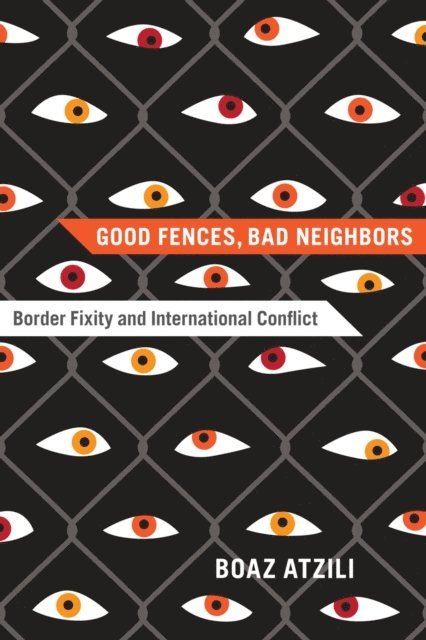
Border fixity - the proscription of foreign conquest and the annexation of homeland territory - has, since World War II, become a powerful norm in world politics. This development has been said to increase stability and peace in international relations. Yet, in a world in which it is unacceptable to challenge international borders by force, sociopolitically weak states remain a significant source of widespread conflict, war, and instability. In this book, Boaz Atzili argues that the process of state building has long been influenced by external territorial pressures and competition, with the absence of border fixity contributing to the evolution of strong states - and its presence to the survival of weak ones. What results from this norm, he argues, are conditions that make internal conflict and the spillover of interstate war more likely. Using a comparison of historical and contemporary case studies, Atzili sheds light on the relationship between state weakness and conflict.His argument that under some circumstances an international norm that was established to preserve the peace may actually create conditions that are ripe for war is sure to generate debate and shed light on the dynamics of continuing conflict in the twenty-first century.
1 110 kr
Skickas inom 7-10 vardagar
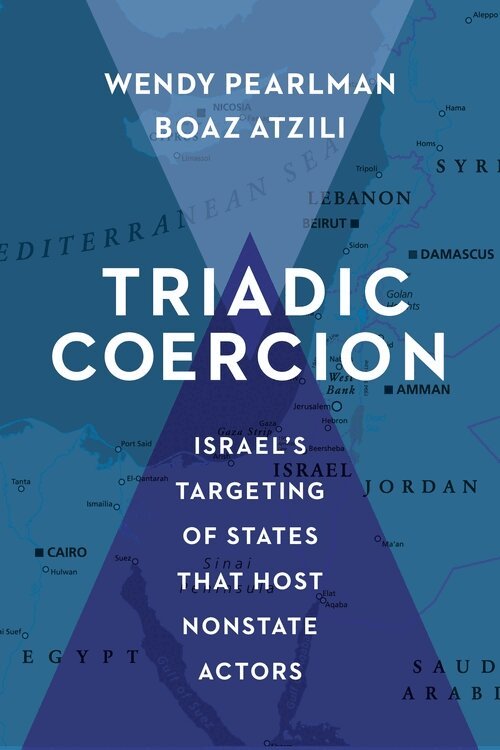
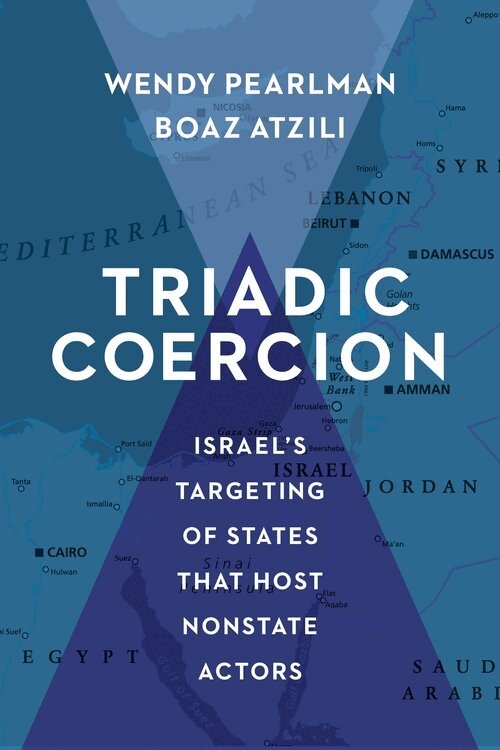
In the post–Cold War era, states increasingly find themselves in conflicts with nonstate actors. Finding it difficult to fight these opponents directly, many governments instead target states that harbor or aid nonstate actors, using threats and punishment to coerce host states into stopping those groups.Wendy Pearlman and Boaz Atzili investigate this strategy, which they term triadic coercion. They explain why states pursue triadic coercion, evaluate the conditions under which it succeeds, and demonstrate their arguments across seventy years of Israeli history. This rich analysis of the Arab-Israeli conflict, supplemented with insights from India and Turkey, yields surprising findings. Traditional discussions of interstate conflict assume that the greater a state’s power compared to its opponent, the more successful its coercion. Turning that logic on its head, Pearlman and Atzili show that this strategy can be more effective against a strong host state than a weak one because host regimes need internal cohesion and institutional capacity to move against nonstate actors. If triadic coercion is thus likely to fail against weak regimes, why do states nevertheless employ it against them? Pearlman and Atzili’s investigation of Israeli decision-making points to the role of strategic culture. A state’s system of beliefs, values, and institutionalized practices can encourage coercion as a necessary response, even when that policy is prone to backfire.A significant contribution to scholarship on deterrence, asymmetric conflict, and strategic culture, Triadic Coercion illuminates an evolving feature of the international security landscape and interrogates assumptions that distort strategic thinking.
283 kr
Skickas inom 7-10 vardagar
In the post–Cold War era, states increasingly find themselves in conflicts with nonstate actors. Finding it difficult to fight these opponents directly, many governments instead target states that harbor or aid nonstate actors, using threats and punishment to coerce host states into stopping those groups.Wendy Pearlman and Boaz Atzili investigate this strategy, which they term triadic coercion. They explain why states pursue triadic coercion, evaluate the conditions under which it succeeds, and demonstrate their arguments across seventy years of Israeli history. This rich analysis of the Arab-Israeli conflict, supplemented with insights from India and Turkey, yields surprising findings. Traditional discussions of interstate conflict assume that the greater a state’s power compared to its opponent, the more successful its coercion. Turning that logic on its head, Pearlman and Atzili show that this strategy can be more effective against a strong host state than a weak one because host regimes need internal cohesion and institutional capacity to move against nonstate actors. If triadic coercion is thus likely to fail against weak regimes, why do states nevertheless employ it against them? Pearlman and Atzili’s investigation of Israeli decision-making points to the role of strategic culture. A state’s system of beliefs, values, and institutionalized practices can encourage coercion as a necessary response, even when that policy is prone to backfire.A significant contribution to scholarship on deterrence, asymmetric conflict, and strategic culture, Triadic Coercion illuminates an evolving feature of the international security landscape and interrogates assumptions that distort strategic thinking.
426 kr
Skickas inom 10-15 vardagar
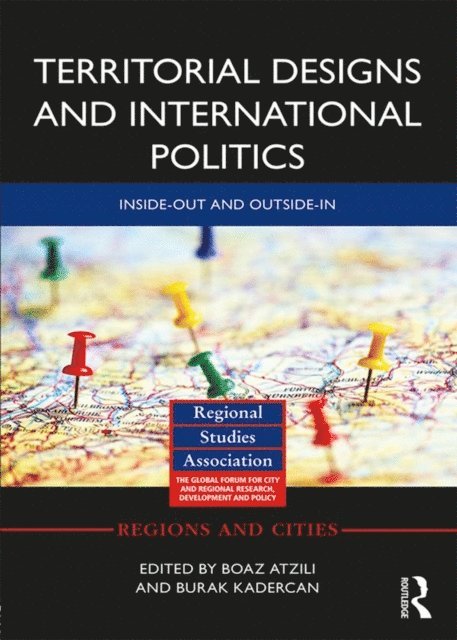
Territory is back with a vengeance. Although territorial politics never really went away, it was often perceived that way in public discussion and among scholars. The territorial conflicts of the last several years, however, have raised new academic and policy questions, revived old debates that were nearly forgotten, and forced us to rethink many of our common conceptions. Social scientists broadly agree that territory, as well as the boundaries that confine it and group identity that relates to it, are socially constructed rather than natural or primordial. But how and through which mechanisms is the meaning of territory constructed? By whom? For which purposes and by what tools? Which forces influence such “territorial designs”? How do different territorial designs affect state behavior in particular, and the dynamics of international politics in general? This book brings together political scientists and geographers—both disciplines in which scholars have long researched such questions—to create a mutually fertilizing dialogue, which will advance our understanding of territorial designs. The authors tackle core theoretical questions, institutions and ideas of territoriality, borders, space, place, and identity, as well as the methodologies used to study them. They utilize case studies as far apart as the Ottoman Empire, the colonization of Ireland, and current day Middle East; and they interrogate the characteristics of spaces as different as land, air, and water.The chapters were originally published as a special issue of Territory, Politics, Governance.
1 292 kr
Skickas inom 10-15 vardagar
Territory is back with a vengeance. Although territorial politics never really went away, it was often perceived that way in public discussion and among scholars. The territorial conflicts of the last several years, however, have raised new academic and policy questions, revived old debates that were nearly forgotten, and forced us to rethink many of our common conceptions. Social scientists broadly agree that territory, as well as the boundaries that confine it and group identity that relates to it, are socially constructed rather than natural or primordial. But how and through which mechanisms is the meaning of territory constructed? By whom? For which purposes and by what tools? Which forces influence such “territorial designs”? How do different territorial designs affect state behavior in particular, and the dynamics of international politics in general? This book brings together political scientists and geographers—both disciplines in which scholars have long researched such questions—to create a mutually fertilizing dialogue, which will advance our understanding of territorial designs. The authors tackle core theoretical questions, institutions and ideas of territoriality, borders, space, place, and identity, as well as the methodologies used to study them. They utilize case studies as far apart as the Ottoman Empire, the colonization of Ireland, and current day Middle East; and they interrogate the characteristics of spaces as different as land, air, and water.The chapters were originally published as a special issue of Territory, Politics, Governance.