Wendy Pearlman - Böcker
Visar alla böcker från författaren Wendy Pearlman. Handla med fri frakt och snabb leverans.
8 produkter
8 produkter
191 kr
Skickas inom 5-8 vardagar
LONG-LISTED FOR THE CARNEGIE MEDALReminiscent of the work of Nobel Prize winner Svetlana Alexievich, an astonishing collection of intimate wartime testimonies and poetic fragments from a cross-section of Syrians whose lives have been transformed by revolution, war, and flight.Against the backdrop of the wave of demonstrations known as the Arab Spring, in 2011 hundreds of thousands of Syrians took to the streets demanding freedom, democracy and human rights. The government’s ferocious response, and the refusal of the demonstrators to back down, sparked a brutal civil war that over the past five years has escalated into the worst humanitarian catastrophe of our times. Yet despite all the reporting, the video, and the wrenching photography, the stories of ordinary Syrians remain unheard, while the stories told about them have been distorted by broad brush dread and political expediency. This fierce and poignant collection changes that. Based on interviews with hundreds of displaced Syrians conducted over four years across the Middle East and Europe, We Crossed a Bridge and It Trembled is a breathtaking mosaic of first-hand testimonials from the frontlines. Some of the testimonies are several pages long, eloquent narratives that could stand alone as short stories; others are only a few sentences, poetic and aphoristic. Together, they cohere into an unforgettable chronicle that is not only a testament to the power of storytelling but to the strength of those who face darkness with hope, courage, and moral conviction.
1 110 kr
Skickas inom 7-10 vardagar
In the post–Cold War era, states increasingly find themselves in conflicts with nonstate actors. Finding it difficult to fight these opponents directly, many governments instead target states that harbor or aid nonstate actors, using threats and punishment to coerce host states into stopping those groups.Wendy Pearlman and Boaz Atzili investigate this strategy, which they term triadic coercion. They explain why states pursue triadic coercion, evaluate the conditions under which it succeeds, and demonstrate their arguments across seventy years of Israeli history. This rich analysis of the Arab-Israeli conflict, supplemented with insights from India and Turkey, yields surprising findings. Traditional discussions of interstate conflict assume that the greater a state’s power compared to its opponent, the more successful its coercion. Turning that logic on its head, Pearlman and Atzili show that this strategy can be more effective against a strong host state than a weak one because host regimes need internal cohesion and institutional capacity to move against nonstate actors. If triadic coercion is thus likely to fail against weak regimes, why do states nevertheless employ it against them? Pearlman and Atzili’s investigation of Israeli decision-making points to the role of strategic culture. A state’s system of beliefs, values, and institutionalized practices can encourage coercion as a necessary response, even when that policy is prone to backfire.A significant contribution to scholarship on deterrence, asymmetric conflict, and strategic culture, Triadic Coercion illuminates an evolving feature of the international security landscape and interrogates assumptions that distort strategic thinking.
283 kr
Skickas inom 7-10 vardagar
In the post–Cold War era, states increasingly find themselves in conflicts with nonstate actors. Finding it difficult to fight these opponents directly, many governments instead target states that harbor or aid nonstate actors, using threats and punishment to coerce host states into stopping those groups.Wendy Pearlman and Boaz Atzili investigate this strategy, which they term triadic coercion. They explain why states pursue triadic coercion, evaluate the conditions under which it succeeds, and demonstrate their arguments across seventy years of Israeli history. This rich analysis of the Arab-Israeli conflict, supplemented with insights from India and Turkey, yields surprising findings. Traditional discussions of interstate conflict assume that the greater a state’s power compared to its opponent, the more successful its coercion. Turning that logic on its head, Pearlman and Atzili show that this strategy can be more effective against a strong host state than a weak one because host regimes need internal cohesion and institutional capacity to move against nonstate actors. If triadic coercion is thus likely to fail against weak regimes, why do states nevertheless employ it against them? Pearlman and Atzili’s investigation of Israeli decision-making points to the role of strategic culture. A state’s system of beliefs, values, and institutionalized practices can encourage coercion as a necessary response, even when that policy is prone to backfire.A significant contribution to scholarship on deterrence, asymmetric conflict, and strategic culture, Triadic Coercion illuminates an evolving feature of the international security landscape and interrogates assumptions that distort strategic thinking.
832 kr
Skickas inom 7-10 vardagar
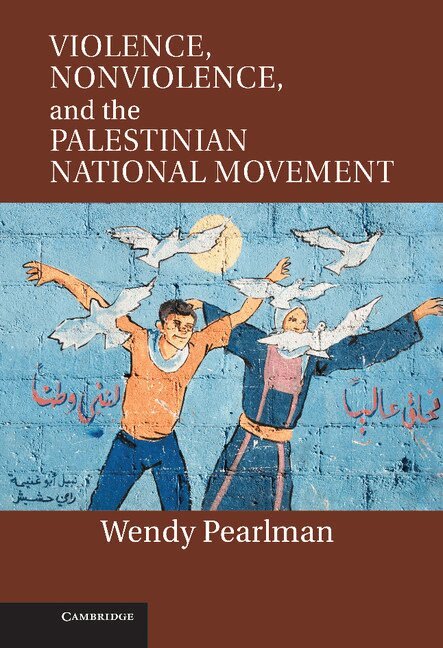
Why do some national movements use violent protest and others nonviolent protest? Wendy Pearlman shows that much of the answer lies inside movements themselves. Nonviolent protest requires coordination and restraint, which only a cohesive movement can provide. When, by contrast, a movement is fragmented, factional competition generates new incentives for violence and authority structures are too weak to constrain escalation. Pearlman reveals these patterns across one hundred years in the Palestinian national movement, with comparisons to South Africa and Northern Ireland. To those who ask why there is no Palestinian Gandhi, Pearlman demonstrates that nonviolence is not simply a matter of leadership. Nor is violence attributable only to religion, emotions or stark instrumentality. Instead, a movement's organizational structure mediates the strategies that it employs. By taking readers on a journey from civil disobedience to suicide bombings, this book offers fresh insight into the dynamics of conflict and mobilization.
318 kr
Skickas inom 7-10 vardagar
Why do some national movements use violent protest and others nonviolent protest? Wendy Pearlman shows that much of the answer lies inside movements themselves. Nonviolent protest requires coordination and restraint, which only a cohesive movement can provide. When, by contrast, a movement is fragmented, factional competition generates new incentives for violence and authority structures are too weak to constrain escalation. Pearlman reveals these patterns across one hundred years in the Palestinian national movement, with comparisons to South Africa and Northern Ireland. To those who ask why there is no Palestinian Gandhi, Pearlman demonstrates that nonviolence is not simply a matter of leadership. Nor is violence attributable only to religion, emotions or stark instrumentality. Instead, a movement's organizational structure mediates the strategies that it employs. By taking readers on a journey from civil disobedience to suicide bombings, this book offers fresh insight into the dynamics of conflict and mobilization.
273 kr
Skickas inom 7-10 vardagar
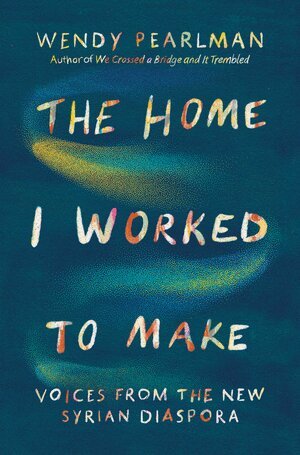
In 2011, Syrians took to the streets demanding freedom. Brutal government repression transformed peaceful protests into one of the most devastating conflicts of our time, killing hundreds of thousands and displacing millions. The Home I Worked to Make takes Syria’s refugee outflow as its point of departure. Based on hundreds of interviews conducted across more than a decade, it probes a question as intimate as it is universal: What is home? With gripping immediacy, Syrians now on five continents share stories of leaving, losing, searching, and finding (or not finding) home. Across this tapestry of voices, a new understanding emerges: home. For those without the privilege of taking it for granted, home is both struggle and achievement. Recasting “refugee crises” as acts of diaspora-making, The Home I Worked to Make challenges readers to grapple with the hard-won wisdom of those who survive war and to see, with fresh eyes, what home means in their own lives.
295 kr
Skickas inom 3-6 vardagar
104 kr
Skickas