Bob Perelman - Böcker
Visar alla böcker från författaren Bob Perelman. Handla med fri frakt och snabb leverans.
4 produkter
4 produkter
663 kr
Skickas inom 3-6 vardagar
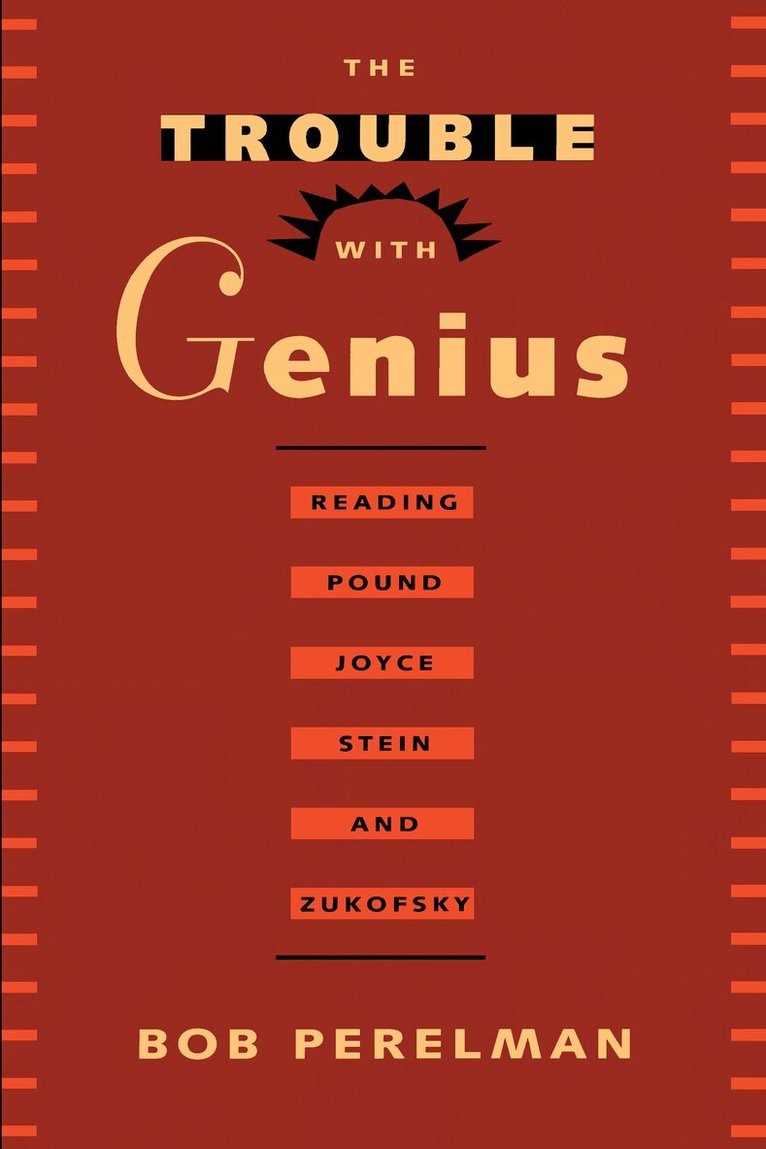
A paradox: Ezra Pound, James Joyce, Gertrude Stein, and Louis Zukofsky all wrote their central works to be 'masterpieces', synoptic views of the world that would change the very consciousness of the public. And yet these writings are so hard to read that instead of producing social change, they have produced critical industries dedicated to decoding them. In new, provocative readings of these demanding authors, Bob Perelman shows how the inaccessibility of their writing reveals the conflict between the goals of social relevance and literary innovation. As self-proclaimed geniuses, they used language in new ways that were inevitably incomprehensible to the large audiences that they sought to instruct, change, or simply dazzle. By seeing genius as a role that is simultaneously social and poetic, Perelman reads the difficulty of their works as rooted in the cultural relationship between authors and their readers. Perelman's brilliant analysis offers scholars new insight and opens these works to readers who have been frustrated by their difficulty."The Trouble with Genius" is one poet's passionate attempt to make sense of the stylistic and political challenge of these modernists and to find, although not uncritically, the value of their work for readers and writers today.
460 kr
Skickas inom 7-10 vardagar
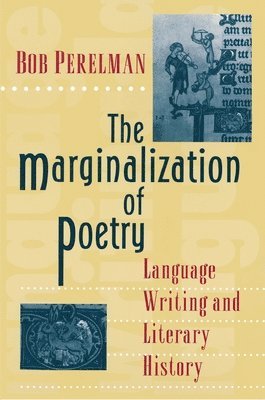
Language writing, the most controversial avant-garde movement in contemporary American poetry, appeals strongly to writers and readers interested in the politics of postmodernism and in iconoclastic poetic form. Drawing on materials from popular culture, avoiding the standard stylistic indications of poetic lyricism, and using nonsequential sentences are some of the ways in which language writers make poetry a more open and participatory process for the readers. Reading this kind of writing, however, may not come easily in a culture where poetry is treated as property of a special class. It is this barrier that Bob Perelman seeks to break down in this fascinating and comprehensive account of the language writing movement. A leading language writer himself, Perelman offers insights into the history of the movement and discusses the political and theoretical implications of the writing. He provides detailed readings of work by Lyn Hejinian, Ron Silliman, and Charles Bernstein, among many others, and compares it to a wide range of other contemporary and modern American poetry.A variety of issues are addressed in the following chapters: "The Marginalization of Poetry," "Language Writing and Literary History," "Here and Now on Paper," "Parataxis and Narrative: The New Sentence in Theory and Practice," "Write the Power," "Building a More Powerful Vocabulary: Bruce Andrews and the World (Trade Center)," "This Page Is My Page, This Page Is Your Page: Gender and Mapping," "An Alphabet of Literary Criticism," and "A False Account of Talking with Frank O'Hara and Roland Barthes in Philadelphia."
225 kr
Tillfälligt slut
477 kr
Skickas inom 7-10 vardagar
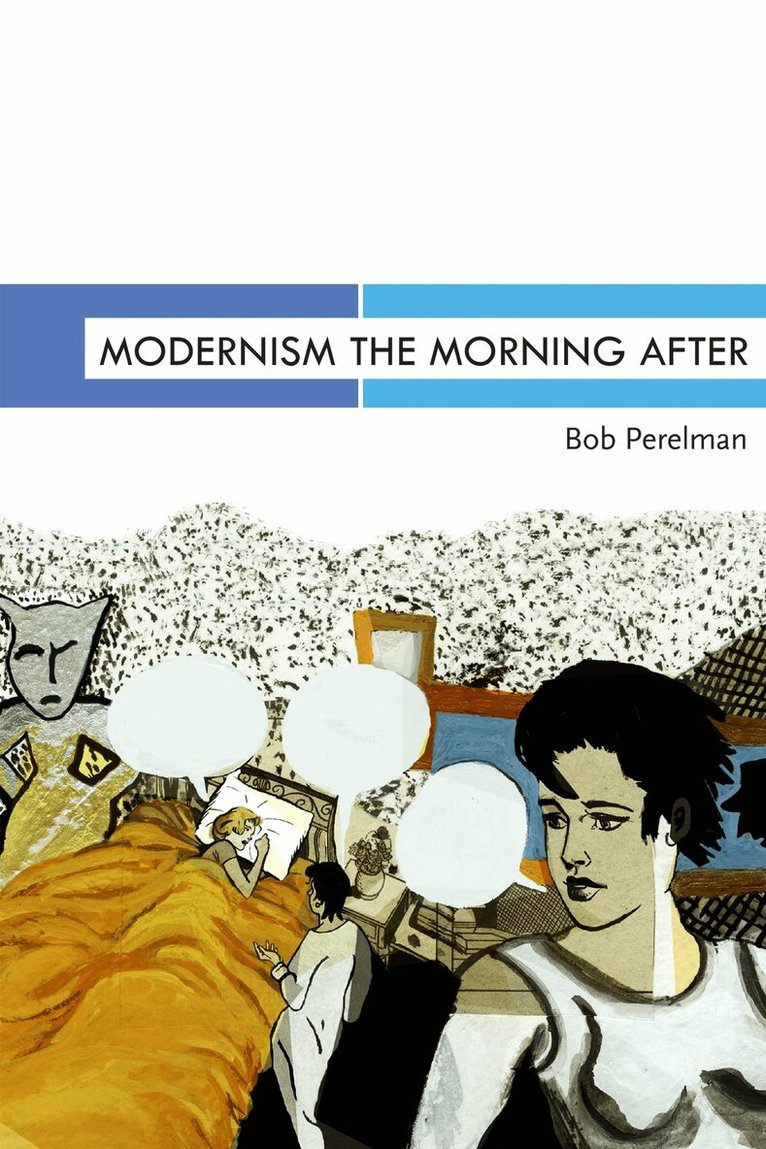
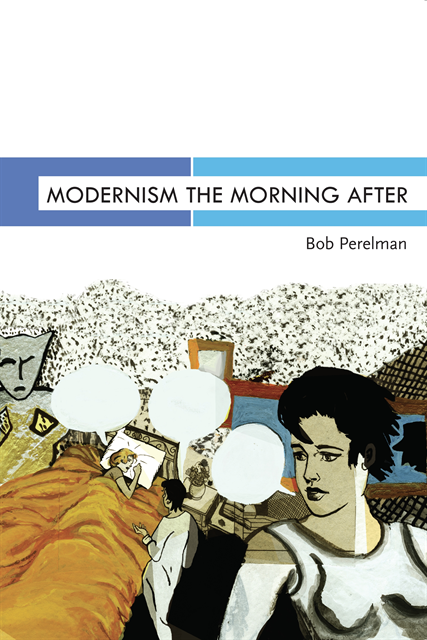
Modernism the Morning After scrutinizes a number of long-held modernist dogmas in order to articulate a more capacious model for thinking about modernism, past, present, and future.Modernism the Morning After is a superb, lively, engaging series of essays and talks, dating from 1995 to 2016, by the eminent scholar, critic, and poet Bob Perelman. Throughout his career, Perelman has focused on the persistence of modernist ambition in poetry, with all of its admirable articulations and tragicomic short-circuits. Poetry, it turns out, is not simply “news that stays news,” as Ezra Pound postulated. Instead, as Perelman demonstrates, poetry often gropes toward whatever news can be found in the broader contexts of public speech—the cultural commons, the almost-real or much-too-real language of people and our hyperactive media.Working in a variety of modes from the poetic to the dramatic to the conversational, and ranging across an expansive historical register from Dickinson, Whitman, and Dunbar in the nineteenth century to Kenneth Goldsmith and Stephen Colbert in the twenty-first, Perelman’s readings are unfailingly illuminating and, in many cases, his witty expositions take us strikingly close to the original intent of the text concerned.Perelman also places intermittent, yet artful, pressure on some basic questions about the very nature of poetry: What does the transcription of poems tell us about them?; How do hoaxes like the Ern Malley affair compel us to reconsider fundamental assumptions about what constitutes “authentic” poetry?; And, how does the bathetic register relate to tones and idiom in recent poetic production? In Modernism the Morning After, Perelman writes as a poet, teacher, and critic, addressing a broad audience of readers and writers without choosing between them, inviting all to consider along with him modernism’s future through a dynamic consideration of its past.