Brenda Farnell - Böcker
Visar alla böcker från författaren Brenda Farnell. Handla med fri frakt och snabb leverans.
6 produkter
6 produkter
2 171 kr
Skickas inom 10-15 vardagar
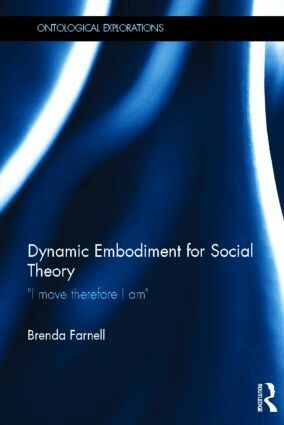
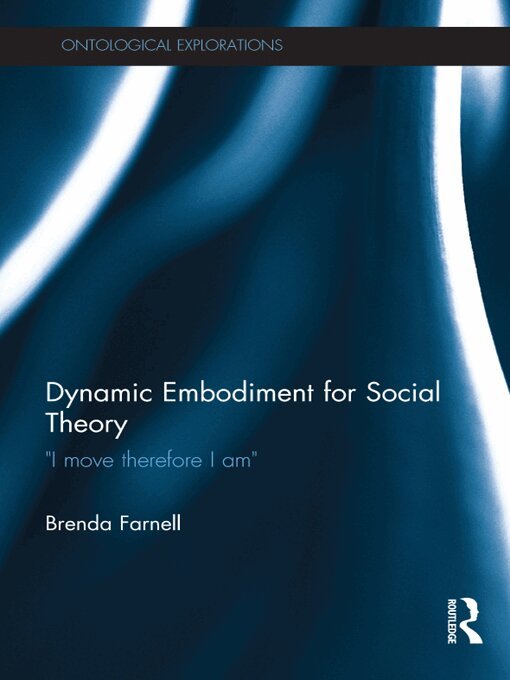
This book presents a series of ontological investigations into an adequate theory of embodiment for the social sciences. Informed by a new realist philosophy of causal powers, it seeks to articulate a concept of dynamic embodiment, one that positions human body movement, and not just ‘the body’ at the heart of theories of social action. It draws together several lines of thinking in contemporary social science: about the human body and its movements; adequate meta-theoretical explanations of agency and causality in human action; relations between moving and talking; skill and the formation of knowledge; metaphor, perception and the senses; movement literacy; the constitution of space and place, and narrative performance. This is an ontological inquiry that is richly grounded in, and supported by anthropological ethnographic evidence. Using the work of Rom Harré, Roy Bhaskar, Charles Varela and Drid Williams this book applies causal powers theory to a revised ontology of personhood, and discusses why the adequate location of human agency is crucial for the social sciences. The breakthrough lies in fact that new realism affords us an account of embodied human agency as a generative causal power that is grounded in our corporeal materiality, thereby connecting natural/physical and cultural worlds.Dynamic Embodiment for Social Theory is compelling reading for students and academics of the social sciences, especially anthropologists and sociologists of ‘the body’, and those interested in new developments in critical realism.
429 kr
Skickas inom 7-10 vardagar
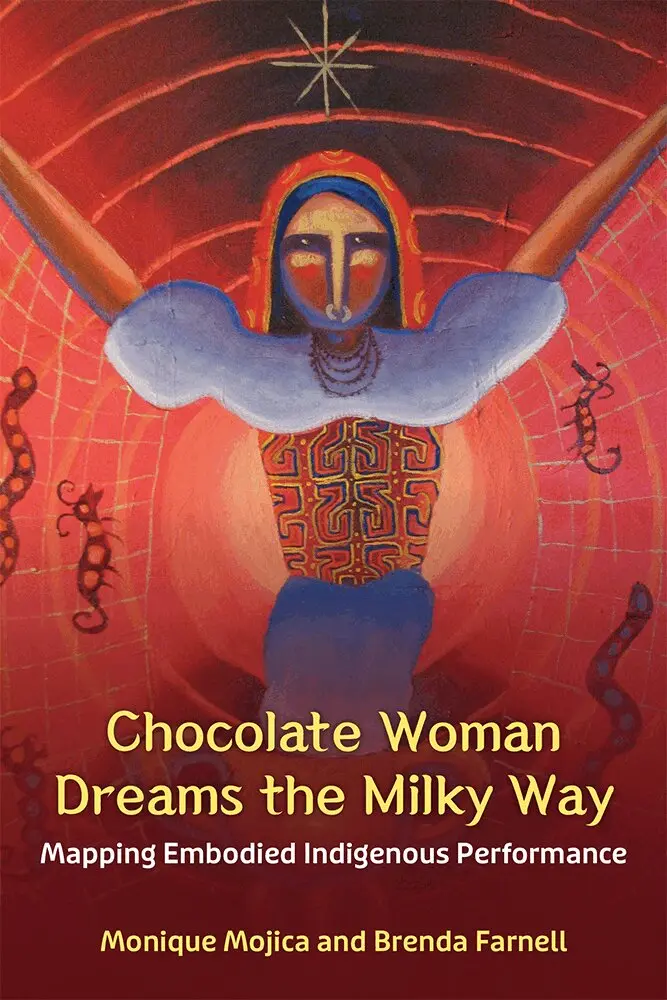
This volume documents the creation of Chocolate Woman Dreams the Milky Way, a play written and performed by Monique Mojica with collaborators from diverse disciplines. Inspired by the pictographic writing and mola textiles of the Guna, an indigenous people of Panama and Colombia, the book explores Mojica’s unique approach to the performance process. Her method activates an Indigenous theatrical process that privileges the body in contrast to Western theater’s privileging of the written text, and rethinks the role of land, body, and movement, as well as dramatic story-structure and performance style. Co-authored with anthropologist Brenda Farnell, the book challenges the divide between artist and scholar, and addresses the many levels of cultural, disciplinary, and linguistic translations required to achieve this. Placing the complex intellect inherent to Indigenous Knowledges at its center, the book engages Indigenous performance theory, and concepts that link body, land, and story, such as terra nullius/corpus nullius, mapping, pattern literacy, land literacy, and movement literacy. Enhanced by contributions from other artists and scholars, the book challenges Eurocentric ideologies about what counts as “performance” and what is required from an “audience,” as well as long-standing body-mind dualisms.
1 087 kr
Skickas inom 7-10 vardagar
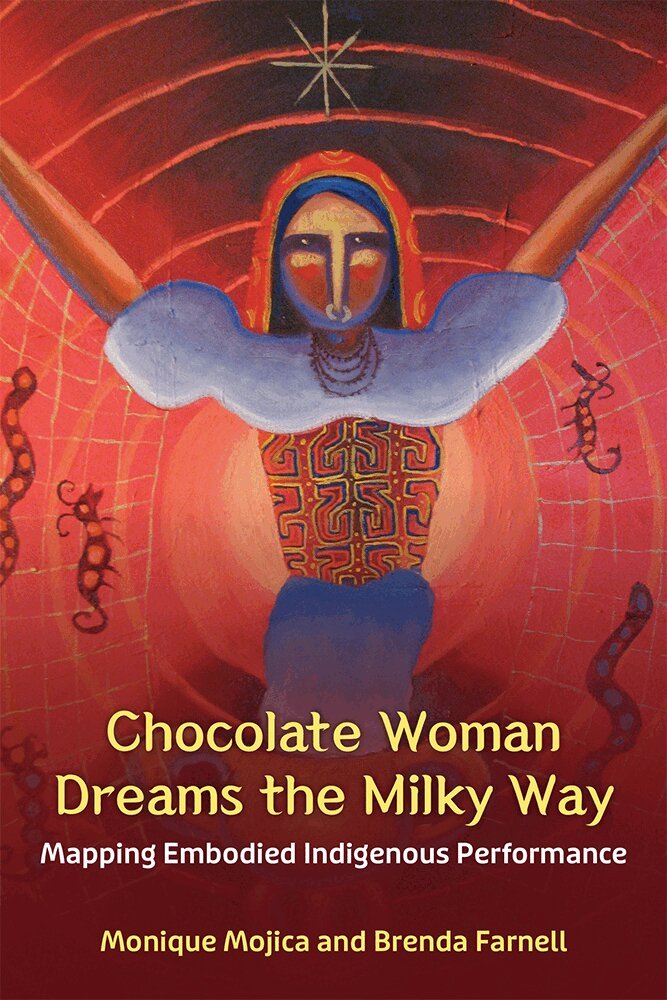
This volume documents the creation of Chocolate Woman Dreams the Milky Way, a play written and performed by Monique Mojica with collaborators from diverse disciplines. Inspired by the pictographic writing and mola textiles of the Guna, an indigenous people of Panama and Colombia, the book explores Mojica’s unique approach to the performance process. Her method activates an Indigenous theatrical process that privileges the body in contrast to Western theater’s privileging of the written text, and rethinks the role of land, body, and movement, as well as dramatic story-structure and performance style. Co-authored with anthropologist Brenda Farnell, the book challenges the divide between artist and scholar, and addresses the many levels of cultural, disciplinary, and linguistic translations required to achieve this. Placing the complex intellect inherent to Indigenous Knowledges at its center, the book engages Indigenous performance theory, and concepts that link body, land, and story, such as terra nullius/corpus nullius, mapping, pattern literacy, land literacy, and movement literacy. Enhanced by contributions from other artists and scholars, the book challenges Eurocentric ideologies about what counts as “performance” and what is required from an “audience,” as well as long-standing body-mind dualisms.
323 kr
Skickas inom 10-15 vardagar
Plains Indian Sign Talk (PST), a complex system of hand signs, once served as the lingua franca among many Native American tribes of the Great Plains, who spoke very different languages. Although some researchers thought it had disappeared following the establishment of reservations and the widespread adoption of English, Brenda Farnell discovered that PST is still an integral component of the storytelling tradition in contemporary Assiniboine (Nakota) culture.Farnell's research challenges the dominant European American view of language as a matter of words only. In Nakota language practices, she asserts, words and gestures are equal partners in the creation of meaning. Drawing on Nakota narratives videotaped during field research at the Fort Belknap reservation in northern Montana, she uses the movement script Labanotation to create texts of the movement content of these performances. The first and only ethnographic study of contemporary uses of PST, Do You See What I Mean? draws on important developments in the study of language and culture to provide an action-centered analysis of spoken and gestural discourse. It offers a theoretical approach to language and the body that transcends the current "intellectualist" versus "phenomenological" impasse in social and linguistic theory.
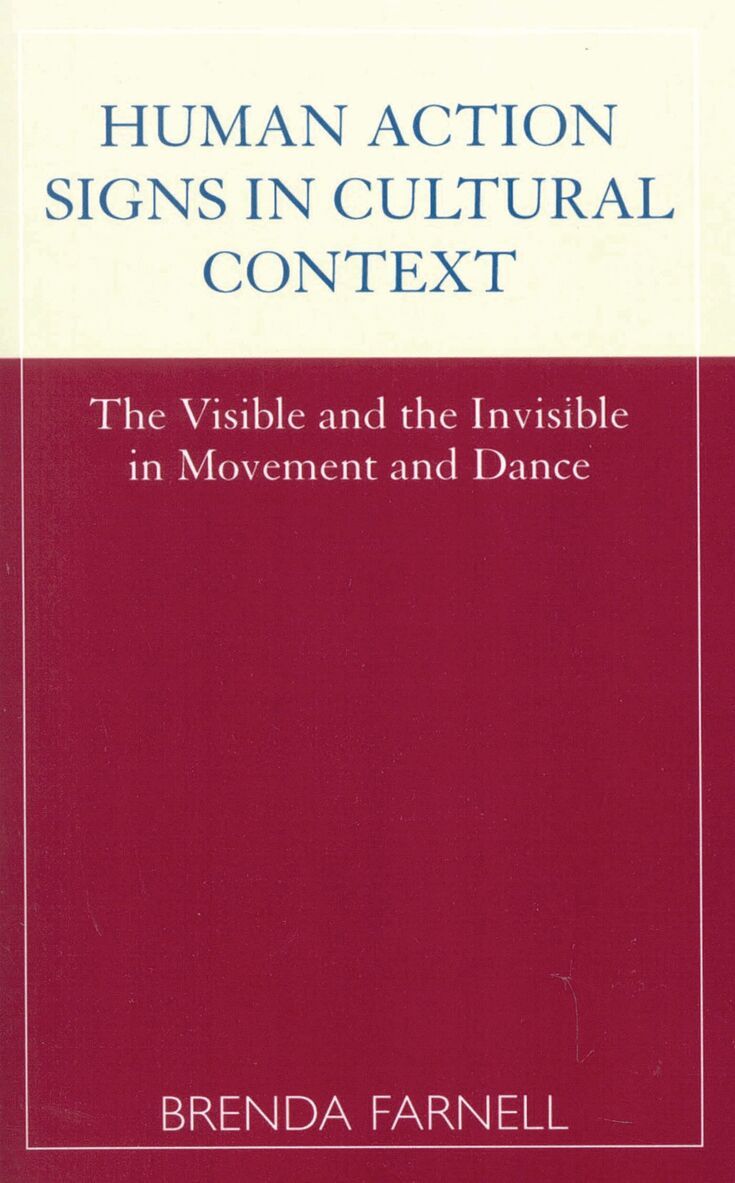
Human Action Signs in Cultural Context
The Visible and the Invisible in Movement and Dance
Häftad, Engelska, 1995
901 kr
Skickas inom 10-15 vardagar
Despite the tremendous multi-disciplinary upsurge of interest in "the body" of late, little or no attention has been given to the moving body or rather, the moving person, a situation that is remedied by this book. For the first time, leading scholars in the anthropology of dance and human movement come together to provide a rich sample of their current work, introducing theories and methods that move well beyond the more familiar "proxemic" and "kinesic" approaches to body movement and space.Part 1 consists of ethnographic studies as diverse as Hawaiian dance and poetry, Tai Chi Chuan, Ballet and the Roman Catholic Mass, Australian Aboriginal sign language, Plains Indians sign language, and African-American movement performance. Part 2 complements this ethnographic richness by providing an in-depth commentary, together with a critical examination of several fundamental philosophical and theoretical issues that have been raised.
805 kr
Skickas inom 10-15 vardagar
This book presents a series of ontological investigations into an adequate theory of embodiment for the social sciences. Informed by a new realist philosophy of causal powers, it seeks to articulate a concept of dynamic embodiment, one that positions human body movement, and not just ‘the body’ at the heart of theories of social action. It draws together several lines of thinking in contemporary social science: about the human body and its movements; adequate meta-theoretical explanations of agency and causality in human action; relations between moving and talking; skill and the formation of knowledge; metaphor, perception and the senses; movement literacy; the constitution of space and place, and narrative performance. This is an ontological inquiry that is richly grounded in, and supported by anthropological ethnographic evidence. Using the work of Rom Harré, Roy Bhaskar, Charles Varela and Drid Williams this book applies causal powers theory to a revised ontology of personhood, and discusses why the adequate location of human agency is crucial for the social sciences. The breakthrough lies in fact that new realism affords us an account of embodied human agency as a generative causal power that is grounded in our corporeal materiality, thereby connecting natural/physical and cultural worlds.Dynamic Embodiment for Social Theory is compelling reading for students and academics of the social sciences, especially anthropologists and sociologists of ‘the body’, and those interested in new developments in critical realism.