Bretislav Friedrich - Böcker
Visar alla böcker från författaren Bretislav Friedrich. Handla med fri frakt och snabb leverans.
7 produkter
7 produkter
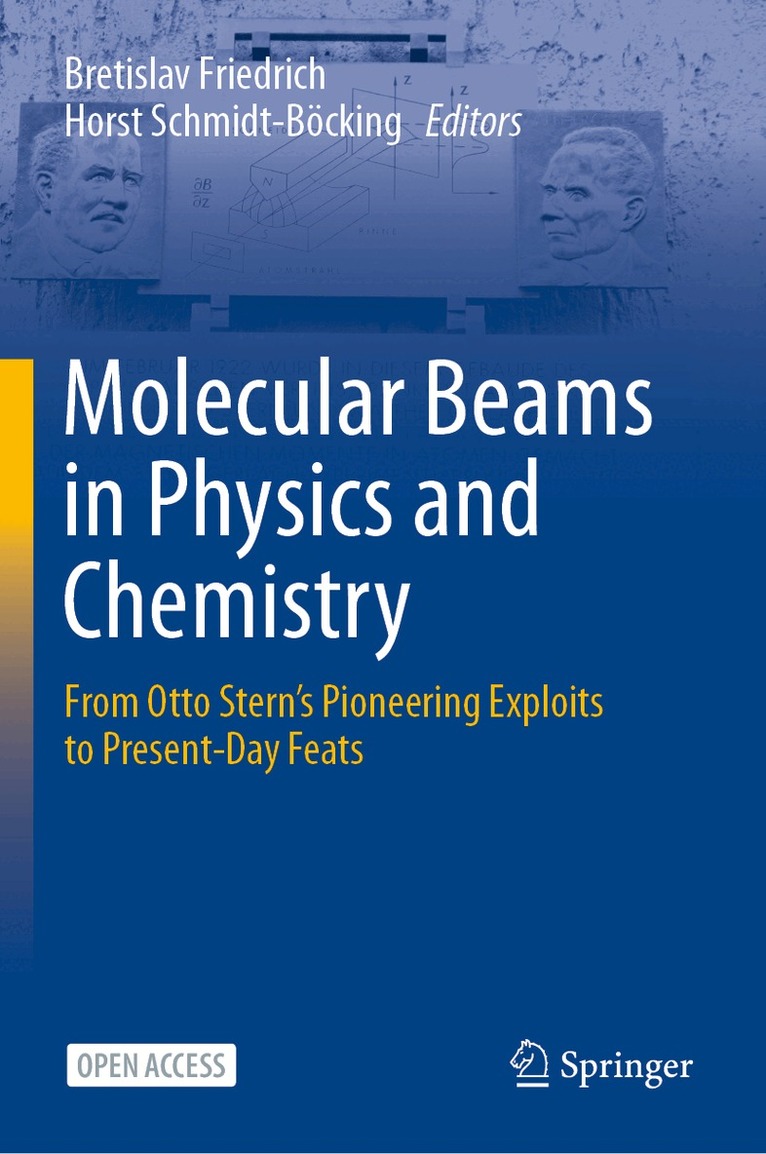
Molecular Beams in Physics and Chemistry
From Otto Stern's Pioneering Exploits to Present-Day Feats
Inbunden, Engelska, 2021
536 kr
Skickas inom 10-15 vardagar
This Open Access book gives a comprehensive account of both the history and current achievements of molecular beam research. In 1919, Otto Stern launched the revolutionary molecular beam technique.
Molecular Beams in Physics and Chemistry
From Otto Stern's Pioneering Exploits to Present-Day Feats
Häftad, Engelska, 2022
430 kr
Skickas inom 10-15 vardagar
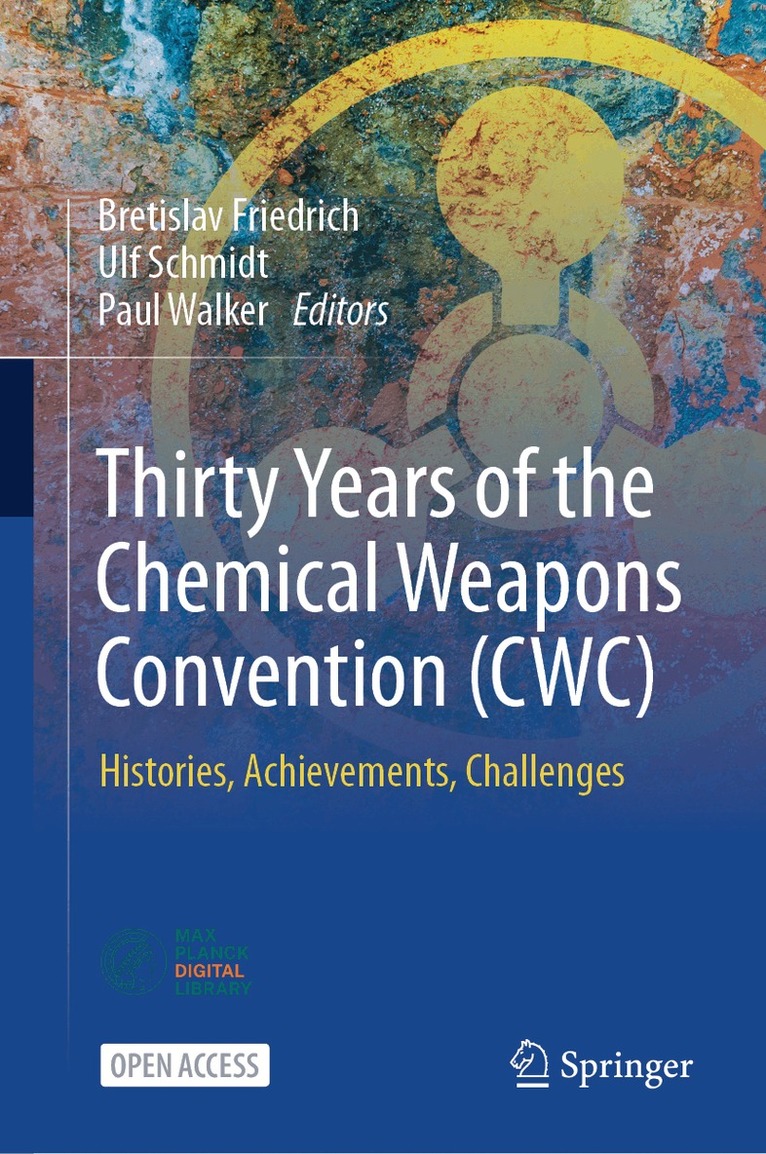
Thirty Years of the Chemical Weapons Convention (CWC)
Histories, Achievements, Challenges
Inbunden, Engelska, 2026
552 kr
Skickas inom 10-15 vardagar
This open-access volume consists of papers presented at the conference “Thirty Years of the Chemical Weapons Convention (CWC): Histories, Achievements, Challenges”, held in Berlin, 5–6 October 2023, as well as of additional contributions.The volume’s twenty-two individual chapters reflect on the history and achievements of the CWC over the past thirty years and explore existing and future challenges as the world realigns itself with a new geopolitical and security environment amid ongoing conflicts in volatile regions such as Eastern Europe and the Middle East.Highlights of the volume include:• Contributions by government officials, renowned scholars, and esteemed members of civil society.• A keynote address by the former Director General of the implementing agency of the CWC, the Organization for the Prohibition of Chemical Weapons (OPCW), providing insights into the treaty’s evolution.• A section examining the potential of the CWC as a model for the abolition of nuclear weapons.
1 241 kr
Skickas inom 5-8 vardagar
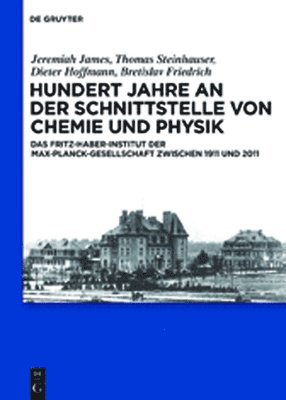
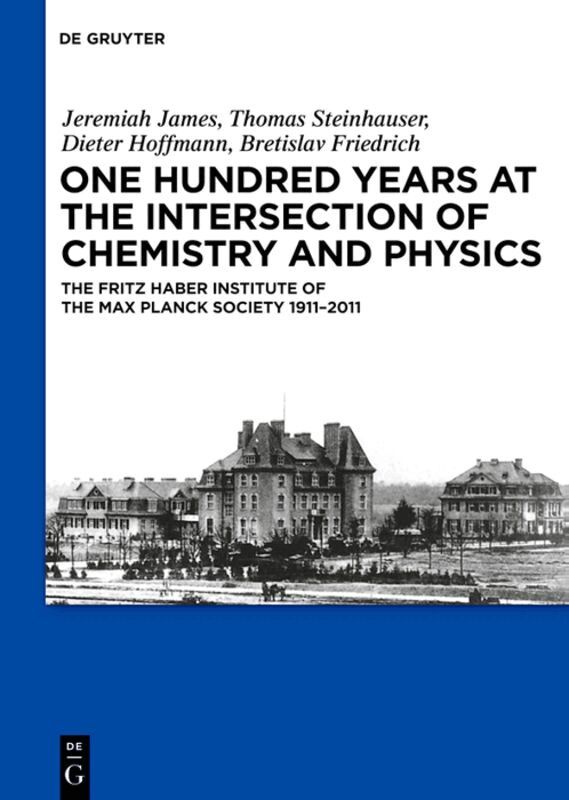
One Hundred Years at the Intersection of Chemistry and Physics
The Fritz Haber Institute of the Max Planck Society 1911-2011
Inbunden, Engelska, 2011
1 285 kr
Skickas inom 5-8 vardagar
This volume, occasioned by the centenary of the Fritz Haber Institute, formerly the Institute for Physical Chemistry and Electrochemistry, covers the institute's scientific and institutional history from its founding until the present. The institute was among the earliest established by the Kaiser Wilhelm Society, and its inauguration was one of the first steps in the development of Berlin-Dahlem into a center for scientific research. Its establishment was made possible by an endowment from Leopold Koppel, granted on the condition that Fritz Haber, well-known for his discovery of a method to synthesize ammonia from its elements, be made its director. The history of the institute has largely paralleled that of 20th-century Germany. It undertook controversial weapons research during World War I, followed by a "Golden Era" during the 1920s, in spite of financial hardships. Under the National Socialists it experienced a purge of its scientific staff and a diversion of its research into the service of the new regime, accompanied by a breakdown in its international relations. In the immediate aftermath of World War II it suffered crippling material losses, from which it recovered slowly in the post-war era. In 1953, shortly after taking the name of its founding director, the institute joined the fledgling Max Planck Society. During the 1950s and 60s, the institute supported diverse researches into the structure ofmatter and electron microscopy in a territorially insular and politically precarious West-Berlin. In subsequent decades, as both Berlin and the Max Planck Society underwent significant changes, the institute reorganized around a board of coequal scientific directors and a renewed focus on the investigation of elementary processes on surfaces and interfaces, topics of research that had been central to the work of Fritz Haber and the first "Golden Era" of the institute.
536 kr
Skickas inom 10-15 vardagar
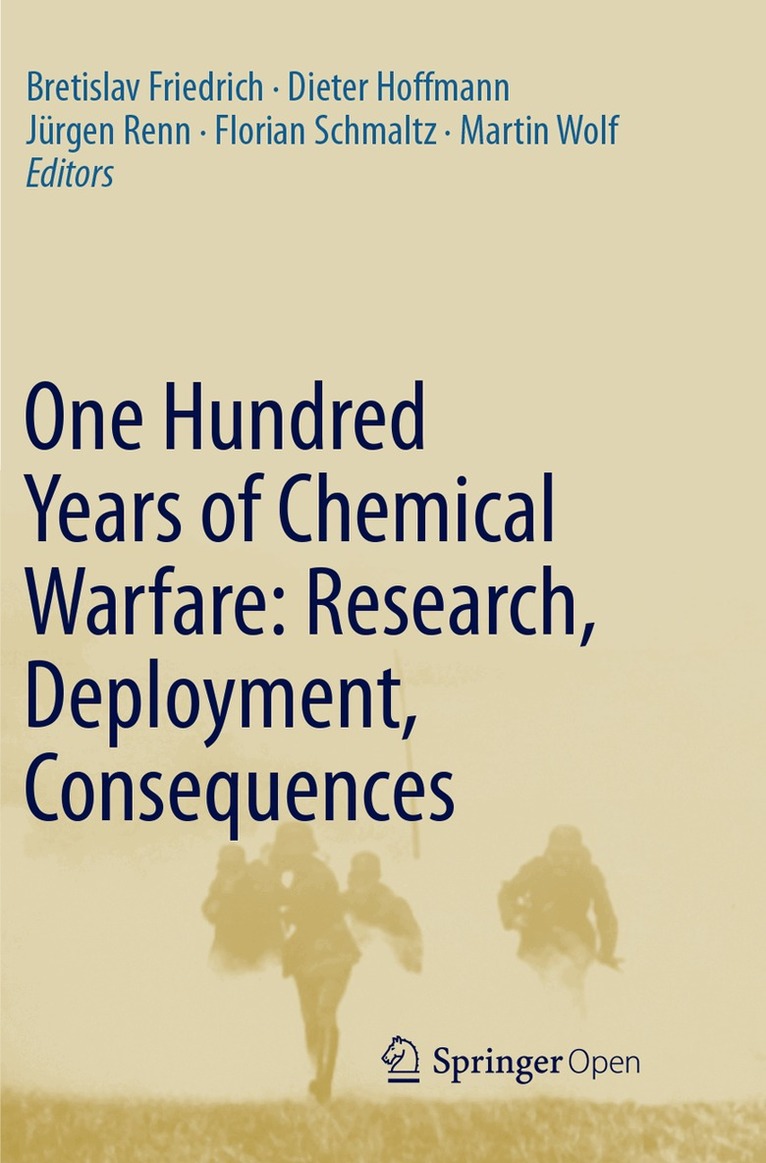
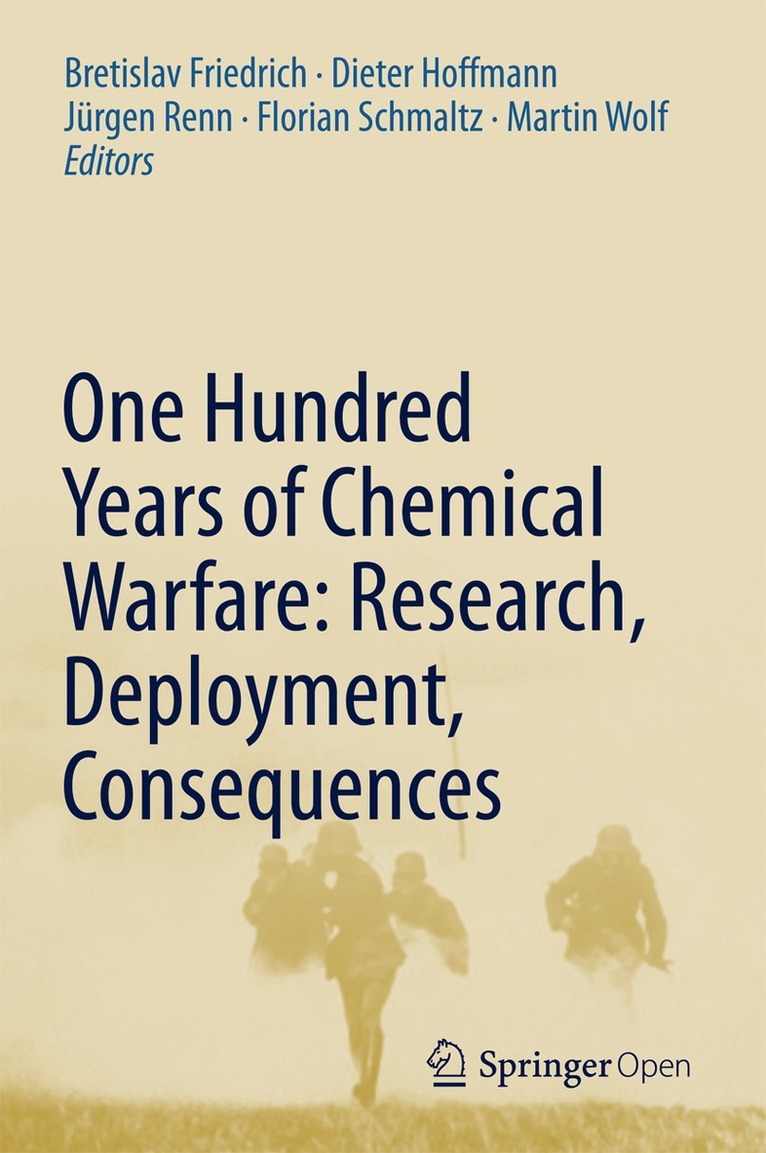
This book is open access under a CC BY-NC 2.5 license. On April 22, 1915, the German military released 150 tons of chlorine gas at Ypres, Belgium. Carried by a long-awaited wind, the chlorine cloud passed within a few minutes through the British and French trenches, leaving behind at least 1,000 dead and 4,000 injured. This chemical attack, which amounted to the first use of a weapon of mass destruction, marks a turning point in world history. The preparation as well as the execution of the gas attack was orchestrated by Fritz Haber, the director of the Kaiser Wilhelm Institute for Physical Chemistry and Electrochemistry in Berlin-Dahlem. During World War I, Haber transformed his research institute into a center for the development of chemical weapons (and of the means of protection against them).Bretislav Friedrich and Martin Wolf (Fritz Haber Institute of the Max Planck Society, the successor institution of Haber’s institute) together with Dieter Hoffmann, Jürgen Renn, and Florian Schmaltz (Max Planck Institute for the History of Science) organized an international symposium to commemorate the centenary of the infamous chemical attack. The symposium examined crucial facets of chemical warfare from the first research on and deployment of chemical weapons in WWI to the development and use of chemical warfare during the century hence. The focus was on scientific, ethical, legal, and political issues of chemical weapons research and deployment — including the issue of dual use — as well as the ongoing effort to control the possession of chemical weapons and to ultimately achieve their elimination.The volume consists of papers presented at the symposium and supplemented by additional articles that together cover key aspects of chemical warfare from 22 April 1915 until the summer of 2015.
552 kr
Skickas inom 10-15 vardagar
This book is open access under a CC BY-NC 2.5 license. On April 22, 1915, the German military released 150 tons of chlorine gas at Ypres, Belgium. Carried by a long-awaited wind, the chlorine cloud passed within a few minutes through the British and French trenches, leaving behind at least 1,000 dead and 4,000 injured. This chemical attack, which amounted to the first use of a weapon of mass destruction, marks a turning point in world history. The preparation as well as the execution of the gas attack was orchestrated by Fritz Haber, the director of the Kaiser Wilhelm Institute for Physical Chemistry and Electrochemistry in Berlin-Dahlem. During World War I, Haber transformed his research institute into a center for the development of chemical weapons (and of the means of protection against them).Bretislav Friedrich and Martin Wolf (Fritz Haber Institute of the Max Planck Society, the successor institution of Haber’s institute) together with Dieter Hoffmann, Jürgen Renn, and Florian Schmaltz (Max Planck Institute for the History of Science) organized an international symposium to commemorate the centenary of the infamous chemical attack. The symposium examined crucial facets of chemical warfare from the first research on and deployment of chemical weapons in WWI to the development and use of chemical warfare during the century hence. The focus was on scientific, ethical, legal, and political issues of chemical weapons research and deployment — including the issue of dual use — as well as the ongoing effort to control the possession of chemical weapons and to ultimately achieve their elimination.The volume consists of papers presented at the symposium and supplemented by additional articles that together cover key aspects of chemical warfare from 22 April 1915 until the summer of 2015.