Brian Ayers - Böcker
Visar alla böcker från författaren Brian Ayers. Handla med fri frakt och snabb leverans.
4 produkter
4 produkter
420 kr
Skickas inom 7-10 vardagar
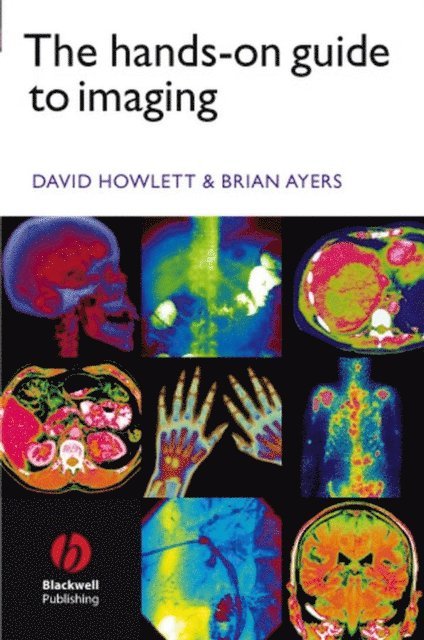
This brand new text, is an essential practical guide for junior doctors and medical students making the transition from medical school to life on the wards. .'I think that this book is an excellent idea.' 4th year medical student The hands-on guide to imaging takes a systems focused approach and is very easy to consult when on the job. Written to help you get the most of your Radiology department, this book gives you: Pointers on how to evaluate the appropriate Radiology required Reference on patient care and preparation Guidance on analysing results and patient feedback Advice on following the correct procedures The best information about imaging techniques 150 detailed images Help on how to deal effectively with the Radiology department Health and Safety advice Hints on how to organise paperwork and work through the mass of hospital forms Details on how to manage budgets effectively A quick reference, pocket-sized reassurance This book intends to help you understand the practical issues that aren't taught at Medical School. Why not see for yourself how it can help you?
574 kr
Skickas inom 5-8 vardagar
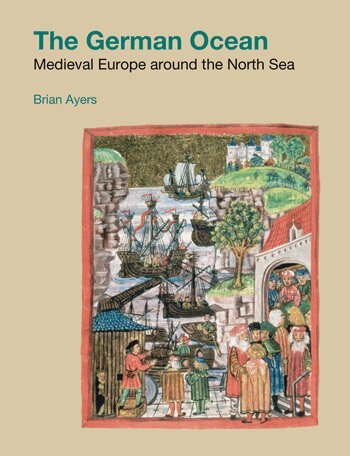
The German Ocean examines archaeological and historical evidence for the development of economies and societies around the North Sea from the beginning of the twelfth century until the mid sixteenth century. It draws in material from Scandinavia to Normandy and from Scotland to the Thames estuary. While largely concerned with the North Sea littoral, when necessary it takes account of adjacent areas such as the Baltic or inland hinterlands.The North Sea is often perceived as a great divide, divorcing the British Isles from continental Europe. In cultural terms, however, it has always acted more as a lake, supporting communities around its fringes which have frequently had much in common. This is especially true of the medieval period when trade links, fostered in the two centuries prior to 1100, expanded in the 12th and 13th centuries to ensure the development of maritime societies whose material culture was often more remarkable for its similarity across distance than for its diversity.Geography, access to raw materials and political expediency could nevertheless combine to provide distinctive regional variations. Economies developed more rapidly in some areas than others; local solutions to problems produced urban and rural environments of different aspect; the growth, and sometimes decline, of towns and ports was often dictated by local as much as wider factors.This book explores evidence for this `diverse commonality’ through the historic environment of the North Sea region with the intention that it will be of interest not only to historians and archaeologists but to those who live and work within the historic environment. This environment is a common European resource with much to contribute to a sustainable future – the book provides an archaeological contribution to the understanding of that resource.
Del 3 - Comparative and Global Perspectives on Japanese Archaeology
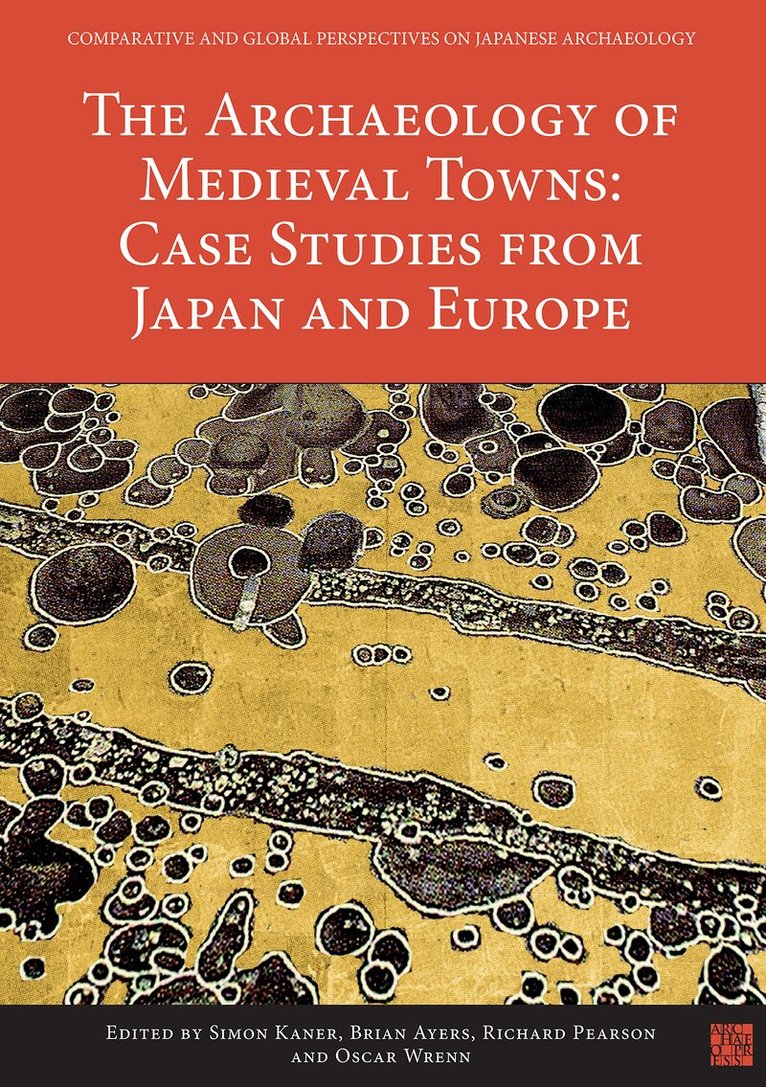
Archaeology of Medieval Towns: Case Studies from Japan and Europe
Häftad, Engelska, 2020
486 kr
Skickas
In recent years, major new archaeological discoveries have redefined the development of towns and cities in the Japanese archipelago. The uncovering of the plans of major port towns such as Sakai, Kusado Sengen and Ichijōdani, and the revealing of early phases in the development of cities such as Kamakura and Hakata provide an important new resource in understanding the cultural and economic processes which shaped medieval Japan.This fully illustrated book provides a sampler of these findings for a western audience. The new discoveries from Japan are set in context of medieval archaeology beyond Japan by accompanying essays from leading European specialists.The global significance of Japanese medieval archaeology is assessed through comparing the development of towns in Japan and northern Europe. The medieval period in Japan and northwest Europe saw urban growth with towns not only providing centres of administration but also fostering economic development. The pressures which led to such growth, however, be they political or social, were universal in character. following basic requirements of food, shelter, security and spiritual nourishment, towns provided commercial infrastructures, transport and storage facilities, and the setting for trade, craft specialists and art.Chapters include ‘The archaeology of medieval towns in Japan and europe: an introduction’ (Brian Ayers and Simon Kaner); ‘Permanent urban frameworks (‘armature’) and economic networks in northern France c.700 – c.1000’ (Henri Galinié); ‘Medieval urbanism and culture in the cities of the Baltic: with a comparison between Lübeck, Germany, and Sakai, Japan’ (Manfred Gläser); ‘The development of Hakata as a medieval port town’ (Ōba Kōji); ‘The establishment and transformation of Japan’s medieval capital, Kamakura’ (Oka Yōichirō); ‘Ichijōdani: the archaeology of a Japanese medieval castle town’ (Ono Masatoshi); ‘Japanese medieval trading towns: Sakai and Tosaminato’ (Richard Pearson); and ‘Medieval ceramic production in the aegean, 1100 – 1600 AD: some considerations in an east-west perspective’ (Joanita Vroom).
1 325 kr
Skickas inom 5-8 vardagar
The German Ocean examines archaeological and historical evidence for the development of economies and societies around the North Sea from the beginning of the twelfth century until the mid sixteenth century. It draws in material from Scandinavia to Normandy and from Scotland to the Thames estuary. While largely concerned with the North Sea littoral, when necessary it takes account of adjacent areas such as the Baltic or inland hinterlands. The North Sea is often perceived as a great divide, divorcing the British Isles from continental Europe. In cultural terms, however, it has always acted more as a lake, supporting communities around its fringes which have frequently had much in common. This is especially true of the medieval period when trade links, fostered in the two centuries prior to 1100, expanded in the 12th and 13th centuries to ensure the development of maritime societies whose material culture was often more remarkable for its similarity across distance than for its diversity. Geography, access to raw materials and political expediency could nevertheless combine to provide distinctive regional variations.Economies developed more rapidly in some areas than others; local solutions to problems produced urban and rural environments of different aspect; the growth, and sometimes decline, of towns and ports was often dictated by local as much as wider factors.This book explores evidence for this 'diverse commonality' through the historic environment of the North Sea region with the intention that it will be of interest not only to historians and archaeologists but to those who live and work within the historic environment. This environment is a common European resource with much to contribute to a sustainable future - the book provides an archaeological contribution to the understanding of that resource.