Brian D. Joseph - Böcker
Visar alla böcker från författaren Brian D. Joseph. Handla med fri frakt och snabb leverans.
11 produkter
11 produkter
512 kr
Skickas inom 7-10 vardagar
This collection of nine original syntactic studies carried out within the framework for syntactic theory and description known as Relational Grammar provides a state-of-the-art survey of this and allied fields. In relational theory, grammatical relations such as subject, direct object, and predicate are taken to be theoretical primitives which permit the definition of formal objects called Arcs, the fundamental building blocks of syntactic structures. Edited by Paul M. Postal and Brian D. Joseph, this volume is the third in a series highlighting work in Relational Grammar. It extends the foundational studies of the first two volumes to refine and modify the insights, analyses, and theoretical devices developed in earlier connections, while at the same time providing support for some of the earlier constructs and claims. Of the nine papers, four treat various aspects of advancements to and demotions from indirect object; three deal with raising and clause union constructions, in which initial immediate constituents of one structure are nonimmediate constituents of another; and two are concerned with problems in the description and formalization of verbal agreement systems. The nine articles cover languages ranging from Chamorro to English, French, Georgian, Greek, Japanese, Kek'chi, Korean, Southern Tiwa, Spanish, and Tzotzil.
26 257 kr
Skickas inom 10-15 vardagar
Historical linguistics is concerned with the way languages change over time, looking both at the distant past and at the present day, and taking as its point of departure the truism that the only constant in language is that it is always changing. This new title from Routledge’s Major Works series, Critical Concepts in Linguistics, assembles in six volumes foundational and canonical pieces, together with the very best cutting-edge research, from this rich and flourishing field.With a full index, together with a comprehensive introduction, newly written by the editors, which places the collected material in its intellectual context, Historical Linguistics is an essential work of reference. The collection will be particularly useful as an essential database allowing scattered and often fugitive material to be easily located. It will also be welcomed as a crucial tool permitting rapid access to less familiar—and sometimes overlooked—texts. It is a vital one-stop research and pedagogic resource.
The Synchrony and Diachrony of the Balkan Infinitive
A Study in Areal, General and Historical Linguistics
Häftad, Engelska, 2009
550 kr
Skickas inom 7-10 vardagar
This study offers a comprehensive and illuminating account of one of the characteristics shared to some degree by the languages of the Balkan peninsula - Greek, Albanian, Macedonian, Bulgarian, Serbo-Croatian and Romanian - namely the loss of the infinitive and its replacement by finite verb forms. Dr Joseph meticulously examines the documentary evidence for this loss and, in the light of his findings, many of the oversimplifications, misinterpretations and omissions in earlier accounts are rectified. Many of the issues raised in his discussion, for example how 'infinitive' or 'finiteness' should be defined, have important implications for synchronic syntactic theory and description. In addition, the study is of significance for diachronic linguistics, for it makes a valuable contribution to the debate on constraining possible syntactic changes and syntactic borrowing. This study will also offer insights to linguistics interested in areal typology, since it is one of the fullest accounts available.
2 101 kr
Skickas inom 7-10 vardagar
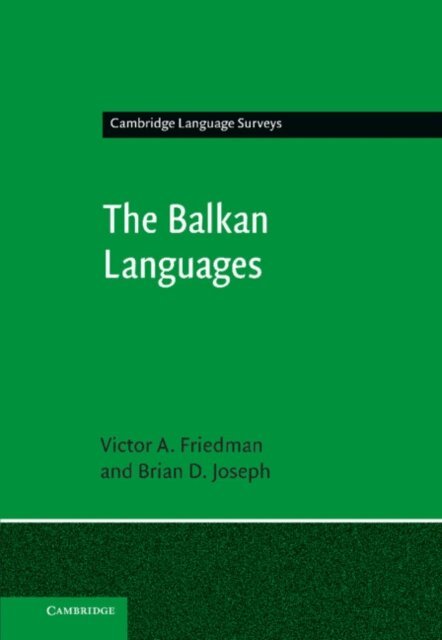
Southeast Europe's Balkan peninsula is home to numerous languages that have come to converge structurally and lexically, due to complex social factors involving contact among speakers of these languages, constituting a 'sprachbund'. This volume provides the first comprehensive, book-length survey of the Balkan languages in English. It covers the full range of languages involved in the Balkan convergence zone, including Albanian, Aromanian, Bulgarian, Gagauz, Greek, Judezmo, Macedonian, Meglenoromanian, Romani, Romanian, Torlak, and West Rumelian Turkish. Balkan convergences - 'Balkanisms' - are presented, considering the grammatical domains of phonetics, phonology, morphology, morphosyntax, syntax, semantics, pragmatics, and lexicon. It gives attention to relevant notions of contact linguistics and to the history of the field, while also introducing key conceptual innovations. Providing fresh data and perspectives on the most studied intense contact situation, this work is essential reading for anyone interested in Balkan languages. This title is also available as open access on Cambridge Core.
2 552 kr
Skickas inom 3-6 vardagar
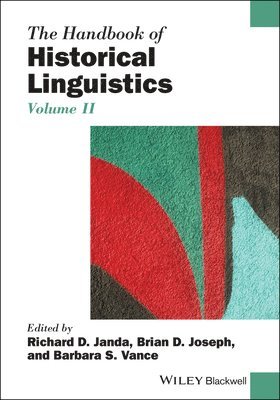
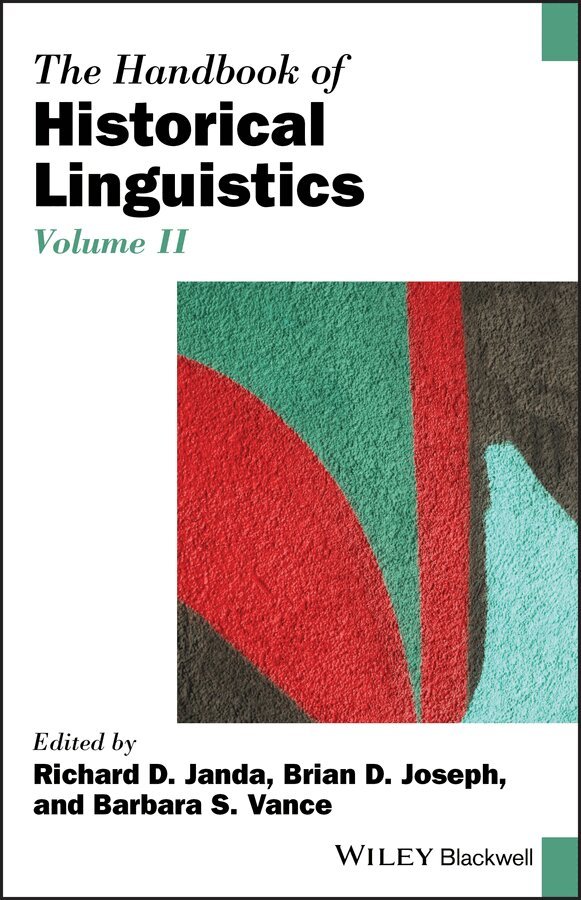
“The first volume of the Handbook of Historical Linguistics is the best-worn handbook among many in my office and even though it’s almost 20 years old, I still consult it often. Still, historical linguistics is a very different field today than it was in 2003 and this new volume fully reflects and engages with the state of the art. It’s a completely new book, a worthy successor, and I look forward to wearing out this second volume.”Joseph Salmons, University of Wisconsin–Madison, USA “This is an important resource for right now and far into the future. In its breadth and depth it has everything we could ask for and more, a comprehensive survey in 24 chapters written by the world’s foremost scholars. It unites time-honored fundamentals of historical linguistics and progressive lines of ongoing research.”Lyle Campbell, University of Hawai‘i at Mānoa, USA This brand-new, second volume of The Handbook of Historical Linguistics is a complement to the well-established first volume, initially published in 2003. It includes extended content allowing uniquely comprehensive coverage of the study of language(s) over time. Though it adds fresh perspectives on several topics previously treated in the first volume, this Handbook focuses on extensions of diachronic linguistics beyond those key issues. This Handbook provides readers with studies of language change whose perspectives range from comparisons of large open vs. small closed corpora, via creolistics and linguistic contact in general, to obsolescence and endangerment of languages. Written by leading scholars in their respective fields, the chapters of this Handbook cover new topics such as the origin of language, the evidence from language for reconstructing human prehistory, the relevance of the study of present-day language for studying language in the past, and the benefits of linguistic fieldwork for historical investigation. Unique to this volume is a chapter that discusses in detail a large number of highly specific predictions as to the future of a widely spoken language-variety, thereby focusing long-term attention on thirty changes in the lexicon, phonology, morphology, and morphosyntax of North American English. The Handbook of Historical Linguistics, Volume II, is an ideal book for undergraduate and graduate students in linguistics, researchers, and professional linguists, as well as all those interested in the history of particular languages and the history of language more generally.
569 kr
Skickas inom 7-10 vardagar
“The first volume of the Handbook of Historical Linguistics is the best-worn handbook among many in my office and even though it’s almost 20 years old, I still consult it often. Still, historical linguistics is a very different field today than it was in 2003 and this new volume fully reflects and engages with the state of the art. It’s a completely new book, a worthy successor, and I look forward to wearing out this second volume.”Joseph Salmons, University of Wisconsin–Madison, USA “This is an important resource for right now and far into the future. In its breadth and depth it has everything we could ask for and more, a comprehensive survey in 24 chapters written by the world’s foremost scholars. It unites time-honored fundamentals of historical linguistics and progressive lines of ongoing research.”Lyle Campbell, University of Hawai‘i at Mānoa, USA This brand-new, second volume of The Handbook of Historical Linguistics is a complement to the well-established first volume, initially published in 2003. It includes extended content allowing uniquely comprehensive coverage of the study of language(s) over time. Though it adds fresh perspectives on several topics previously treated in the first volume, this Handbook focuses on extensions of diachronic linguistics beyond those key issues. This Handbook provides readers with studies of language change whose perspectives range from comparisons of large open vs. small closed corpora, via creolistics and linguistic contact in general, to obsolescence and endangerment of languages. Written by leading scholars in their respective fields, the chapters of this Handbook cover new topics such as the origin of language, the evidence from language for reconstructing human prehistory, the relevance of the study of present-day language for studying language in the past, and the benefits of linguistic fieldwork for historical investigation. Unique to this volume is a chapter that discusses in detail a large number of highly specific predictions as to the future of a widely spoken language-variety, thereby focusing long-term attention on thirty changes in the lexicon, phonology, morphology, and morphosyntax of North American English. The Handbook of Historical Linguistics, Volume II, is an ideal book for undergraduate and graduate students in linguistics, researchers, and professional linguists, as well as all those interested in the history of particular languages and the history of language more generally.
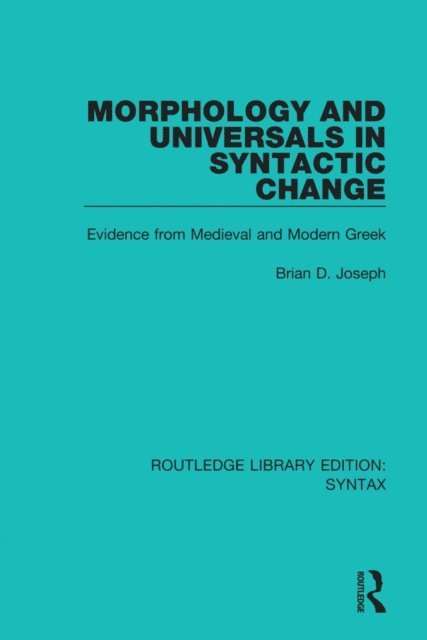
Morphology and Universals in Syntactic Change
Evidence from Medieval and Modern Greek
Inbunden, Engelska, 2016
2 288 kr
Skickas inom 10-15 vardagar
This book, first published in 1990, is a study of both the specific syntactic changes in the more recent stages of Greek and of the nature of syntactic change in general. Guided by the constraints and principles of Universal Grammar, this hypothesis of this study allows for an understanding of how these changes in Greek syntax occurred and so provides insight into the mechanism of syntactic change. This title will be of interest to students of language and linguistics.
Morphology and Universals in Syntactic Change
Evidence from Medieval and Modern Greek
Häftad, Engelska, 2018
565 kr
Skickas inom 10-15 vardagar
This book, first published in 1990, is a study of both the specific syntactic changes in the more recent stages of Greek and of the nature of syntactic change in general. Guided by the constraints and principles of Universal Grammar, this hypothesis of this study allows for an understanding of how these changes in Greek syntax occurred and so provides insight into the mechanism of syntactic change. This title will be of interest to students of language and linguistics.
Del 218 - Trends in Linguistics. Studies and Monographs [TiLSM]
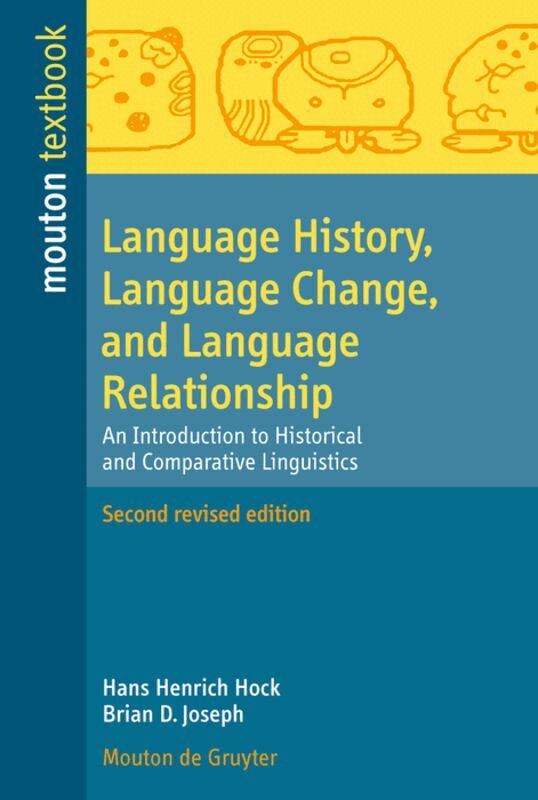
Language History, Language Change, and Language Relationship
An Introduction to Historical and Comparative Linguistics
Häftad, Engelska, 2009
515 kr
Skickas inom 7-10 vardagar
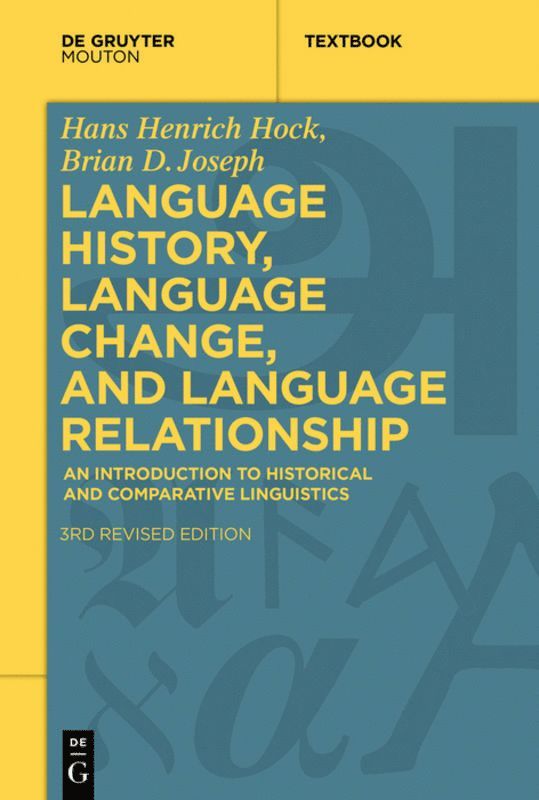
Why does language change? Why can we speak to and understand our parents but have trouble reading Shakespeare? Why is Chaucer's English of the fourteenth century so different from Modern English of the late twentieth century that the two are essentially different languages? Why are Americans and English 'one people divided by a common language'? And how can the language of Chaucer and Modern English - or Modern British and American English - still be called the same language? The present book provides answers to questions like these in a straightforward way, aimed at the non-specialist, with ample illustrations from both familiar and more exotic languages. Most chapters in this new edition have been reworked, with some difficult passages removed, other passages thoroughly rewritten, and several new sections added, e.g. on language and race and on Indian writing systems. Further, the chapter notes and bibliography have all been updated. The content is engaging, focusing on topics and issues that spark student interest. Its goals are broadly pedagogical and the level and presentation are appropriate for interested beginners with little or no background in linguistics. The language coverage for examples goes well beyond what is usual for books of this kind, with a considerable amount of data from various languages of India.
Language History, Language Change, and Language Relationship
An Introduction to Historical and Comparative Linguistics
Inbunden, Engelska, 2009
3 126 kr
Skickas inom 5-8 vardagar
Why does language change? Why can we speak to and understand our parents but have trouble reading Shakespeare? Why is Chaucer's English of the fourteenth century so different from Modern English of the late twentieth century that the two are essentially different languages? Why are Americans and English 'one people divided by a common language'? And how can the language of Chaucer and Modern English - or Modern British and American English - still be called the same language? The present book provides answers to questions like these in a straightforward way, aimed at the non-specialist, with ample illustrations from both familiar and more exotic languages. Most chapters in this new edition have been reworked, with some difficult passages removed, other passages thoroughly rewritten, and several new sections added, e.g. on language and race and on Indian writing systems. Further, the chapter notes and bibliography have all been updated. The content is engaging, focusing on topics and issues that spark student interest. Its goals are broadly pedagogical and the level and presentation are appropriate for interested beginners with little or no background in linguistics. The language coverage for examples goes well beyond what is usual for books of this kind, with a considerable amount of data from various languages of India.
Language History, Language Change, and Language Relationship
An Introduction to Historical and Comparative Linguistics
Häftad, Engelska, 2019
469 kr
Skickas inom 5-8 vardagar
Why does language change? Why can we speak to and understand our parents but have trouble reading Shakespeare? Why is Chaucer's English of the fourteenth century so different from Modern English of the late twentieth century that the two are essentially different languages? Why are Americans and English 'one people divided by a common language'? And how can the language of Chaucer and Modern English - or Modern British and American English - still be called the same language? The present book provides answers to questions like these in a straightforward way, aimed at the non-specialist, with ample illustrations from both familiar and more exotic languages. Most chapters in this new edition have been reworked, with some difficult passages removed, other passages thoroughly rewritten, and several new sections added, e.g. on the regularity of sound change and its importance for general historical-comparative linguistics. Further, the chapter notes and bibliography have all been updated. The content is engaging, focusing on topics and issues that spark student interest. Its goals are broadly pedagogical and the level and presentation are appropriate for interested beginners with little or no background in linguistics. The language coverage for examples goes well beyond what is usual for books of this kind, with a considerable amount of data from various languages of India.