Brian L. Strom - Böcker
Visar alla böcker från författaren Brian L. Strom. Handla med fri frakt och snabb leverans.
9 produkter
9 produkter
1 632 kr
Skickas inom 10-15 vardagar
This volume is a summary of material presented in the course given in the International School of Phannacology on "Drug Epidemiology and Post-Marketing Surveillance" between September 27 and October 8, 1990, at the "Ettore Majorana Center for Scientific Culture" in Erice, Sicily. The course, which was a NATO Advanced Study Institute, included lectures and workshops presented by experts in the new field of phannacoepidemiology. The material covered includes various approaches to spontaneous reporting of adverse drug reactions, including aggregate approaches, such as those used in France, and detailed analyses of individual reports, such as that done in The Netherlands and in Sweden. Also, included are studies using traditional epidemiology methods. In addition, modern pharmacoepidemiology makes considerable use of automated databases. As such, information is presented on their use as well. Phannacoepidemiology started in hospitals and some of the newest work in the field is returning to the hospital as a site for studies. Material on these topics was presented as well. Finally, selected new methodologic developments were outlined in specific examples presented that were of regulatory and commercial importance. This new field of phannacoepidemiology is exploding in interest internationally. Evidence of this is the increasing development of pharmacoepidemiology programs in industry, medical schools, pharmacy schools, and schools of public health. Also, there is a new International Society ofPhannacoepidemiology. Practitioners in this field tend to specialize in either analyses of spontaneous reporting or the use of formal epidemiologic techniques.
606 kr
Tillfälligt slut
The vaccine used to protect humans against the anthrax disease, called Anthrax Vaccine Adsorbed (AVA), was licensed in 1970. It was initially used to protect people who might be exposed to anthrax where they worked, such as veterinarians and textile plant workers who process animal hair. When the U. S. military began to administer the vaccine, then extended a plan for the mandatory vaccination of all U. S. service members, some raised concerns about the safety and efficacy of AVA and the manufacture of the vaccine. In response to these and other concerns, Congress directed the Department of Defense to support an independent examination of AVA. The Anthrax Vaccine: Is It Safe? Does It Work? reports the studya (TM)s conclusion that the vaccine is acceptably safe and effective in protecting humans against anthrax. The book also includes a description of advances needed in main areas: improving the way the vaccine is now used, expanding surveillance efforts to detect side effects from its use, and developing a better vaccine.
558 kr
Tillfälligt slut
Despite efforts over the past several decades to reduce sodium intake in the United States, adults still consume an average of 3,400 mg of sodium every day. A number of scientific bodies and professional health organizations, including the American Heart Association, the American Medical Association, and the American Public Health Association, support reducing dietary sodium intake. These organizations support a common goal to reduce daily sodium intake to less than 2,300 milligrams and further reduce intake to 1,500 mg among persons who are 51 years of age and older and those of any age who are African-American or have hypertension, diabetes, or chronic kidney disease. A substantial body of evidence supports these efforts to reduce sodium intake. This evidence links excessive dietary sodium to high blood pressure, a surrogate marker for cardiovascular disease (CVD), stroke, and cardiac-related mortality. However, concerns have been raised that a low sodium intake may adversely affect certain risk factors, including blood lipids and insulin resistance, and thus potentially increase risk of heart disease and stroke.In fact, several recent reports have challenged sodium reduction in the population as a strategy to reduce this risk. Sodium Intake in Populations recognizes the limitations of the available evidence, and explains that there is no consistent evidence to support an association between sodium intake and either a beneficial or adverse effect on most direct health outcomes other than some CVD outcomes (including stroke and CVD mortality) and all-cause mortality. Some evidence suggested that decreasing sodium intake could possibly reduce the risk of gastric cancer. However, the evidence was too limited to conclude the converse-that higher sodium intake could possibly increase the risk of gastric cancer. Interpreting these findings was particularly challenging because most studies were conducted outside the United States in populations consuming much higher levels of sodium than those consumed in this country. Sodium Intake in Populations is a summary of the findings and conclusions on evidence for associations between sodium intake and risk of CVD-related events and mortality.
Eliminating the Public Health Problem of Hepatitis B and C in the United States
Phase One Report
Häftad, Engelska, 2016
773 kr
Skickas
Hepatitis B and C cause most cases of hepatitis in the United States and the world. The two diseases account for about a million deaths a year and 78 percent of worlda (TM)s hepatocellular carcinoma and more than half of all fatal cirrhosis. In 2013 viral hepatitis, of which hepatitis B virus (HBV) and hepatitis C virus (HCV) are the most common types, surpassed HIV and AIDS to become the seventh leading cause of death worldwide. The world now has the tools to prevent hepatitis B and cure hepatitis C. Perfect vaccination could eradicate HBV, but it would take two generations at least. In the meantime, there is no cure for the millions of people already infected. Conversely, there is no vaccine for HCV, but new direct-acting antivirals can cure 95 percent of chronic infections, though these drugs are unlikely to reach all chronically-infected people anytime soon. This report, the first of two, examines the feasibility of hepatitis B and C elimination in the United States and identifies critical success factors. The phase two report will outline a strategy for meeting the elimination goals discussed in this report.
Veterans, Prescription Opioids and Benzodiazepines, and Mortality, 2007–2019
Three Target Trial Emulations
Häftad, Engelska, 2025
426 kr
Tillfälligt slut
Veterans are more likely than non-veterans to experience pain, trauma, and mental health challenges due to training and combat-related service. Treatment often results in the prescription of opioid and benzodiazepine medications.In 2024, the National Academies were tasked with convening a committee of experts to evaluate the effects of these medications on all-cause mortality of veterans, including suicide, regardless of whether information relating to such deaths was reported to the U.S. Centers for Disease Control and Prevention.The resulting report examines newly dispensed opioid pharmacotherapy in veterans without and with current benzodiazepine pharmacotherapy; varying levels of the initial baseline dosage and dosage escalation of dispensed opioid pharmacotherapy; and newly dispensed benzodiazepine compared to alternative non-benzodiazepine pharmacotherapy in veterans with consistent opioid pharmacotherapy.
1 923 kr
Skickas inom 7-10 vardagar
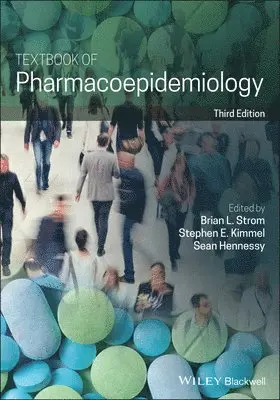
The Textbook of Pharmacoepidemiology provides a streamlined text for evaluating the safety and effectiveness of medicines. It includes a brief introduction to pharmacoepidemiology as well as sections on data sources, methodology and applications. Each chapter includes key points, case studies and essential references. One-step resource to gain understanding of the subject of pharmacoepidemiology at an affordable priceGives a perspective on the subject from academia, pharmaceutical industry and regulatory agenciesDesigned for students with basic knowledge of epidemiology and public healthIncludes many case studies to illustrate pharmacoepidemiology in real clinical setting
3 245 kr
Skickas inom 11-20 vardagar
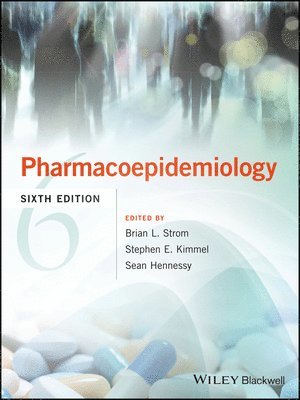
This classic, field-defining textbook, now in its sixth edition, provides the most comprehensive guidance available for anyone needing up-to-date information in pharmacoepidemiology. This edition has been fully revised and updated throughout and continues to provide a rounded view on all perspectives from academia, industry and regulatory bodies, addressing data sources, applications and methodologies with great clarity.
905 kr
Skickas inom 7-10 vardagar
Pharmacoepidemiology originally arose from the union of the fields of clinical pharmacology and epidemiology. Pharmacoepidemiology studies the use of and the effects of medical products in large numbers of people and applies the methods of epidemiology to the content area of clinical pharmacology. This field represents the science underlying studies of the effects of medical products (such as drugs, biologicals, and devices) in real world use. Strom’s Textbook of Pharmacoepidemiology meets the increasing need for people to be trained in the field. Designed to meet the need of students, this textbook offers an approach that focuses on the core of the discipline, providing a focused educational resource for students. The book is designed for students at all levels: upper-level undergraduates, graduate students, post-doctoral fellows, and others who are learning the field. Case examples feature in most chapters, and all chapters include key points and a list of further reading. Fully revised and updated throughout, Textbook of Pharmacoepidemiology, 3rd edition is a useful introduction and resource for students of pharmacoepidemiology, both those enrolled in formal classes and those learning in “the real world,” who will respond to the challenges that they encounter.
1 632 kr
Skickas inom 10-15 vardagar
This volume is a summary of material presented in the course given in the International School of Phannacology on "Drug Epidemiology and Post-Marketing Surveillance" between September 27 and October 8, 1990, at the "Ettore Majorana Center for Scientific Culture" in Erice, Sicily. The course, which was a NATO Advanced Study Institute, included lectures and workshops presented by experts in the new field of phannacoepidemiology. The material covered includes various approaches to spontaneous reporting of adverse drug reactions, including aggregate approaches, such as those used in France, and detailed analyses of individual reports, such as that done in The Netherlands and in Sweden. Also, included are studies using traditional epidemiology methods. In addition, modern pharmacoepidemiology makes considerable use of automated databases. As such, information is presented on their use as well. Phannacoepidemiology started in hospitals and some of the newest work in the field is returning to the hospital as a site for studies. Material on these topics was presented as well. Finally, selected new methodologic developments were outlined in specific examples presented that were of regulatory and commercial importance. This new field of phannacoepidemiology is exploding in interest internationally. Evidence of this is the increasing development of pharmacoepidemiology programs in industry, medical schools, pharmacy schools, and schools of public health. Also, there is a new International Society ofPhannacoepidemiology. Practitioners in this field tend to specialize in either analyses of spontaneous reporting or the use of formal epidemiologic techniques.