Brian Wampler - Böcker
Visar alla böcker från författaren Brian Wampler. Handla med fri frakt och snabb leverans.
8 produkter
8 produkter
1 200 kr
Skickas inom 5-8 vardagar
Participatory Budgeting continues to spread across the globe as government officials and citizens adopt this innovative democratic program in the hopes of strengthening accountability, civil society, and well-being. Governments often adapt PB's basic program design to meet local needs, thus creating wide variation in how PB programs function. Some programs retain features of radical democracy, others focus on community mobilization, and yet other programs seek to promote participatory development. Participatory Budgeting in Global Perspective provides a theoretical and empirical explanation to account for widespread variation in PB's adoption, adaptation, and impacts. This book develops six "PB types" to account for the wide variation in how PB programs function as well as the outcomes they produce. To illustrate the similar patterns across the globe, four empirical chapters present a rich set of case studies that illuminate the wide differences among these programs; chapters are organized regionally, with chapters on Latin America, Asia, Sub-Saharan Africa, Europe, and North America. By organizing the chapters regionally, it becomes clear that there are temporal, spatial, economic, and organizational factors that produce different programs across regions, but similar programs within each region. A key empirical finding is that the change in PB rules and design is now leading to significant differences in the outcomes these programs produce. We find that some programs successfully promote accountability, expand civil society, and improve well-being but, too often, researchers do not have any evidence tying PB to significant social or political change.
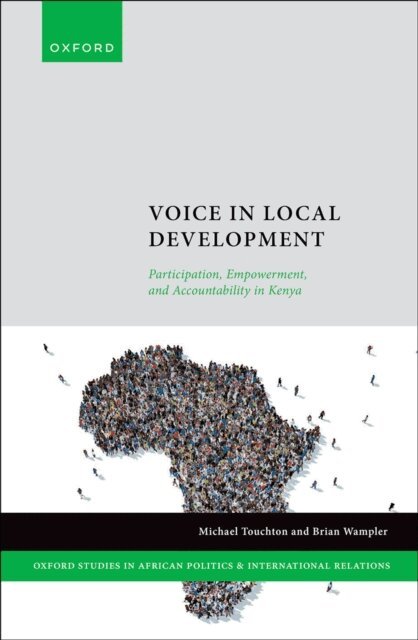
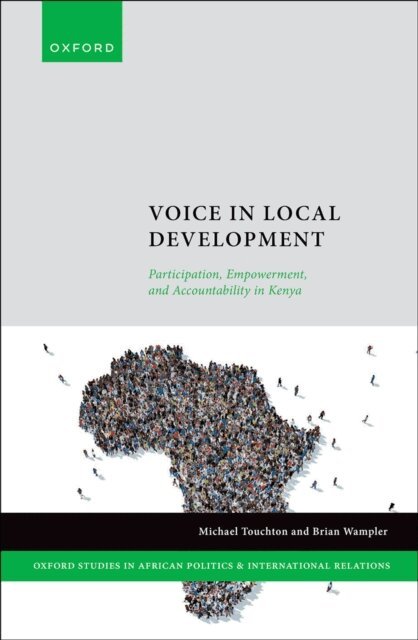
Voice in Local Development
Participation, Empowerment, and Accountability in Kenya
Inbunden, Engelska, 2025
1 886 kr
Skickas inom 3-6 vardagar
Many governments in semi-democratic regimes have adopted participatory democratic institutions to promote development and accountability. But limited resources, weak civil society, and a history of authoritarian politics make building subnational democratic institutions daunting. This book addresses several important questions surrounding participatory democratic institutions: do participatory institutions expand accountability, empower citizens, and advance development in these environments? Through administering a survey with embedded experiments surrounding citizens' development policy preferences to over 11,000 respondents in five Kenyan counties, Touchton and Wampler collect parallel qualitative data through participant observation and over 80 elite interviews and find limited evidence for transformative change from Kenyan PB. This book makes several contributions to advance academic and policy debates on participatory institutions and their impact on governance, accountability, democracy. First, it identifies the vital importance of competitive elections within representative democracy to empower citizens and CSOs as part of the broader causal chain leading to improvements in governance, accountability, and democracy. Next, it develops arguments for how three factors--a new socio-political context, changes to core operational rules, and different configurations of PB actors--interact to influence how PB programs function. Finally, it helps policymakers by redefining the parameters of the types of outcomes that are likely to emerge from new PB programs. This approach will be widely read among policymakers in national and local governments, international organizations, such as the World Bank, DFID, USAID, and international advocacy organizations.Oxford Studies in African Politics and International Relations is a series for scholars and students working on African politics and International Relations and related disciplines. Volumes concentrate on contemporary developments in African political science, political economy, and International Relations, such as electoral politics, democratization, decentralization, gender and political representation, the political impact of natural resources, the dynamics and consequences of conflict, comparative political thought, and the nature of the continent's engagement with the East and West. Comparative and mixed methods work is particularly encouraged. Case studies are welcomed but should demonstrate the broader theoretical and empirical implications of the study and its wider relevance to contemporary debates. The focus of the series is on sub-Saharan Africa, although proposals that explain how the region engages with North Africa and other parts of the world are of interest.Series Editors: Nic Cheeseman (University of Birmingham), Peace Medie (University of Bristol), and Ricardo Soares de Oliveira (University of Oxford)
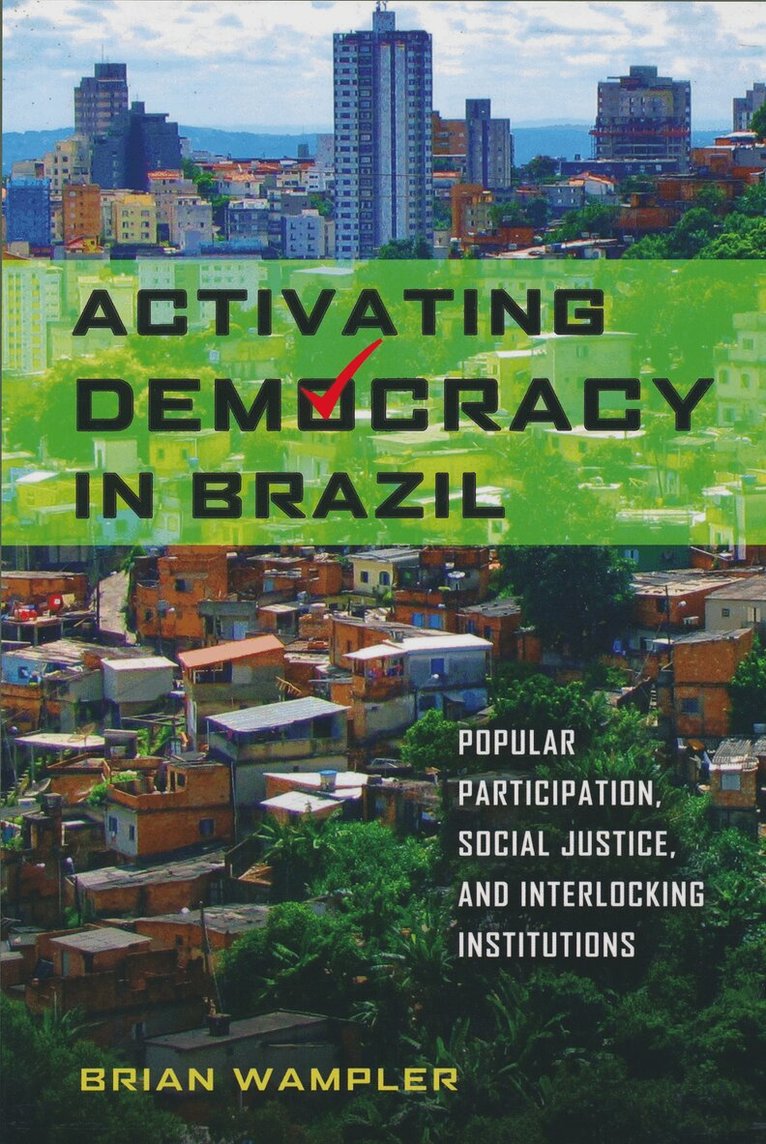
Activating Democracy in Brazil
Popular Participation, Social Justice, and Interlocking Institutions
Häftad, Engelska, 2015
418 kr
Skickas inom 10-15 vardagar
In 1988, Brazil's Constitution marked the formal establishment of a new democratic regime. In the ensuing two and a half decades, Brazilian citizens, civil society organizations, and public officials have undertaken the slow, arduous task of building new institutions to ensure that Brazilian citizens have access to rights that improve their quality of life, expand their voice and vote, change the distribution of public goods, and deepen the quality of democracy. Civil society activists and ordinary citizens now participate in a multitude of state-sanctioned institutions, including public policy management councils, public policy conferences, participatory budgeting programs, and legislative hearings. Activating Democracy in Brazil examines how the proliferation of democratic institutions in Belo Horizonte, Brazil, has transformed the way in which citizens, CSOs, and political parties work together to change the existing state.According to Wampler, the 1988 Constitution marks the formal start of the participatory citizenship regime, but there has been tremendous variation in how citizens and public officials have carried it out. This book demonstrates that the variation results from the interplay of five factors: state formation, the development of civil society, government support for citizens' use of their voice and vote, the degree of public resources available for spending on services and public goods, and the rules that regulate forms of participation, representation, and deliberation within participatory venues. By focusing on multiple democratic institutions over a twenty-year period, this book illustrates how the participatory citizenship regime generates political and social change.
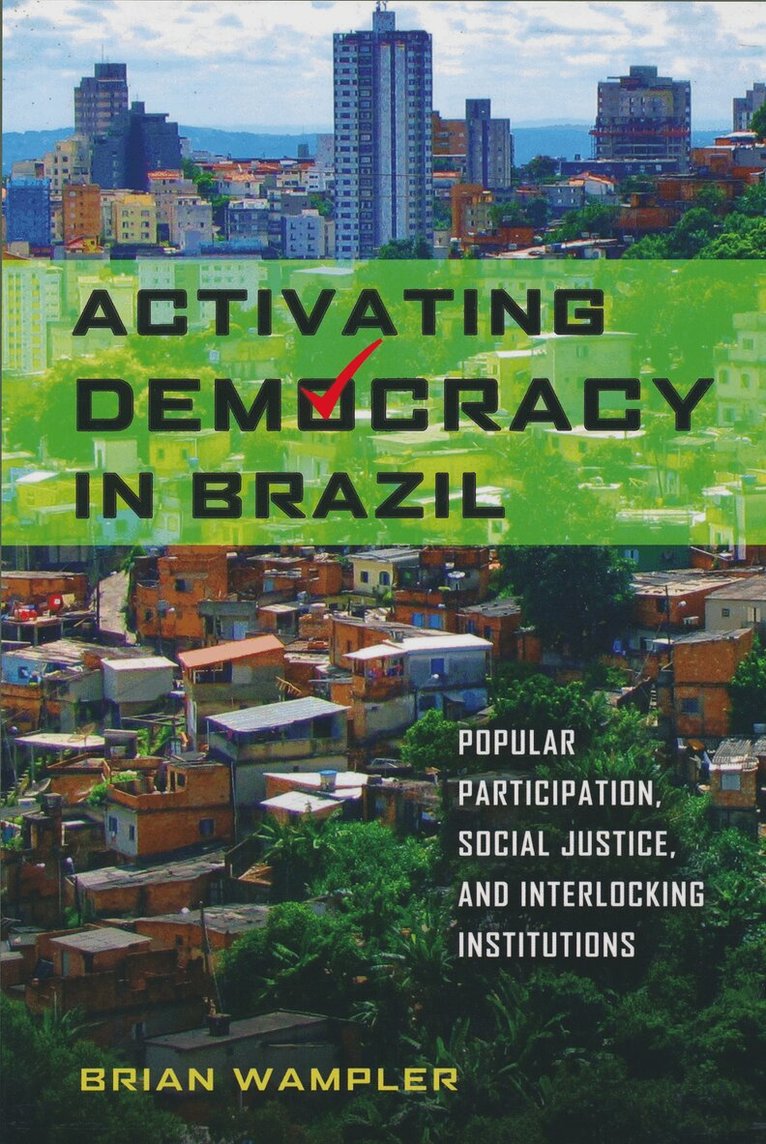
Activating Democracy in Brazil
Popular Participation, Social Justice, and Interlocking Institutions
Inbunden, Engelska, 2024
1 375 kr
Skickas inom 10-15 vardagar
In 1988, Brazil's Constitution marked the formal establishment of a new democratic regime. In the ensuing two and a half decades, Brazilian citizens, civil society organizations, and public officials have undertaken the slow, arduous task of building new institutions to ensure that Brazilian citizens have access to rights that improve their quality of life, expand their voice and vote, change the distribution of public goods, and deepen the quality of democracy. Civil society activists and ordinary citizens now participate in a multitude of state-sanctioned institutions, including public policy management councils, public policy conferences, participatory budgeting programs, and legislative hearings. Activating Democracy in Brazil examines how the proliferation of democratic institutions in Belo Horizonte, Brazil, has transformed the way in which citizens, CSOs, and political parties work together to change the existing state.According to Wampler, the 1988 Constitution marks the formal start of the participatory citizenship regime, but there has been tremendous variation in how citizens and public officials have carried it out. This book demonstrates that the variation results from the interplay of five factors: state formation, the development of civil society, government support for citizens' use of their voice and vote, the degree of public resources available for spending on services and public goods, and the rules that regulate forms of participation, representation, and deliberation within participatory venues. By focusing on multiple democratic institutions over a twenty-year period, this book illustrates how the participatory citizenship regime generates political and social change.
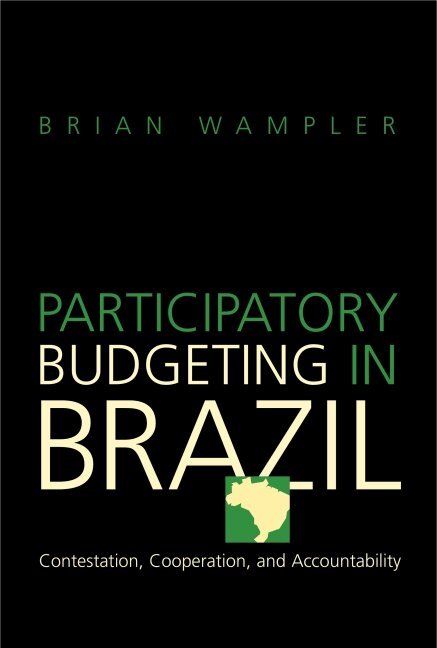
Participatory Budgeting in Brazil
Contestation, Cooperation, and Accountability
Häftad, Engelska, 2010
502 kr
Skickas inom 5-8 vardagar
As Brazil and other countries in Latin America turned away from their authoritarian past and began the transition to democracy in the 1980s and 1990s, interest in developing new institutions to bring the benefits of democracy to the citizens in the lower socioeconomic strata intensified, and a number of experiments were undertaken. Perhaps the one receiving the most attention has been Participatory Budgeting (PB), first launched in the southern Brazilian city of Porto Alegre in 1989 by a coalition of civil society activists and Workers’ Party officials. PB quickly spread to more than 250 other municipalities in the country, and it has since been adopted in more than twenty countries worldwide. Most of the scholarly literature has focused on the successful case of Porto Alegre and has neglected to analyze how it fared elsewhere.In this first rigorous comparative study of the phenomenon, Brian Wampler draws evidence from eight municipalities in Brazil to show the varying degrees of success and failure PB has experienced. He identifies why some PB programs have done better than others in achieving the twin goals of ensuring governmental accountability and empowering citizenship rights for the poor residents of these cities in the quest for greater social justice and a well-functioning democracy. Conducting extensive interviews, applying a survey to 650 PB delegates, doing detailed analysis of budgets, and engaging in participant observation, Wampler finds that the three most important factors explaining the variation are the incentives for mayoral administrations to delegate authority, the way civil society organizations and citizens respond to the new institutions, and the particular rule structure that is used to delegate authority to citizens.
1 442 kr
Skickas inom 7-10 vardagar
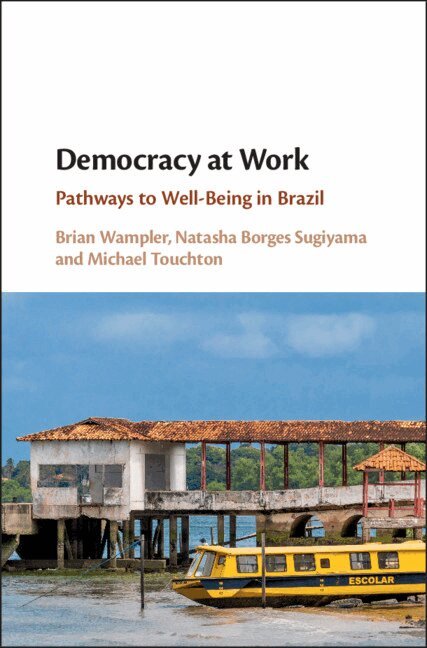
One of the greatest challenges in the twenty-first century is to address large, deep, and historic deficits in human development. Democracy at Work explores a crucial question: how does democracy, with all of its messy, contested, and, time-consuming features, advance well-being and improve citizens' lives? Professors Brian Wampler, Natasha Borges Sugiyama, and Michael Touchton argue that differences in the local robustness of three democratic pathways - participatory institutions, rights-based social programs, and inclusive state capacity - best explain the variation in how democratic governments improve well-being. Using novel data from Brazil and innovative analytic techniques, the authors show that participatory institutions permit citizens to express voice and exercise vote, inclusive social programs promote citizenship rights and access to public resources, and more capable local states use public resources according to democratic principles of rights protections and equal access. The analysis uncovers how democracy works to advance capabilities related to poverty, health, women's empowerment, and education.
449 kr
Skickas
One of the greatest challenges in the twenty-first century is to address large, deep, and historic deficits in human development. Democracy at Work explores a crucial question: how does democracy, with all of its messy, contested, and, time-consuming features, advance well-being and improve citizens' lives? Professors Brian Wampler, Natasha Borges Sugiyama, and Michael Touchton argue that differences in the local robustness of three democratic pathways - participatory institutions, rights-based social programs, and inclusive state capacity - best explain the variation in how democratic governments improve well-being. Using novel data from Brazil and innovative analytic techniques, the authors show that participatory institutions permit citizens to express voice and exercise vote, inclusive social programs promote citizenship rights and access to public resources, and more capable local states use public resources according to democratic principles of rights protections and equal access. The analysis uncovers how democracy works to advance capabilities related to poverty, health, women's empowerment, and education.
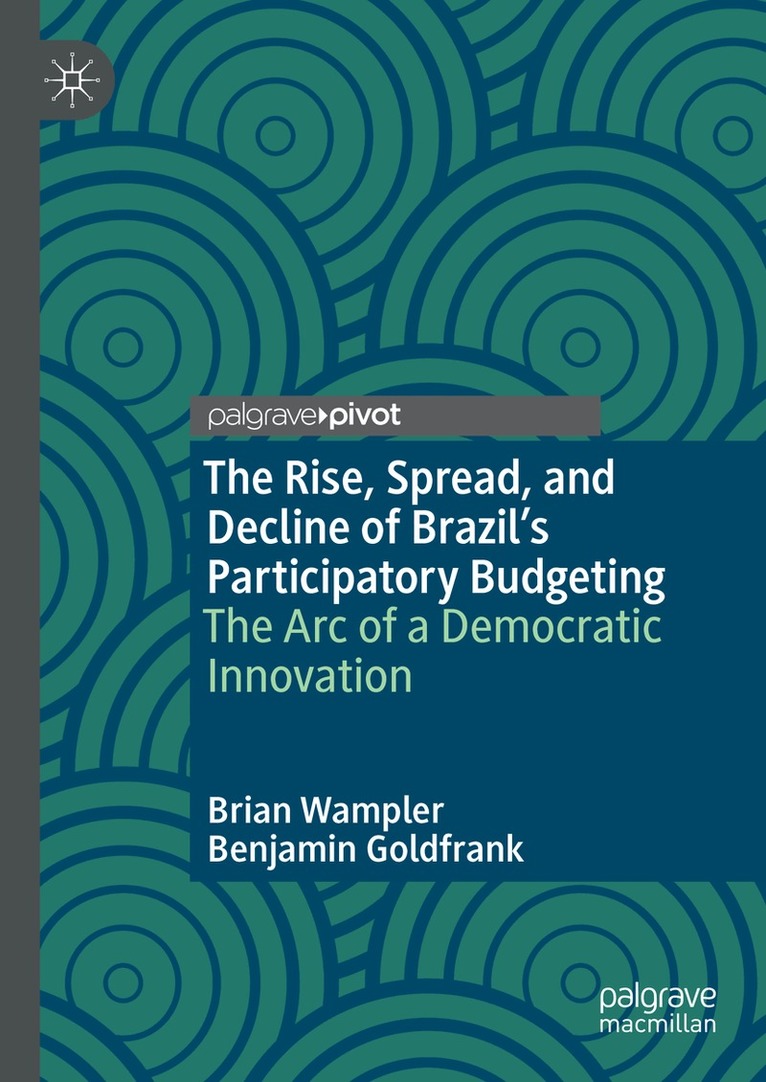
Rise, Spread, and Decline of Brazil’s Participatory Budgeting
The Arc of a Democratic Innovation
Inbunden, Engelska, 2022
692 kr
Skickas inom 10-15 vardagar
This book examines the rise, spread and decline of participatory budgeting in Brazil. It examines what the arc of the creation, spread, and decline of participatory budgeting tells us about the long-term viability and potential democratic impact of this innovative democratic institution as it spreads globally.