Michael Touchton - Böcker
Visar alla böcker från författaren Michael Touchton. Handla med fri frakt och snabb leverans.
5 produkter
5 produkter
1 200 kr
Skickas inom 5-8 vardagar
Participatory Budgeting continues to spread across the globe as government officials and citizens adopt this innovative democratic program in the hopes of strengthening accountability, civil society, and well-being. Governments often adapt PB's basic program design to meet local needs, thus creating wide variation in how PB programs function. Some programs retain features of radical democracy, others focus on community mobilization, and yet other programs seek to promote participatory development. Participatory Budgeting in Global Perspective provides a theoretical and empirical explanation to account for widespread variation in PB's adoption, adaptation, and impacts. This book develops six "PB types" to account for the wide variation in how PB programs function as well as the outcomes they produce. To illustrate the similar patterns across the globe, four empirical chapters present a rich set of case studies that illuminate the wide differences among these programs; chapters are organized regionally, with chapters on Latin America, Asia, Sub-Saharan Africa, Europe, and North America. By organizing the chapters regionally, it becomes clear that there are temporal, spatial, economic, and organizational factors that produce different programs across regions, but similar programs within each region. A key empirical finding is that the change in PB rules and design is now leading to significant differences in the outcomes these programs produce. We find that some programs successfully promote accountability, expand civil society, and improve well-being but, too often, researchers do not have any evidence tying PB to significant social or political change.
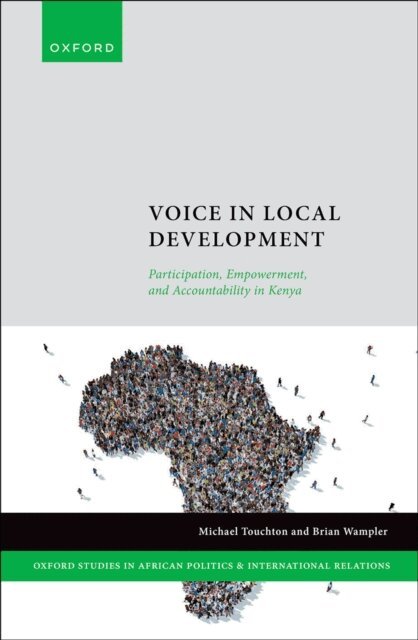
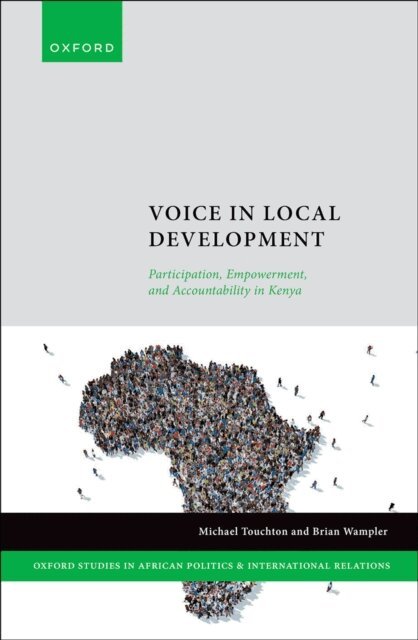
Voice in Local Development
Participation, Empowerment, and Accountability in Kenya
Inbunden, Engelska, 2025
1 886 kr
Skickas inom 3-6 vardagar
Many governments in semi-democratic regimes have adopted participatory democratic institutions to promote development and accountability. But limited resources, weak civil society, and a history of authoritarian politics make building subnational democratic institutions daunting. This book addresses several important questions surrounding participatory democratic institutions: do participatory institutions expand accountability, empower citizens, and advance development in these environments? Through administering a survey with embedded experiments surrounding citizens' development policy preferences to over 11,000 respondents in five Kenyan counties, Touchton and Wampler collect parallel qualitative data through participant observation and over 80 elite interviews and find limited evidence for transformative change from Kenyan PB. This book makes several contributions to advance academic and policy debates on participatory institutions and their impact on governance, accountability, democracy. First, it identifies the vital importance of competitive elections within representative democracy to empower citizens and CSOs as part of the broader causal chain leading to improvements in governance, accountability, and democracy. Next, it develops arguments for how three factors--a new socio-political context, changes to core operational rules, and different configurations of PB actors--interact to influence how PB programs function. Finally, it helps policymakers by redefining the parameters of the types of outcomes that are likely to emerge from new PB programs. This approach will be widely read among policymakers in national and local governments, international organizations, such as the World Bank, DFID, USAID, and international advocacy organizations.Oxford Studies in African Politics and International Relations is a series for scholars and students working on African politics and International Relations and related disciplines. Volumes concentrate on contemporary developments in African political science, political economy, and International Relations, such as electoral politics, democratization, decentralization, gender and political representation, the political impact of natural resources, the dynamics and consequences of conflict, comparative political thought, and the nature of the continent's engagement with the East and West. Comparative and mixed methods work is particularly encouraged. Case studies are welcomed but should demonstrate the broader theoretical and empirical implications of the study and its wider relevance to contemporary debates. The focus of the series is on sub-Saharan Africa, although proposals that explain how the region engages with North Africa and other parts of the world are of interest.Series Editors: Nic Cheeseman (University of Birmingham), Peace Medie (University of Bristol), and Ricardo Soares de Oliveira (University of Oxford)
1 442 kr
Skickas inom 7-10 vardagar
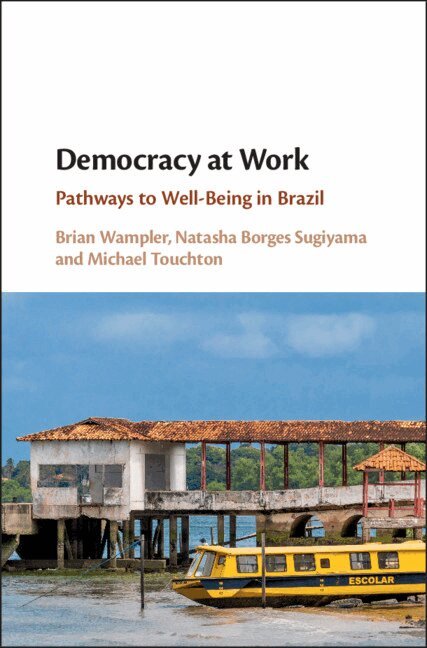
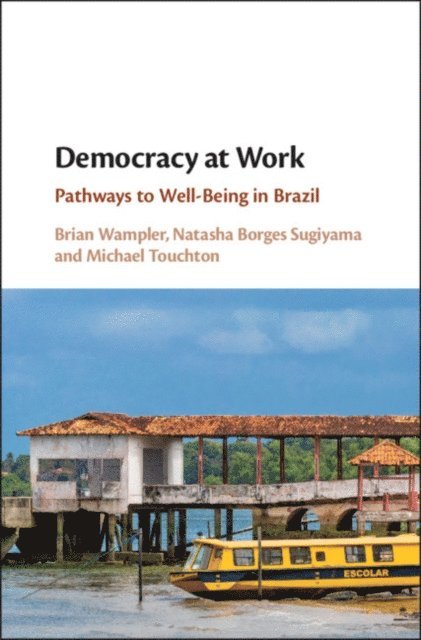
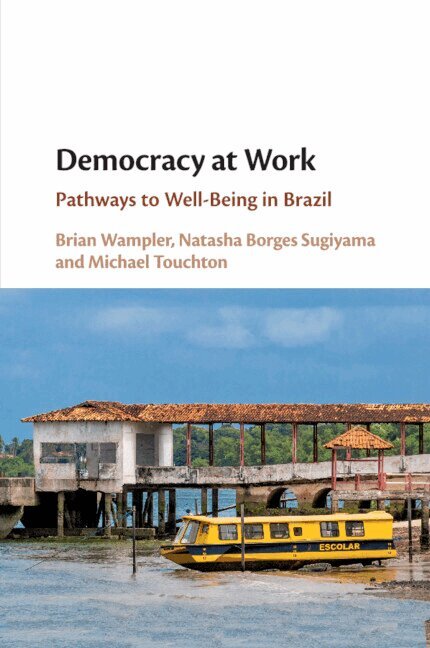
One of the greatest challenges in the twenty-first century is to address large, deep, and historic deficits in human development. Democracy at Work explores a crucial question: how does democracy, with all of its messy, contested, and, time-consuming features, advance well-being and improve citizens' lives? Professors Brian Wampler, Natasha Borges Sugiyama, and Michael Touchton argue that differences in the local robustness of three democratic pathways - participatory institutions, rights-based social programs, and inclusive state capacity - best explain the variation in how democratic governments improve well-being. Using novel data from Brazil and innovative analytic techniques, the authors show that participatory institutions permit citizens to express voice and exercise vote, inclusive social programs promote citizenship rights and access to public resources, and more capable local states use public resources according to democratic principles of rights protections and equal access. The analysis uncovers how democracy works to advance capabilities related to poverty, health, women's empowerment, and education.
449 kr
Skickas
One of the greatest challenges in the twenty-first century is to address large, deep, and historic deficits in human development. Democracy at Work explores a crucial question: how does democracy, with all of its messy, contested, and, time-consuming features, advance well-being and improve citizens' lives? Professors Brian Wampler, Natasha Borges Sugiyama, and Michael Touchton argue that differences in the local robustness of three democratic pathways - participatory institutions, rights-based social programs, and inclusive state capacity - best explain the variation in how democratic governments improve well-being. Using novel data from Brazil and innovative analytic techniques, the authors show that participatory institutions permit citizens to express voice and exercise vote, inclusive social programs promote citizenship rights and access to public resources, and more capable local states use public resources according to democratic principles of rights protections and equal access. The analysis uncovers how democracy works to advance capabilities related to poverty, health, women's empowerment, and education.
366 kr
Skickas inom 10-15 vardagar
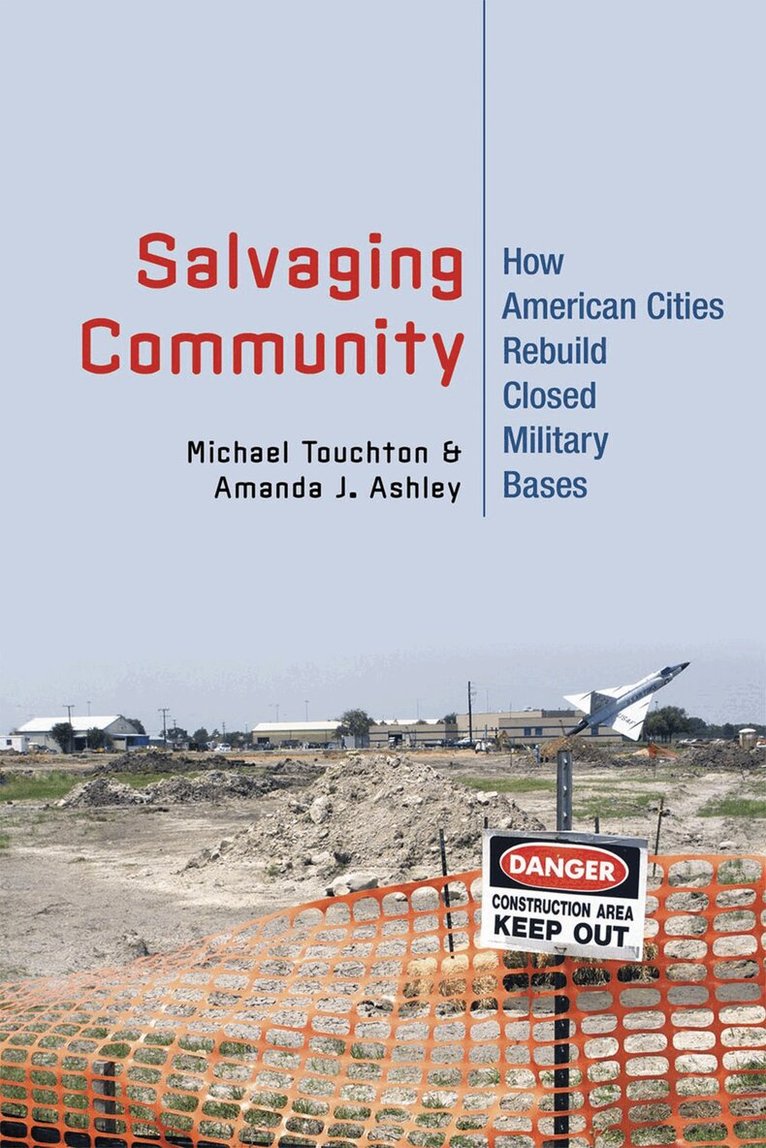
American communities face serious challenges when military bases close. But affected municipalities and metro regions are not doomed. Taking a long-term, flexible, and incremental approach, Michael Touchton and Amanda J. Ashley make strong recommendations for collaborative models of governance that can improve defense conversion dramatically and ensure benefits, even for low-resource municipalities. Communities can't control their economic situation or geographic location, but, as Salvaging Community shows, communities can control how they govern conversion processes geared toward redevelopment and reinvention.In Salvaging Community, Touchton and Ashley undertake a comprehensive evaluation of how such communities redevelop former bases following the Department of Defense's Base Realignment and Closure (BRAC) process. To do so, they developed the first national database on military redevelopment and combine quantitative national analyses with three, in-depth case studies in California. Salvaging Community thus fills the void in knowledge surrounding redevelopment of bases and the disparate outcomes that affect communities after BRAC. The data presented in Salvaging Community points toward effective strategies for collaborative governance that address the present-day needs of municipal officials, economic development agencies, and non-profit organizations working in post-BRAC communities. Defense conversion is not just about jobs or economic rebound, Touchton and Ashley argue. Emphasizing inclusion and sustainability in redevelopment promotes rejuvenated communities and creates places where people want to live. As localities and regions deal with the legacy of the post-Cold War base closings and anticipate new closures in the future, Salvaging Community presents a timely and constructive approach to both economic and community development at the close of the military-industrial era.