Brian Wong Yue Shun – författare
Visar alla böcker från författaren Brian Wong Yue Shun. Handla med fri frakt och snabb leverans.
2 produkter
2 produkter
314 kr
Skickas
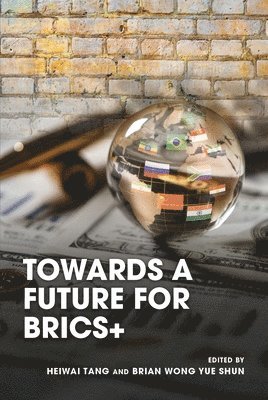
The BRICS+ countries include the original five members of Brazil, Russia, India, China, and South Africa, alongside the four new members Egypt, Ethiopia, Iran, and the United Arab Emirates, with Saudi Arabia also invited to join.The Global South both as a concept and the loosely defined collection of countries has gained increasing traction in public and policy discourse. BRICS+ countries may become precipitously important in economic, trade, and financial terms, as well as in the interplay of geopolitics and other multilateral institutions. Amid the growing role these powers play in the global food and energy supply chains, academics cannot avoid engaging with and reflecting upon the past, present, and future of the BRICS+ countries. This compendium draws upon scholars across numerous continents, spheres, and disciplines, examining the future of BRICS+ in a rigorous and evidence-informed manner to provide a robust and accurate assessment of both the strengths and weaknesses of BRICS+.While the energy, financial, and supply chain complementarities between its original five members are comparatively evident, with the entry of four new countries, questions have inevitably arisen over the tenability and coherence of the grouping, as well as the extent to which internal rifts and divergences can be managed. Many non-BRICS+ nations and observers remain cautious of the viability and desirability of BRICS+ as a force that could counterbalance the conventionally defined G7 countries. Though the significance of the BRICS+ as a geopolitical force remains to be fully seen, understanding BRICS+ would prove vital for policymakers and businesses across the world.
2 113 kr
Skickas inom 10-15 vardagar
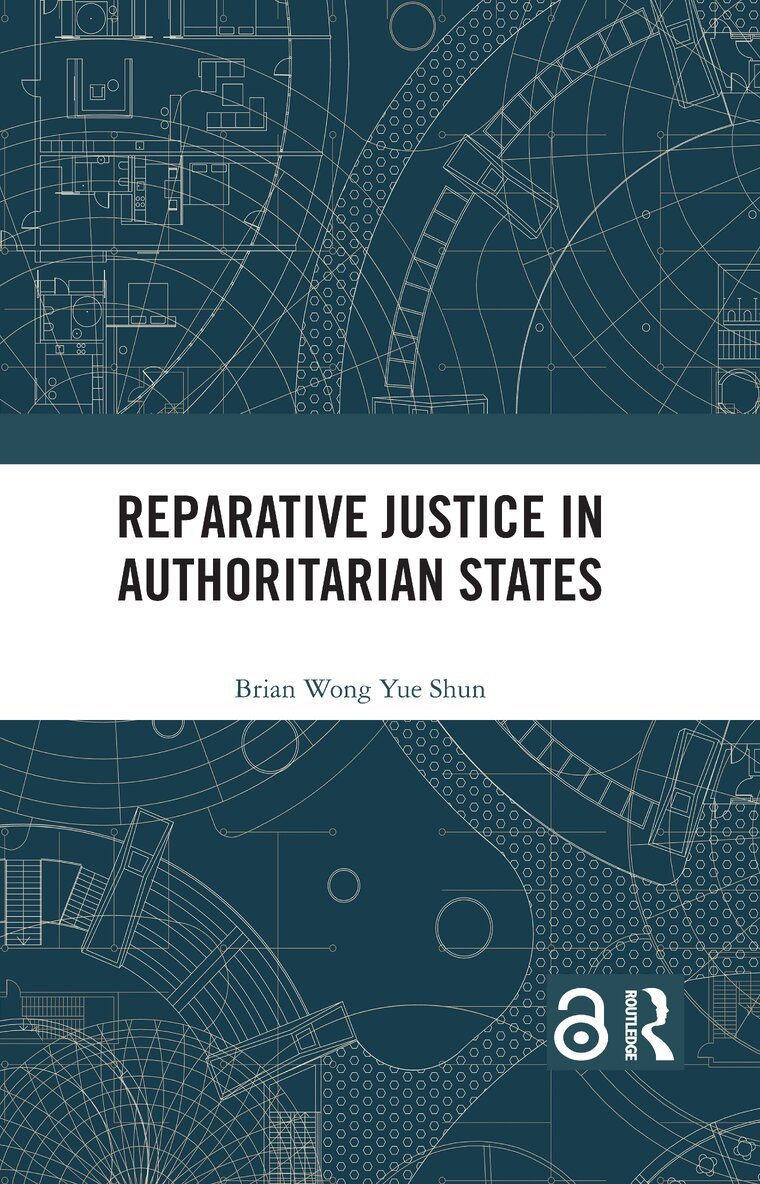
Wong examines the normative responsibilities of citizens in authoritarian states to address the injustices perpetrated by their governments. He challenges prevailing assumptions in political philosophy, arguing that certain citizens, by virtue of their agency and authorisation of their states, bear responsibilities to compensate, oppose, commemorate, or apologise over injustices that take place in such states.The book explores the relationship between authoritarian regimes and the citizens who enable or endure them, offering a fresh perspective on questions of reparative justice, moral agency, and accountability in contexts where state actors fail to meet their obligations. Drawing upon political philosophy, history, sociology, and international relations, it adopts a richly interdisciplinary approach for understanding citizen liability in authoritarian states. Case studies encompassing historical examples such as the Soviet Union, Indonesia under Suharto, South Korea under Park Chung-hee, through to contemporary cases such as the Iranian, Myanmar, and Russian states, bridge theory and lived experiences, illuminating the complex dynamics of justice in non-democratic contexts. The advancement of a novel General Authorisation View offers original insights that extend beyond authoritarian regimes, addressing broader implications of reparative justice for all regime types.Posing critical questions about the evolving responsibilities of citizens in shaping just societies, this is an indispensable resource for scholars and students of political philosophy, international relations, and empirical political science as well as those interested in authoritarianism, reform in non-democratic contexts, and global justice.